+86-134 5177 3742 info@yiyimeshbelt.com Mon - Fri  08:00 - 17:00 CST
Manufacturing Since 1998 ISO 9001 Certified Third-Party Factory Audit Welcome
CORE PRODUCT - SELF-STACKER BELT

Self-Stacker Belt for Buyers Who Cannot Risk Poor Stacking Performance

Self-stacker belts must stack correctly, engage consistently, and match the real system geometry. YIYI supports OEM and replacement projects with drawing-based production, fixture welding, stack testing, and final release proof.
Stack Testing Before Release Fixture-Controlled Welding 10+ Year Experienced Welders Drawing-Based Production OEM & Replacement Support
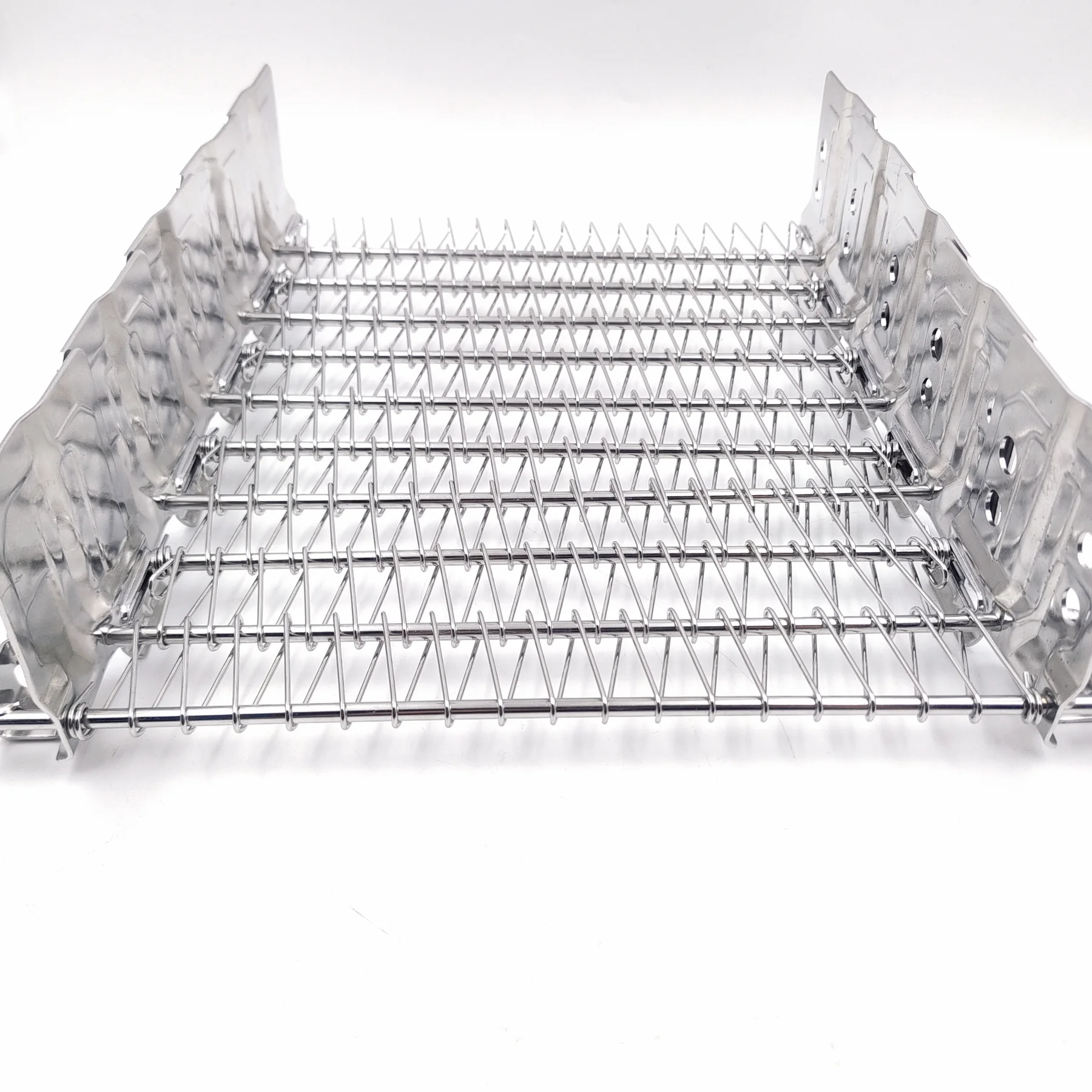
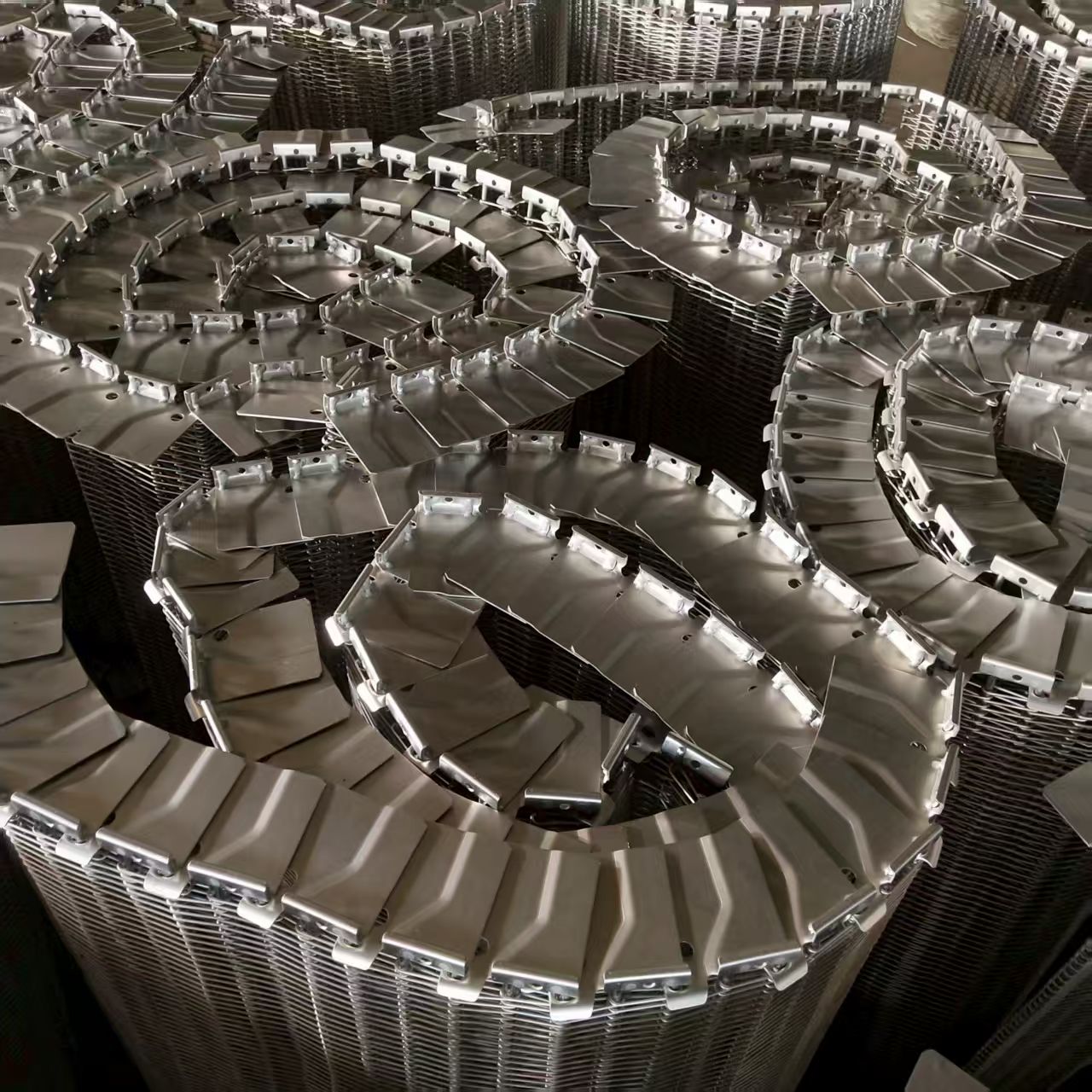
Self-stacker belt complete assembly for spiral stacking systems
Self-Stacker Belt
Complete belt assembly with stacking plate structure
Visual starting point for OEM, replacement, and repeat-order review.
Stack Test Before Release
Fixture-Controlled Welding
OEM Production
Replacement Matching
100% Final Inspection
SELF-STACKING PROJECT REVIEW DESK

Confirm Stacking Behavior Before Price Discussion

Self-stacking belt risk is not only width or material. The real risk is whether the belt stacks, contracts, and releases correctly in the machine. YIYI reviews upper/lower engagement, plate geometry, slot length, rod pitch, sprocket or drum matching, and running direction before production release.

What should the buyer send first? Drawing, old belt photos, plate height, slot length, overall width, rod diameter, rod pitch, spiral pitch, chain pitch, running direction, and stack-test requirement. Start Self-Stacking Belt Review
01 Stack Fit

Confirm upper/lower engagement

  • Stack height and engagement depth
  • One-side or two-side shrinkable layout
  • Release behavior in compact spiral systems
02 Plate Geometry

Check plate and slot dimensions

  • Plate height and plate thickness
  • Slot length and slot clearance
  • Stacking plate position across belt width
03 Belt Pitch

Confirm mesh and rod structure

  • Rod diameter and rod pitch
  • Spiral wire diameter and spiral pitch
  • Chain pitch or drum matching data
04 Fixture Welding

Control plate position during welding

  • Fixture support for plate alignment
  • Heat control to prevent burn-through
  • Rod-end and weld position consistency
05 Stack Test

Verify real behavior before release

  • Upper/lower tier contact check
  • Contraction and release movement
  • Stack-test photo or video proof
06 Shipment Proof

Release after privacy-safe QA

  • Final inspection and packing readiness
  • Neutral packing without public buyer data
  • Repeat-order data retained internally
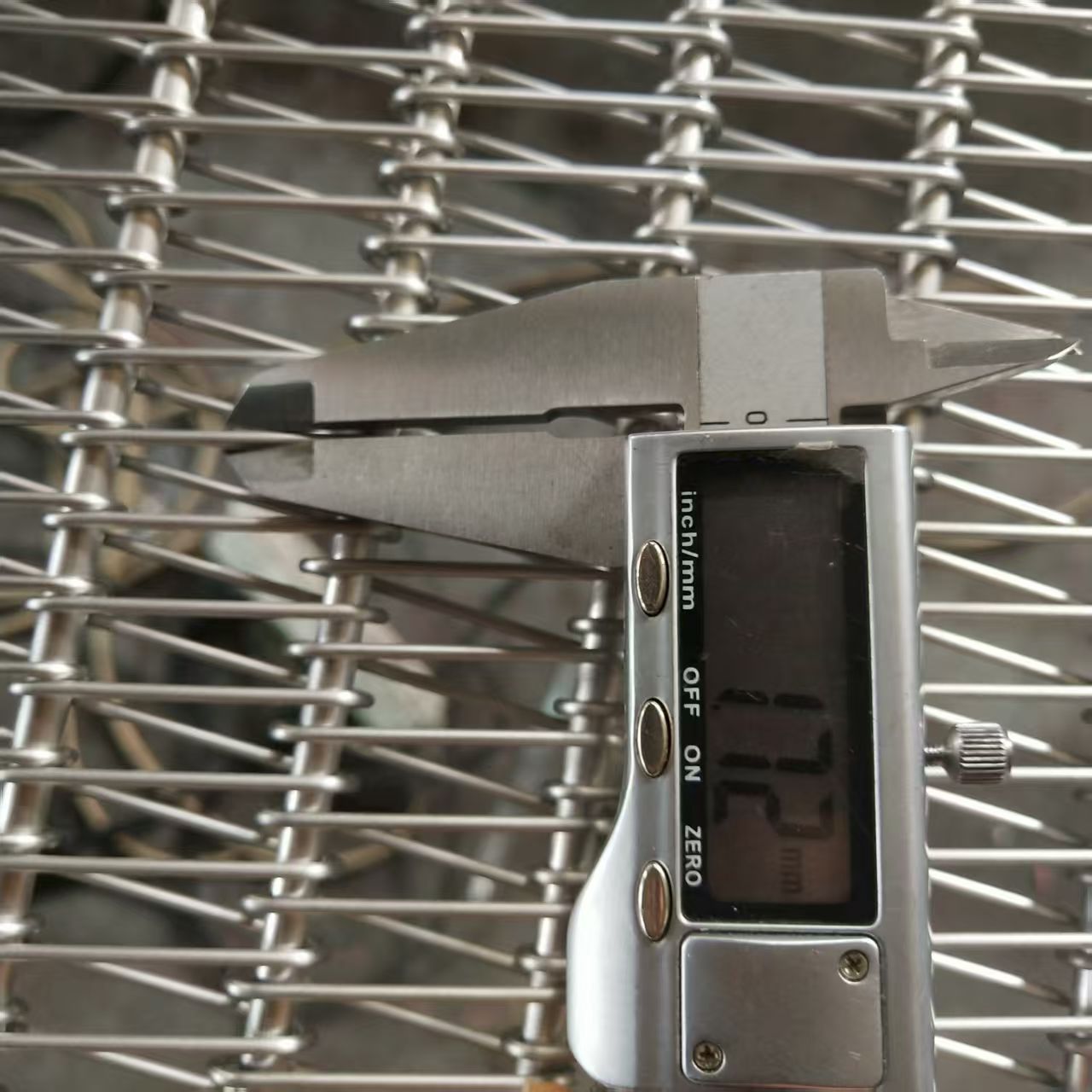
Measured self-stacking belt examples on this page include overall width, plate height, plate thickness, rod diameter, rod pitch, spiral pitch, and spiral wire diameter. Metal conveyor belts are custom-built; final specification should be confirmed by drawing, old belt photo, sample measurement, or application review.
PRODUCT DEFINITION

Built for Systems Where Stacking Geometry Must Be Right

The main risk is simple: the belt may look correct but fail to stack smoothly in the real machine. YIYI checks engagement, slot behavior, contraction, and drive fit before release.

YIYI Mesh Belt builds self-stacker belts as system-matching industrial components. The focus is not only on dimensions, but on the geometry that determines upper and lower tier engagement, stable stacking behavior, and repeatable supply for future orders.

This makes the page especially relevant for OEM builders integrating a new system, distributors comparing suppliers, and replacement buyers trying to avoid mismatch risk on an existing line.
Lateral Contraction Design Upper/Lower Tier Engagement Stacking Plate Structure Slot-Guided Geometry
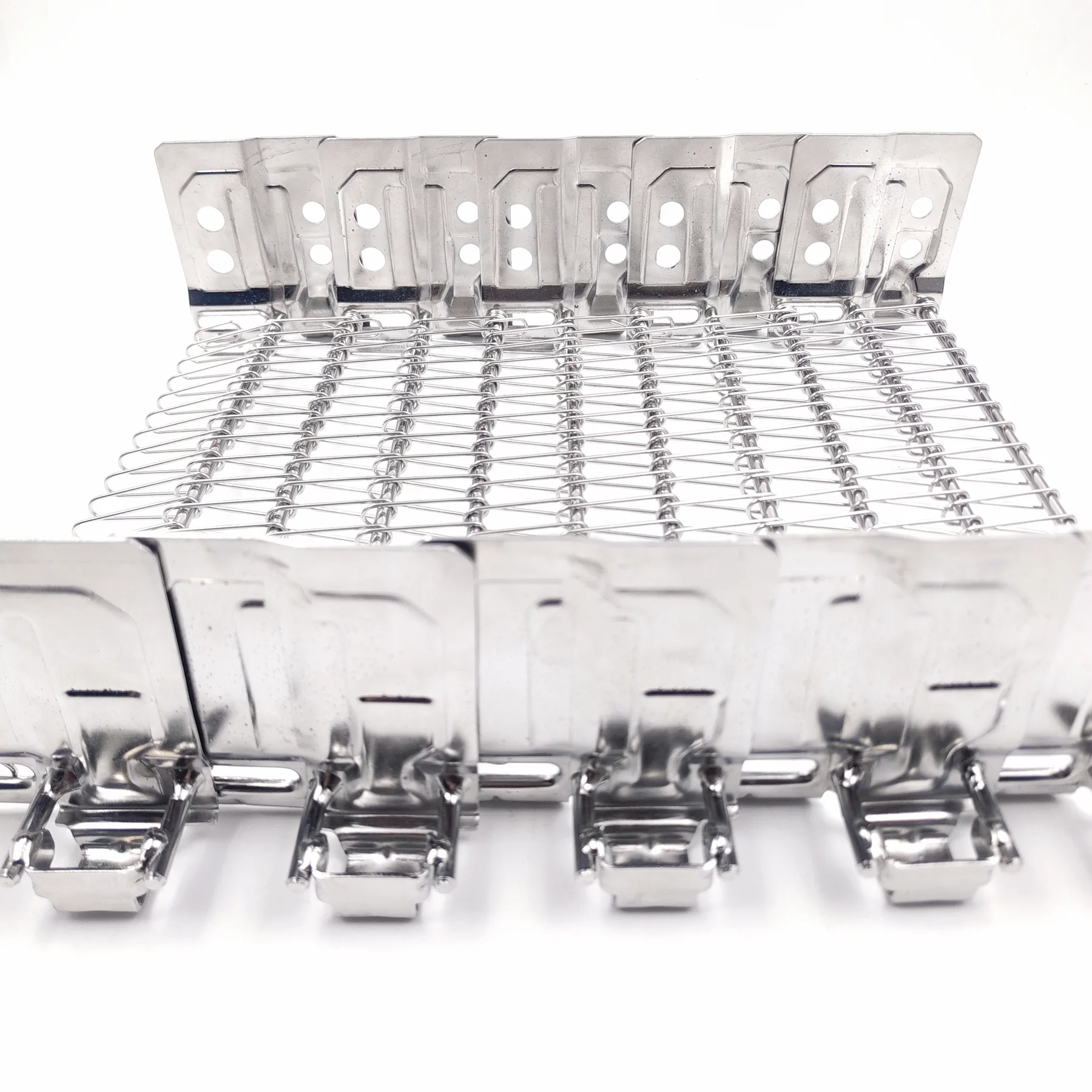
Self-stacker belt detail showing stacking geometry and side structure
Structure Detail
Stacking plate and engagement geometry
Used by buyers to review fit, contraction behavior, and replacement matching risk.

PRODUCTION EVIDENCE

Stack Test, Measurement, and Material Verification

For self-stacking belt projects, buyers need proof that the belt stacks correctly in real geometry. YIYI uses stack-test video, fixture welding, dimensional measurement, and material verification before release.

Priority Proof
Stack Test Video

Upper and lower engagement checked

Stack testing confirms real stacking behavior, engagement depth, contraction movement, and release readiness before shipment.
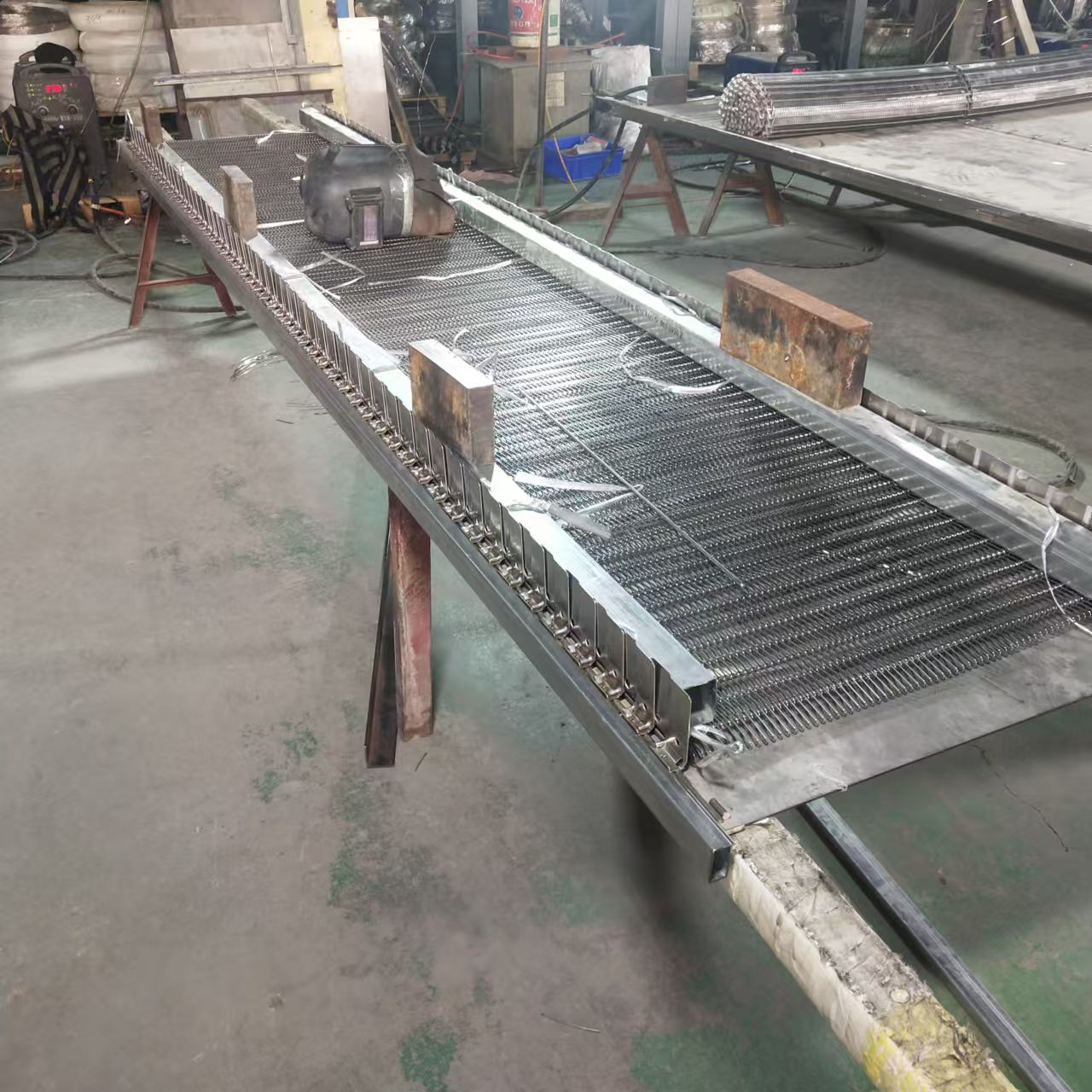
Self-stacking belt fixture welding proof
Fixture Welding
Plate Position Control

Fixture-controlled welding

Plate position, slot geometry, and rod-end consistency are controlled because small errors change stacking behavior.
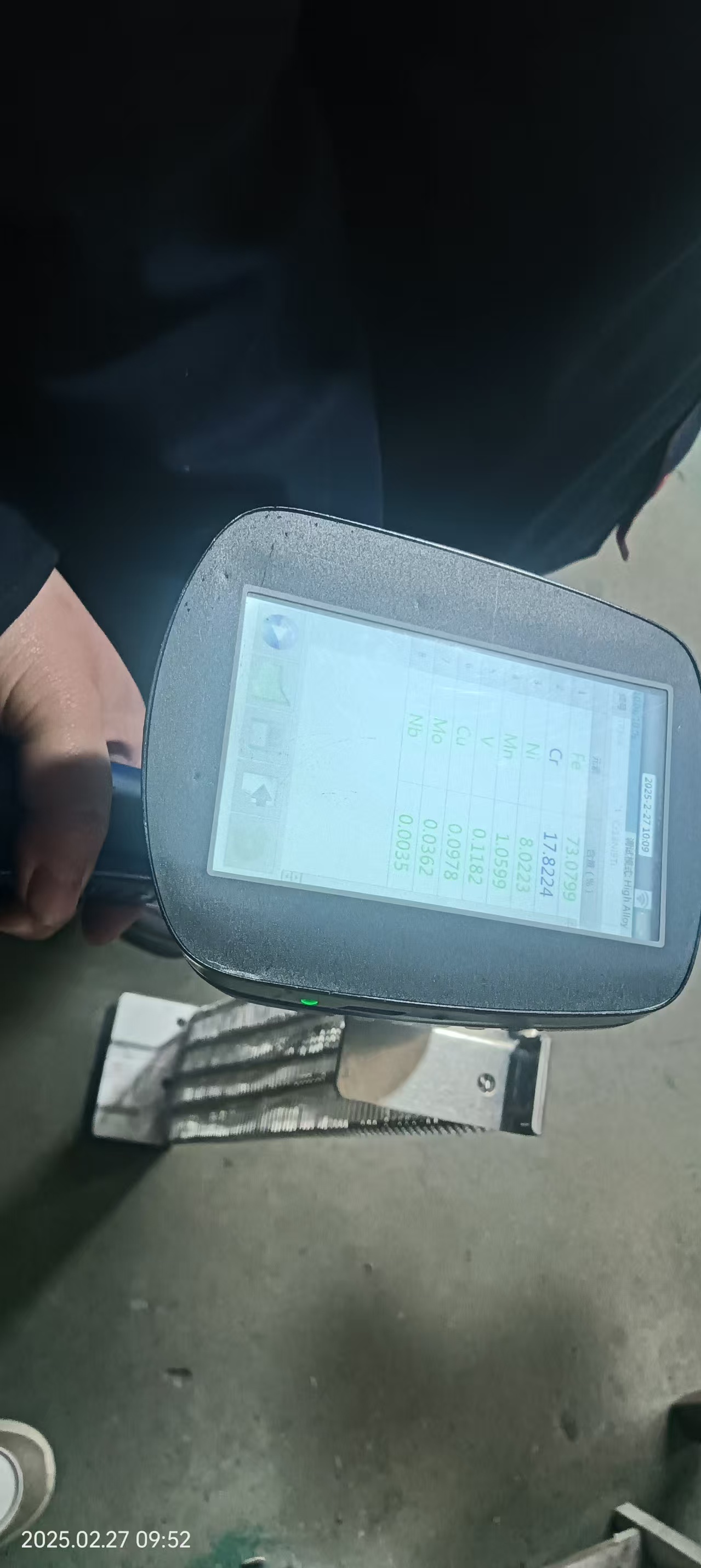
Self-stacking belt raw material verification
Material Check
Raw Material Verification

Material checked before release

Material verification and dimensional checks support food-processing, OEM, and replacement belt confidence.

ANONYMIZED SHIPMENT CASES

Actual Project Evidence Without Customer Details

Public case evidence keeps product and inspection value while removing customer names, order numbers, shipping marks, labels, faces, and logistics details.

OEM compact spiral system

Self-stacking belt configured from drawing, fixture welding, and stack test before shipment release.

Replacement matching

Existing belt photos, sample measurements, plate height, rod pitch, slot length, and chain pitch used for replacement review.

Custom-built supply

Metal conveyor belts are custom-built. Detailed configuration should be confirmed with drawings, old belt photos, running direction, and stack geometry.

Measured width examples

Self-stacking belt examples are reviewed by overall width and usable width. Width alone is not enough; stack geometry must be confirmed.

Measured geometry

Rod diameter, rod pitch, spiral pitch, spiral wire diameter, plate height, plate thickness, slot length, and running direction.

Stacking layouts

Single-side and two-side shrinkable structures, single or double spiral mesh, standard and heavy-duty stacking plates.

Release risk points

Upper/lower engagement, contraction movement, weld burn-through prevention, burr-free edges, cleaning, and neutral export packing.

SELF-STACKING BELT ENGINEERING REVIEW

Stacking Geometry, Engagement, and Release Test

A self-stacking belt is custom-built around tier height, stacking pitch, slot length, chain pitch, rod pitch, contraction range, sprocket engagement, load, and running direction.

If plate position, slot geometry, or upper/lower engagement is wrong, the belt can bind, wear the chain, or fail as a replacement. YIYI checks these points before quotation and verifies stack behavior before release.

Tier Height and Stack Pitch

Tier spacing, stacking pitch, and upper/lower contact depth determine whether the belt seats cleanly in the vertical stack.

Slot Geometry and Contraction

Long-slot or short-slot structure controls lateral contraction. The slot must match the machine path and replacement sample.

Chain Pitch and Sprocket Fit

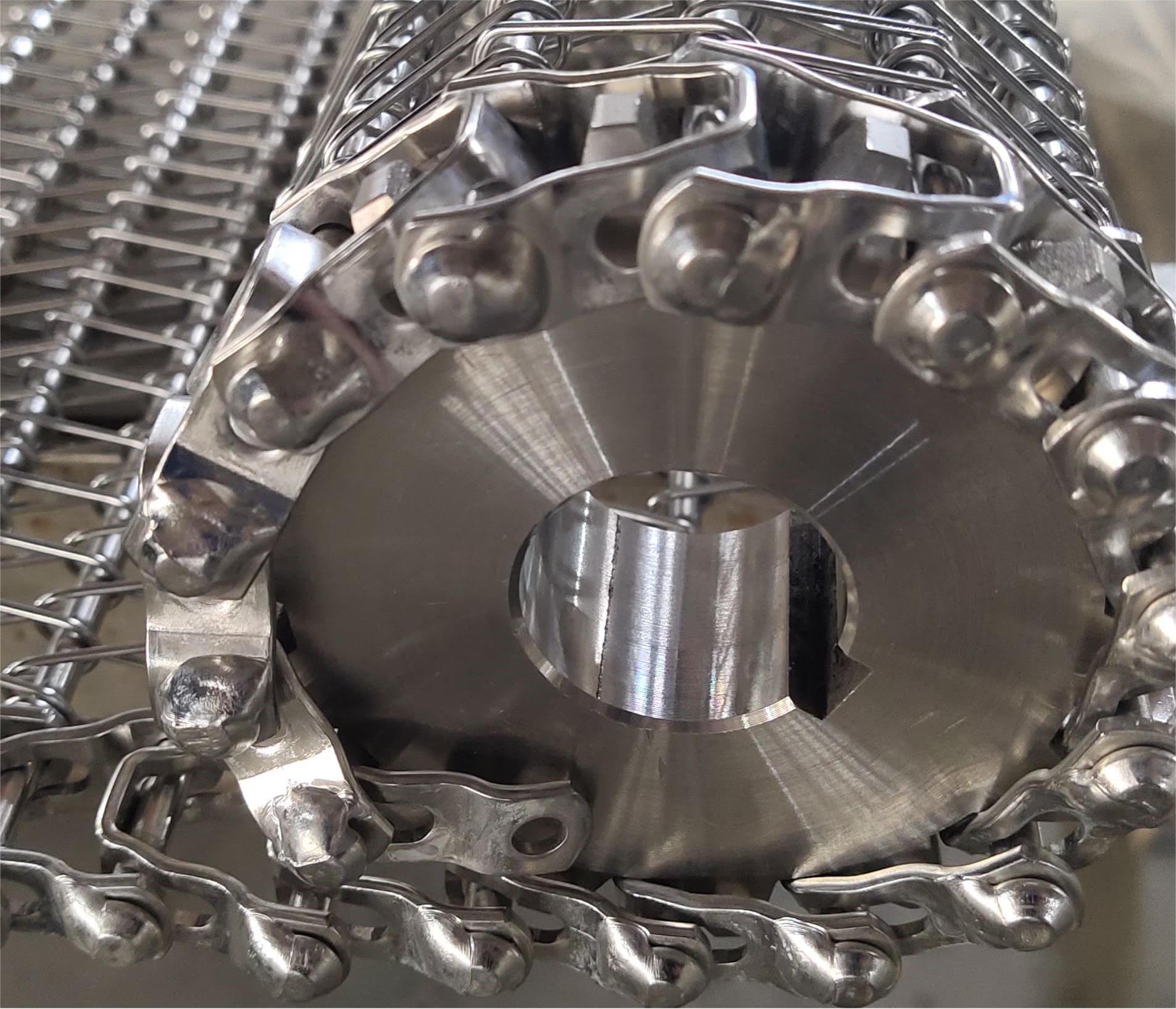
Chain pitch, sprocket tooth profile, edge chain format, and running direction are checked before production to avoid drive mismatch.

One-Side / Two-Side Shrinkable

The shrinkable layout affects tier alignment, belt path, and whether the structure can replace the original without drive modification.

Freezing and Cooking Applications

Used in spiral freezing, chilling, cooling, proofing, steaming, smoking, cooking, bakery, meat, seafood, poultry, and prepared food systems.

Factory Release Control

Fixture-controlled welding, stack test confirmation, final inspection, and export packing keep OEM and repeat orders consistent.

FACTORY REVIEW FLOW

From Sample Geometry to Stack-Test Release

This is the engineering order used for self-stacker projects: application condition, existing sample or drawing, stacking geometry, drive compatibility, welding control, and release inspection.

01
Application ConditionFreezing, cooling, proofing, cooking, load, temperature, sanitation, airflow, and line speed.
02
Drawing / Sample CheckBelt width, rod diameter, spiral pitch, chain pitch, slot length, stack plate profile, and wear points.
03
Stack Geometry MatchTier height, upper/lower engagement depth, lateral contraction range, and one-side or two-side shrinkable layout.
04
Drive CompatibilitySprocket engagement, edge chain format, shaft layout, running direction, and replacement fit.
05
Fixture WeldingStacking plate position, weld sequence, heat control, slot stability, and rod-end consistency.
06
Stack Test ReleaseStacking behavior, smooth contraction, engagement depth, final inspection, and export packing confirmation.
CLEAN PRODUCT PHOTOS

Self-Stacking Belt Product Views

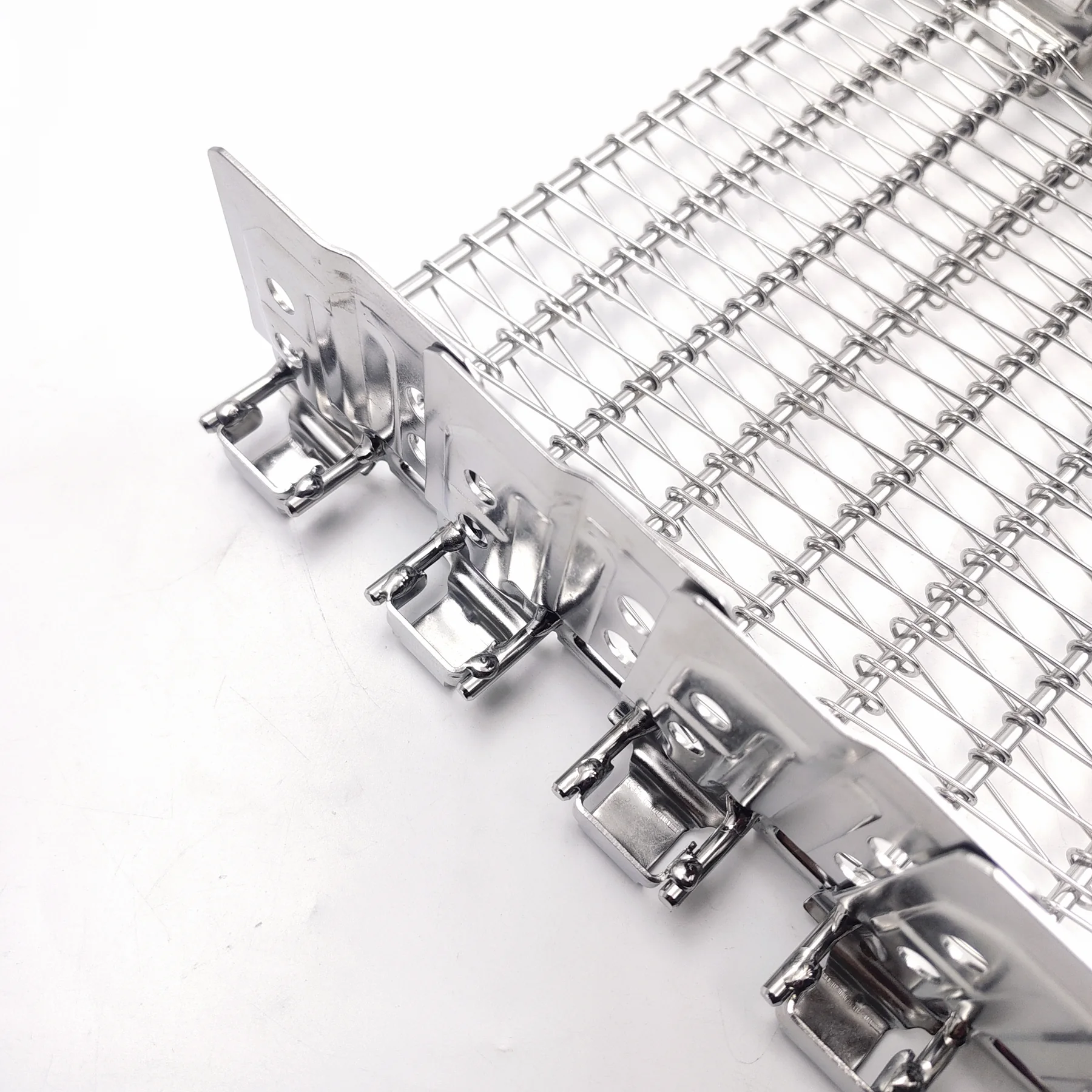
White-background product views are used as engineering evidence: full belt overview, stacking plate side, chain side, slot geometry, engagement detail, and shipment-ready condition.
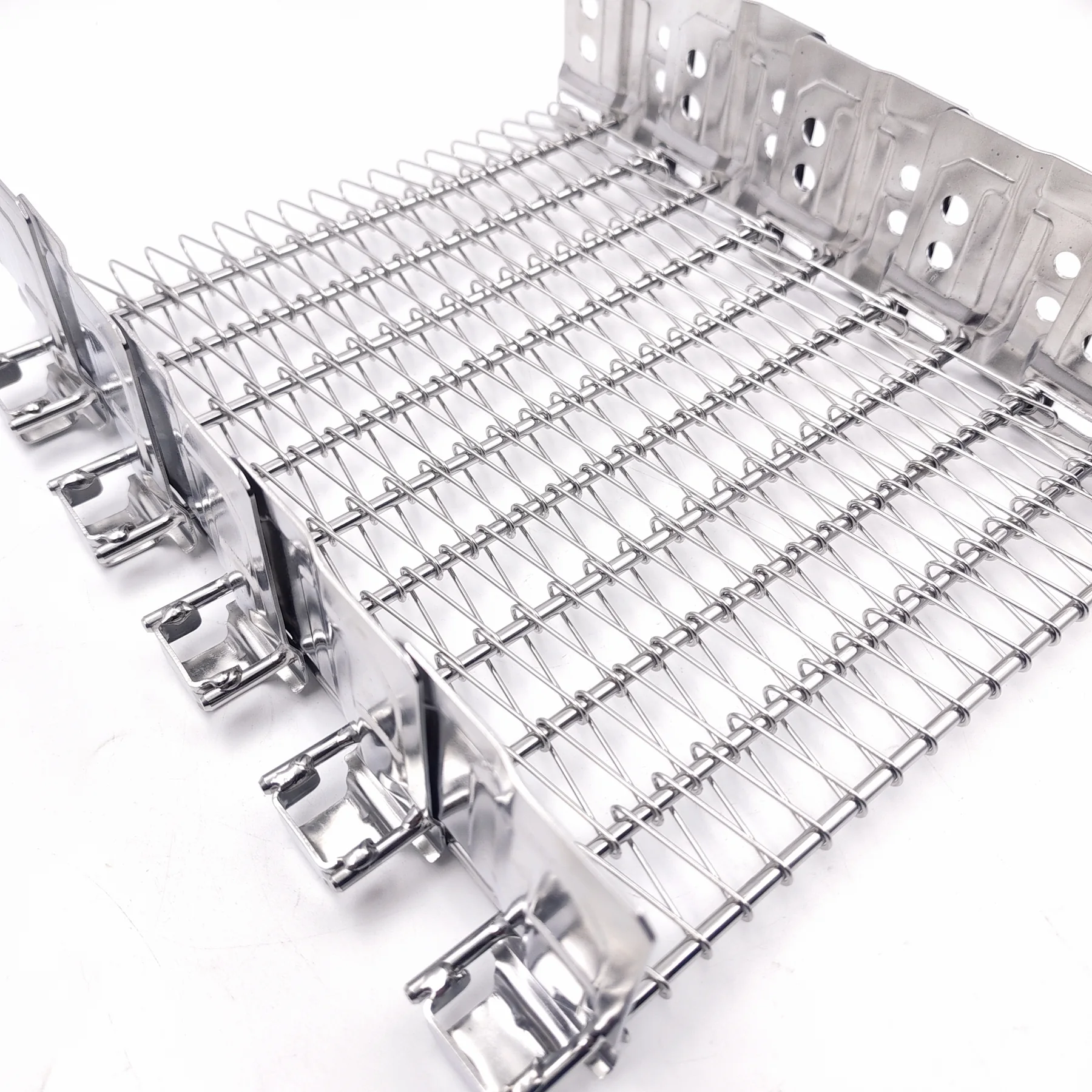
Self-stacker belt full overview
Product Photo 01
Full Belt Overview
Self-stacker belt stacking plate side view
Product Photo 02
Stacking Plate Side View
Self-stacker belt chain side detail
Product Photo 03
Chain Side Detail
Self-stacker belt slot and engagement detail
Product Photo 04
Slot / Engagement Detail
Self-stacker belt stack test or running view
Product Photo 05
Stack Test or Running View
Self-stacker belt shipment ready product view
Product Photo 06
Shipment-Ready View
STACKING PLATE AND EDGE DETAILS

Details That Control Stack Reliability

For self-stacking belts, small differences in plate position, slot opening, rod-end finish, and chain connection can change the way the belt stacks. These details are reviewed as working geometry, not decoration.

Self-stacker belt standard rod end detail
Detail 01
Standard Rod End
Self-stacker belt stacking plate weld area
Detail 02
Stacking Plate Weld Area
Self-stacker belt slot geometry close-up
Detail 03
Slot Geometry Close-Up
Self-stacker belt chain connection detail
Detail 04
Chain Connection Detail
Self-stacker belt upper and lower engagement point
Detail 05
Finished Stacked Belt Point
Self-stacker belt custom finished edge
Detail 06
Custom Finished Edge
MANUFACTURING APPROACH

Why Buyers Use YIYI for Self-Stacker Belt Projects

Self-stacker belt manufacturing requires more than correct nominal dimensions. Buyers need controlled slot geometry, repeatable stacking-plate position, consistent engagement behavior, and a release process that proves real stacking performance before shipment.

YIYI Mesh Belt approaches each self-stacker project through system-matching logic. Configuration starts from the customer's drawing, sample, or real machine requirement. Fixture-controlled welding keeps the structure more repeatable, and stack testing confirms whether the finished belt behaves correctly before it leaves the factory.
Stack testing is standard, not optionalEvery project includes pre-release stack testing to verify actual stacking behavior and engagement.
Fixture-guided welding controls structural geometryCustom fixtures hold each component in position during welding, reducing positional variation at every stacking plate.
Experienced welders on every projectWelders assigned to self-stacker production have 10 or more years of experience on this belt structure specifically.
OEM and replacement handled through the same workflowFirst-build and replacement orders use the same matching, verification, and release process.
Self-stacker belt engineering review and drawing-based production proof
Engineering Proof
Drawing-based production review
Used to confirm geometry, stacking behavior, and repeat-order references before production.

CONFIGURATION LOGIC

Proven Configuration Logic Based on Real Project Requirements

A self-stacker belt configuration is not defined by width alone. The stacking behavior, lateral contraction, engagement geometry, and drive compatibility all depend on multiple interrelated parameters. The following inputs are typically required to configure a self-stacker belt correctly for OEM or replacement use.

01
Overall Width and Effective Width
Total belt width and usable product-carrying width. Both must be specified where relevant — they may differ due to edge chain and stacking plate geometry.
02
Wire Diameter
Spiral wire diameter affects belt flexibility, weight, mesh opening, and structural behavior during lateral contraction in the stacking section.
03
Spiral Pitch
Spacing between spiral loops affects the mesh opening and the contraction behavior as the belt enters the stacking turn.
04
Rod Diameter
Cross rod diameter affects structural integrity, assembly fit, and engagement compatibility with the stacking plates and sprocket system.
05
Chain Pitch
Chain pitch must match the sprocket and drive system on the equipment. Incorrect chain pitch causes engagement failure and premature drive wear.
06
One-Side or Two-Side Shrinkable
Whether the belt contracts on one side or both sides affects stacking behavior, tier alignment, and compatibility with the conveyor path geometry.
07
Long-Slot or Short-Slot Structure
Slot length in the stacking plate directly determines the contraction range and upper/lower engagement depth. Must match the original design or system requirement.
08
Edge Geometry
Edge chain type, edge plate configuration, and rod-end finish affect running stability, wear resistance, and replacement compatibility with existing system guides.
09
Stack Engagement Requirement
The specific upper/lower engagement depth and stacking height required by the system. This is verified through stack testing before final release.
10
Running Direction
Right-hand or left-hand running direction determines spiral winding orientation. Must match the equipment layout to ensure correct stacking behavior.
11
Replacement Matching Conditions
For replacement projects, the existing belt dimensions, sample measurements, and system conditions are reviewed to ensure the replacement matches stacking geometry and drive compatibility.

For replacement projects without drawings: a sample of the existing belt, measurements of the stacking plate geometry, and basic system information are often sufficient to begin the matching process. Contact us to discuss your specific requirement.

SPECIFICATION VERIFICATION BEFORE RELEASE

Factory Measurement Points for Self-Stacking Belt Geometry

Self-stacking belt release depends on measured geometry, not only visual inspection. Before shipment, YIYI checks the dimensions that affect stacking behavior, drive fit, replacement matching, and repeat supply. These photos show typical measurement points used to confirm the production specification.
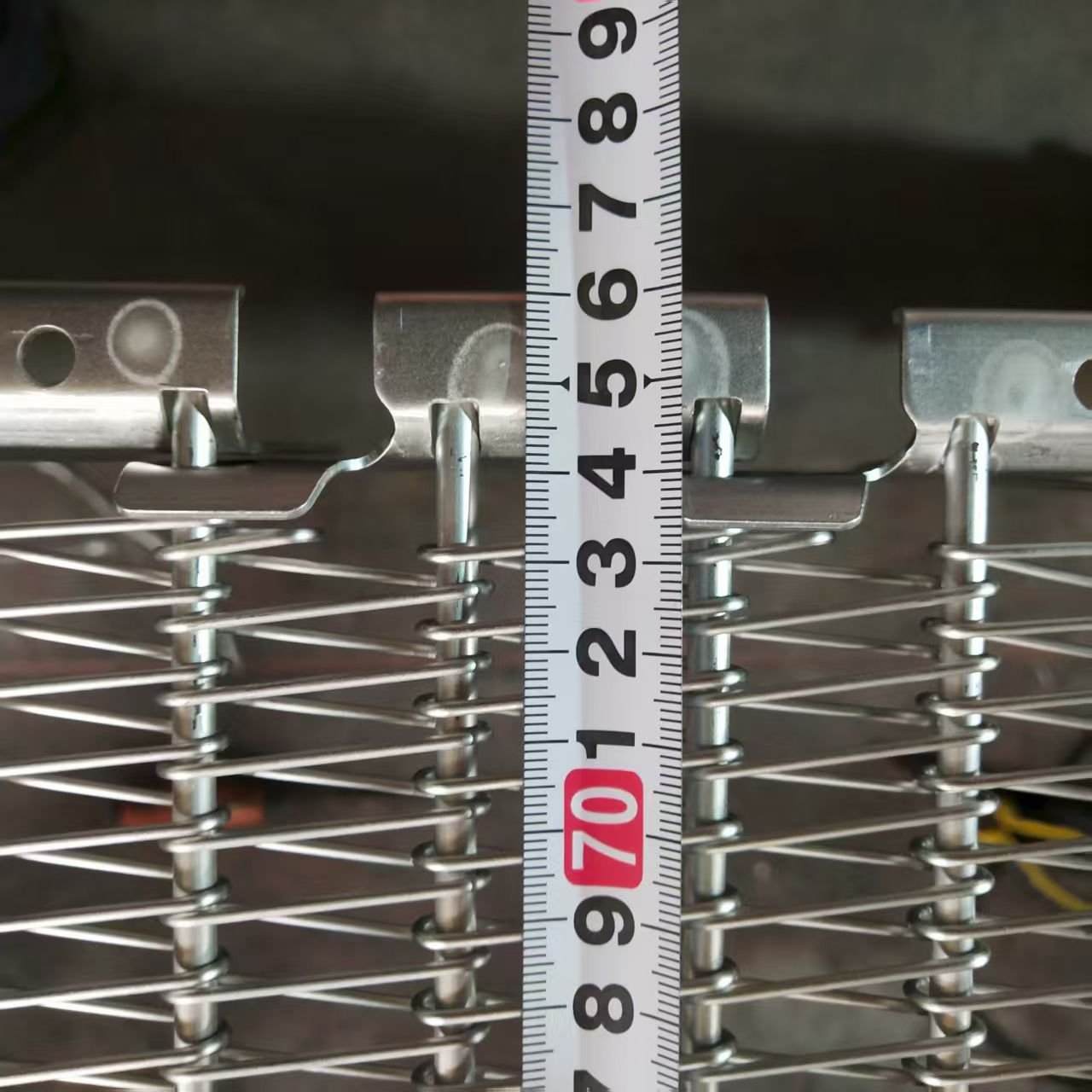
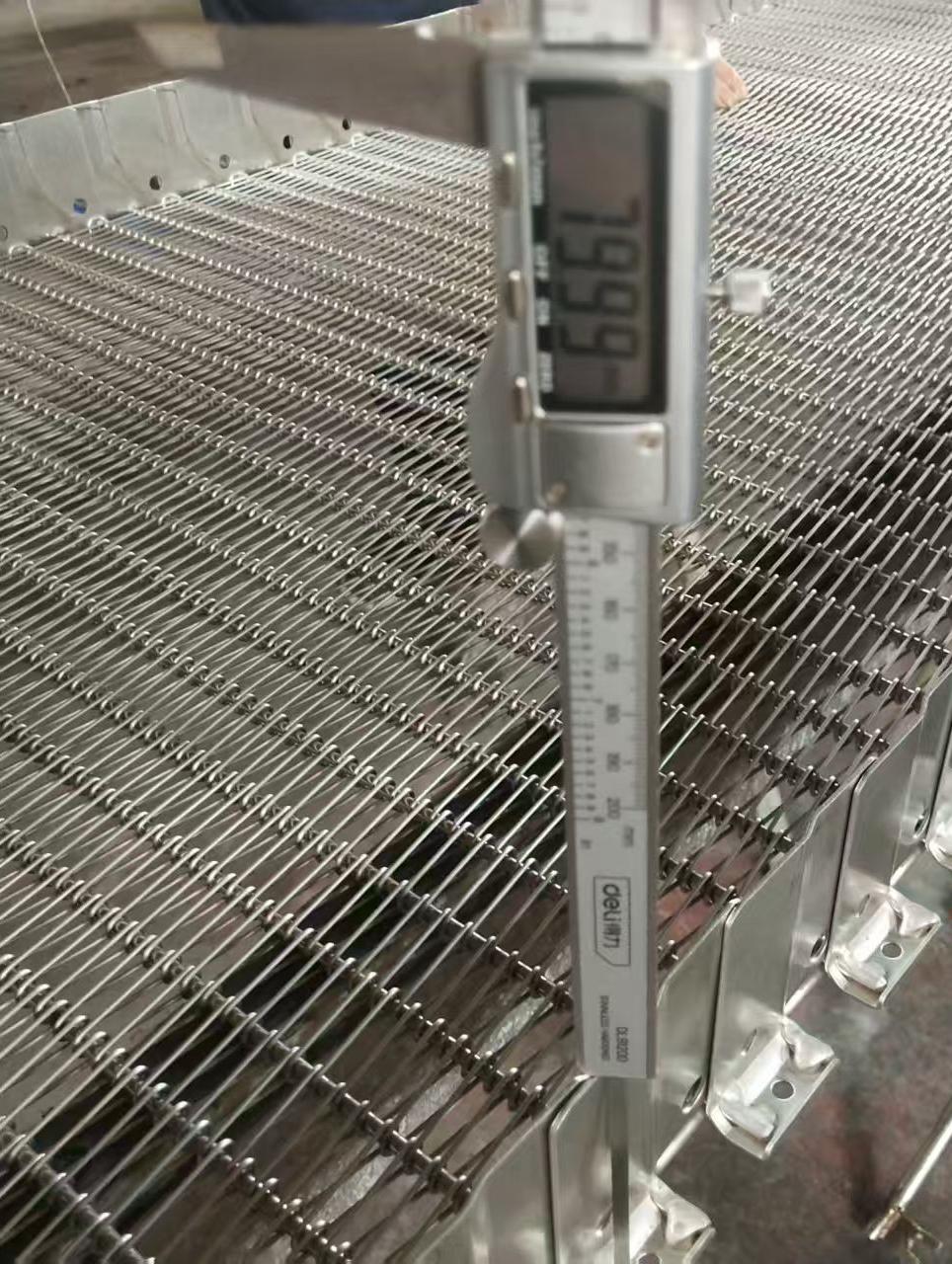
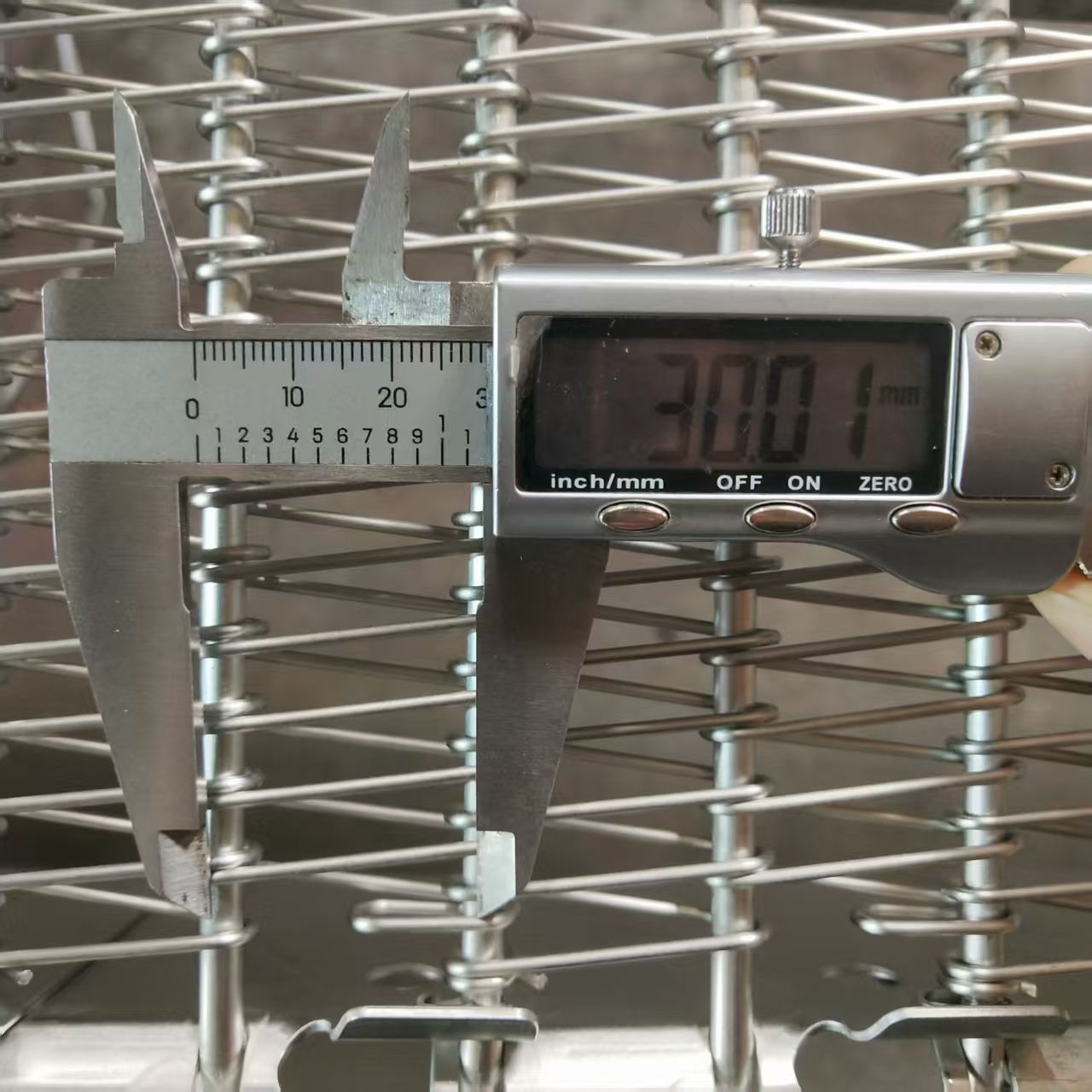
Self-stacking belt overall width measurement before release
Width Check
Overall Width Verification
Confirms total belt width against drawing, sample, or replacement requirement.
Self-stacking belt stacking plate height measurement
Stack Height
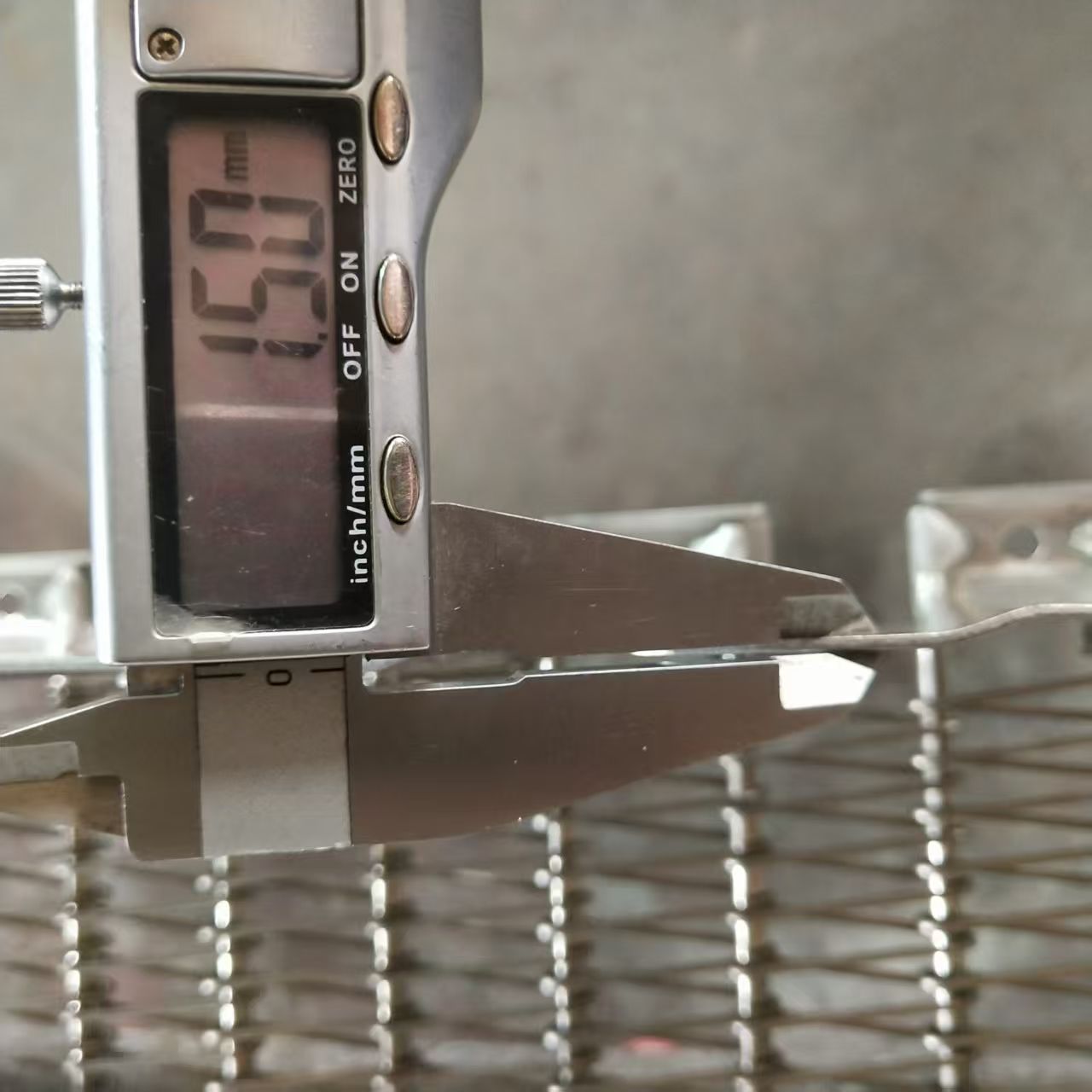
Stacking Plate Height
Checks plate height because it affects tier clearance and upper/lower engagement.
Self-stacking belt stacking plate thickness measurement
Plate Control
Stacking Plate Thickness
Verifies plate thickness for structural consistency and welding control.
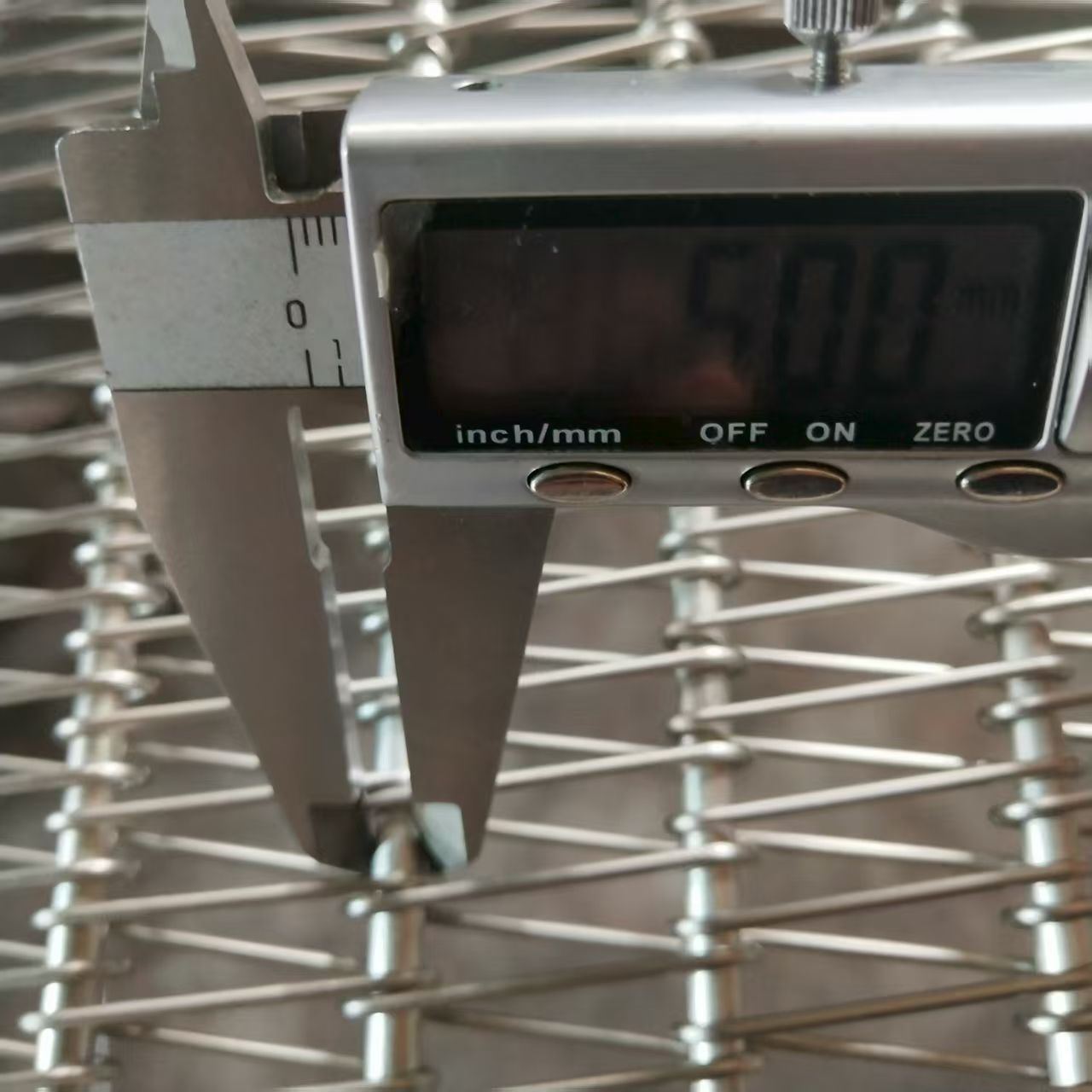
Self-stacking belt cross rod diameter measurement
Rod Check
Cross Rod Diameter
Confirms rod diameter for load support, engagement stability, and repeat matching.
Self-stacking belt rod pitch measurement
Pitch Check
Rod Pitch Measurement
Checks rod spacing because it affects belt geometry and sprocket-related fit.
Self-stacking belt spiral pitch measurement
Mesh Geometry
Spiral Pitch Measurement
Verifies mesh pitch for opening size, contraction behavior, and product support.
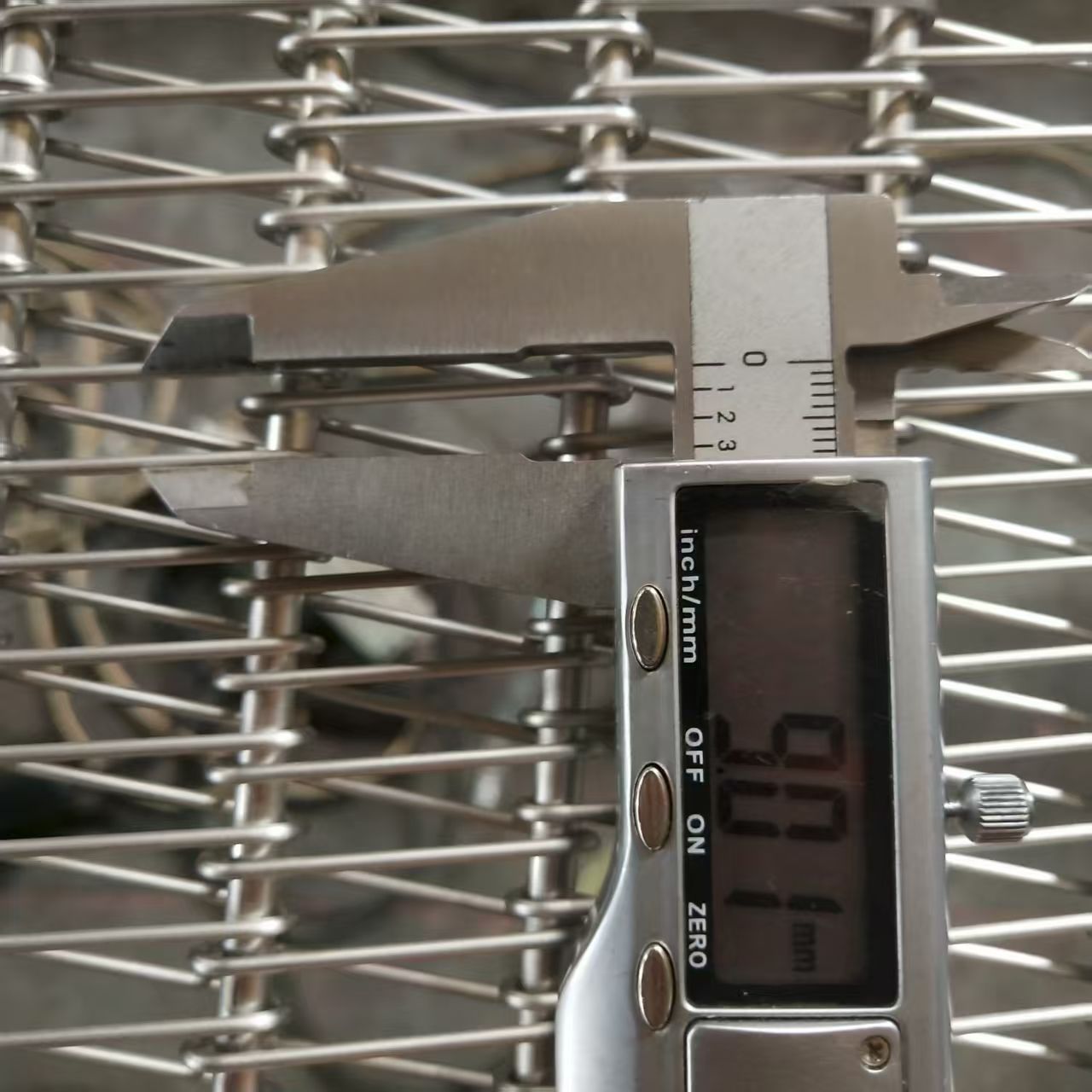
Self-stacking belt spiral wire diameter measurement
Wire Check
Spiral Wire Diameter
Confirms wire diameter for flexibility, belt weight, strength, and repeat production.
Self-stacking belt material composition verification by analyzer
Material Check
Material Composition Verification
Material is checked as part of the quality-control record for food and industrial use.

RELEASE STANDARD - STACK TESTING

Stack Testing Before Final Release - Standard for Every Project

Dimension checks are necessary, but stack behavior must be proven physically. Stack testing verifies upper/lower engagement, binding risk, contraction, and release readiness before shipment.
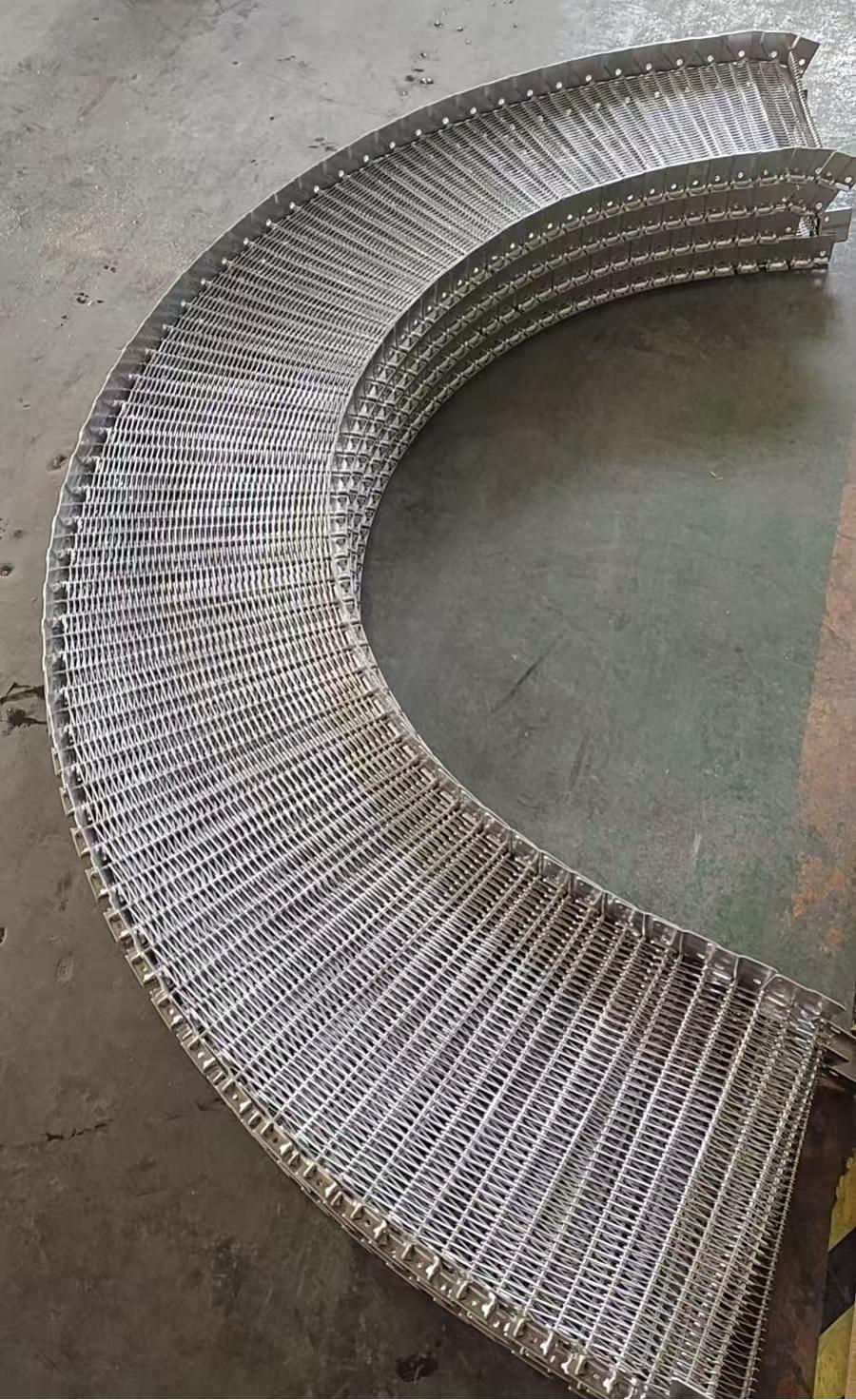
Verifies real stacking behavior, not only dimensionsStack testing confirms that the belt physically stacks as required — engagement depth, tier alignment, and contraction behavior are all observed directly.
Upper/lower engagement confirmed before releaseThe contact between stacking plates on upper and lower tiers is checked for correct depth and consistency. Missing or incomplete engagement is identified and addressed before shipment.
Reduces risk for OEM and replacement projectsFor OEM builders, stack testing provides documented evidence that the belt is structurally ready for integration into the system. For replacement buyers, it reduces the risk of receiving a belt that fails to perform in the existing conveyor geometry.
Stack verification is part of YIYI Mesh Belt’s release logicNo self-stacker belt is approved for shipment without passing stack testing. This is a production standard, not a project-specific option.
Stacking Geometry Video
Stacking behavior checked before release
Real factory video showing stacked self-stacking belt geometry before release.
Self-stacker belt stack test proof photo
Stacking Geometry Test
Stack Test Video
Real Behavior Verification
Physical stacking cycle observed and confirmed — not estimated from drawings alone
Engagement Confirmation
Upper and lower tier contact verified for correct depth and consistency across the belt width
OEM Risk Reduction
Documented stack test result provides OEM builders with evidence of structural readiness before system integration
Standard Release Requirement
Stack testing is a production release standard — not an optional step — for every self-stacker belt project at YIYI Mesh Belt
MANUFACTURING PROOF - WELDING DISCIPLINE

Experienced Welding and Fixture-Controlled Precision

Self-stacker belt welding is not a simple operation. The stacking plates, slot structures, and edge components must be welded in a precise sequence and held in exact position — or the resulting belt will not stack correctly, regardless of whether individual dimensions appear acceptable on paper.

YIYI Mesh Belt uses two overlapping controls to achieve structural consistency in self-stacker belt welding: welders with 10 or more years of experience on this specific belt structure, combined with custom-designed fixtures that hold every component in the correct position during welding.
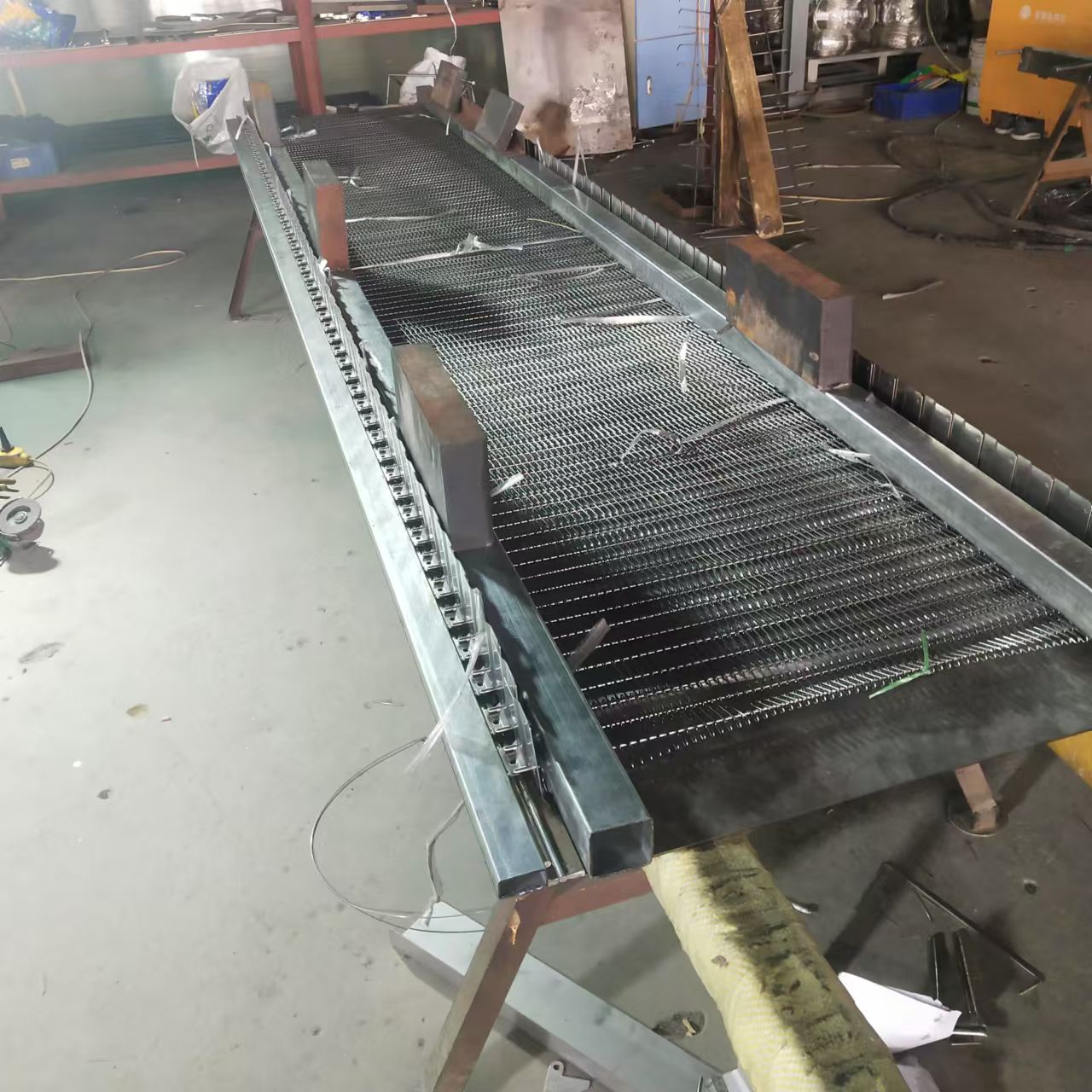
10+ years of welder experience on self-stacker structuresExperience on this belt type means the welder understands how weld sequence, heat input, and fixture use affect the final stacking geometry — not only whether the joint looks complete.
Custom-designed welding fixturesFixtures are purpose-built for self-stacker belt geometry. They hold stacking plates, rods, and chain components in position during welding — controlling weld position and reducing positional variation across every joint.
Strict tolerance control through fixture guidanceThe combination of experienced welders and purpose-built fixtures achieves the tolerance consistency that stacking performance requires — ensuring structural geometry is repeatable across the full belt length and across repeat production batches.
Supports repeat-order consistencyBecause the welding process is fixture-guided, the structural geometry of a repeat order can be reproduced reliably — reducing the need for re-verification of every dimension on subsequent batches.
10+
Years Welder Experience
Custom
Welding Fixtures
Strict
Tolerance Control
Self-stacker belt welding fixture and structural control proof
Fixture Control
Welding structure held for repeatable geometry
Proof position for fixture-controlled welding and stacking plate consistency.
Custom fixture close-up for self-stacker belt production
Welding Setup View
Self-stacker belt weld detail close-up
Weld Position Detail
WELDING DISCIPLINE

Controlled Welding for Stacking Reliability

Self-stacker welding must protect stack geometry. Plate position, weld size, heat input, and rod alignment are controlled because small errors affect engagement.

Avoiding burn-through on stacking platesStacking plates are thinner structural elements. Excessive heat input during welding can cause burn-through or distortion that affects the slot geometry and engagement behavior. Experienced welders and fixture support help manage this risk.
Weld sequence affects structural consistencyThe order in which components are welded affects residual stress distribution and dimensional stability. Controlled weld sequence, guided by the fixture, reduces post-weld distortion and maintains stacking plate alignment.
Fixing method determines positional accuracyHow components are held in the fixture during welding determines whether the stacking plate ends up in the correct position relative to the rod and chain. Correct fixing method is part of the production discipline on every belt.
Welding quality affects stacking engagement directlyA stacking plate that is out of position by even a small amount will engage differently in the stacking cycle — affecting how the upper tier seats on the lower, and potentially causing uneven wear or running resistance over time.
Self-stacker belt stacking plate weld position inspection
Weld Position Inspection
Stacking Plate Position Check
Fixture-controlled welding helps keep stacking plates aligned for stable engagement.

QUALITY CONTROL

Critical Quality Control Points for Self-Stacker Belts

Self-stacker QA focuses on stack behavior, plate position, weld consistency, free contraction, surface cleanliness, and packing readiness.

01
Stacking Plate Position Verification
Position of every stacking plate checked against specification after welding — deviation identified before assembly continues.
02
Slot Geometry Inspection
Long-slot or short-slot dimensions verified for correct depth and width — slot geometry directly determines engagement behavior.
03
Side-to-Side Length Consistency
Both belt edges checked for equal length — asymmetry causes uneven stacking behavior and premature edge wear.
04
Diagonal Consistency
Diagonal measurements verified to confirm the belt is square and free from structural twist before release.
05
Smooth Lateral Contraction
Belt checked for free and smooth lateral contraction without binding, interference, or resistance in the stacking section.
06
Stack Test - Upper/Lower Engagement
Physical stack test performed before release — upper and lower tier engagement confirmed for correct depth and consistency.
07
Weld Position and Size Consistency
Weld position on stacking plates and connection points checked for consistency — undersized or mispositioned welds identified and addressed.
08
No Stacking Plate Burn-Through or Distortion
Stacking plates inspected for burn-through, warping, or distortion from welding heat. Affected plates are rejected before assembly.
09
Chain Pitch Verification
Chain pitch measured against specification to confirm drive compatibility before shipment preparation.
10
Burr-Free Edge Finish
All rod ends and edge details checked for sharp burrs. Burr-free finish reduces installation risk and hygiene concern in food-related applications.
11
Surface Condition After Treatment
Surface inspected after electropolishing or cleaning for residue, staining, and water marks before drying and packing.
12
100% Final Inspection Before Shipment
No belt is released without passing final inspection. Shipment documentation prepared only after QA sign-off including stack test confirmation.
SYSTEM COMPATIBILITY

Matched Drive and System Compatibility

A self-stacker belt must be compatible with the drive system it operates in. Chain pitch, sprocket engagement, edge chain format, and running direction must all be correct before the belt enters service. Incompatibility in any of these parameters causes drive problems that cannot be corrected after the belt is installed.
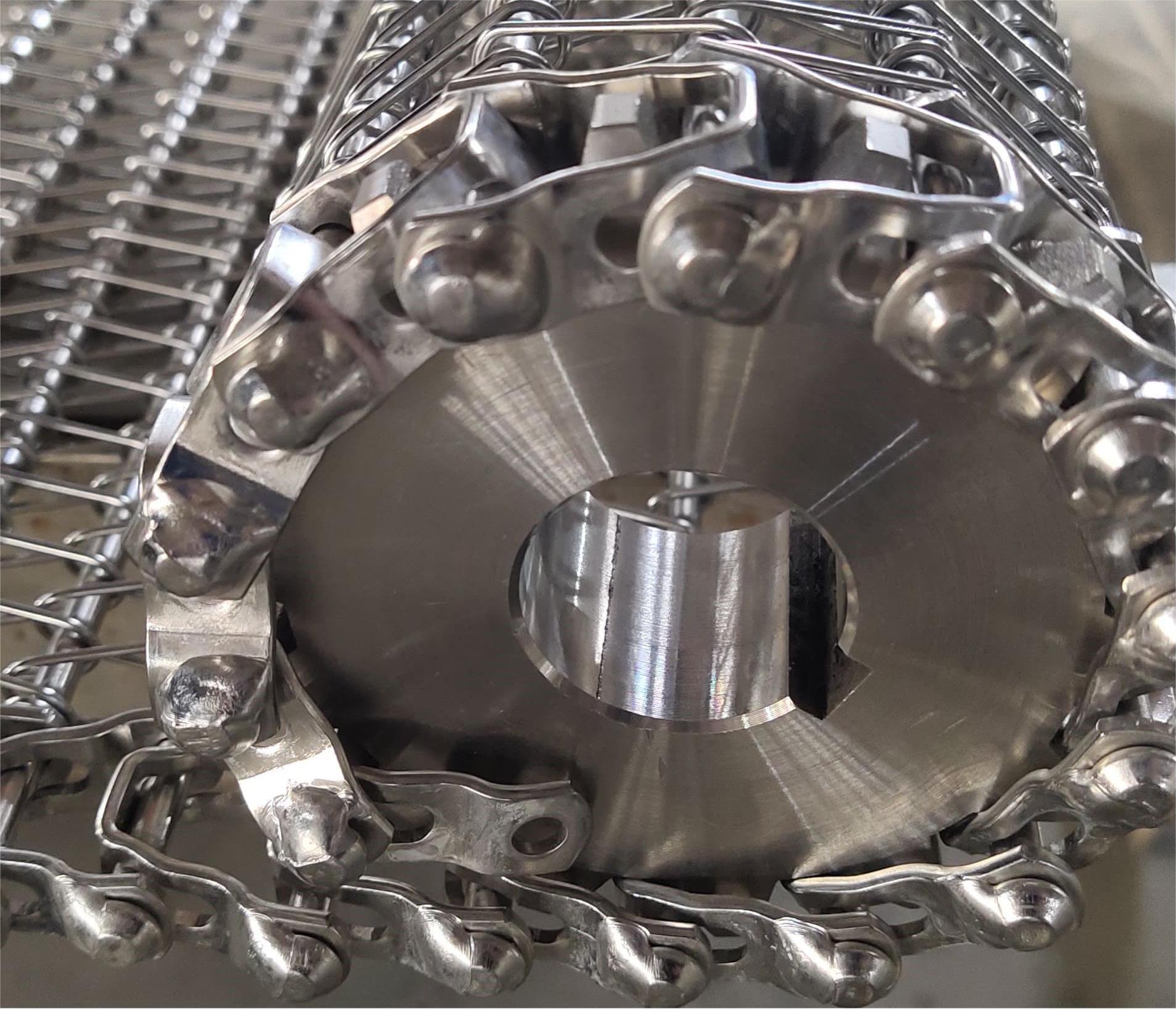
Chain pitch verified against customer drive sprocket specification before production is finalized
Running direction confirmed to ensure correct stacking orientation and contraction behavior
Edge chain format matched to existing system guides and wear strips for replacement projects
For OEM projects, drive compatibility is reviewed against the equipment drawing before production begins
Self-stacker belt chain pitch verification
Drive Matching
Chain Pitch Measurement
Matched sprocket for self-stacker belt drive system
Matched Parts
Sprocket Engagement Support

OEM & REPLACEMENT

OEM and Replacement Support - From First Build to Long-Term Supply

YIYI supports OEM builds, replacement matching, repeat orders, and urgent maintenance projects through the same drawing, sample, stack-test, and inspection workflow.
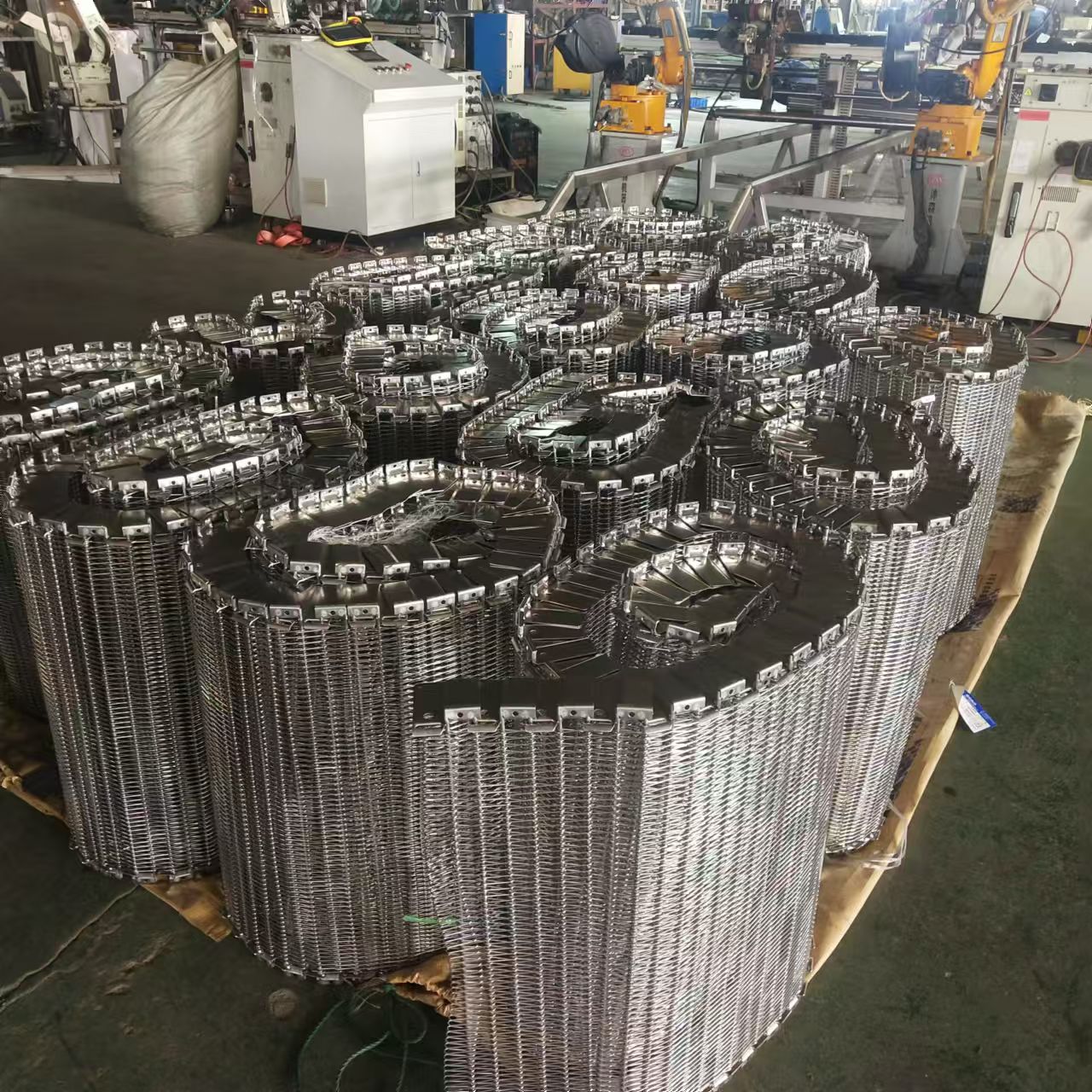
Drawing-Based Production
Technical drawings used as the primary production reference. YIYI Mesh Belt reviews drawings for completeness and raises clarification questions before production begins.
Sample-Based Replacement Matching
For replacement projects without drawings, sample review and dimensional matching of stacking plate geometry are used to configure the replacement belt before production.
Trial Production and Sample Confirmation
For new OEM projects or complex replacement requirements, trial production and sample confirmation can be arranged before full batch production begins.
Repeat-Order Consistency
Fixture-guided welding and production records support reliable repeat orders. Structural geometry is reproducible across batches without re-confirming every parameter.
Urgent Replacement Support
Reserve raw material stock supports faster production response on urgent replacement orders where equipment downtime requires accelerated delivery.
Matched Spare Parts
Matched spare components including stacking plates, rods, chain pieces, and connection parts can be supplied to specification for field repair and maintenance.
Self-stacking belt finished stacked structure for replacement matching review
Replacement Matching
Old Sample to New Belt Review
Matched spare parts for self-stacker belt replacement projects
Spare Parts
Matched Components Support
SURFACE FINISH & EXPORT PACKING

Surface Finish, Cleanliness, and Export Packing

For food-related applications, surface condition affects cleanability and hygienic compliance. Electropolishing is available for self-stacker belts where hygiene-sensitive or cleanroom requirements apply. Post-treatment cleaning, inspection, full drying, neutral packing, and stretch-film protection are completed before export release.
Electropolishing available for food-related and hygienic applications
Surface inspected for residue, staining, and water marks after treatment
Belt fully dried before packing to prevent moisture-related surface degradation in transit
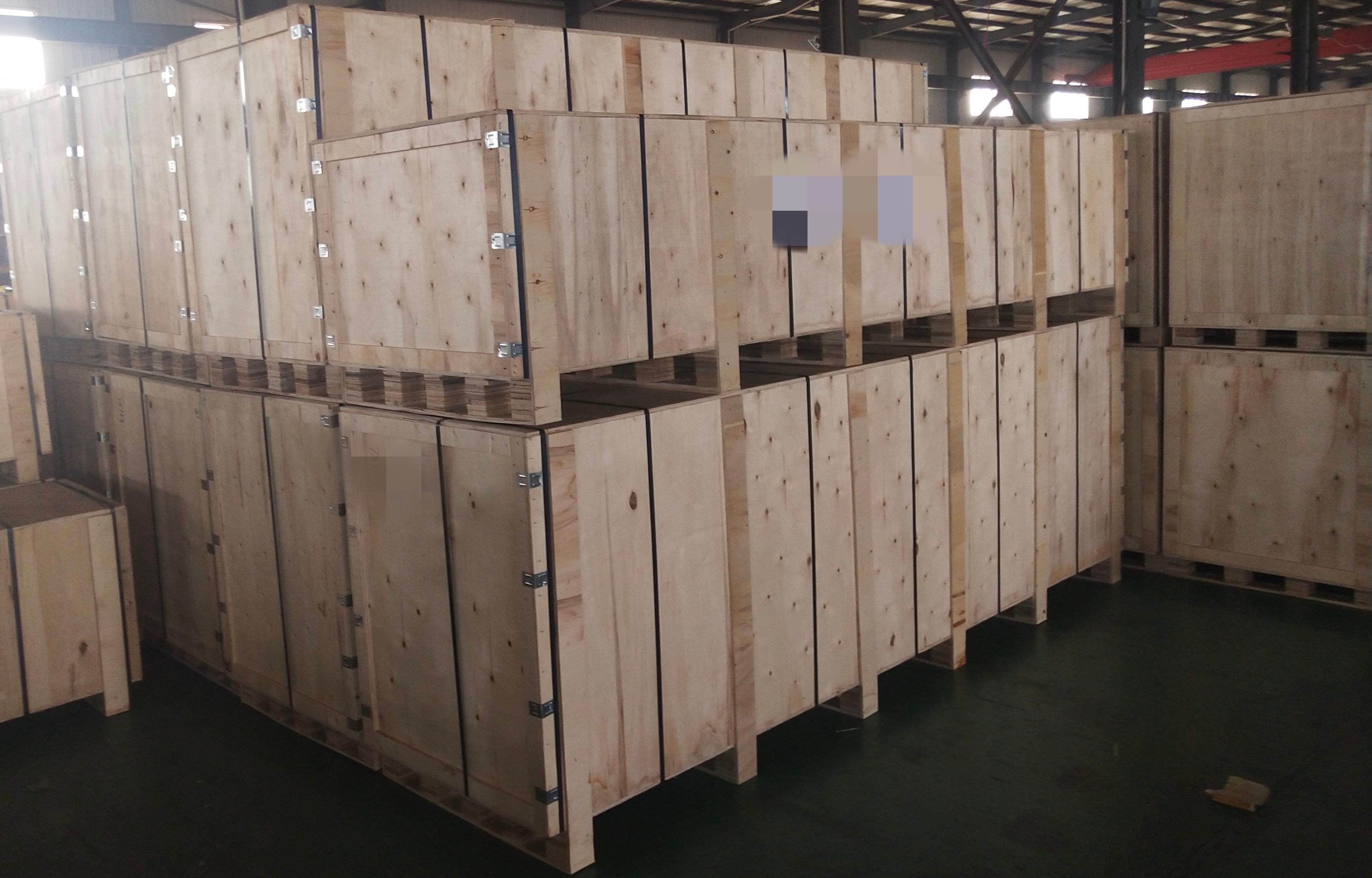
Outer packing can be prepared without Chinese text and protected with stretch film for a cleaner terminal-side handover
Shipment proof is used only after customer marks, order references, and buyer information are removed
Self-stacker belt bright surface finish after treatment
Surface Finish
Clean Belt Surface
Neutral export packing proof for self-stacker belt shipment
Export Packing
Neutral Packing and Clean Crate Protection

TYPICAL APPLICATIONS

Where Self-Stacker Belts Are Used

Spiral Freezer Systems
Self-stacker belts used in IQF and blast freezer spiral conveyors requiring compact stacking in the vertical section
Spiral Cooling Conveyors
Cooling and tempering applications in baking, confectionery, and prepared food where controlled elevation changes are required
Compact Spiral Elevator Systems
Multi-level product handling systems where the self-stacking design enables tight elevation changes in limited floor space
Hygienic Food Processing
Applications requiring electropolished surface finish, cleanable structure, and food-industry hygiene compliance
FAQ

Frequently Asked Questions

Does YIYI Mesh Belt perform stack testing before final release?

Yes. Every YIYI Mesh Belt self-stacker belt project includes stack testing before final release. Stack testing verifies real stacking behavior, upper and lower engagement, and structural readiness before the belt is approved for shipment.

How does YIYI Mesh Belt control welding quality on self-stacker belts?

YIYI Mesh Belt uses custom-designed welding fixtures combined with welders who have 10 or more years of experience on self-stacking belt structures. Fixture-guided welding controls weld position, geometry, and tolerance consistency across every stacking plate and connection point.

Can YIYI Mesh Belt produce self-stacker belts based on drawings?

Yes. YIYI Mesh Belt supports drawing-based production. Technical drawings, dimensional specifications, and application requirements are used as the primary production reference.

Does YIYI Mesh Belt support replacement matching for existing self-stacker systems?

Yes. Replacement projects are supported through sample review, dimensional matching, and engagement compatibility analysis with the existing system before production begins.

What configuration parameters does YIYI Mesh Belt need for a self-stacker belt?

Key parameters include overall width, effective width, wire diameter, spiral pitch, rod diameter, chain pitch, one-side or two-side shrinkable layout, long-slot or short-slot structure, edge geometry, stack engagement requirement, and running direction.

Can YIYI Mesh Belt supply matched spare parts for self-stacker belts?

Yes. YIYI Mesh Belt can supply matched spare components including stacking plates, rods, chain pieces, and connection parts matched to the original belt specification.

Does YIYI Mesh Belt perform 100% final inspection before shipment?

Yes. All self-stacker belts go through 100% final inspection before shipment release, including stack test verification, dimensional check, surface inspection, and packing confirmation.

What surface finish is available for self-stacker belts?

Electropolishing is available for food-related and hygienic applications. Belts are cleaned, fully dried, and inspected for surface condition before export packing.

START YOUR PROJECT

Ready to Review Your
Self-Stacker Belt Project?

Send the drawing if you have it. Send sample measurements if you are matching an existing system. Or send the application details if you are still confirming geometry. We will reply around stacking behavior, matching risk, and supply practicality, not just price.