+86-134 5177 3742 info@yiyimeshbelt.com
ISO 9001 Certified 30 Sets Spiral Form Machines In-House Wire Drawing
COMPOUND WEAVE BELT · HERRINGBONE CONVEYOR BELT · YIYI MESH BELT

Compound
Weave Belt

Double-Spiral Herringbone Structure - Dense Mesh, Stable Load, Continuous Operation

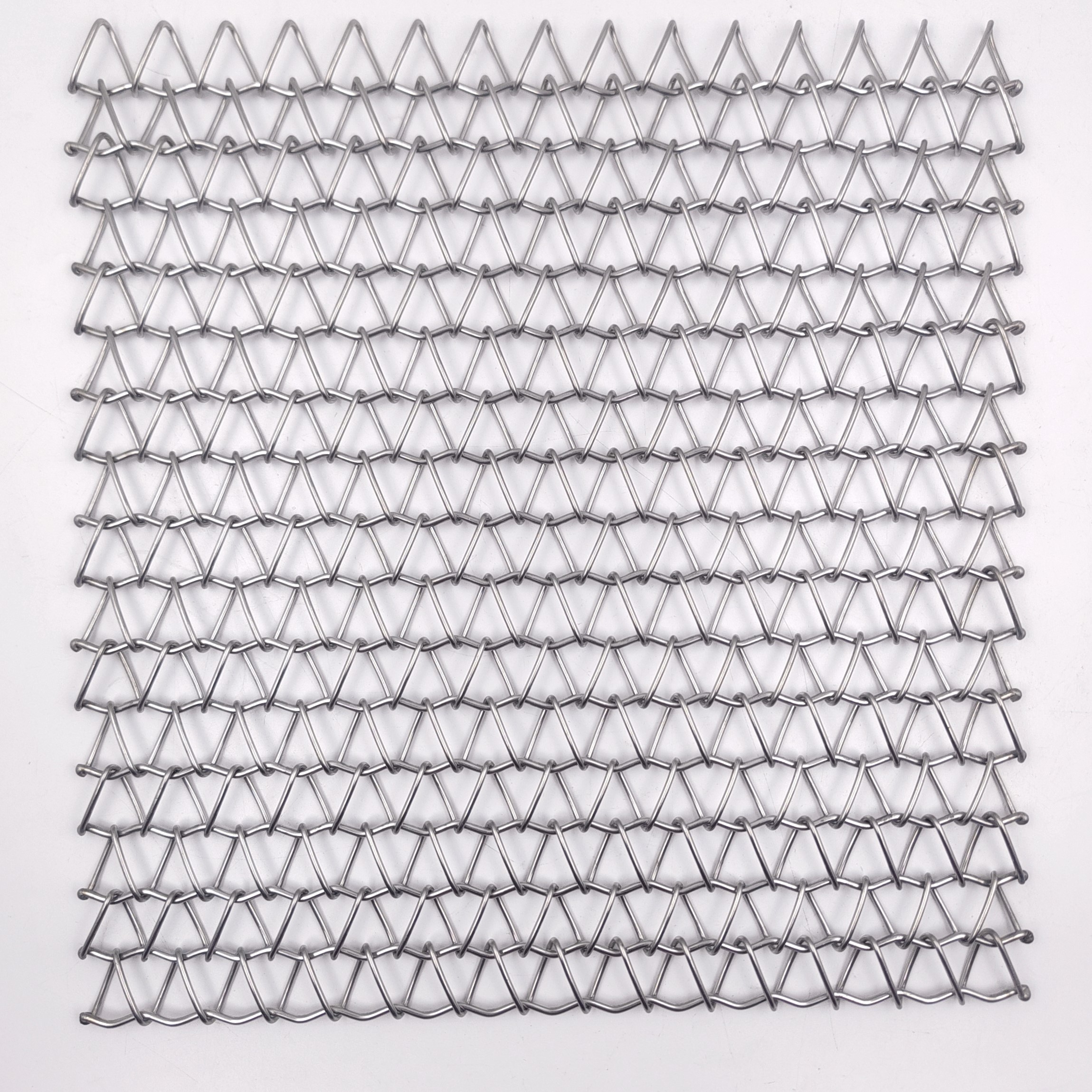
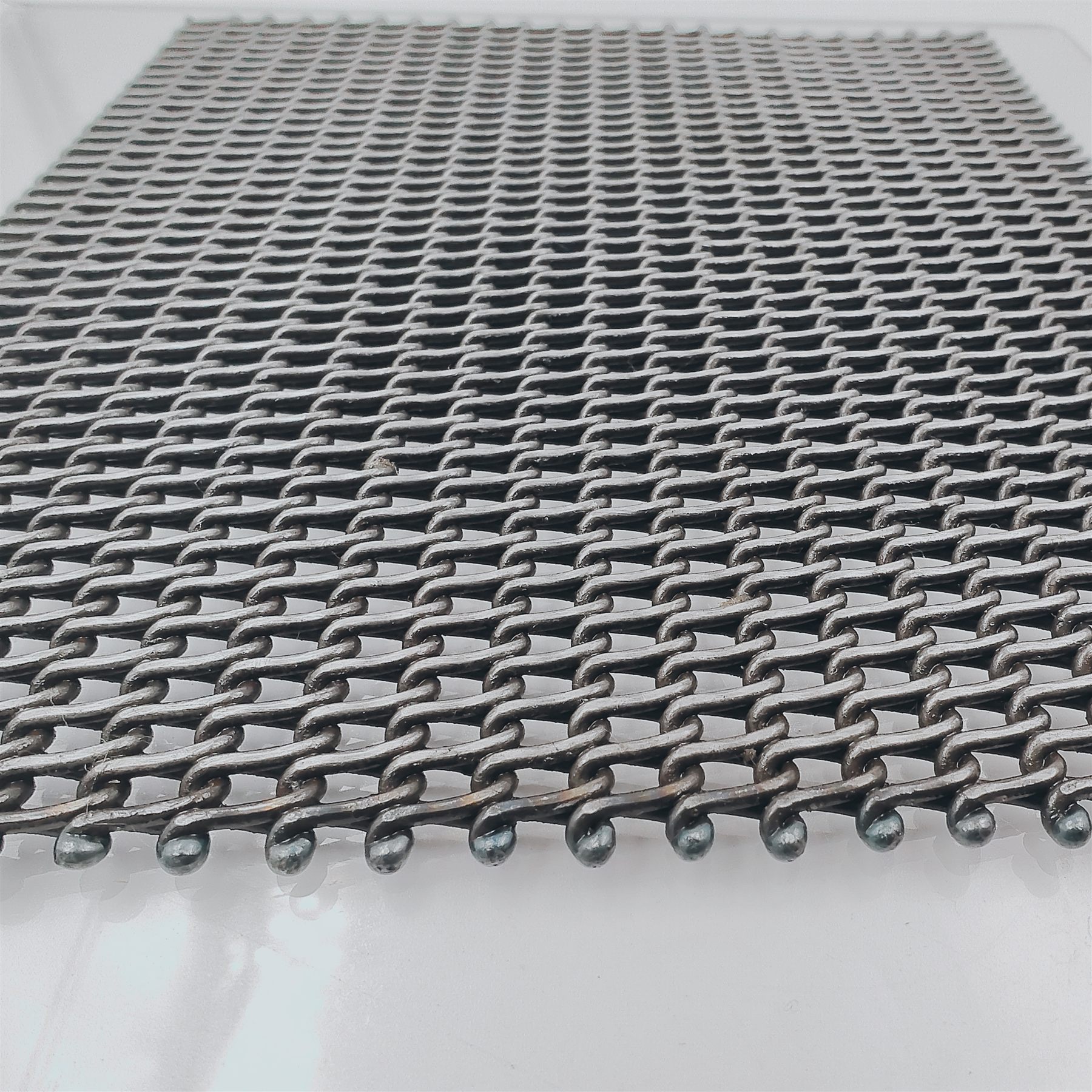
The compound weave belt uses a double-spiral interlocked structure - two spiral coils per pitch unit instead of one. This doubles mesh density compared to standard balanced weave belts, producing a denser, more closed carrying surface with smaller mesh openings. YIYI Mesh Belt manufactures compound weave belts for baking ovens, washing lines, cooling conveyors, oil filtration systems, and heavy-duty industrial conveying - in friction-driven and gear-driven configurations, with soft wire, spring wire, and flat wire options.
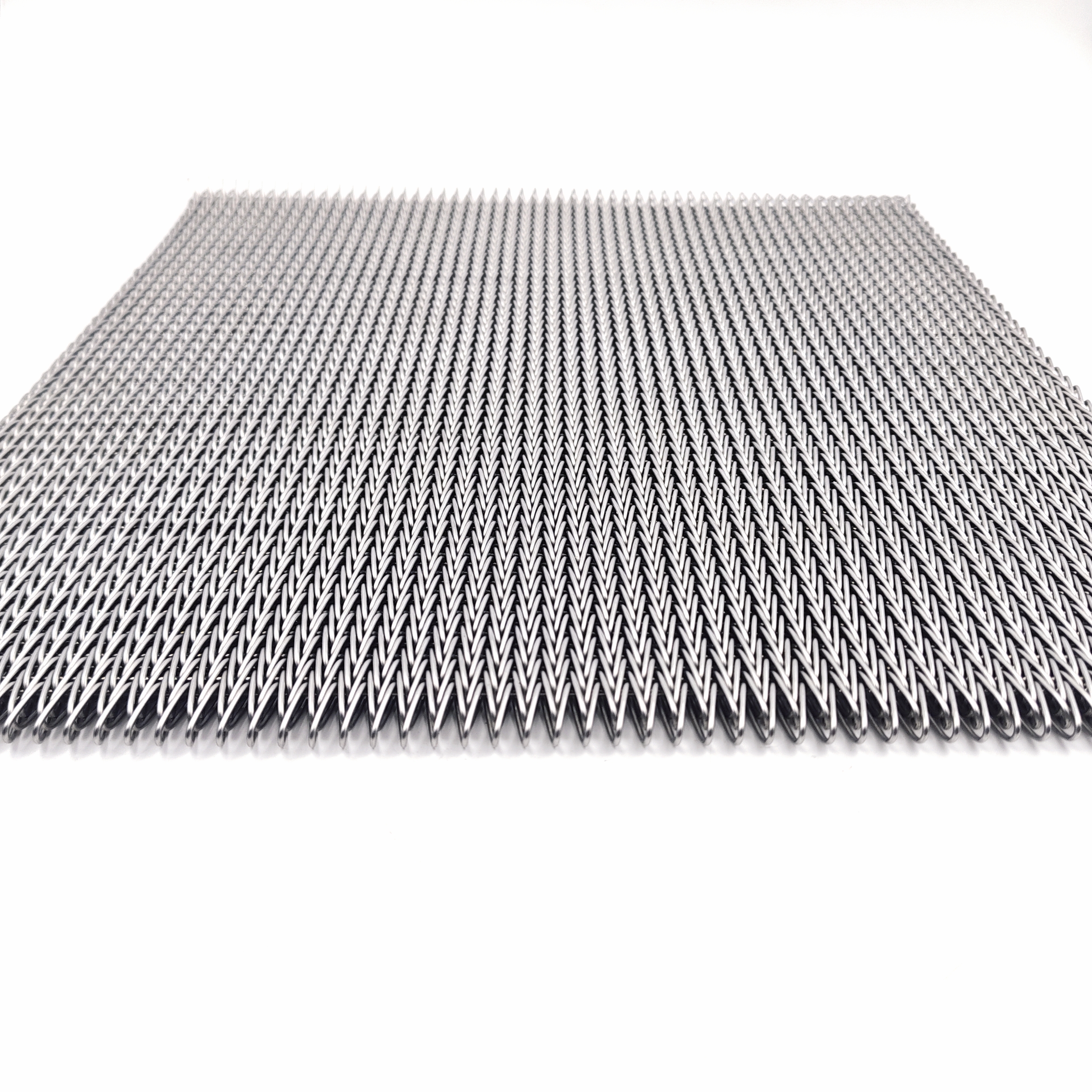
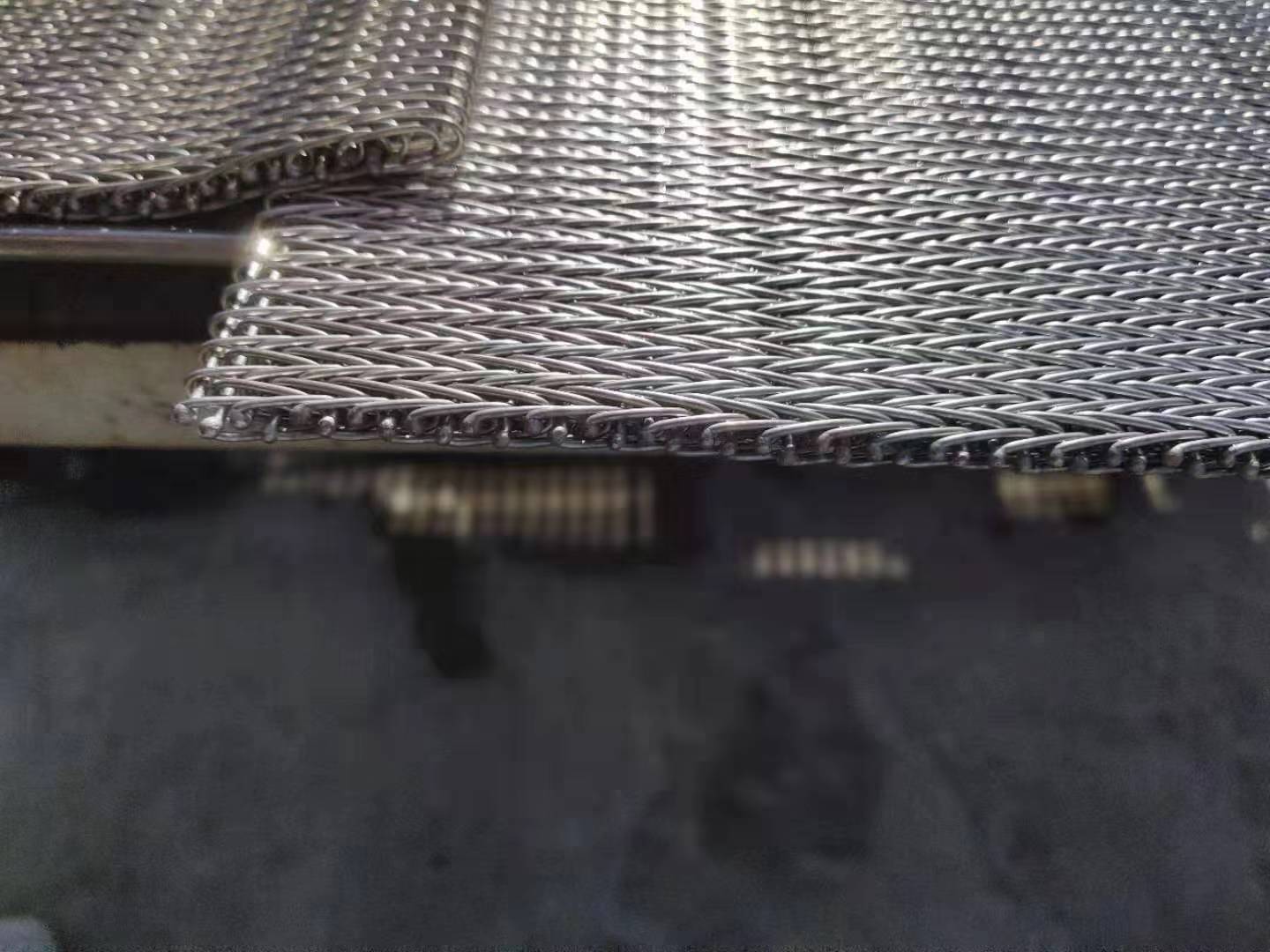
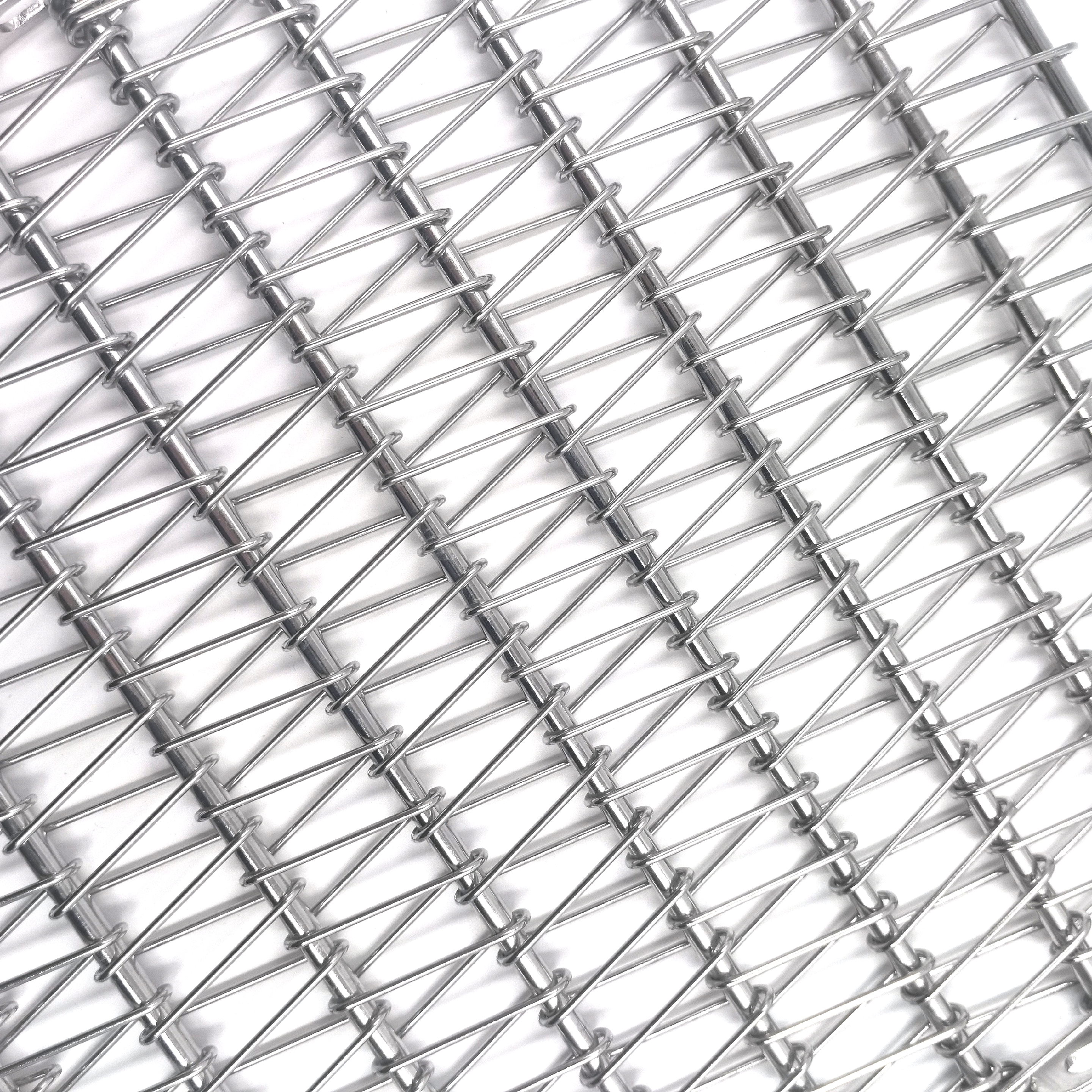
Compound weave belt herringbone surface close-up manufactured by YIYI Mesh Belt
Dense herringbone mesh surface for stable product support
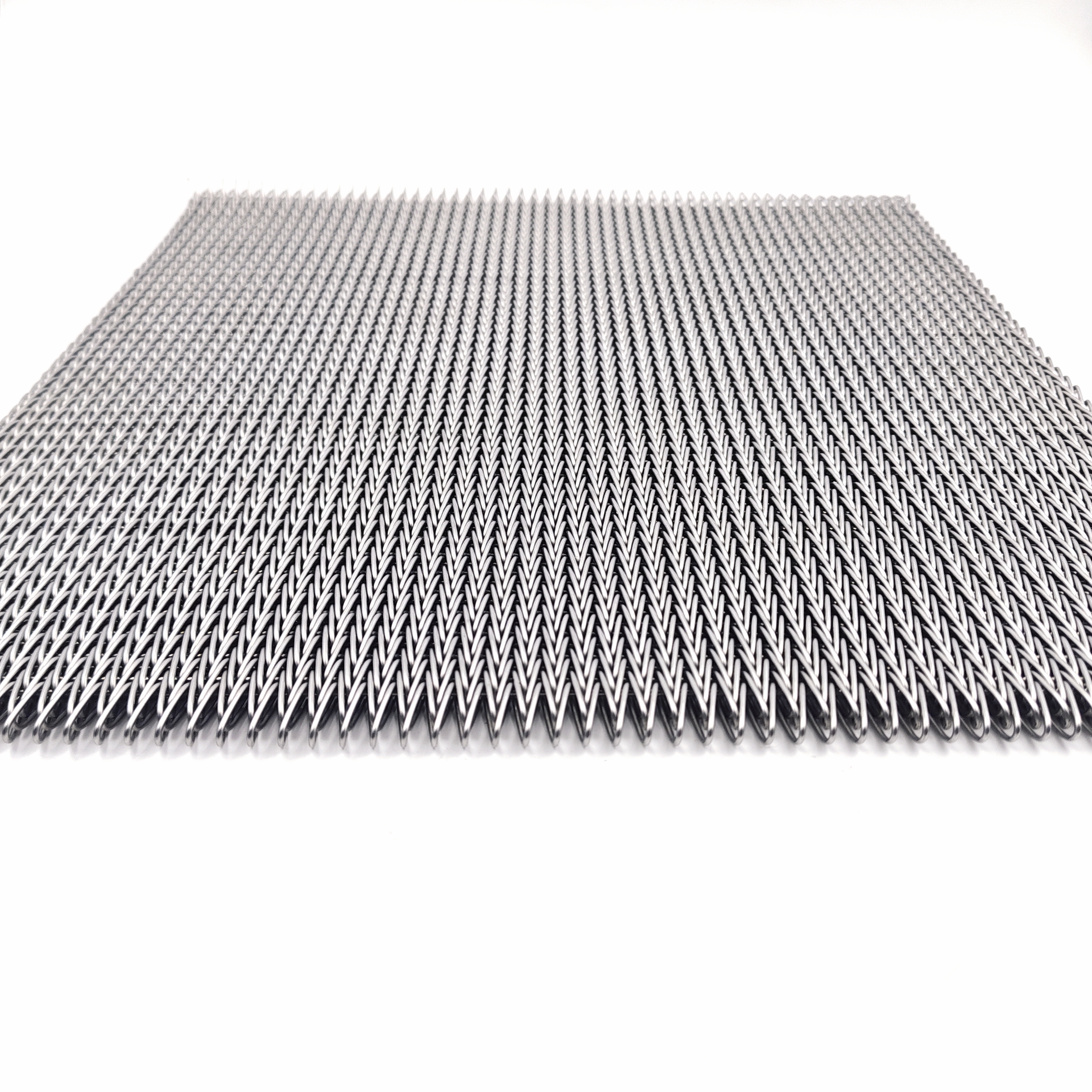
Double-Spiral Herringbone Structure
Width 200mm - 2,320mm (Actual Orders)
Gear-Driven Variant Available
Flat Wire & Curved Shaft Options
PTFE Coating Available
SUS304 / SUS316 / Carbon Steel · ISO 9001
STRUCTURAL PRINCIPLE

How the Double-Spiral Structure Works - and Why Density Matters

A standard balanced weave belt uses one spiral coil per pitch unit - left-hand and right-hand spirals alternating across the belt width, connected by straight cross rods. The compound weave belt uses two interlocked spiral coils per pitch unit. The result is approximately twice the number of wire contact points per unit area, producing a measurably denser mesh surface.

This density difference has practical consequences. The smaller effective mesh opening allows smaller products to be conveyed without falling through, dropping, or deforming under their own weight. The denser surface distributes load more evenly across the product contact area - reducing contact pressure and surface marking on soft products such as dough, pastries, biscuits, and formed food items. It also provides better drainage uniformity in washing and air-cooling applications, where a coarser mesh would allow uneven water or airflow distribution.

~2x mesh density vs standard balanced weaveTwo spiral coils per pitch unit - doubled wire contacts per unit area. Smaller effective opening without increasing cross rod count.
Zero lateral drift - same as balanced weaveLeft-hand and right-hand spiral forces balance each other. The compound weave belt tracks straight under load without the belt drifting to one side - same fundamental geometry as balanced weave, applied at double density.
Diagonal measurement - production quality controlBoth belt edges must be the same length. Diagonal measurement is performed during production to verify geometric consistency. Diagonal deviation causes drift and skip under drive - eliminated at the production stage.
Denser surface - more even load distributionThe higher wire contact density reduces per-contact load - less surface marking, better support for soft or fragile products, more uniform drainage or airflow through the belt surface.
Heavier than standard balanced weave - same widthMore wire per unit area means more weight per metre. Confirmed against drive system load capacity before specification is finalised.
Compound weave belt double spiral interlocking surface detail
Double-spiral interlocking surface detail
Balanced weave belt single spiral reference surface
Balanced weave reference
Compound weave belt denser double spiral surface reference
Compound weave: denser double spiral
COMPOUND WEAVE vs BALANCED WEAVE - KEY DIFFERENCES
Balanced Weave Compound Weave 1 spiral per pitch2 spirals per pitch Standard mesh density~2x mesh density Larger openingSmaller effective opening Lighter per metreHeavier per metre
WIRE TYPE AND CONFIGURATION

Three Wire Types - Four Special Configurations

YIYI Mesh Belt produces compound weave belts in three wire types and four structural configurations - each matching a specific application requirement. Wire type is not a preference; it determines whether the belt will perform correctly under the drive and load conditions of the intended application.

WIRE TYPE 01
Soft Wire (Annealed / WEA)

Standard wire condition for friction-driven compound weave belts. More flexible - easier to form into the tight double-spiral geometry. Used in baking, food processing, and washing line applications where the belt is driven by friction against the carrying surface or edge.

Applications: baking ovens · washing lines · cooling conveyors · oil filtration
WIRE TYPE 02
Spring Wire (High-Tensile)

Required for gear-driven compound weave belts. Higher tensile strength supports the engagement stress of positive sprocket drive without progressive spiral deformation at the gear contact zone. Using soft wire in a gear-driven application causes spiral deformation after sustained operation - eliminated by specifying spring wire as standard for all gear-driven orders.

Required for: positive gear drive · side sprocket drive · heavy continuous duty
WIRE TYPE 03
Flat Wire (Compressed Cross-Section)

Round wire compressed to a flat cross-section (e.g. 1.5mm x 1.25mm from 1.0mm round). The flat face increases the wire-to-product contact area - reducing contact pressure per unit area on soft product surfaces. Used where round wire contact marks are unacceptable. Confirmed from actual YIYI production orders.

Applications: soft food products · delicate surface contact · marking-sensitive applications
@media(max-width:768px){div[style*="grid-template-columns:1fr 1fr 1fr"]{grid-template-columns:1fr!important}}
SPECIAL STRUCTURAL CONFIGURATIONS - FROM ACTUAL YIYI PRODUCTION RECORDS
CONFIGURATION 01
Straight Shaft
Standard cross rod configuration - straight rods pass through the spiral coils at 90 degrees to the belt running direction. Used in most friction-driven compound weave belt applications. Confirmed from production data: 304 stainless steel, widths 250mm - 2,320mm, 3-rod to 6-rod configurations.
CONFIGURATION 02
Curved Shaft / Crank Rod
Cross rods are formed with a curved or cranked profile rather than straight. The curved geometry provides an additional mechanical interlock between rod and spiral - improving rod retention and reducing the risk of rod pull-out under high tension or lateral load. Confirmed from actual YIYI production orders: SUS304 curved shaft compound weave, widths 1,560mm - 2,320mm.
CONFIGURATION 03
Flat Wire Spiral
Spiral coils formed from flat-section wire - round wire compressed to a rectangular cross-section before spiral forming. The flat face of the wire increases the belt surface contact area. Confirmed from YIYI production data: width 1,264.6mm, flat wire 1.5mm x 1.25mm, spiral pitch 11.29mm, 6-rod configuration, carbon steel with 45-steel rods.
CONFIGURATION 04
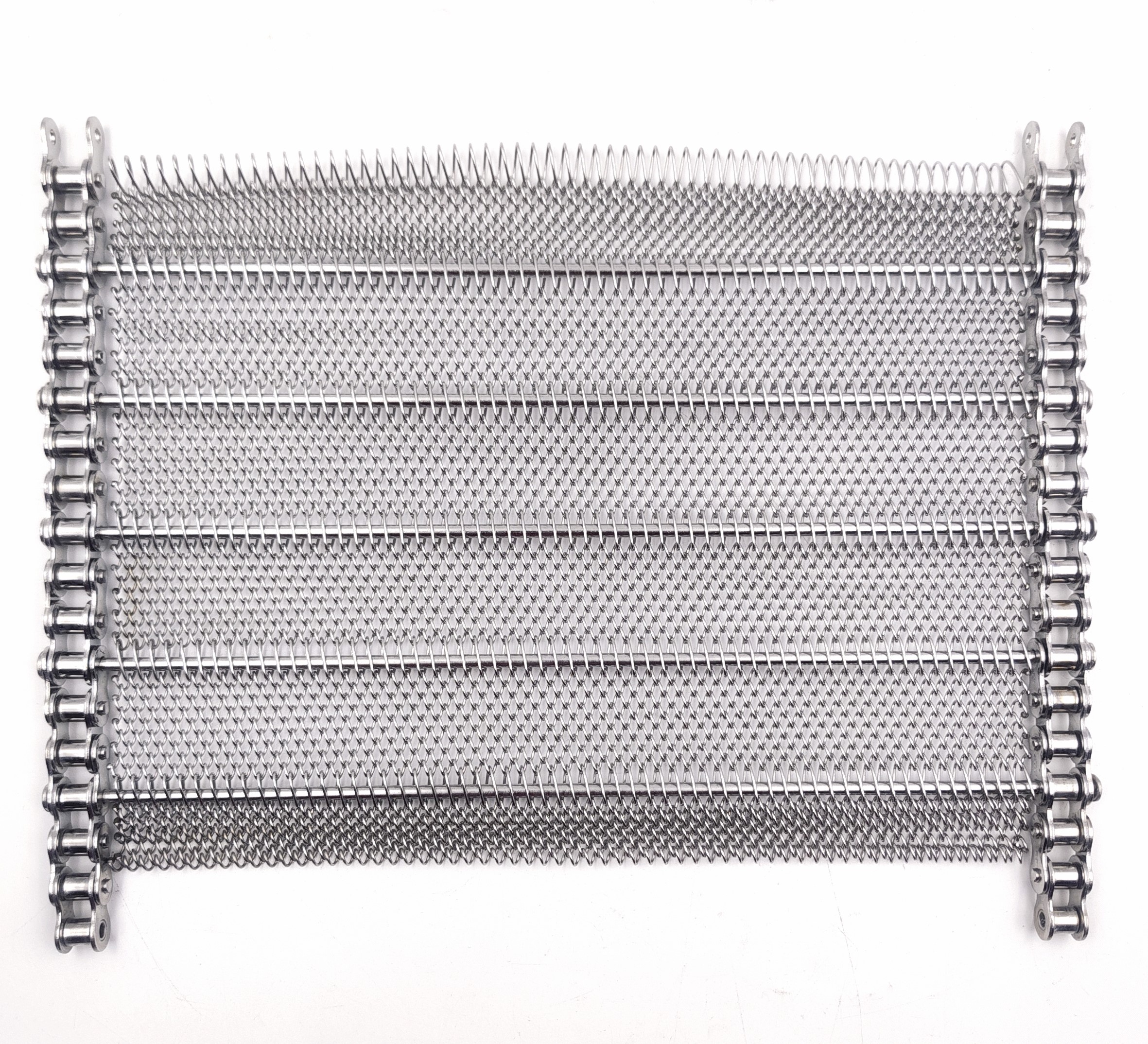
Chain-Net Integrated
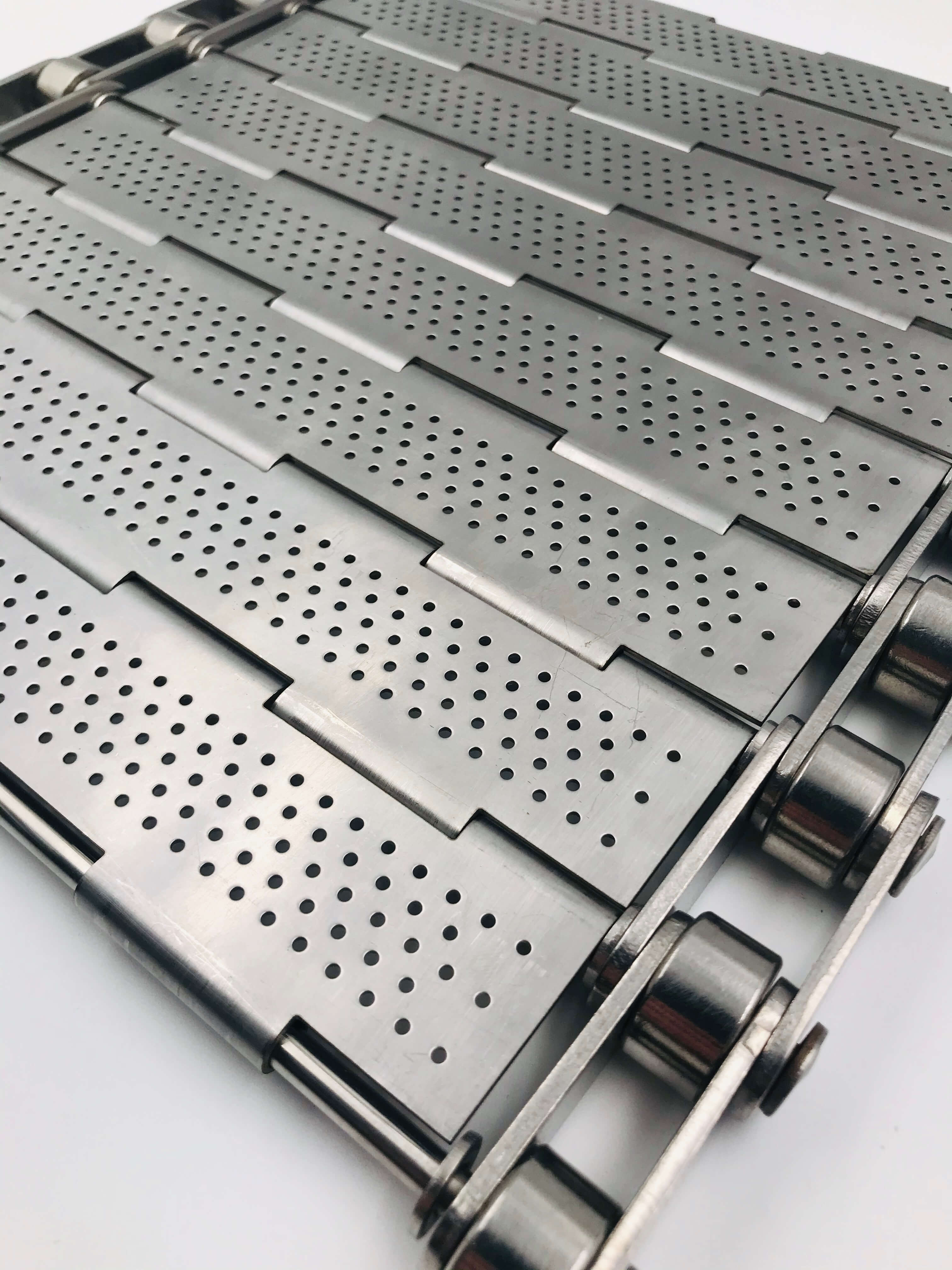
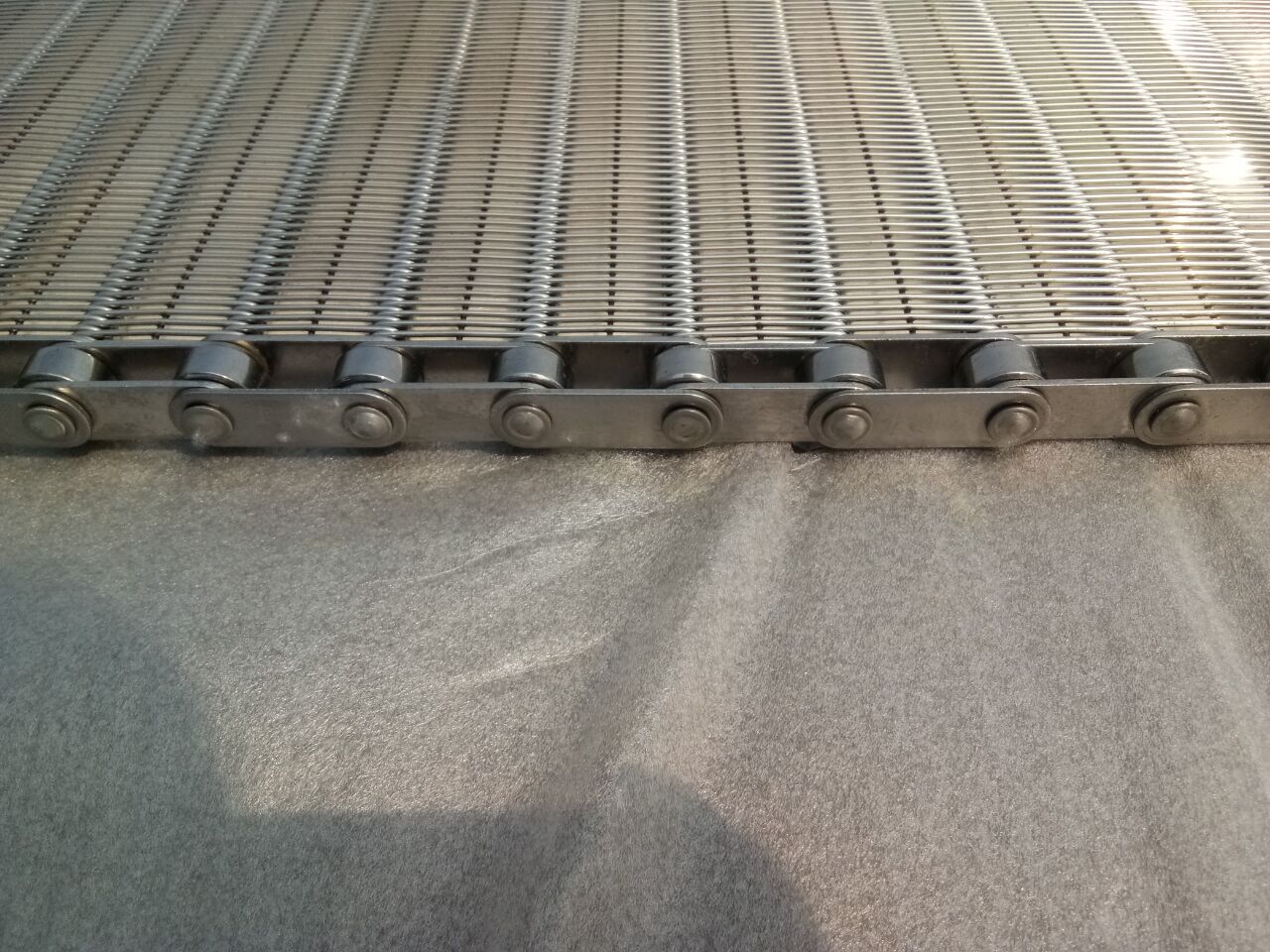
Compound weave mesh surface mounted onto side chains - combining the dense mesh surface of a compound weave belt with the chain-driven positive drive of a chain conveyor. Used where positive drive is required alongside a dense mesh carrying surface. Confirmed from YIYI production: center distance 1,330mm, mesh width 1,200mm, chain pitch 63.5mm, roller diameter 39.68mm, stainless steel grade confirmed before production.
Compound weave belt product video
Chain integrated conveyor belt edge detail reference
Chain-integrated edge reference
YIYI CAPABILITY - GEAR-DRIVEN COMPOUND WEAVE

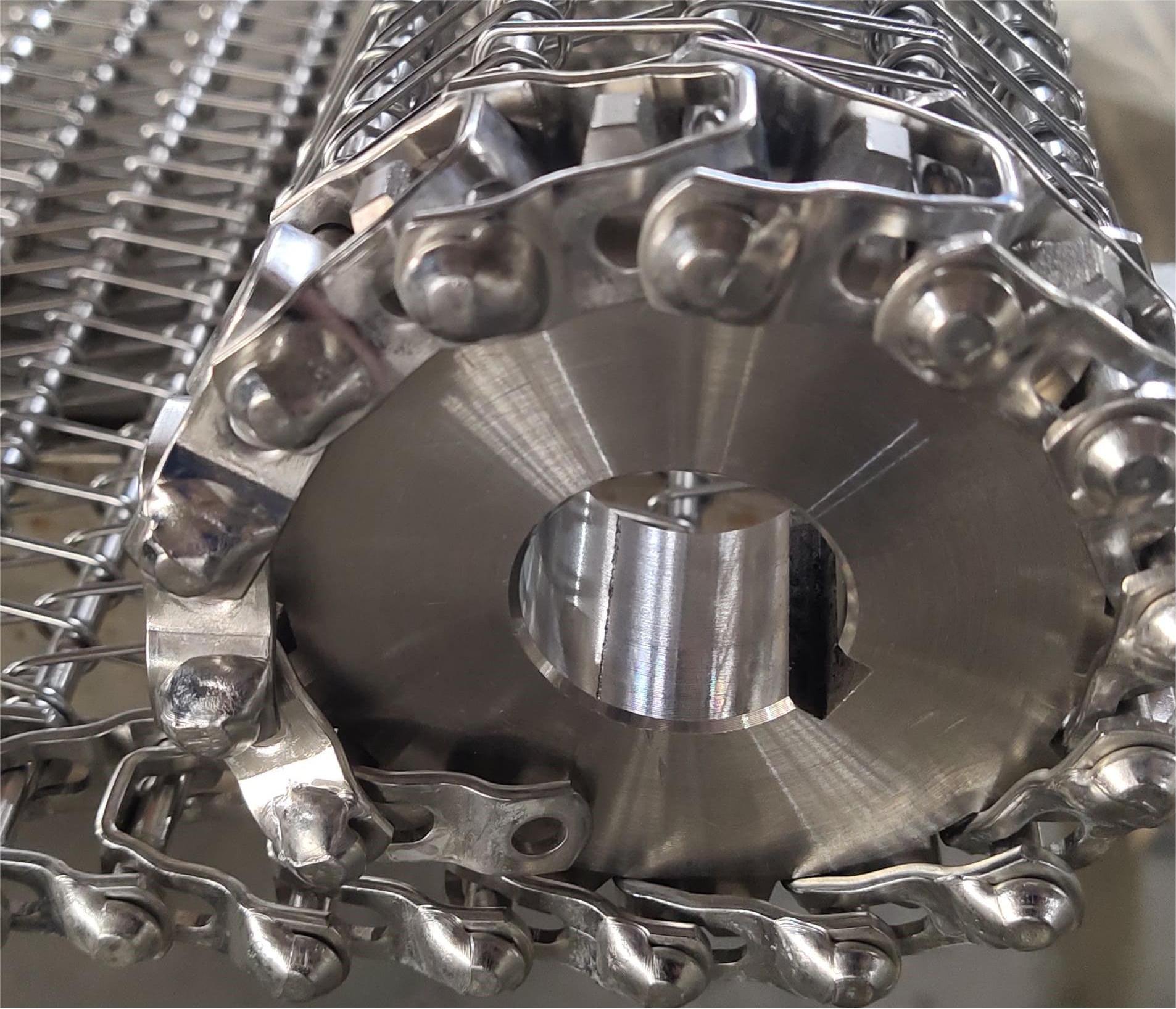
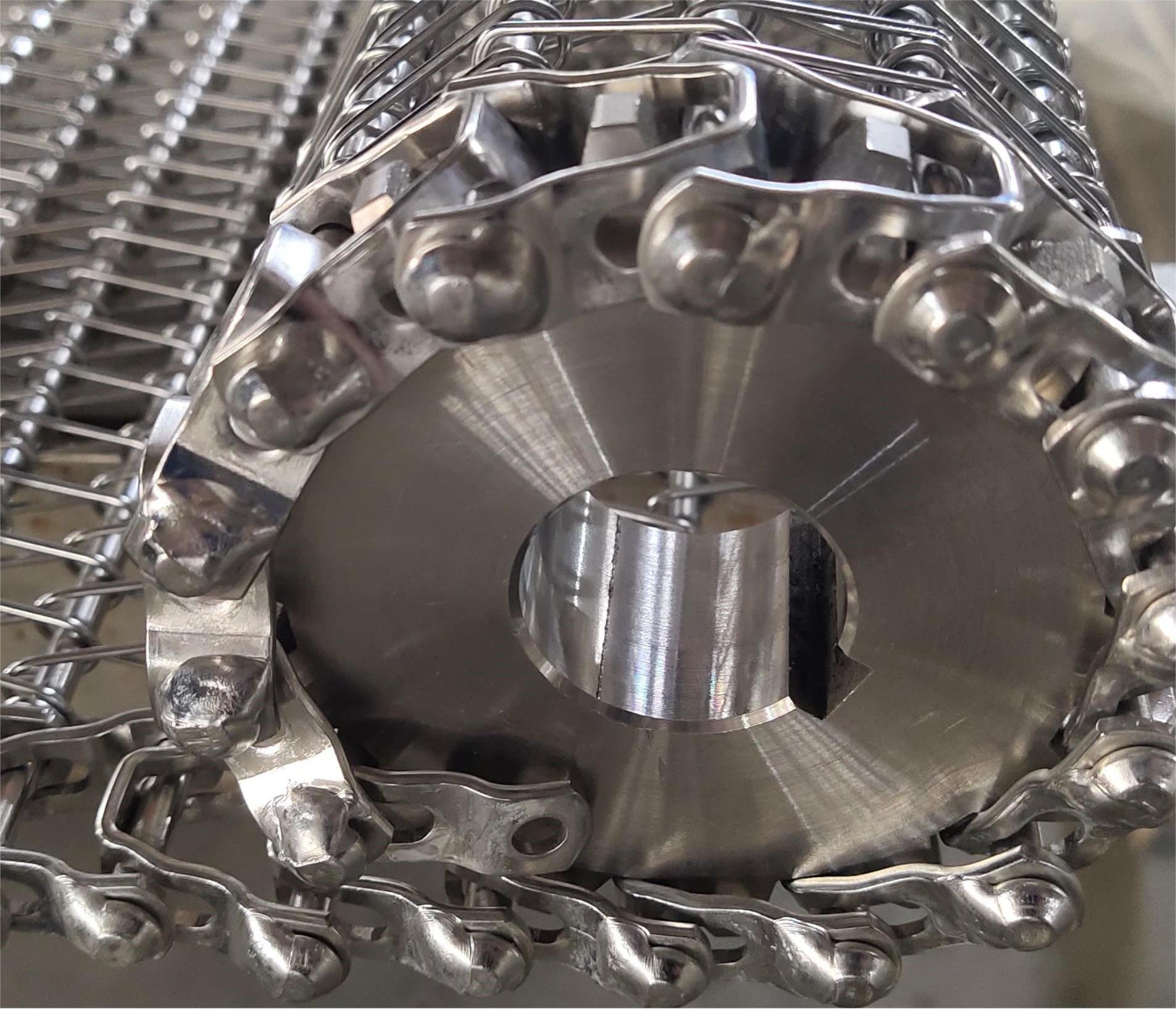
Gear-Driven Compound Weave Belt - Belt and Sprocket Supplied Together

YIYI Mesh Belt manufactures gear-driven compound weave belts and the matched drive sprockets as one integrated supply. Belt and sprocket specifications are confirmed against each other before production begins - eliminating the pitch mismatch risk of sourcing belt and sprockets separately.

A first-piece running test - belt engaging the actual matched sprockets - is performed before mass production is authorised. The running test is video-documented and sent to the customer for confirmation. No batch is released without this confirmation. This applies to all gear-driven compound weave belt orders at YIYI Mesh Belt.

Spring wire - mandatory for gear-driven beltsAll gear-driven compound weave belt orders use high-tensile spring wire as standard. Soft wire cannot withstand the repeated engagement stress of positive sprocket drive - progressive spiral deformation occurs at the engagement zone without spring wire.
Sprocket geometry confirmed to belt specificationNode pitch, tooth profile, shaft bore and keyway confirmed to your equipment drawing or belt specification before sprocket machining begins. YIYI Mesh Belt manufactures the sprocket - not sourced from a third party.
First-piece running test - video confirmationThe first completed belt section runs on the actual matched sprockets before mass production continues. Running test video is sent to customer. Mass production does not continue without customer approval of the test result.
Diagonal measurement during productionBoth edges of the belt must be the same length. Diagonal measurement verified during production - diagonal deviation causes belt skip, jump, or drift under gear drive, discovered on site after installation rather than at the factory stage.
No drift, no jump - delivery standardGear-driven compound weave belts are inspected to the standard: no drift, no jump, both edges level, mesh surface clean and dry. Confirmed before packing and shipment release.
View Drive Sprockets →
Matched sprocket engagement reference
Matched sprocket tooth profile and belt pitch confirmation
Sprocket tooth profile matched to belt pitch
Diagonal and dimensional measurement during conveyor belt production QC
Diagonal measurement during production QC
GEAR-DRIVEN SPECS - FROM ACTUAL PRODUCTION RECORDS
Width: 600mm - 2,014mm Wire: 1.0mm - 2.0mm spring Spiral pitch: 4.3mm - 10.16mm Rod pitch: 5mm - 12.7mm Material: SUS304 / SUS316 Wire type: Spring (mandatory)

Based on YIYI Mesh Belt actual production records

YIYI CAPABILITY - PTFE COATING

PTFE-Coated Compound Weave Belt - Dual-Side Available

YIYI Mesh Belt supplies compound weave belts with PTFE (Teflon) coating - dual-side or single-side. The belt mesh is produced and fully inspected first, then sent for PTFE coating before final packing. This is not a surface treatment applied during production - it is a dedicated coating process applied to the completed belt.

PTFE coating confirmed from actual YIYI production records - including dual-side PTFE for baking and food processing applications, with explicit requirement to leave adequate time for PTFE coating before final delivery date.

Non-stick food releaseReduces product adhesion on baking and food processing lines - particularly for sticky, sugar-based, or fat-containing products that would adhere to bare wire surfaces.
Chemical resistancePTFE coating provides additional resistance to acidic and alkaline cleaning agents - relevant for CIP systems and aggressive wash environments where uncoated wire would be exposed to corrosive cleaning media.
Dual-side or single-sideDual-side PTFE for applications where both belt surfaces require non-stick properties. Single-side for applications where only the product-contact surface needs coating.
Temperature limit - confirm at enquiry stagePTFE coating has a different temperature limit from the base stainless steel mesh. Confirm operating temperature at enquiry stage - the coating specification determines whether PTFE is suitable for the intended oven or process temperature.
Enquire About PTFE Coating →
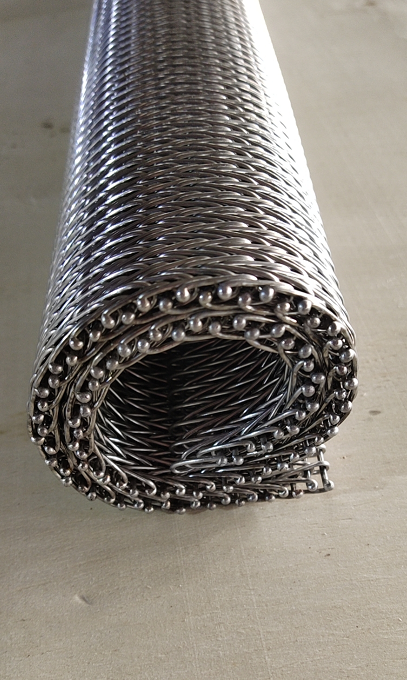
Rolled compound weave belt edge and dense mesh surface
Rolled compound weave belt edge and surface
Compound weave belt dense surface for baking and food processing contact
Dense surface for baking and food processing contact
Compound weave belt close-up showing dense wire mesh surface
Close-up surface check for dense wire mesh
PTFE APPLICATIONS
Baking lines Food processing Oil filtration conveyors Spray coating lines Sticky product handling
CONFIRMED PRODUCTION RANGE

Real Specification Range - From YIYI Production Records

The following ranges are drawn from actual YIYI Mesh Belt production orders - not catalogue claims. All dimensions within these ranges have been produced, tested, and shipped to customers worldwide.

Compound Weave Belt - Confirmed Production Range From Actual Orders
Total Belt Width200mm - 2,320mm  (custom widths confirmed to drawing - weld-to-weld measurement used in production records)
Spiral Wire Diameter0.8mm - 2.5mm  (in-house drawn - all diameters within range)
Cross Rod Diameter1.0mm - 2.5mm  (rod material confirmed separately - 45-steel rod for carbon steel mesh orders)
Spiral Pitch3.7mm - 12mm  (tighter pitches for fine mesh / food applications, wider for heavy-duty)
Rod Pitch (Node Pitch)2.5mm - 20mm  (mesh opening and open area determined by pitch combination)
Cross Rod Count3-rod / 4-rod / 6-rod  (confirmed to application - 6-rod for flat wire and heavy-duty configurations)
Shaft TypeStraight shaft · Curved/crank shaft  (curved shaft for high-tension or lateral-load applications)
Wire TypeSoft wire (WEA/annealed) · Spring wire (high-tensile) · Flat wire (compressed)  (spring wire mandatory for gear-driven belts)
Material GradeSUS304  /  SUS316 / SUS316L  /  430 stainless (magnetic)  /  Carbon steel  /  45-steel rod
Surface TreatmentNatural · Acid-washed welds · Degreased / defatted · PTFE-coated (dual or single side)
Drive TypeFriction (standard) · Gear/sprocket positive drive (spring wire + matched sprocket)
Special ConfigurationsFlat wire spiral · Curved shaft · Chain-net integrated · Welded top pins · No loose ends
Spare Parts IncludedExtra spiral coils (left + right) · Extra cross rods · Connection pins  (standard with every order - quantity to belt size)
All specifications custom. No standard stock. Send your drawing, sample, or dimensions - confirmed before production. Contact →
0.8 - .5mm
Spiral Wire Range
200 - 320mm
Belt Width Range
5 grades
Material Options
PTFE
Coating Available
MANUFACTURING PROCESS

From In-House Wire to Finished Belt - The YIYI Production Chain

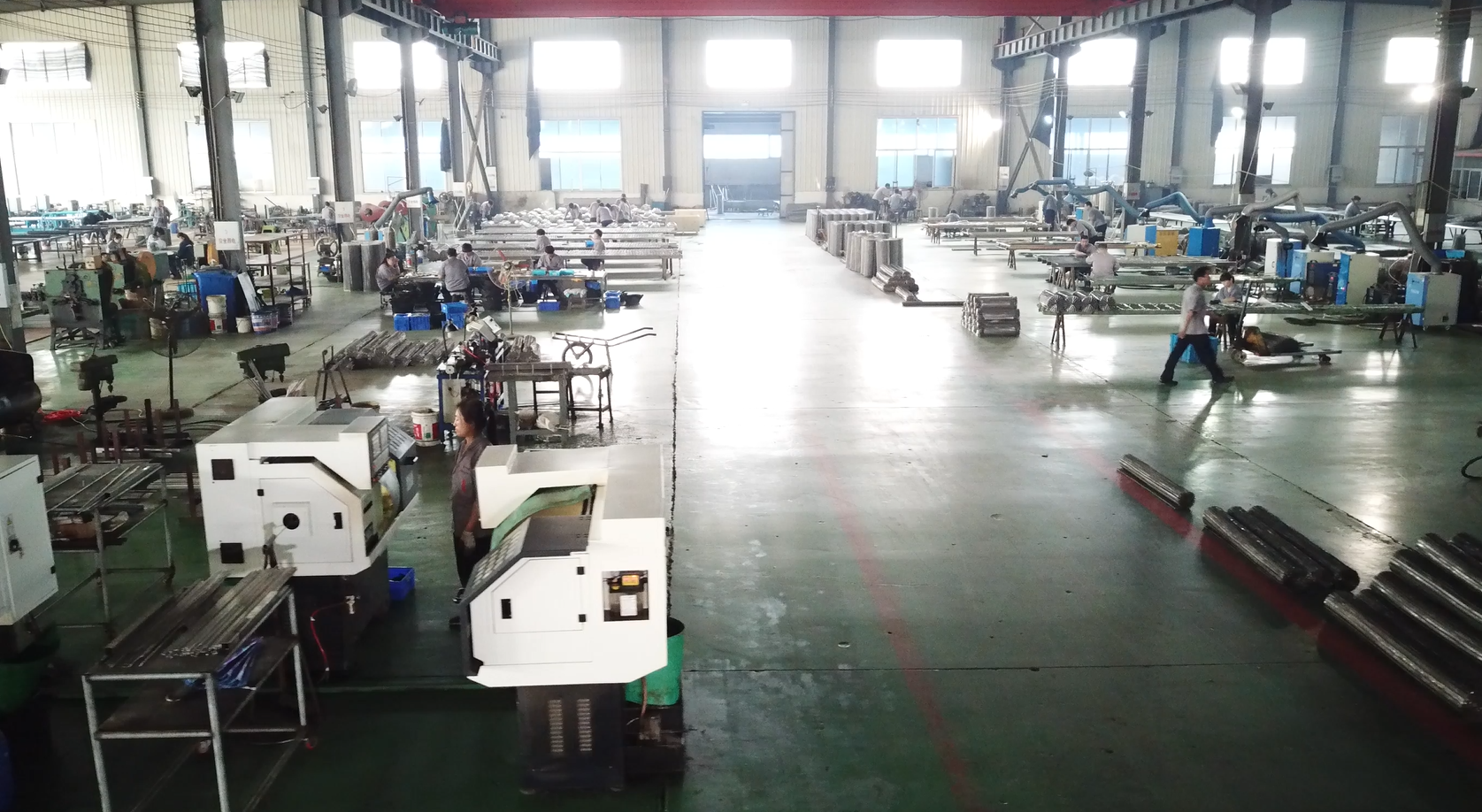
YIYI Mesh Belt is the only manufacturer in China with in-house stainless steel wire drawing capability for conveyor belt production. This means raw material quality, wire diameter precision, and tensile characteristics are controlled from the beginning - not accepted from an external supplier without verification.

01
In-House Wire Drawing
Stainless steel wire drawn in-house from rod stock - USD 400,000 wire drawing machinery, processing range 3.2mm →1.0mm. Rod drawing equipment valued at USD 360,000, processing range 12mm →4mm round bars. Wire diameter and tensile characteristics controlled at source.
USD 400K Wire Drawing Machine3.2mm - .0mm range
02
Raw Material Inspection
Wire diameter and rod diameter tested per ISO 9001 standard before production begins. Both caliper measurement and alloy verification performed. From PDF: photographic evidence of incoming wire and rod inspection with digital caliper - wire 1.82mm, rod 8.02mm documented.
ISO 9001 IQCWire + Rod diameter check
03
Spiral Forming - 30 Sets of Machines
30 sets of spiral wire form machines valued at USD 390,000. The double-spiral compound weave structure is formed on dedicated machines - not hand-assembled. Machine-formed spirals achieve consistent coil diameter, pitch uniformity, and left-right spiral symmetry across the full belt width.
30 Sets Spiral MachinesUSD 390KMachine-formed - not hand-assembled
04
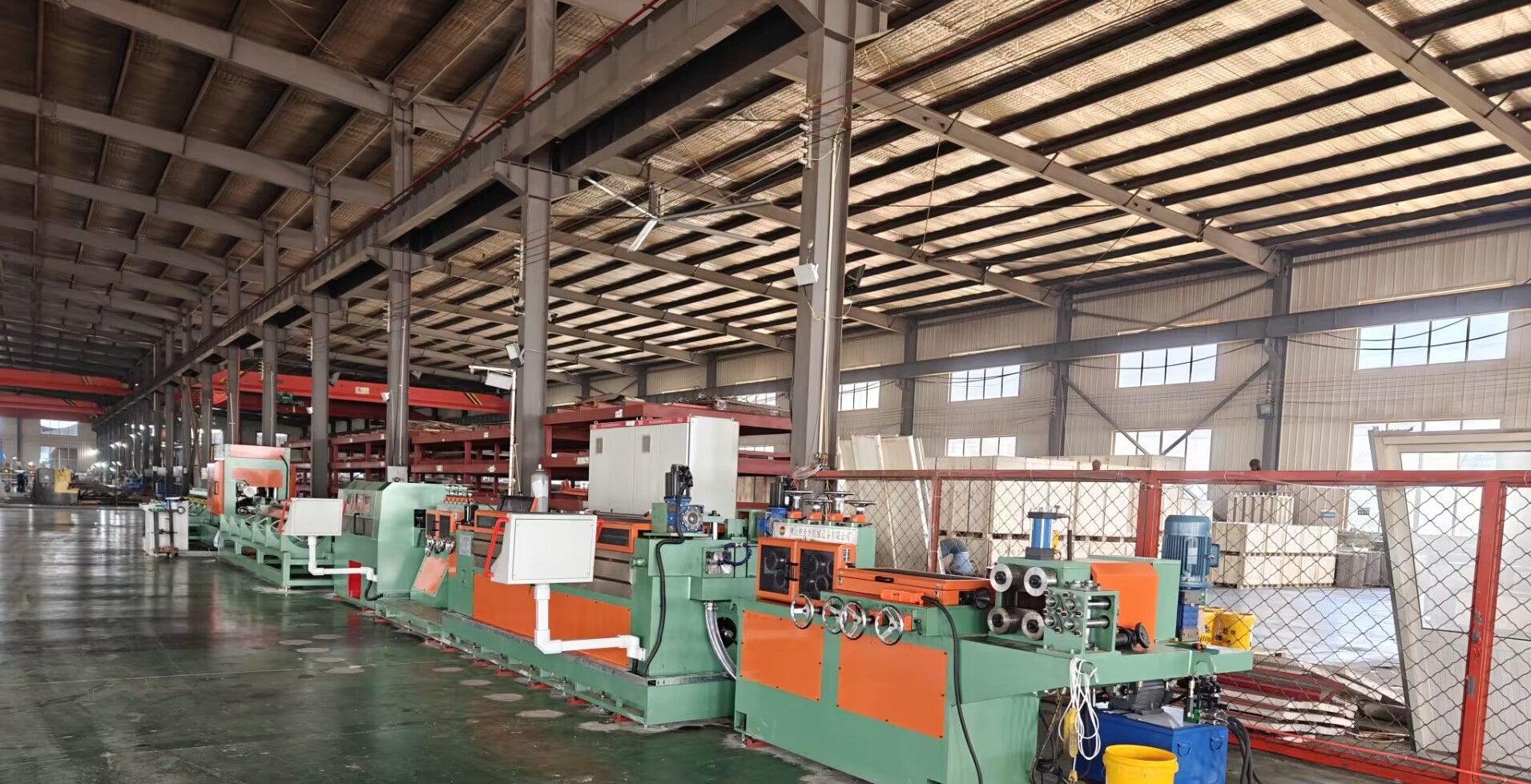
Large Compound Weave Belt Forming Machine
Dedicated large-format compound weave belt forming machine for wide belts - confirmed from PDF P8-9 with production photos. This equipment supports widths up to 2,320mm+ in a single production run - not assembled in sections and joined. The machine controls belt flatness and width consistency across the full forming length.
Dedicated Forming MachineUp to 2,320mm+ width
05
Production Sample QA Inspection
Wire diameter, rod diameter, spiral pitch, and rod pitch verified on production samples per ISO 9001. From PDF P10: 6-point caliper inspection with readings: 1.50mm, 6.00mm, 4.00mm, 1.30mm - documented. Belt flatness and surface condition checked at this stage.
6-point dimensional checkISO 9001 in-process
06
Full Inspection Before Shipment
100% final inspection - wire diameter, rod diameter, pitch, belt width, surface cleanliness, and edge condition. From PDF P11: full belt laid flat, 6-point measurement documented. Surface must be clean and dry - no residual cleaning solution, no water marks. Packing only after confirmation.
100% Final QASurface clean and dry
07
Export Packing to International Standard
Belt coiled around a galvanised steel tube core to prevent permanent deformation during transit. Bubble wrap inner protection + waterproof outer wrap. Wooden crate for sea freight. From packing photos: coiled on tube, wrapped in film, wooden box with steel corner reinforcement. Packing meets international transport standards.
Galvanised tube coreWaterproof wrapWooden crate
Compound weave belt forming and product movement
Production QA inspection and dimensional check for compound weave belt order
Production QA inspection and dimensional check
Export packing and shipment-ready conveyor belt order
Export packing with shipment-ready confirmation
In-house wire drawing equipment for stainless steel conveyor belt production
In-house wire drawing supports raw material control
Final inspection before conveyor belt shipment
Final inspection before shipment release
FAILURE ANALYSIS

Three Common Compound Weave Belt Failures - and How YIYI Prevents Them

Most compound weave belt failures occur at predictable points in the production or installation chain. Understanding the failure mode is the first step to preventing it.

⚠ Failure Mode 01
Belt Drifts or Runs Off Track After Installation
Cause: diagonal asymmetry - the belt was not produced with equal-length edges. The geometric imbalance creates a net lateral force under tension, pulling the belt to one side. Discovered after installation, not visible before.
✓YIYI Production Standard
Diagonal Measurement During Production - Both Edges Confirmed Equal
Diagonal measurement is part of the production inspection for every compound weave belt at YIYI Mesh Belt. Both edges must be the same length and both diagonals must be equal - verified before the belt is assembled. Drift is eliminated at the factory stage, not corrected at the installation site.
⚠ Failure Mode 02
Spiral Deformation at Gear Engagement Zone
Cause: soft wire used for a gear-driven belt. Repeated engagement stress at the sprocket contact point progressively deforms the spiral coils - causing pitch irregularity, engagement noise, and belt jump after sustained operation. Not visible immediately after installation.
✓YIYI Production Standard
Spring Wire Mandatory for All Gear-Driven Compound Weave Belt Orders
YIYI Mesh Belt specifies spring wire (high-tensile) as standard for all gear-driven compound weave belt orders. The belt specification is confirmed before production - wire type is not left to default. A first-piece running test with the matched sprocket is also performed before batch production is released.
⚠ Failure Mode 03
Belt Surface Contaminated - Cleaning Agent or Water Residue
Cause: insufficient cleaning after weld-area acid pickling - residual acid or cleaning solution left on the mesh surface, or surface not fully dried before packing. Causes discolouration, corrosion, or contamination of handled product at the installation site.
✓YIYI Production Standard
Surface Must Be Fully Cleaned and Sun-Dried Before Packing - No Exceptions
YIYI Mesh Belt production records explicitly require: cleaning after acid pickling, no residual cleaning solution on mesh surface, no water marks, and fully dried before boxing. Surface condition inspection is part of the pre-shipment QA - not checked only on request.
Diagonal measurement and production-stage verification for metal conveyor belt
Diagonal measurement and production-stage verification
Spring wire engagement and sprocket contact zone inspection
Sprocket engagement and contact-zone review
Clean and dry surface inspection before conveyor belt packing
Clean, dry surface inspection before packing
TYPICAL APPLICATIONS

Where Compound Weave Belts Are Used

The compound weave belt's double-spiral density and available configurations make it suitable across food processing, industrial manufacturing, and specialised conveying applications where a standard balanced weave belt would be too coarse.

🍪
Baking Ovens - Biscuit and Bakery Lines
Dense mesh surface supports small biscuits, crackers, and formed dough pieces without product falling through or deforming on the belt surface. The denser wire contact pattern distributes baking heat more evenly across the product contact area. PTFE coating available for sticky or glazed products.
🛠️
Washing Lines - Cans, Bottles, Parts
Compound weave structure provides uniform drainage through the mesh surface while maintaining secure product support. Smaller mesh openings prevent small parts or containers from falling or tipping - important in bottle cap washing, parts cleaning, and can conveying applications.
🔌
Cooling Conveyors - Air Cooling and Blast Freezing
Air passes through the compound weave mesh surface during cooling - the denser mesh controls airflow distribution more uniformly than a coarser belt. Used in cooling tunnels after baking, pasteurising, or forming where controlled temperature reduction is required.
Oil Filtration Conveyors
Confirmed from actual YIYI production records - compound weave belts are used on oil filtration and spray-oil filtration conveyors. The dense mesh supports filtration while allowing oil to pass through. Soft wire, cleanable surface, and SUS304 stainless steel can be confirmed from project requirements.
🍗
Meat and Seafood Processing
The smaller mesh opening of the compound weave belt prevents small product pieces - fish sections, shellfish, formed meat portions - from falling through the belt surface during conveying, washing, or freezing. SUS316L available for enhanced corrosion resistance in high-salt or acidic environments.
🔧
Drying and Heat Treatment
Balanced weave compound belts for heat treatment furnaces where the denser mesh structure provides better product support at elevated temperatures. 310SS and 314 grades available for high-temperature furnace applications. Confirmed temperature resistance up to 1,000°C+ depending on alloy grade.
Positive Gear Drive Systems
Gear-driven compound weave belts with matched sprockets - suitable for industrial applications requiring positive drive control, high tension, or precise speed synchronisation. Spring wire standard. First-piece running test with matched sprockets before batch release.
🏭
Heavy-Duty Industrial Conveying
Heavier gauge compound weave belts - spiral wire up to 2.5mm, rod wire up to 2.5mm - for industrial applications carrying heavy, abrasive, or mechanically demanding loads. Carbon steel option for non-food heavy-duty applications. Anti-rust treatment applied before export packing.
Biscuit and bakery belt application with dense metal conveyor surface
Baking and biscuit application reference
Washing line conveyor belt surface with drainage through metal belt
Washing and drainage application reference
OEM AND REPLACEMENT SUPPORT

Drawing-Based OEM Production and Replacement Matching

YIYI Mesh Belt supports compound weave belt projects as OEM manufacturer and as replacement supplier. For OEM projects, drawing-based production with sample confirmation before batch release. For replacement projects, existing belt sample and conveyor system review to confirm the replacement matches the actual installation.

Drawing-based productionDrawings reviewed before production - all parameters confirmed in writing. Spiral pitch, rod pitch, wire diameter, width, rod count, shaft type, wire type, material, drive method all confirmed before production begins.
Sample / trial piece before batch releaseFor new specifications - a trial piece is produced and sent to customer for confirmation before mass production is released. Confirmed from actual YIYI production order process.
Retained specification for repeat ordersProduction parameters retained after first order. Repeat orders reference the retained specification - no full re-specification needed. Sample sections also retained as production reference.
Replacement matching - old belt reviewFor replacement orders, YIYI Mesh Belt reviews the existing belt sample - confirming spiral pitch, rod pitch, wire diameter, belt width, shaft type, and material before production. Replacement trial piece produced and confirmed with customer before bulk order is released.
Spare parts included with every orderExtra spiral coils (left-hand + right-hand), extra cross rods, connecting pins - supplied with every order for on-site repair and maintenance. Quantity matched to belt size.
Engineering & OEM Process →
Trial piece and drawing confirmation before conveyor belt mass production
Trial piece and drawing confirmation before mass production
Old belt edge detail used for replacement matching review
Old belt reference for replacement matching
Matched spare parts and stainless steel drive components for conveyor belt projects
Matched spare parts and drive components
RELATED PAGES
COMPETITIVE COMPARISON

YIYI Compound Weave Belt vs Standard Supply

Verifiable manufacturing process differences - not marketing claims. Based on documented production capabilities and customer delivery records.

CapabilityYIYI Mesh BeltTypical SupplierTrading Company
In-house wire drawingYes - USD 400K machine, all diametersPurchases wire from marketNo manufacturing
Dedicated forming machineYes - large compound weave forming machineSpiral machines onlyNo manufacturing
Gear-driven variantYes - spring wire + matched sprocket + running testMay offer - not always with matched sprocketSourced, not engineered
PTFE coatingYes - dual-side or single-side, confirmed processSome offerUnknown quality
Flat wire / curved shaft variantYes - confirmed from production recordsRareNot available
Diagonal measurement QCStandard - every gear-driven and friction beltNot always documentedNot performed
Trial piece before mass productionStandard for new specificationsOn request onlyNot applicable
ISO 9001 certificationYes - full process coverageVariesNot manufacturing
FAQ

Compound Weave Belt - Technical Questions Answered

A compound weave conveyor belt uses a double-spiral (herringbone) structure - two interlocked spiral coils per pitch unit instead of one. The result is approximately twice the mesh density of a standard balanced weave belt, producing a denser, more closed carrying surface with smaller mesh openings. This makes it suitable for applications requiring better product support, finer drainage, or controlled airflow that a standard single-spiral belt cannot provide. The same left/right spiral balance principle ensures zero lateral drift during operation.
Both use alternating left-hand and right-hand spirals - the key difference is mesh density. A balanced weave belt has one spiral per pitch unit; a compound weave belt has two spirals per pitch unit - roughly doubling the wire contacts per unit area. This gives the compound weave belt a denser surface, smaller effective mesh opening, and improved support for small or soft products. The tradeoff is greater weight per metre and slightly less flexibility - relevant when specifying drive system load capacity. Both run straight without lateral drift under the same balanced geometry principle.
Yes. YIYI Mesh Belt manufactures gear-driven compound weave belts using high-tensile spring wire as standard. Belt and drive sprockets are confirmed against each other before production - a first-piece running test with the matched sprockets is performed and video-documented before batch production is released. Diagonal measurement is performed during production to verify geometric consistency required for stable gear engagement. Soft wire must not be used for gear-driven compound weave belts - progressive spiral deformation occurs at the sprocket contact zone under sustained engagement load.
Three wire types are available: soft wire (WEA/annealed) for standard friction-driven belts in baking, food processing, and washing; spring wire (high-tensile) required for gear-driven belts - the higher tensile strength withstands repeated sprocket engagement stress without spiral deformation; flat wire (compressed cross-section) for applications where the contact surface area should be maximised to reduce per-contact pressure on soft products such as delicate food items. Wire type is confirmed at the specification stage and cannot be changed after production begins.
Based on actual production records: belt widths from 200mm to 2,320mm; spiral wire diameters from 0.8mm to 2.5mm; cross rod diameters from 1.0mm to 2.5mm; spiral pitch from 3.7mm to 12mm; rod pitch from 2.5mm to 20mm; 3-rod, 4-rod, or 6-rod cross configurations; straight shaft or curved shaft (crank rod); soft wire, spring wire, or flat wire; PTFE coating dual-side or single-side; materials SUS304, SUS316, 430 stainless steel (magnetic), and carbon steel. All specifications are custom - no standard stock.
Yes. For gear-driven compound weave belt projects, YIYI Mesh Belt manufactures matched drive sprockets - node pitch, tooth profile, shaft bore, and keyway confirmed to the belt specification. Ordering belt and sprockets from the same production review eliminates the pitch mismatch risk of sourcing separately. A first-piece running test is conducted before mass production is released, and the test video is sent to the customer for confirmation before batch production continues.
Yes. YIYI Mesh Belt supplies compound weave belts with PTFE coating - dual-side or single-side. The belt mesh is produced and inspected first, then sent for PTFE coating before final packing. Applications include baking lines where product sticking is an issue, food processing lines requiring non-stick contact surfaces, and spray coating systems. Confirm operating temperature at enquiry stage - PTFE coating has a different temperature ceiling from the base stainless steel mesh.
Useful information includes: overall belt width, spiral wire diameter, cross rod diameter, spiral pitch, rod pitch, number of cross rods (3/4/6), shaft type (straight or curved), wire type (soft/spring/flat), material grade (SUS304/316/carbon steel), drive type (friction or gear-driven), belt length, and application description. A drawing or worn belt sample plus measurements is the most complete input. A partial specification is fine - YIYI Mesh Belt will identify what needs to be confirmed and respond within 24 hours.
START YOUR PROJECT

Send Your Drawing or Specification.
Engineering Response Within 24 Hours.

Send your drawing, sample, specifications, or project requirement to YIYI Mesh Belt. Our team can review spiral pitch, rod configuration, drive method, wire type, material grade, matched sprocket requirement, and PTFE coating suitability for your compound weave belt project - before production begins.

Width 200mm - ,320mm · All Custom Gear-Driven · Spring Wire · Running Test PTFE Coating Dual-Side Available In-House Wire Drawing 30 Sets Spiral Forming Machines ISO 9001 · Sample Review
Manufacturing Since 1998
In-House Wire Drawing - USD 400K Machine
30 Sets Spiral Forming Machines - USD 390K
ISO 9001 Certified · Third-Party Factory Audit Welcome
30+ Countries Delivered