What Happens Before Bulk Production of a Metal Conveyor Belt?
Bulk production on an unproven setup multiplies one mistake by hundreds of metres. A trial section and a first article check stop that.

Short answer
Before bulk production, we build a trial section to the approved drawing, measure it, compare it with your sample if you sent one, and send measured photos for your approval. Bulk production starts after you approve. If it fails, we reject it and build it again.
I am Sunny Ye, Global Sales Director at YIYI MESH BELT in Ningjin, Shandong. We have made metal conveyor belts since 1998 and run 280 units of production equipment, including 9 automatic welding robots. Customer drawing sign-off, trial production, first article check and customer confirmation come before every bulk order we make.
At a glance
| Product | Any custom metal conveyor belt |
|---|---|
| Application | New belts, OEM supply, replacement from a sample |
| Key parameters to confirm | Pitch over ten pitches, wire and rod, width, edge, flatness |
| Buyer type | OEM engineers, distributors, replacement buyers |
| What to send for a quote | Your sample or drawing; you receive the trial measurements and photos for approval |
What is a trial section and why build one?
A trial section is a short piece of your belt, built on the real production setup.
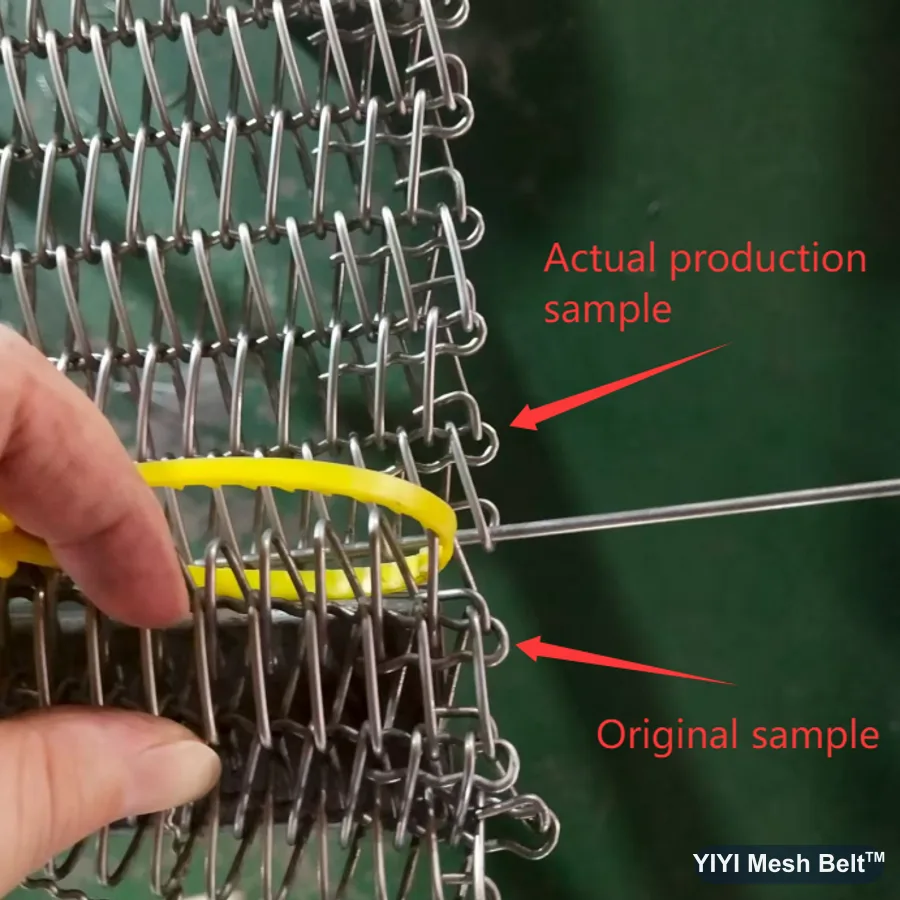
A trial section is a short length of your belt built to the approved drawing on the same machines and settings as bulk production. It proves the setup before hundreds of metres are made. When you sent a sample, the trial is photographed next to it for comparison.
A drawing can be perfect and the setup still slightly off. The trial is where we find that out, on a metre of belt instead of the whole order.
For replacement belts the trial matters even more, because the original design came from someone else. Seeing the trial next to the original is the clearest proof of a match.
What is checked on the first article?
The first article check is a measured record, not a glance.
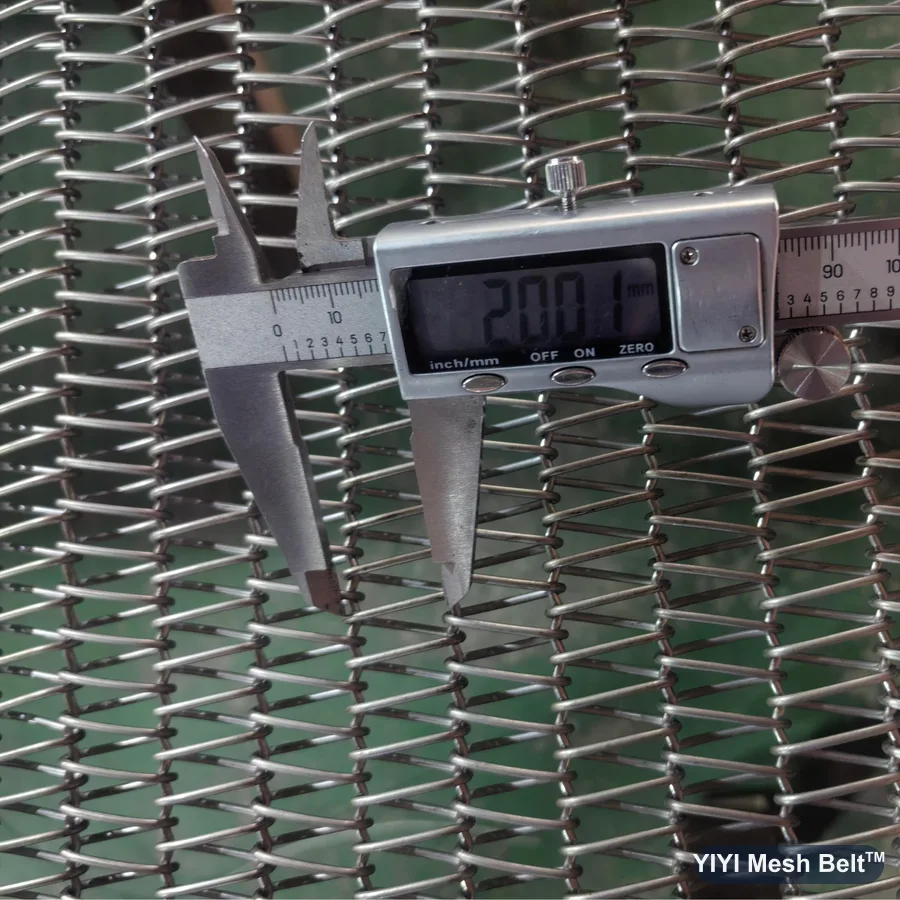
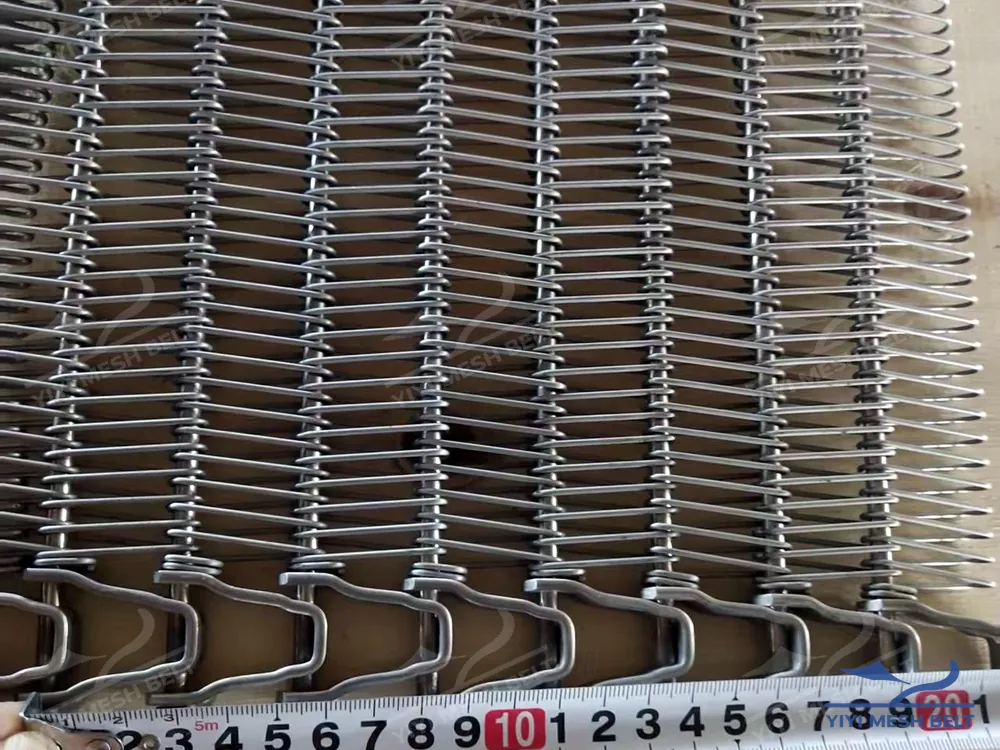
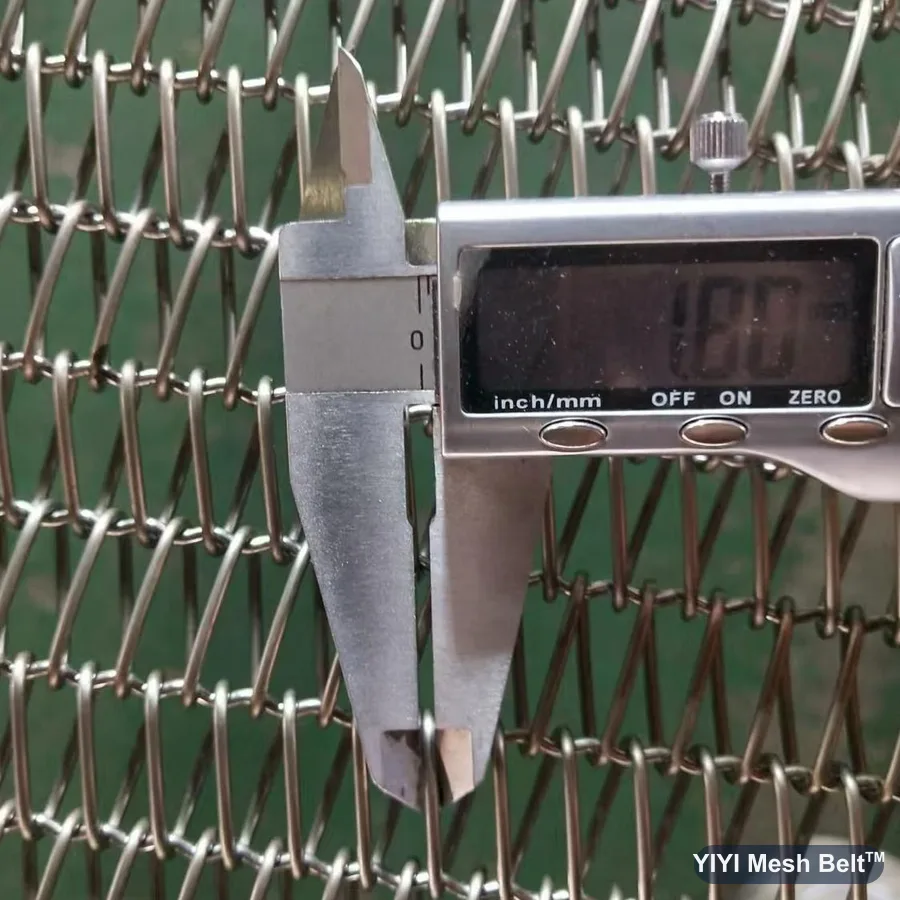
On the first article we measure the pitch over ten pitches in both directions, the wire and rod diameters, the width, the edge and the flatness, and compare each value with the approved drawing. Each reading is photographed with the tool in view and sent with the trial photos.
| Check | How | Why |
|---|---|---|
| Pitch | Over ten pitches, both directions | Fit with the drive and product |
| Wire and rod | Caliper, several places | Strength and open area |
| Width | Tape, several points | Fit in the machine |
| Edge | Caliper and visual | Guides, chain or guards |
| Flatness | Laid on the table | Tracking and product support |
What happens if the trial fails?
A failed trial is the system working, not a problem to hide.
If the trial does not meet the drawing, we record it, adjust the setup, rebuild the trial and measure it again before you see it. A belt that does not meet the approved drawing does not go to packing. You approve the trial that passes, not the one that failed.
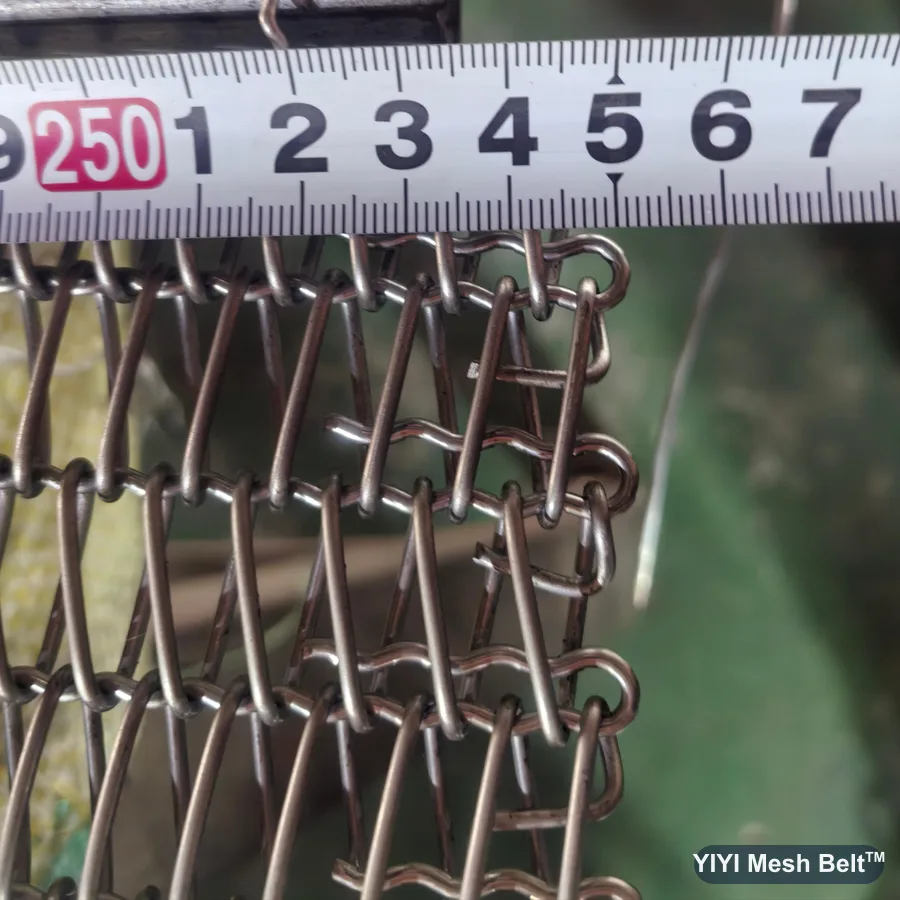
On a 2,550 mm balanced weave belt for a European distributor, our first trial did not hold its width. We rejected it in our workshop and rebuilt it. The new trial was measured over ten spiral and rod pitches and photographed next to the original sample before the distributor approved.
I share this example on purpose. Buyers should expect a supplier to reject its own trials sometimes; that is how the bulk order stays right.
What happens after you approve the trial?
Approval switches the order from proving to producing.
After you approve the trial, bulk production starts to the same drawing and settings. You receive a progress report every Thursday, and before shipment you receive measured photos and the inspection report of the finished belt. Every finished belt is inspected against the approved drawing before packing.
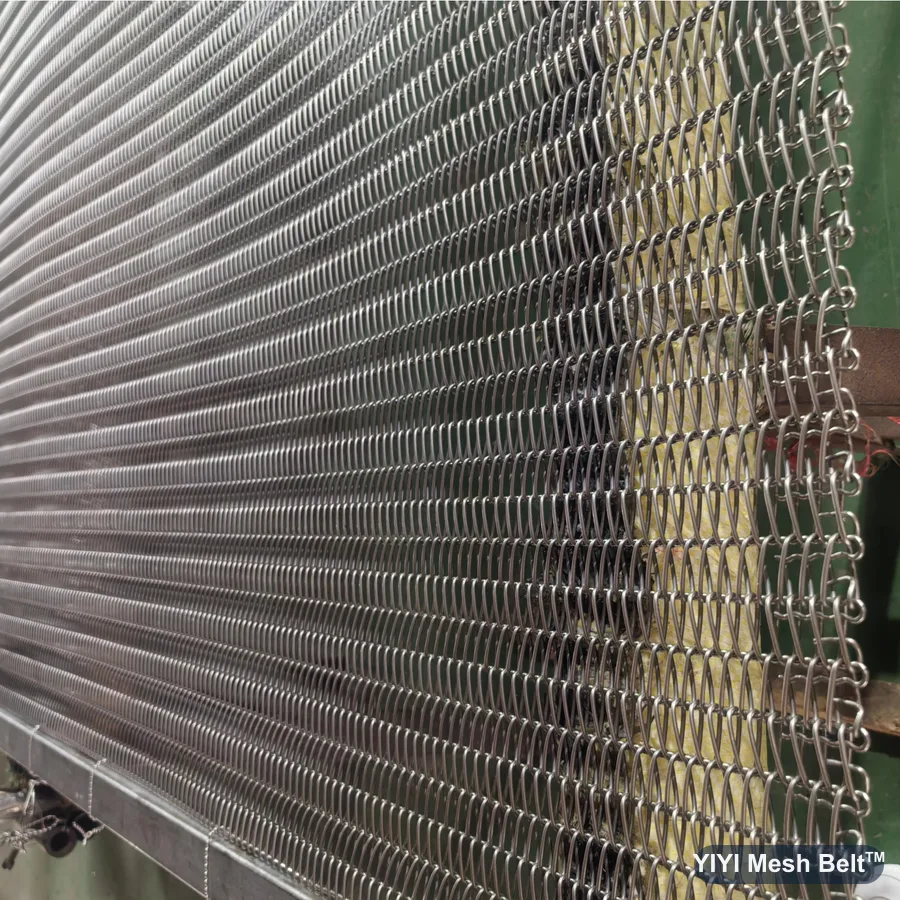
Final inspection checks every belt; that is not a zero-defect promise, but it means nothing is packed without being checked against what you approved.
When this is not the right choice
A trial section is not always needed for a straight repeat order built to an approved drawing that has run well. Then the first article check of the new batch is usually enough.
A trial is also not a substitute for missing information. If the drum, drive or duty is unknown, settle that first; a trial cannot test what was never specified.
From our engineering experience
For a European distributor we built a 2,550 mm balanced weave belt from the end user’s original sample. The first trial did not hold its width, so we rejected it ourselves and built a new one before asking for approval.
For a freezer maker in South America, the first article of a 965 mm spiral freezer belt was measured and reported before production continued. My advice: always ask to see the trial and the first article, with the numbers.
Evidence from our work
- Situation
- A 2,550 mm SUS304 balanced weave belt, 55 m, to match an end user’s original sample.
- What we checked
- The first trial did not hold its width and was rejected in-house. The rebuilt trial was measured over 10 spiral and 10 rod pitches: 1.8 mm wire, 8 mm spiral pitch, 20 mm rod pitch.
- Why it matters
- Rejecting a trial costs a day; shipping a wrong belt costs the order.
- Result
- The distributor approved the rebuilt trial; the belt was ultrasonically cleaned and shipped rolled on galvanized tubes.
- Buyer lesson
- Ask for the trial numbers, and expect a good supplier to reject its own trials when needed.
FAQ
Is a trial section always built?
Where the project requires it, especially for new designs and replacements from a sample. For straight repeat orders, the first article check is usually enough.
How long is a trial section?
Long enough to measure pitch over ten pitches in both directions and to compare with your sample.
Do I have to approve the trial?
Yes. Bulk production starts after you approve the trial.
Can I see the trial in person?
Yes. Buyers can inspect trials and first-article samples at our factory.
What if I find a problem after approval?
Tell us at once. We review it against the approved drawing and the inspection records.
Conclusion
A trial section, a measured first article and your approval come before bulk production. Ask to see the numbers, and expect failed trials to be rebuilt.
Useful files for your project
I have worked on metal conveyor belt projects for 15 years, from new spiral freezers to belt replacement. I share project notes and replacement checklists on LinkedIn.
Technical reviewer: Sunny Ye, Global Sales Director, YIYI MESH BELT · Last updated: 2026-10-12