304, 316 or 310S: How Should You Specify Conveyor Belt Material in an RFQ?
“Stainless steel” is not a specification. Two suppliers can quote two different grades under the same word.

Short answer
Write the grade and the reason in the RFQ: SUS304 for general food processing, SUS316 where salt, brine or stronger cleaning chemicals are present, and a heat-resistant grade such as 310S for high-temperature processes. Add the product, temperature, cleaning method and the material documents you need.
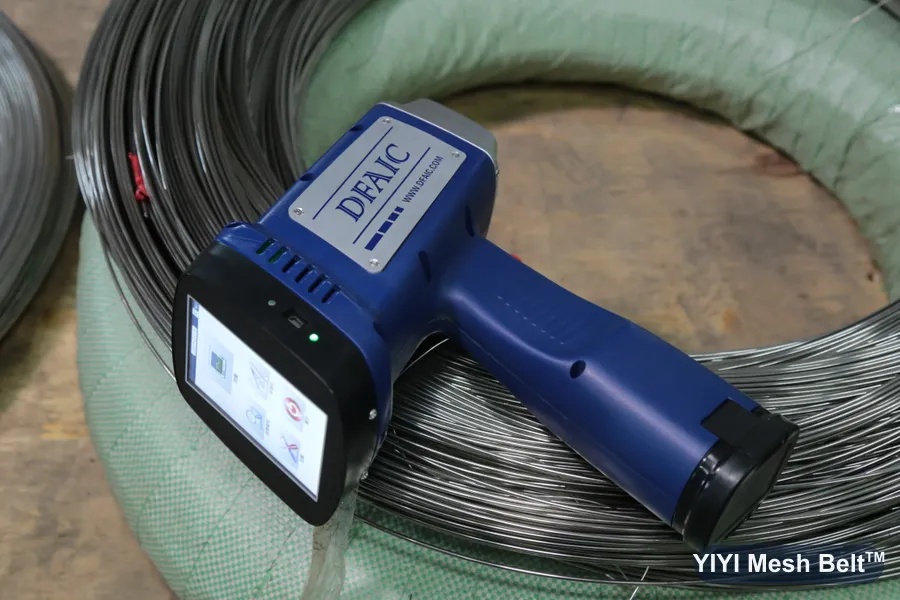
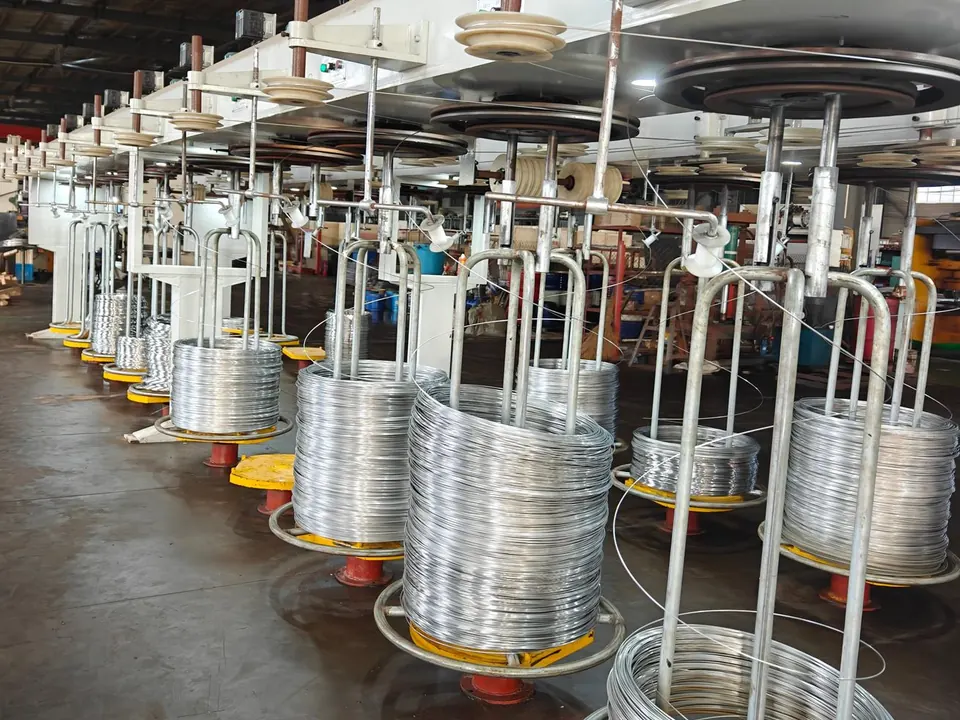
I am Sunny Ye, Global Sales Director at YIYI MESH BELT in Ningjin, Shandong. We have made metal conveyor belts since 1998 and run 280 units of production equipment, including 9 automatic welding robots. We draw our own stainless wire and check every incoming batch, so material is a question I answer daily.
At a glance
| Product | All stainless and carbon steel conveyor belts |
|---|---|
| Application | Food processing, freezing, washing, high temperature |
| Key parameters to confirm | Grade, process conditions, cleaning, temperature, documents |
| Buyer type | OEM buyers, food processors, distributors |
| What to send for a quote | Product, temperature range, cleaning method and required documents |
Why is “stainless steel” not enough?
Different grades behave very differently in salt, chemicals and heat.
An RFQ that says just “stainless steel” lets one supplier quote SUS304 and another SUS316, so the quotes are not comparable, and the belt may meet conditions it was never chosen for. A clear material line makes quotes comparable and lets the manufacturer check the grade against your process.
A good material line has three parts: the grade, the reason and the documents. If you are unsure of the grade, write “to be recommended” and describe the process instead.
When is each grade right?
Each grade answers a different risk.
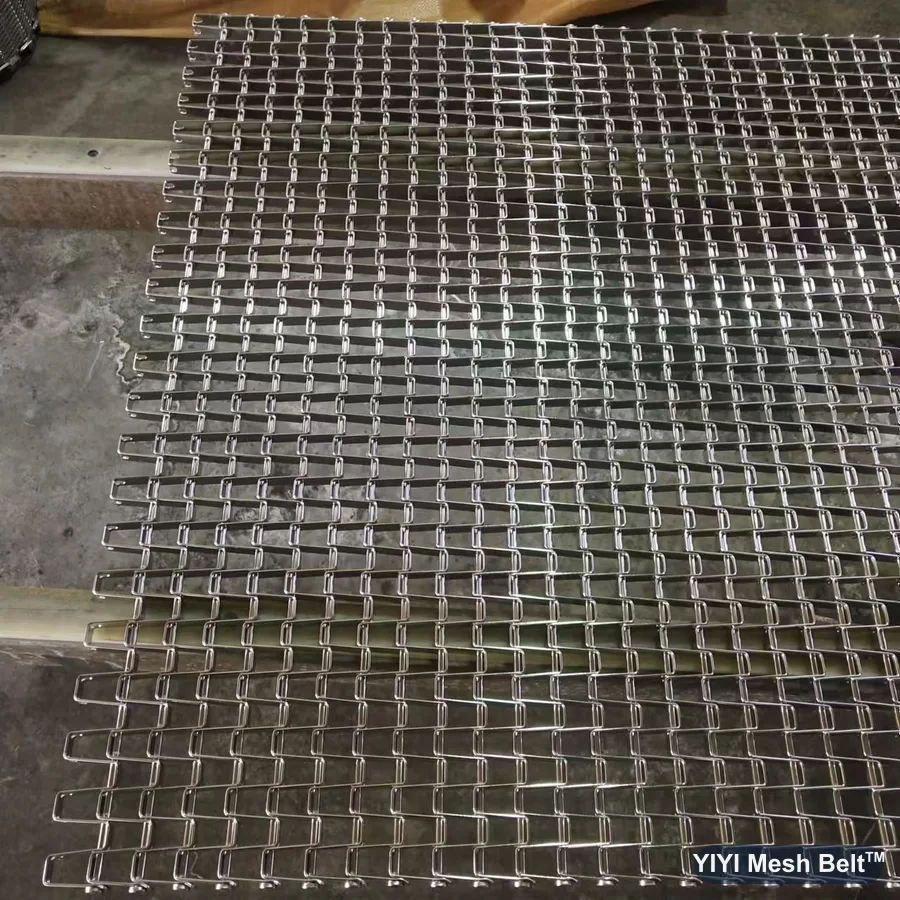
SUS304 is the common grade for food processing, freezing and normal wash-down. SUS316 contains molybdenum and resists chlorides better, so it suits salt, brine, seafood and chlorinated cleaning. 310S resists scaling at high temperature and is considered for furnaces and some ovens, not for wet food lines.
| SUS304 | SUS316 | 310S | |
|---|---|---|---|
| Typical use | Food processing, freezing, cooling | Salt, brine, seafood, stronger chemicals | High-temperature processes |
| Main strength | Balanced resistance and cost | Better chloride resistance | Scaling resistance at heat |
| Main limit | Chlorides, aggressive chemicals | Does not fix design or cleaning problems | Not needed for wet lines |
| At YIYI | Standard grade | Standard grade | Confirmed per project |
SUS316L is available for flat wire belts where the project calls for it; mild or carbon steel suits dry, non-corrosive conveying.
Which documents should you ask for?
Agree the documents before production, not after delivery.
List the documents your customer or market requires in the RFQ. Each incoming batch of wire and bar is checked by spectral analysis and hardness testing, and material documentation for your order is prepared per order. Extra tests or third-party inspection can be arranged when agreed in advance.
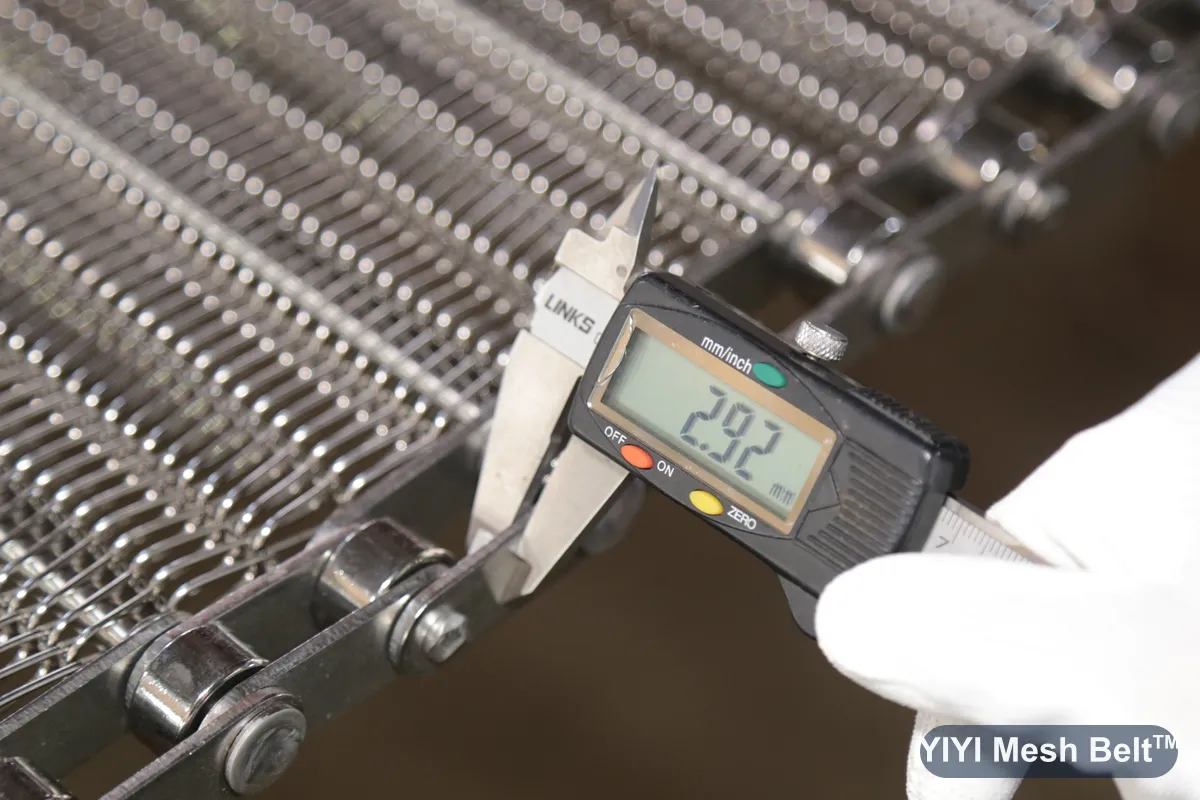
Testing capability does not mean every test is included in every order, so tests are agreed in the quotation.
Does a magnet test prove a belt is 304?
No, and it is one of the most common misunderstandings.
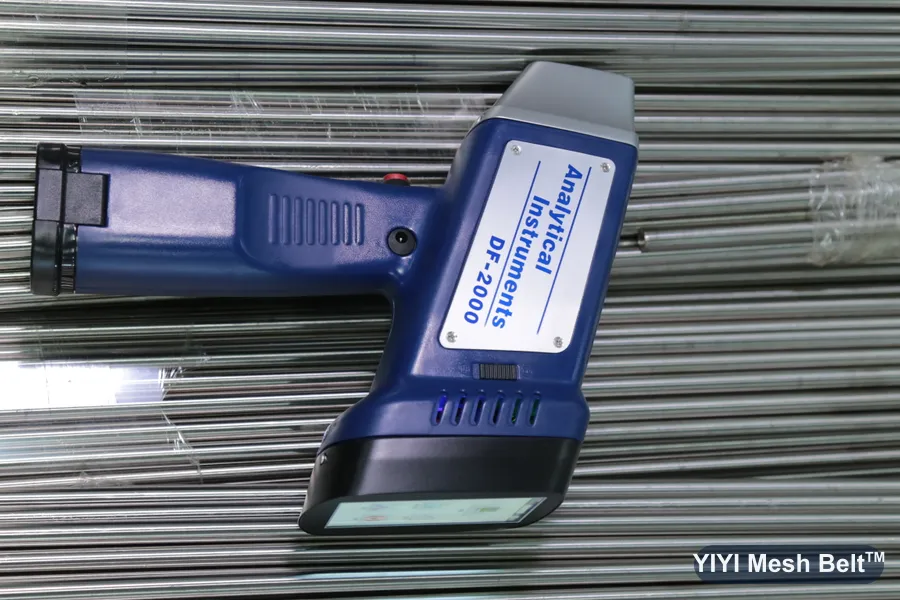
No. Cold-worked SUS304 wire can become slightly magnetic after drawing and forming, so a magnet test cannot confirm or reject the grade. Spectral analysis or the material documentation is the reliable check. If a magnet attracts your belt, ask for the composition check before drawing conclusions.
Cross rods, which are heavily drawn, often attract a magnet more than spiral wire. That does not mean they are a different grade.
When this is not the right choice
SUS316 is not automatically better; if the belt never meets salt or strong chemicals, SUS304 is usually the better value.
310S is not a food-line upgrade; for freezing or wet processing it adds cost without solving the actual risk.
From our engineering experience
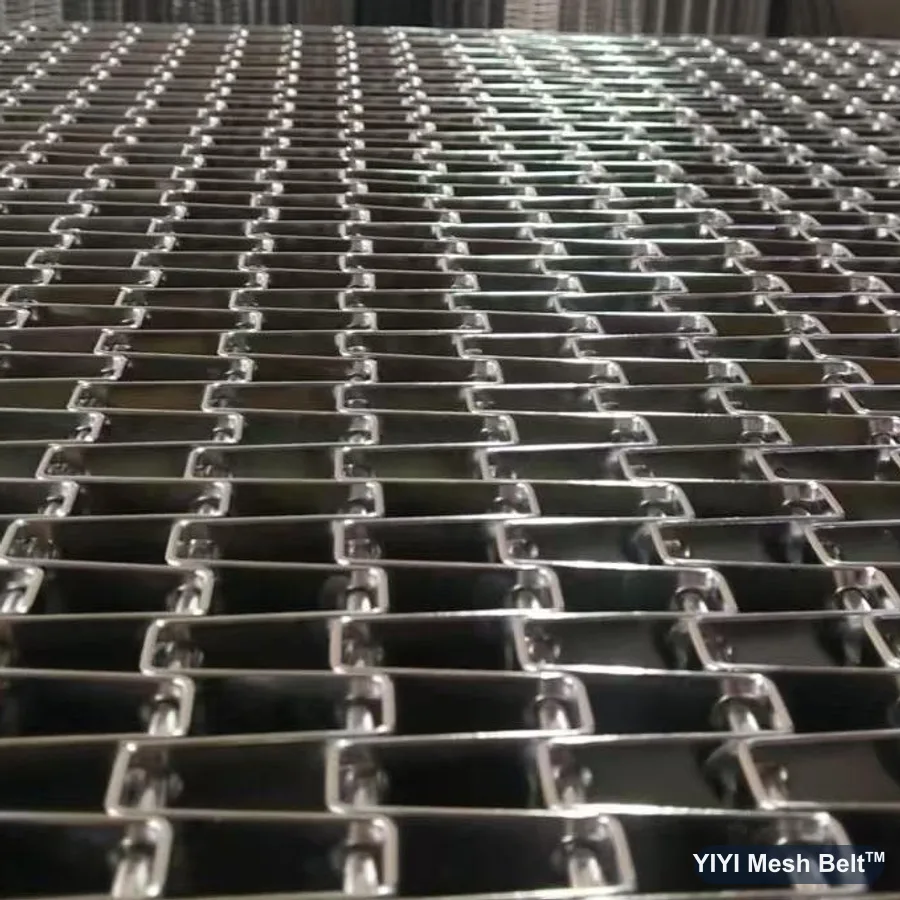
An equipment maker for deep-sea fishing came to us after rust problems with a previous supplier. We sent samples first, built electropolished SUS304 flat wire belts with the welds cleaned, and they inspected first articles at our factory.
My advice: describe the process, not just the grade. Product, temperature and cleaning tell us more than the word “stainless”.
Evidence from our work
- Situation
- After rust problems with a previous supplier, a buyer needed belts for a wet, salty process.
- What we checked
- Samples approved first; SUS304, electropolished, welds cleaned; first-article samples inspected at our factory.
- Why it matters
- The right grade, the right finish and proof before the order address the real rust risk.
- Result
- Two flat wire belts with 40 sprockets shipped clean and dry.
- Buyer lesson
- Match grade and finish to the process, and verify on samples.
FAQ
Is SUS316 always better than SUS304?
No. It resists chlorides better, but where the belt meets no salt or strong chemicals, SUS304 is usually the better value.
Do you make 310S belts?
310S is not a standard grade for us; state the operating temperature and we confirm per project what we can supply.
Which material documents do you provide?
Material documentation for your order, prepared per order; incoming batches are checked by spectral analysis and hardness testing.
Can a SUS304 belt be magnetic?
Slightly, after cold working. A magnet test cannot confirm the grade; spectral analysis can.
Conclusion
Write the grade, the reason and the documents. SUS304 for most food lines, SUS316 for chlorides, heat-resistant grades for heat.
Useful files for your project
I have worked on metal conveyor belt projects for 15 years, from new spiral freezers to belt replacement. I share project notes and replacement checklists on LinkedIn.
Technical reviewer: Sunny Ye, Global Sales Director, YIYI MESH BELT · Last updated: 2026-10-12