Spiral Freezer Belt or Self-Stacking Belt: What Changes for an OEM Project?
The belt type fixes the cage, the drum and the cleaning for years. Our factory builds both to your drawing and tests every spiral belt order on a drum, and hand-stacks every self-stacking belt order and checks it at the turning diameter, before shipment. See our spiral freezer belts and self-stacking belts.

Short answer
A spiral freezer belt runs on a cage and support rails around a driven drum, while a self-stacking belt carries the tier above on its side guards. Choose the spiral freezer belt for wider belts and flexible layouts; choose the self-stacking belt for a compact, enclosed freezer with standard widths.
I am Sunny Ye, Global Sales Director at YIYI MESH BELT in Ningjin, Shandong, China. Our manufacturing experience dates back to 1998. We make both belt types to OEM drawings, so this is how I explain the choice to freezer builders.
At a glance
| Product | Spiral Freezer Belt and Self-Stacking Belt (SUS304 / SUS316) |
|---|---|
| Application | New spiral freezers, coolers and proofers |
| Key parameters to confirm | Belt width, product height, turn ratio, drum, tiers, cleaning method |
| Buyer type | Spiral freezer OEMs, food plant engineers, distributors |
| What to send for a quote | Freezer concept or drawing, product and height, capacity, cleaning method |
How are the two belts built differently?
The difference is where the weight of each tier goes.
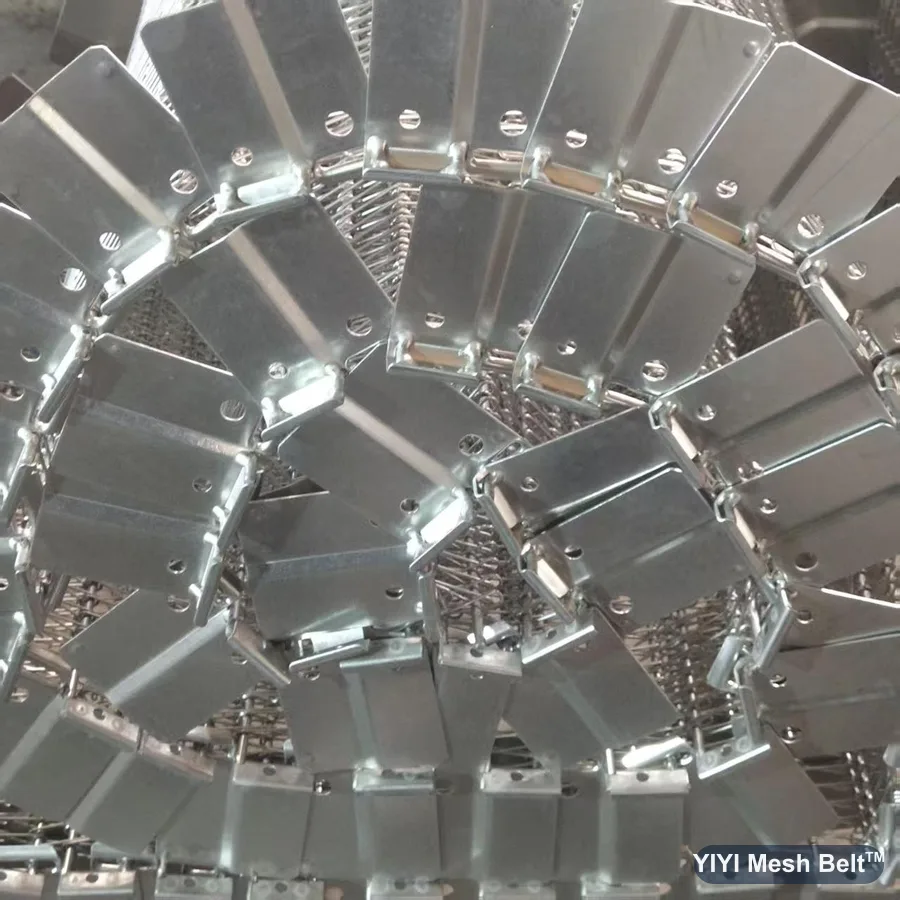
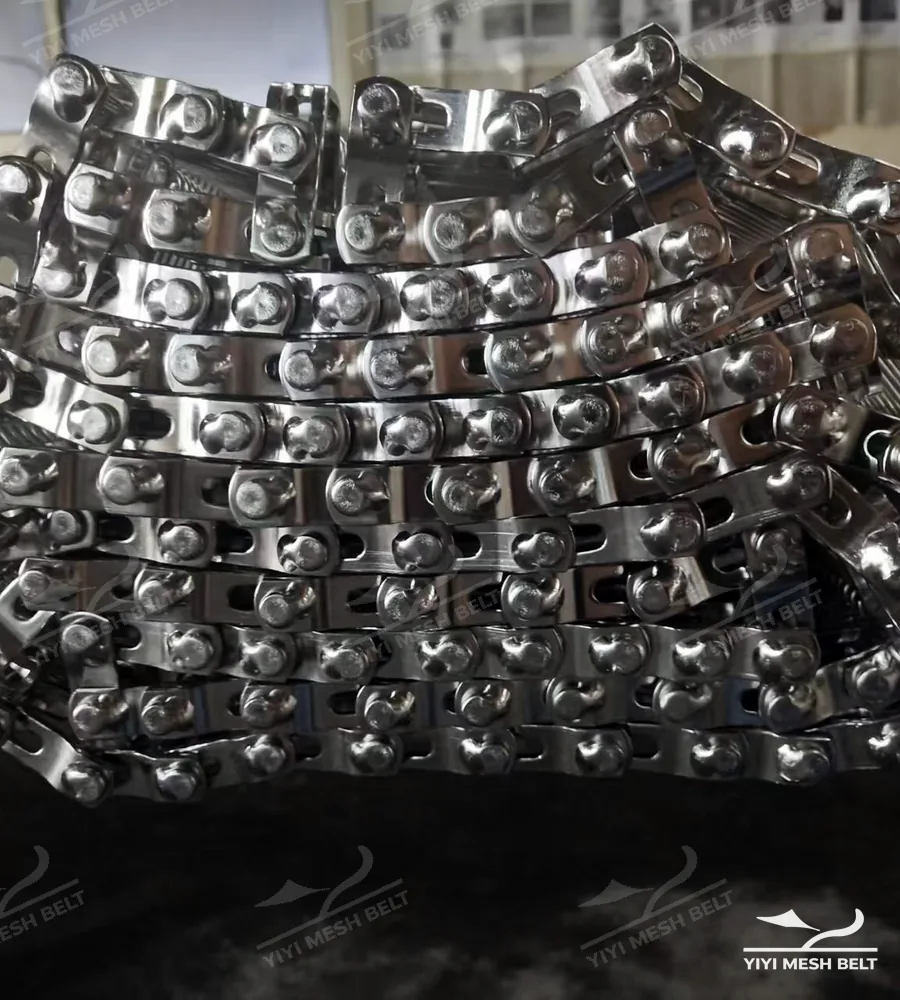
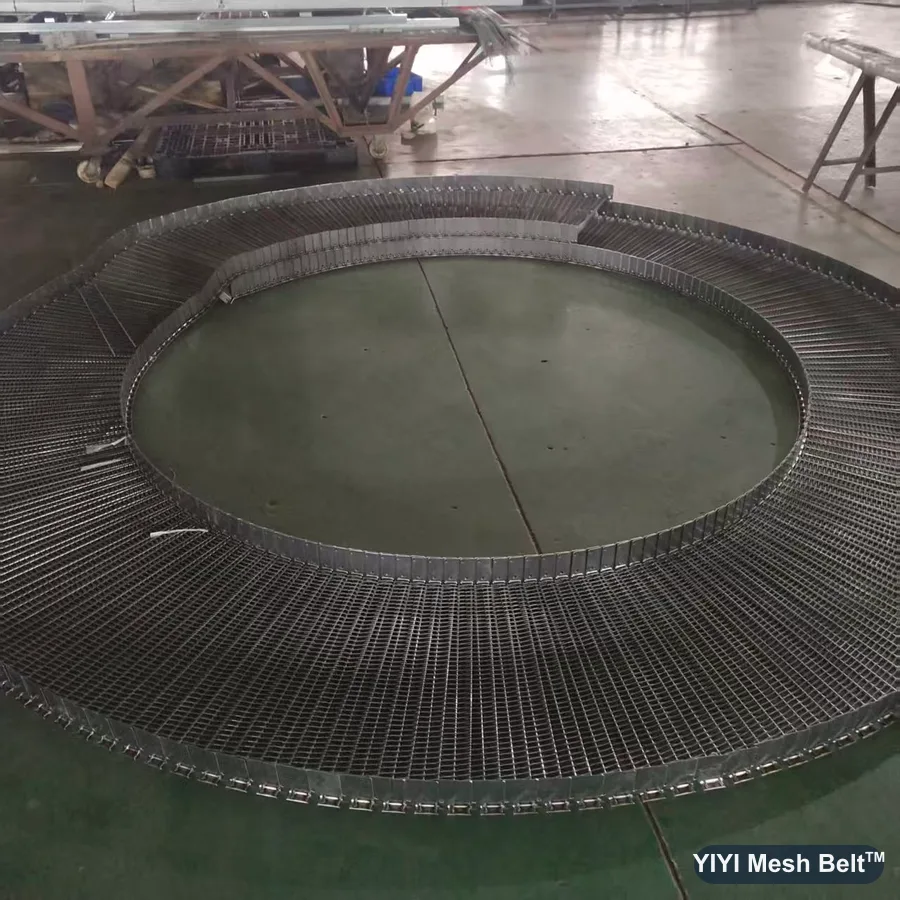
A spiral freezer belt has link plates at the edges and is supported tier by tier on rails in a cage, driven by the drum. A self-stacking belt has tall side guards, and each tier rests on the guards of the tier below, so no cage is needed.
| Feature | Spiral Freezer Belt | Self-Stacking Belt |
|---|---|---|
| Support | Cage and rails | Side guards of the tier below |
| Spiral pitch | 5–23 mm | 6 / 9 / 13 mm |
| Rod pitch | 19.05–40 mm range | 30 mm |
| Width | 300–2900 mm or custom | 420–760 mm standard, up to 1069 mm heavy duty |
| Turn ratio | 1.10–2.5 (small radius about 1.1) | About 1.6 / 1.7 reference |
| Edge | Button, flat-hat, welded, cap, clinched | Side guards 60–150 mm high |
These are the ranges on our published spec tables. The approved drawing decides each belt.
When is a spiral freezer belt the better choice?
The spiral freezer belt suits wider belts and layouts that need flexibility.
Choose a spiral freezer belt when the product needs a wide belt, when the freezer layout needs a specific drum or turn ratio, or when infeed and outfeed positions vary. The cage supports each tier, so belt width and product height are less limited by the belt itself.
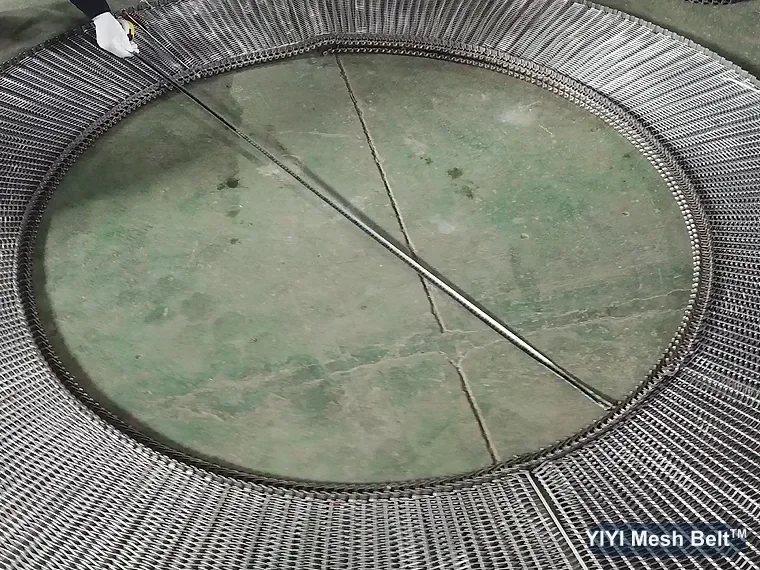
In my experience, freezer builders choose the spiral freezer belt when the plant needs flexibility. The width range is much wider, and the drum and turn ratio can follow the layout.
The trade-off is the cage. Rails and supports add structure and cleaning points. For many plants that is fine; for others, an enclosed self-stacking design is easier to clean.
If you are designing the freezer, send the belt width, product height and drum diameter you have in mind. We check the turn ratio and the edge on the drawing.
When is a self-stacking belt the better choice?
The self-stacking belt suits compact, enclosed freezers with standard widths.
Choose a self-stacking belt when you want a compact freezer without a cage, standard belt widths and a fixed product height. The side guard height sets the clearance between tiers, so it must match the tallest product. Cleaning is simpler because there are fewer rails and supports inside the freezer.
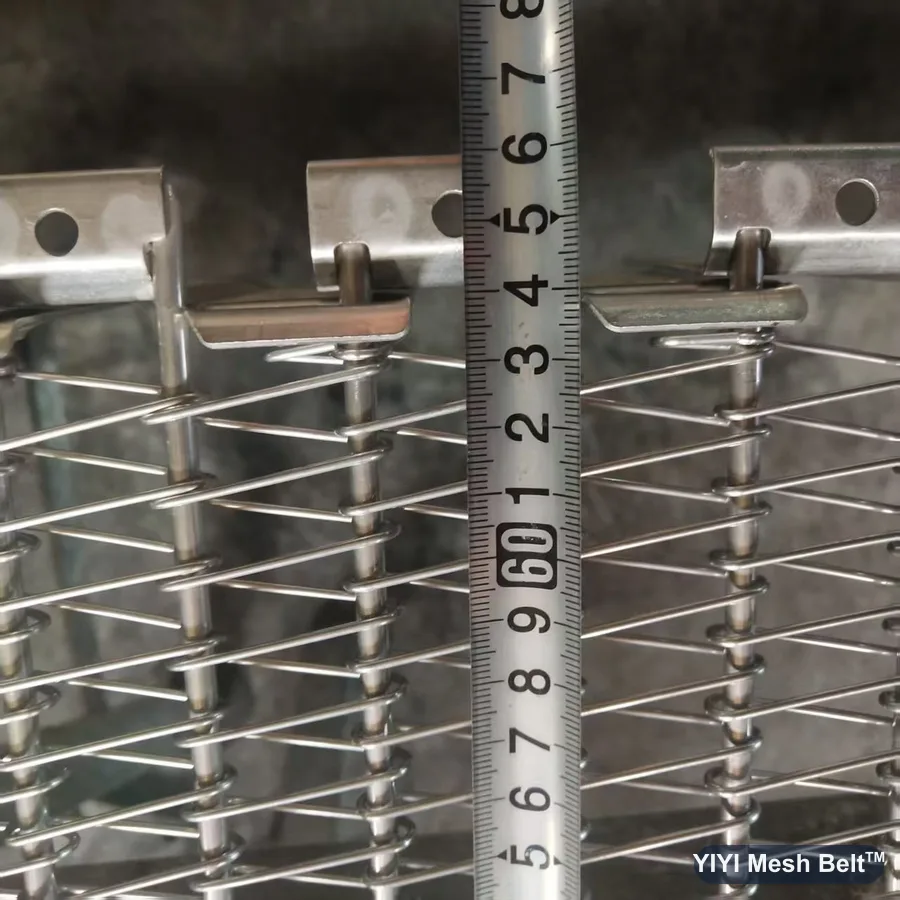
The side guard is the key decision. Too low and the product touches the tier above; too high and the freezer holds less belt. We make guards from 60 to 150 mm and confirm the height against your product.
Widths are more standard on self-stacking belts. If your product needs a width outside the standard and heavy-duty range, a spiral freezer belt is usually the better route.
How does the choice affect future replacement?
The freezer will need a new belt one day. Plan for it now.
The choice affects replacement because each system needs different data. A spiral freezer belt replacement needs the drum diameter, turn ratio and edge details; a self-stacking replacement needs guard height, plate gap and stacking checked. Keeping the approved drawing of the first belt makes either replacement simple.
We keep the approved drawing and order records of every belt we build. When the replacement comes, the buyer just confirms that nothing in the freezer has changed.
For OEMs this matters twice: once for your own production, and again when your customer needs a spare belt years later.
When this is not the right choice
A side-by-side comparison is not the right starting point when the freezer already exists. Then the existing system decides; see what to send for a replacement.
Neither belt is right if the product height, load or temperature has not been defined. Define the process first; the belt follows.
From our engineering experience
When a distributor sent us an original self-stacking belt from an OEM spiral freezer, we drew it, built a trial of the same width, laid the belt out at the plant’s 2,170 mm turning diameter and checked stacking before shipment.
When a freezer maker re-ordered a 965 mm spiral freezer belt, we built it to their 3,610 mm drum and turned it before shipment. My advice to OEMs: decide on the system with the product height and width in hand, and keep the approved drawing.
Evidence from our work
- Situation
- A 660 mm self-stacking belt for an IQF freezer at −40 °C, and a 965 mm spiral freezer belt for a freezer builder.
- What we checked
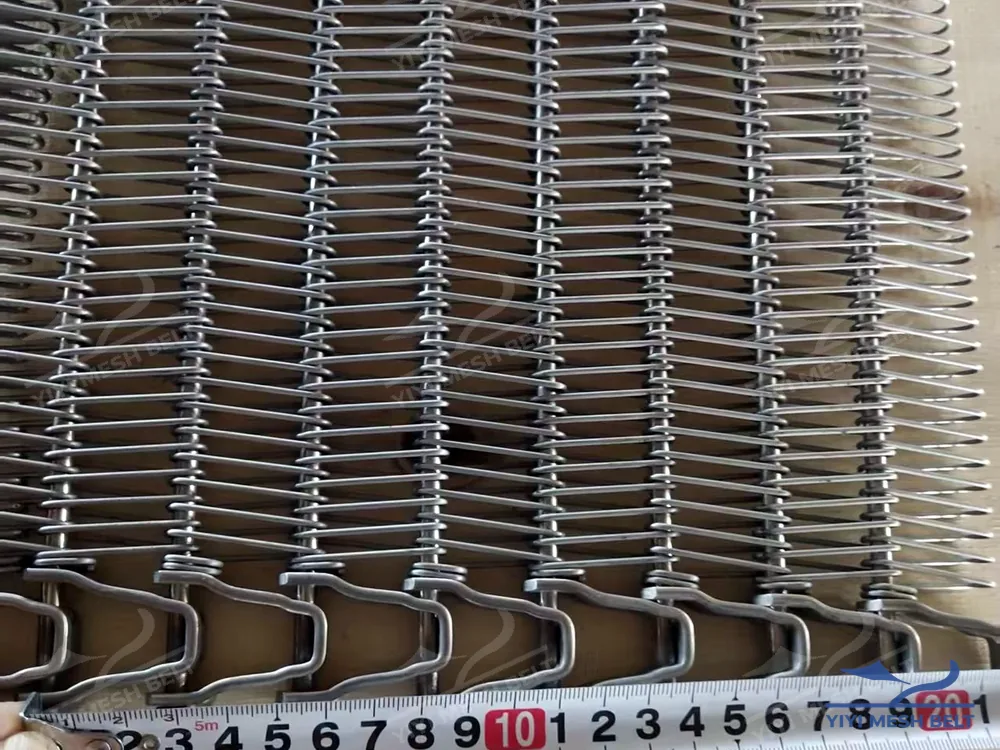
- Self-stacking: 80 mm guards, 13 mm spiral pitch, 30 mm rods, turning check at 2,170 mm. Spiral: 1.5 mm wire, 6 mm pitch, 27.4 mm chain pitch, turning check on 3,610 mm.
- Why it matters
- The two systems are checked in different ways, and each check follows from how the belt carries its load.
- Result
- Both projects led to repeat orders built to the same approved drawings.
- Buyer lesson
- Choose the system by width, product height and cleaning; then keep the drawing.
FAQ
Which is cheaper, spiral or self-stacking?
It depends on the width, length and freezer design, so we quote each system on its drawing. A self-stacking freezer has no cage; a spiral freezer belt is usually simpler as a belt. Compare the whole system.
Can a self-stacking belt be wider than 760 mm?
Our heavy-duty self-stacking belts go to 1069 mm. Wider products usually suit a spiral freezer belt.
Which is easier to clean?
A self-stacking freezer has fewer rails and supports inside, which many plants find easier to clean. The cleaning method still decides the material and finish.
Can you supply both for the same OEM?
Yes. We build spiral freezer belts and self-stacking belts to OEM drawings.
Which material should I choose?
SUS304 for most freezing duties; SUS316 where salt, brine or stronger cleaning chemicals are present.
Conclusion
Wide belts and flexible layouts favour the spiral freezer belt; compact, enclosed freezers favour self-stacking. Decide with the product height, then approve a drawing.
Useful files for your project
I work on metal conveyor belt projects, from new spiral freezers to belt replacement. I share project notes and replacement checklists on LinkedIn.
Technical reviewer: Sunny Ye, Global Sales Director, YIYI MESH BELT · Last updated: 2026-10-12