01 Stack Fit
Confirm upper/lower engagement
- Stack height and engagement depth
- One-side or two-side shrinkable layout
- Release behavior in compact spiral systems
Self-stacker belts must stack correctly, engage consistently, and match the real system geometry. YIYI supports OEM and replacement projects with drawing-based production, fixture welding, stack testing, and final release proof.
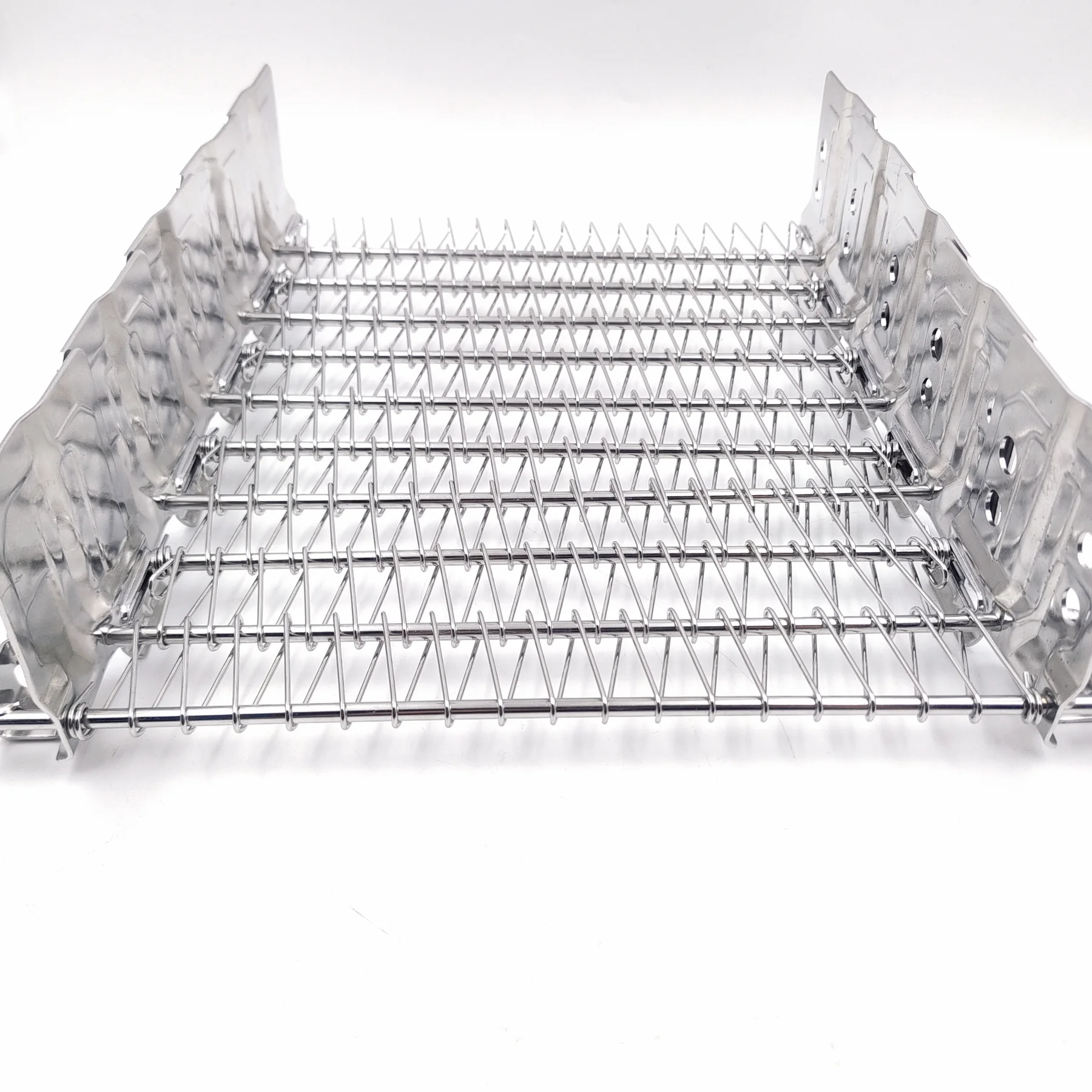
Self-stacking belt risk is not only width or material. The real risk is whether the belt stacks, contracts, and releases correctly in the machine. YIYI reviews upper/lower engagement, plate geometry, slot length, rod pitch, sprocket or drum matching, and running direction before production release.
The main risk is simple: the belt may look correct but fail to stack smoothly in the real machine. YIYI checks engagement, slot behavior, contraction, and drive fit before release.
YIYI Mesh Belt builds self-stacker belts as system-matching industrial components. The focus is not only on dimensions, but on the geometry that determines upper and lower tier engagement, stable stacking behavior, and repeatable supply for future orders.
This makes the page especially relevant for OEM builders integrating a new system, distributors comparing suppliers, and replacement buyers trying to avoid mismatch risk on an existing line.
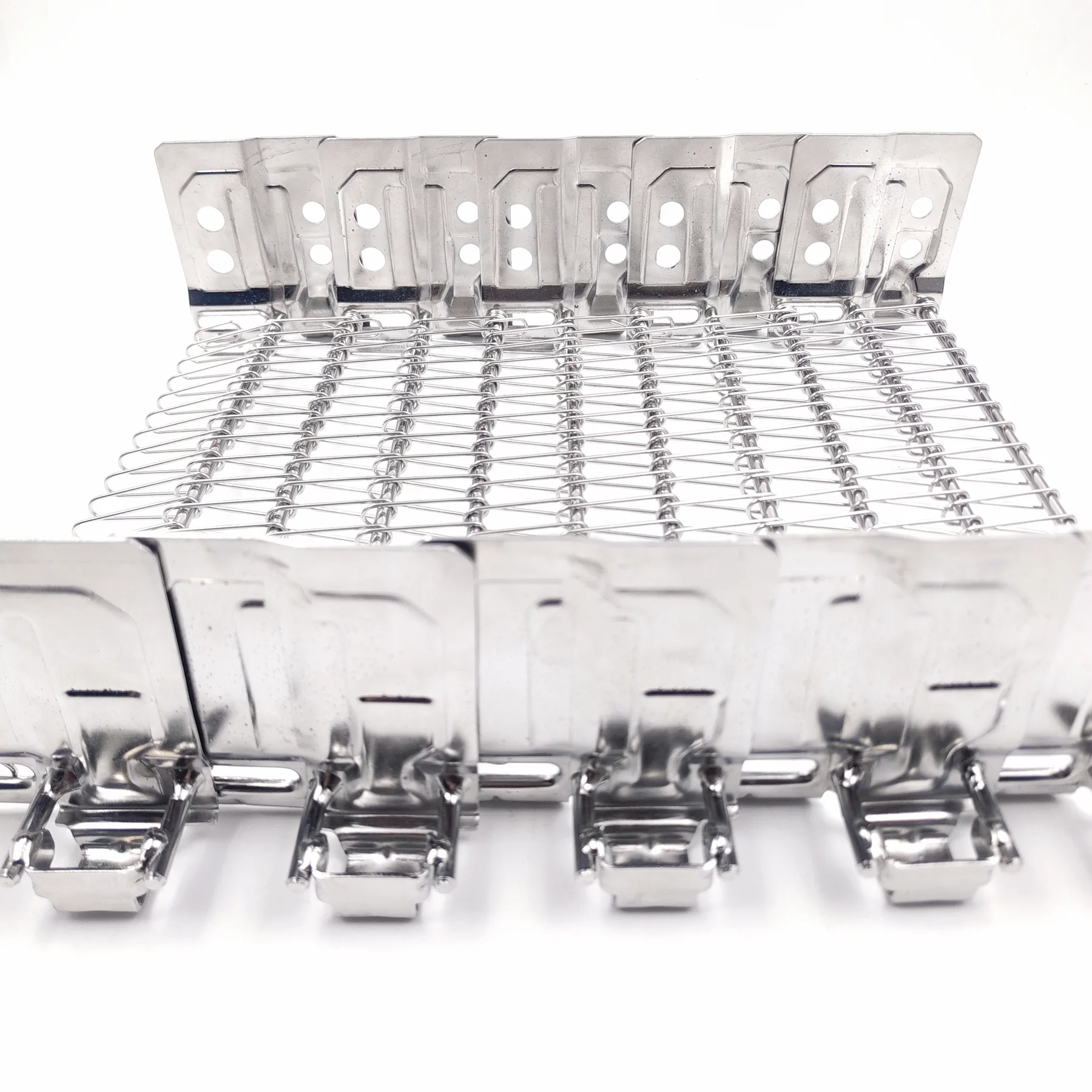
For self-stacking belt projects, buyers need proof that the belt stacks correctly in real geometry. YIYI uses stack-test video, fixture welding, dimensional measurement, and material verification before release.
Stack testing confirms real stacking behavior, engagement depth, contraction movement, and release readiness before shipment.
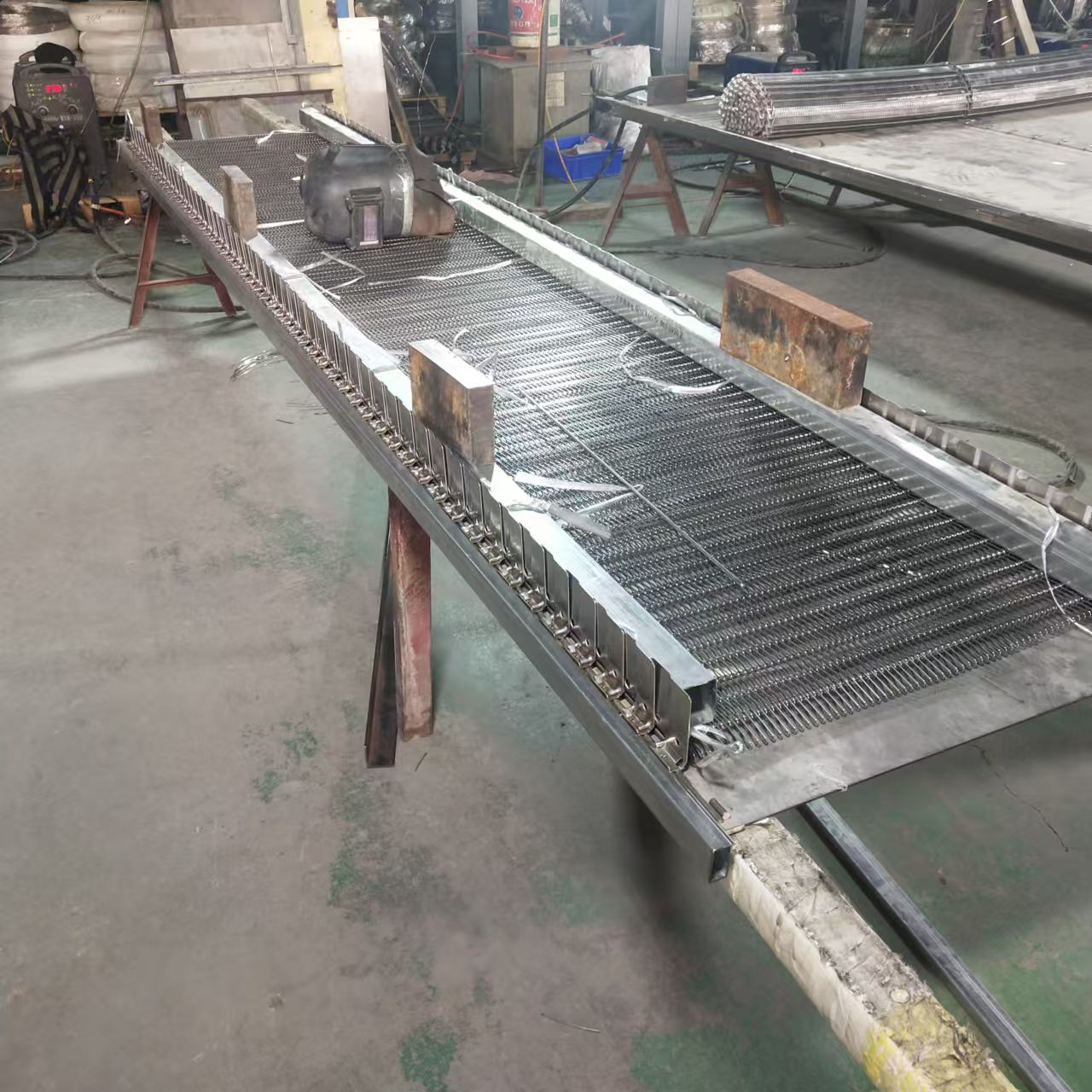
Plate position, slot geometry, and rod-end consistency are controlled because small errors change stacking behavior.
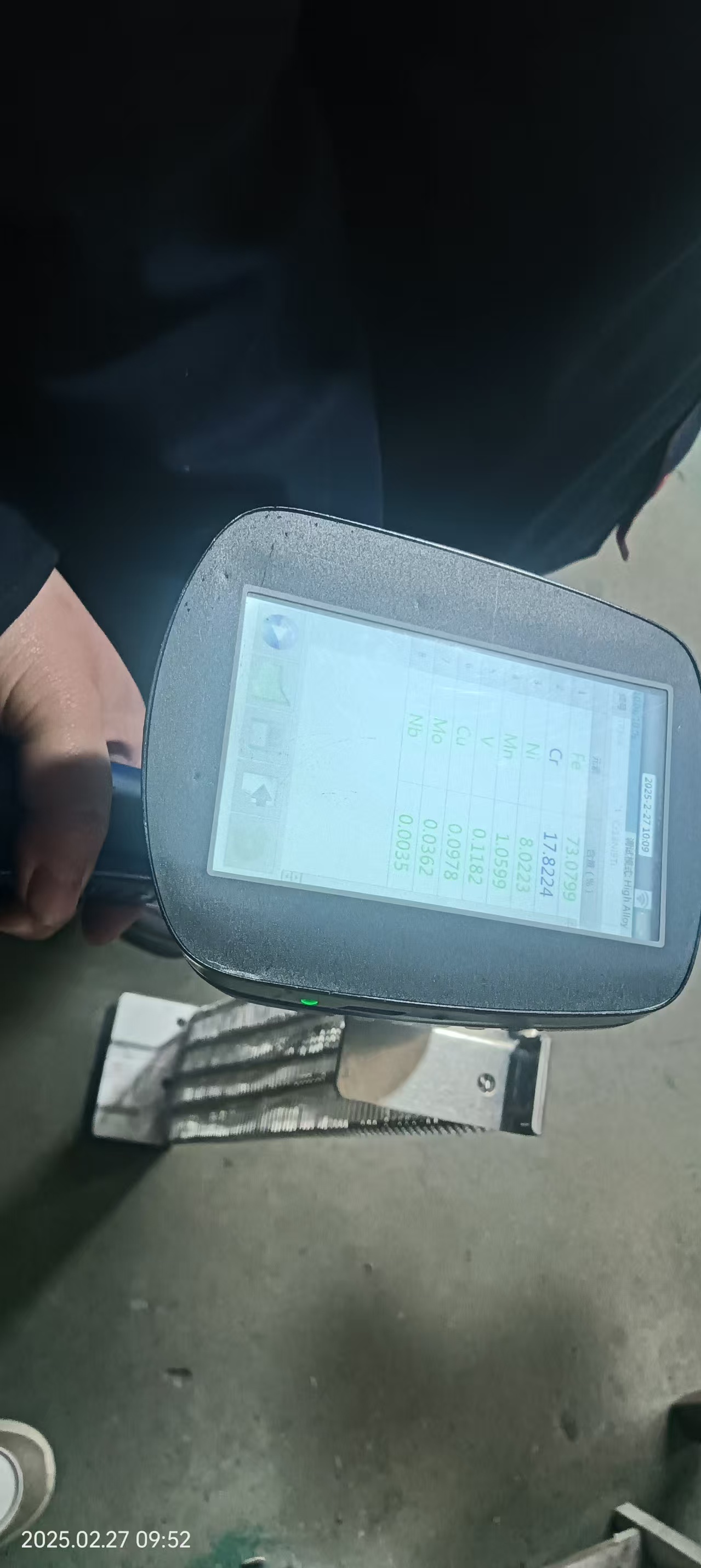
Material verification and dimensional checks support food-processing, OEM, and replacement belt confidence.
Public case evidence keeps product and inspection value while removing customer names, order numbers, shipping marks, labels, faces, and logistics details.
Self-stacking belt configured from drawing, fixture welding, and stack test before shipment release.
Existing belt photos, sample measurements, plate height, rod pitch, slot length, and chain pitch used for replacement review.
Metal conveyor belts are custom-built. Detailed configuration should be confirmed with drawings, old belt photos, running direction, and stack geometry.
Self-stacking belt examples are reviewed by overall width and usable width. Width alone is not enough; stack geometry must be confirmed.
Rod diameter, rod pitch, spiral pitch, spiral wire diameter, plate height, plate thickness, slot length, and running direction.
Single-side and two-side shrinkable structures, single or double spiral mesh, standard and heavy-duty stacking plates.
Upper/lower engagement, contraction movement, weld burn-through prevention, burr-free edges, cleaning, and neutral export packing.
A self-stacking belt is custom-built around tier height, stacking pitch, slot length, chain pitch, rod pitch, contraction range, sprocket engagement, load, and running direction.
If plate position, slot geometry, or upper/lower engagement is wrong, the belt can bind, wear the chain, or fail as a replacement. YIYI checks these points before quotation and verifies stack behavior before release.
Tier spacing, stacking pitch, and upper/lower contact depth determine whether the belt seats cleanly in the vertical stack.
Long-slot or short-slot structure controls lateral contraction. The slot must match the machine path and replacement sample.
Chain pitch, sprocket tooth profile, edge chain format, and running direction are checked before production to avoid drive mismatch.
The shrinkable layout affects tier alignment, belt path, and whether the structure can replace the original without drive modification.
Used in spiral freezing, chilling, cooling, proofing, steaming, smoking, cooking, bakery, meat, seafood, poultry, and prepared food systems.
Fixture-controlled welding, stack test confirmation, final inspection, and export packing keep OEM and repeat orders consistent.
This is the engineering order used for self-stacker projects: application condition, existing sample or drawing, stacking geometry, drive compatibility, welding control, and release inspection.
White-background product views are used as engineering evidence: full belt overview, stacking plate side, chain side, slot geometry, engagement detail, and shipment-ready condition.
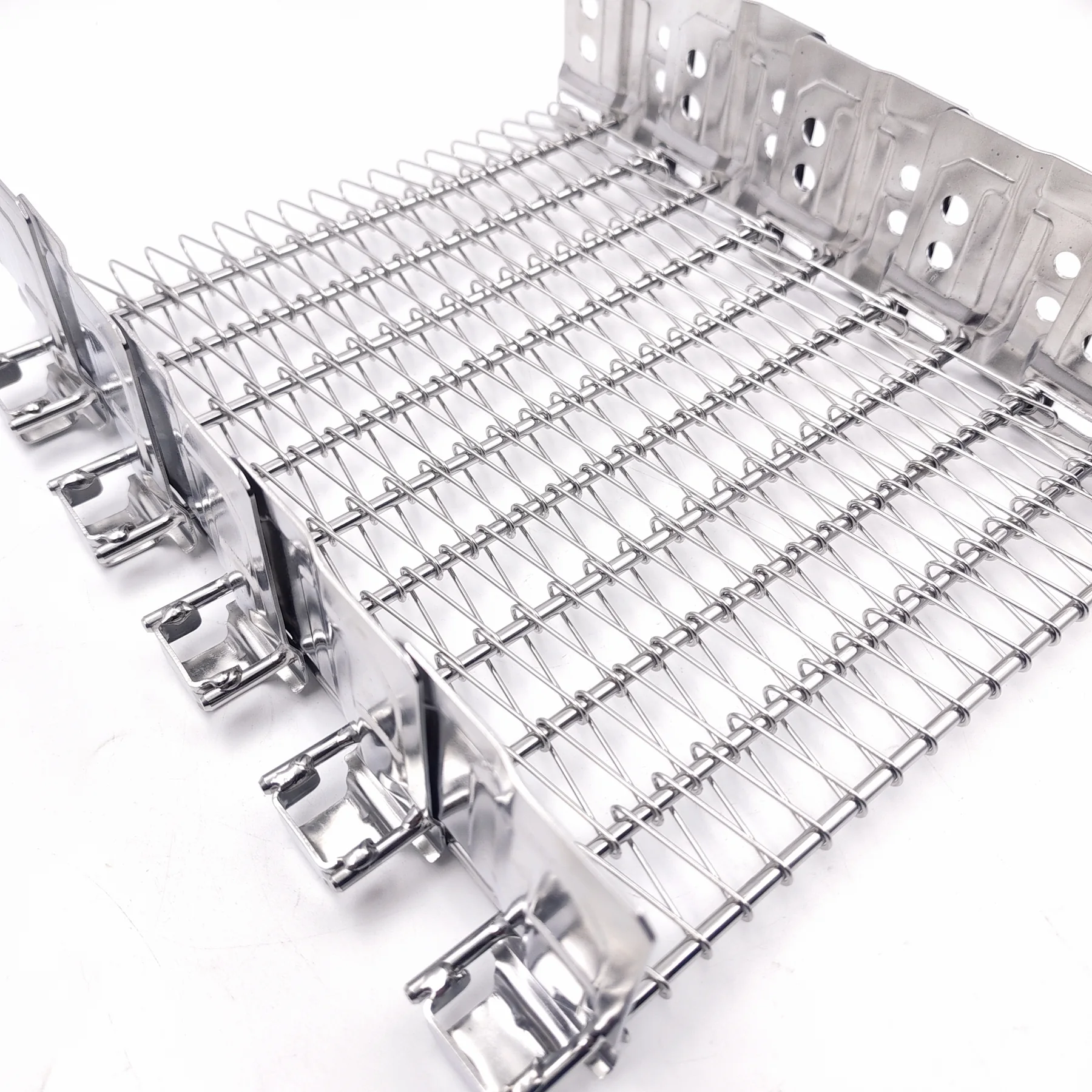
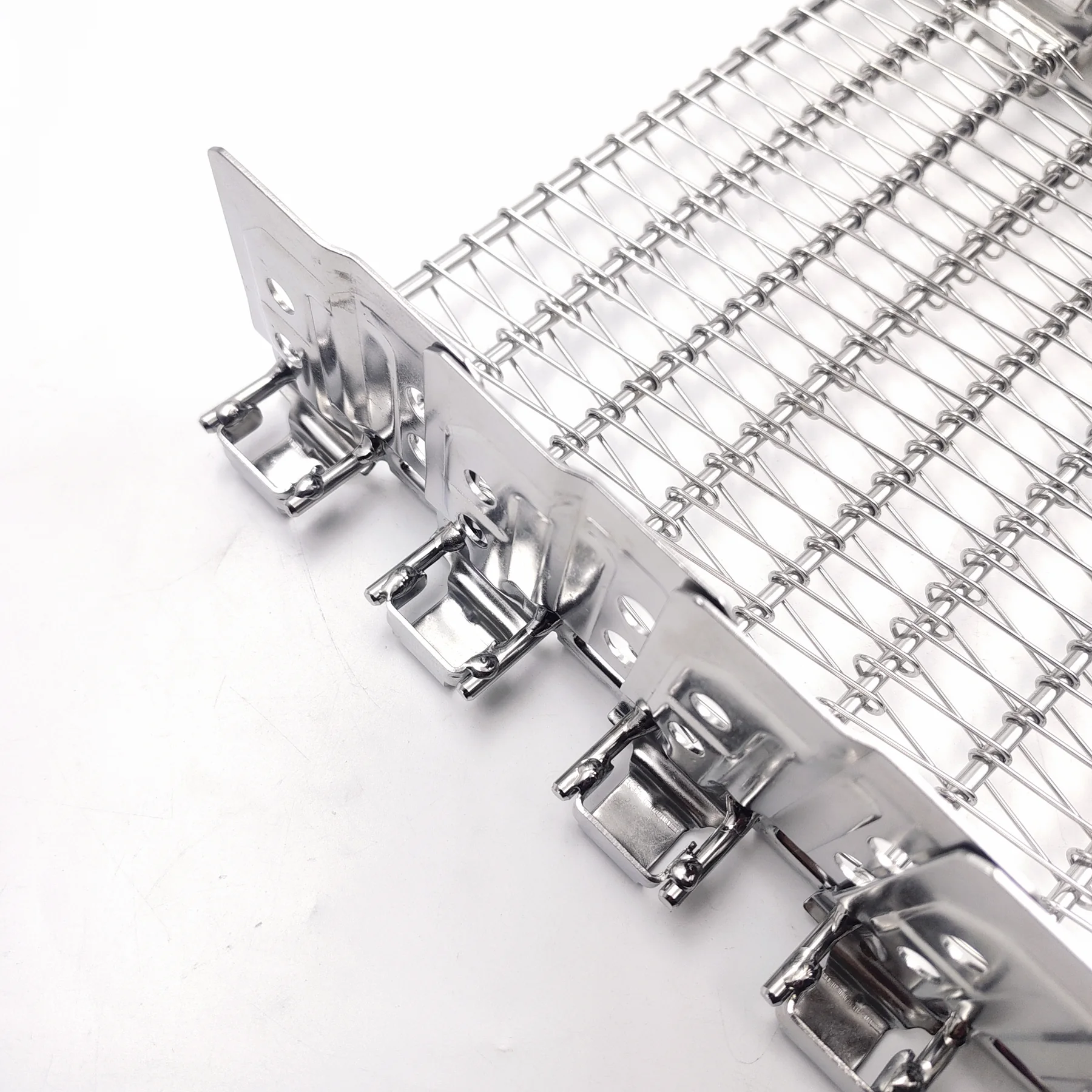
For self-stacking belts, small differences in plate position, slot opening, rod-end finish, and chain connection can change the way the belt stacks. These details are reviewed as working geometry, not decoration.
Self-stacker belt manufacturing requires more than correct nominal dimensions. Buyers need controlled slot geometry, repeatable stacking-plate position, consistent engagement behavior, and a release process that proves real stacking performance before shipment.
YIYI Mesh Belt approaches each self-stacker project through system-matching logic. Configuration starts from the customer's drawing, sample, or real machine requirement. Fixture-controlled welding keeps the structure more repeatable, and stack testing confirms whether the finished belt behaves correctly before it leaves the factory.
A self-stacker belt configuration is not defined by width alone. The stacking behavior, lateral contraction, engagement geometry, and drive compatibility all depend on multiple interrelated parameters. The following inputs are typically required to configure a self-stacker belt correctly for OEM or replacement use.
For replacement projects without drawings: a sample of the existing belt, measurements of the stacking plate geometry, and basic system information are often sufficient to begin the matching process. Contact us to discuss your specific requirement.
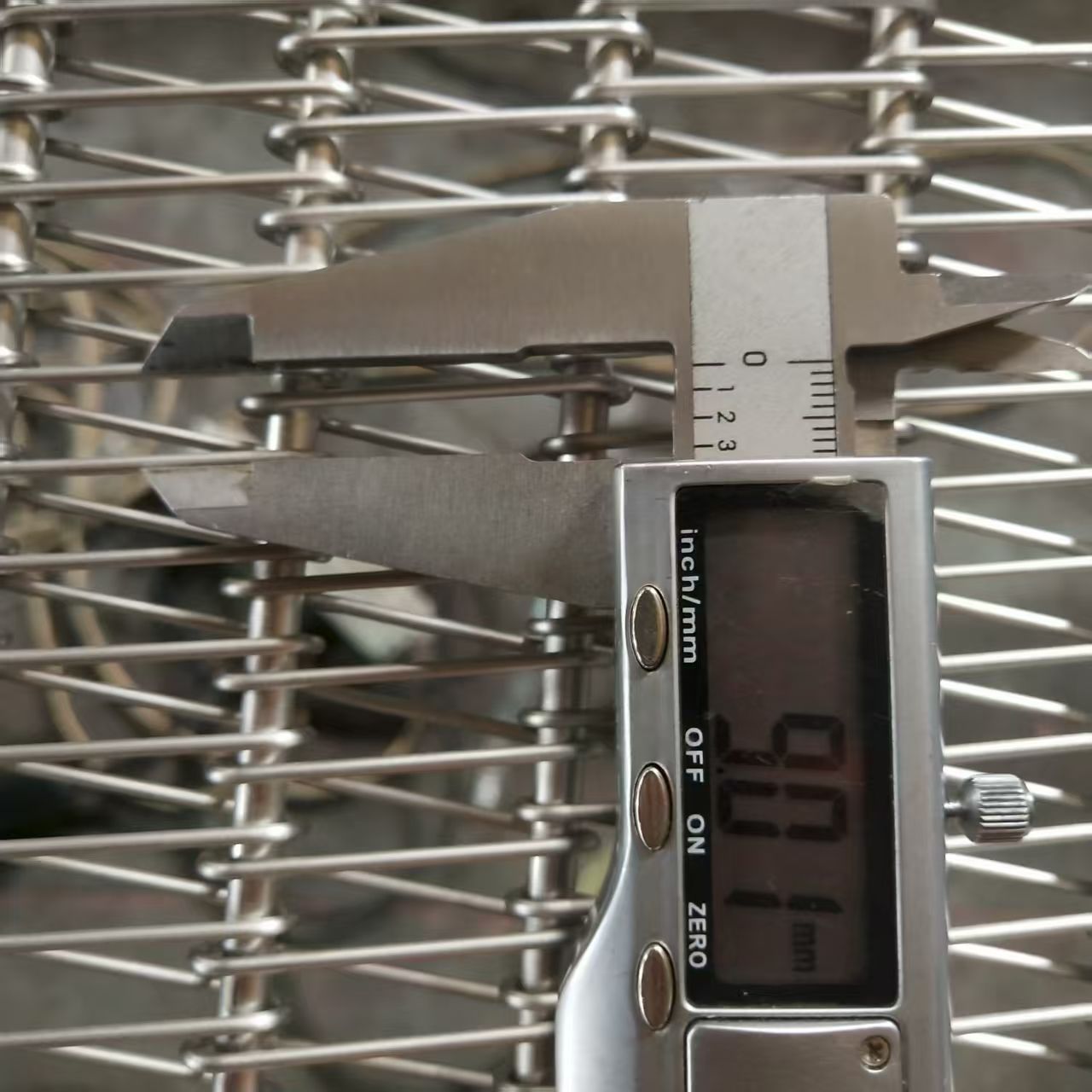
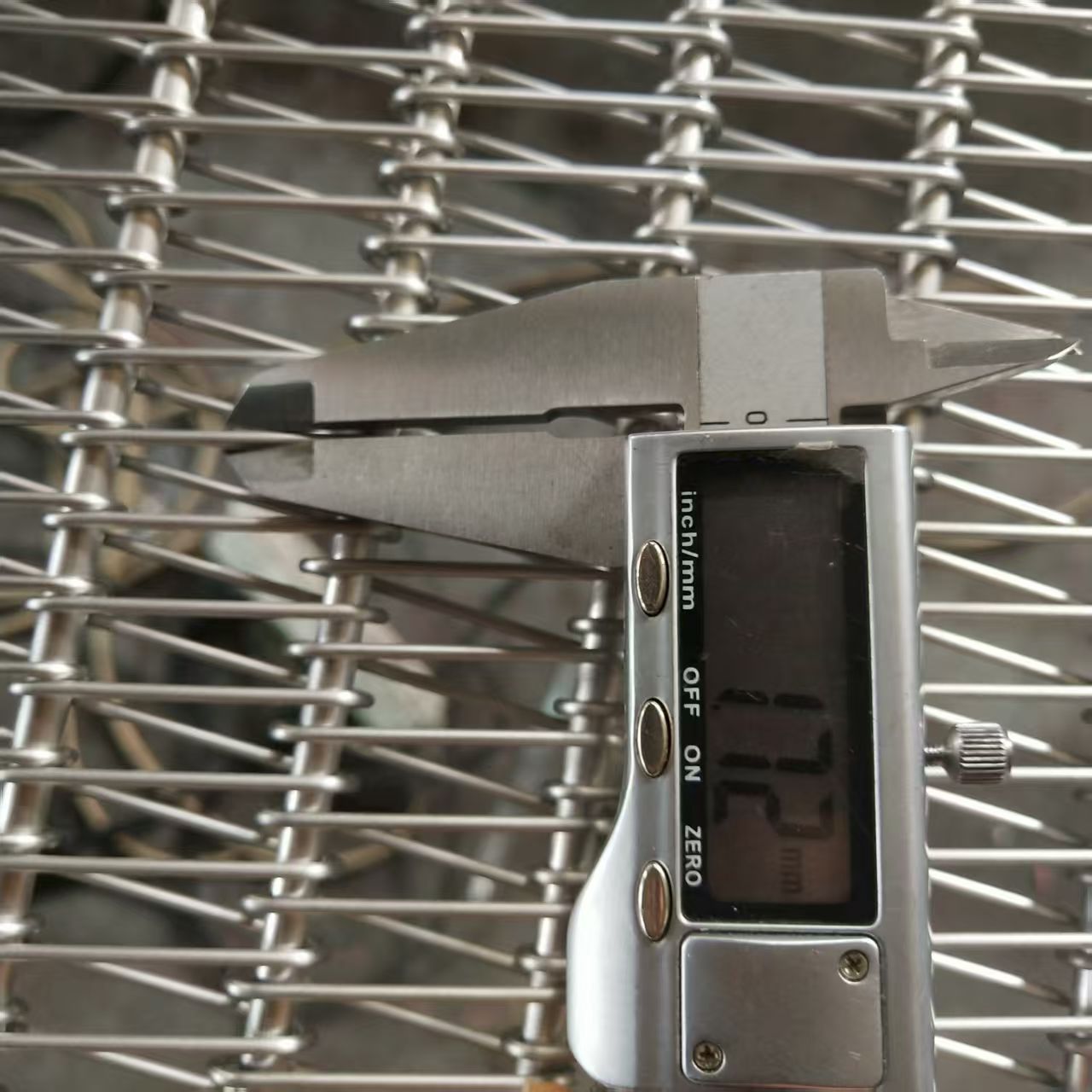
Self-stacking belt release depends on measured geometry, not only visual inspection. Before shipment, YIYI checks the dimensions that affect stacking behavior, drive fit, replacement matching, and repeat supply. These photos show typical measurement points used to confirm the production specification.
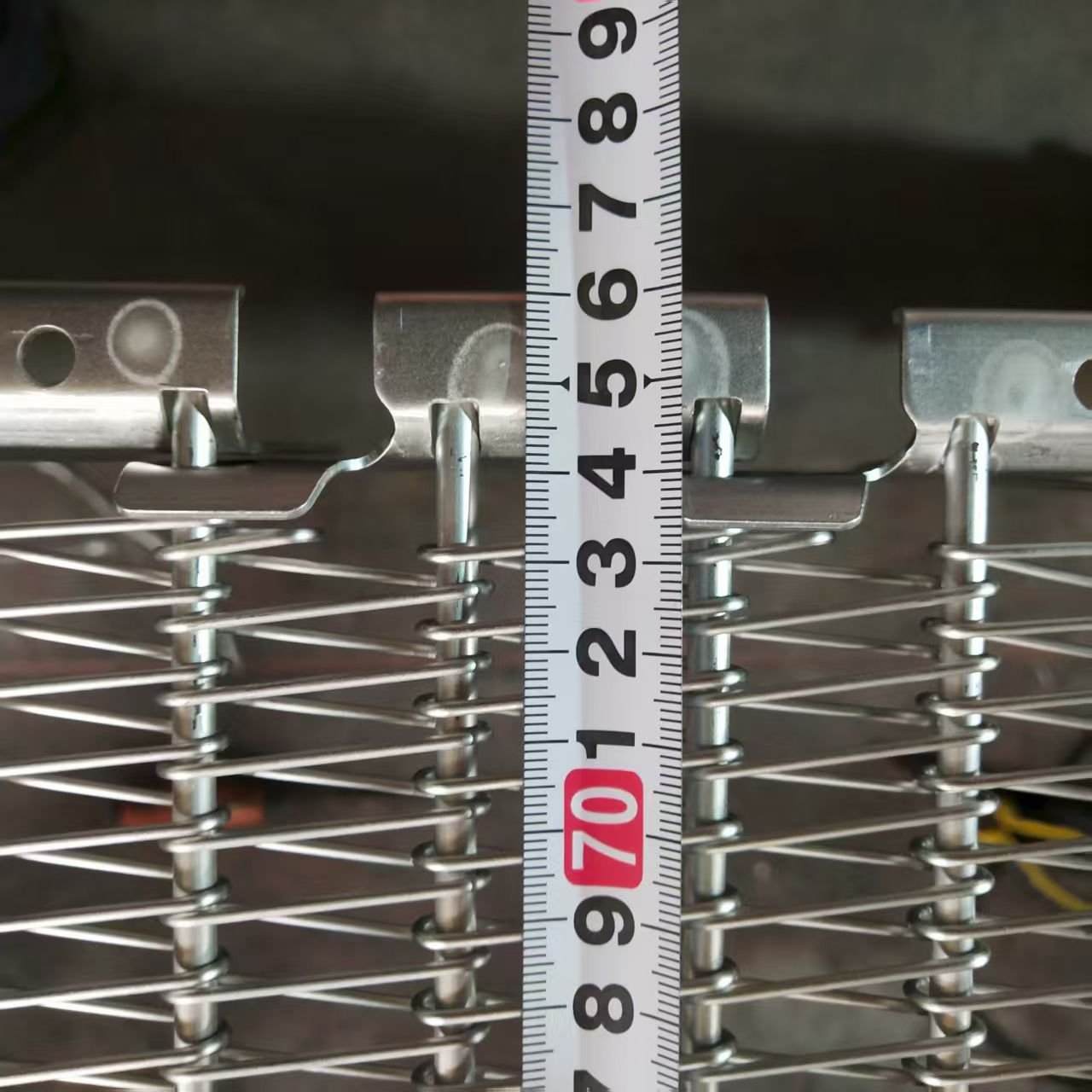
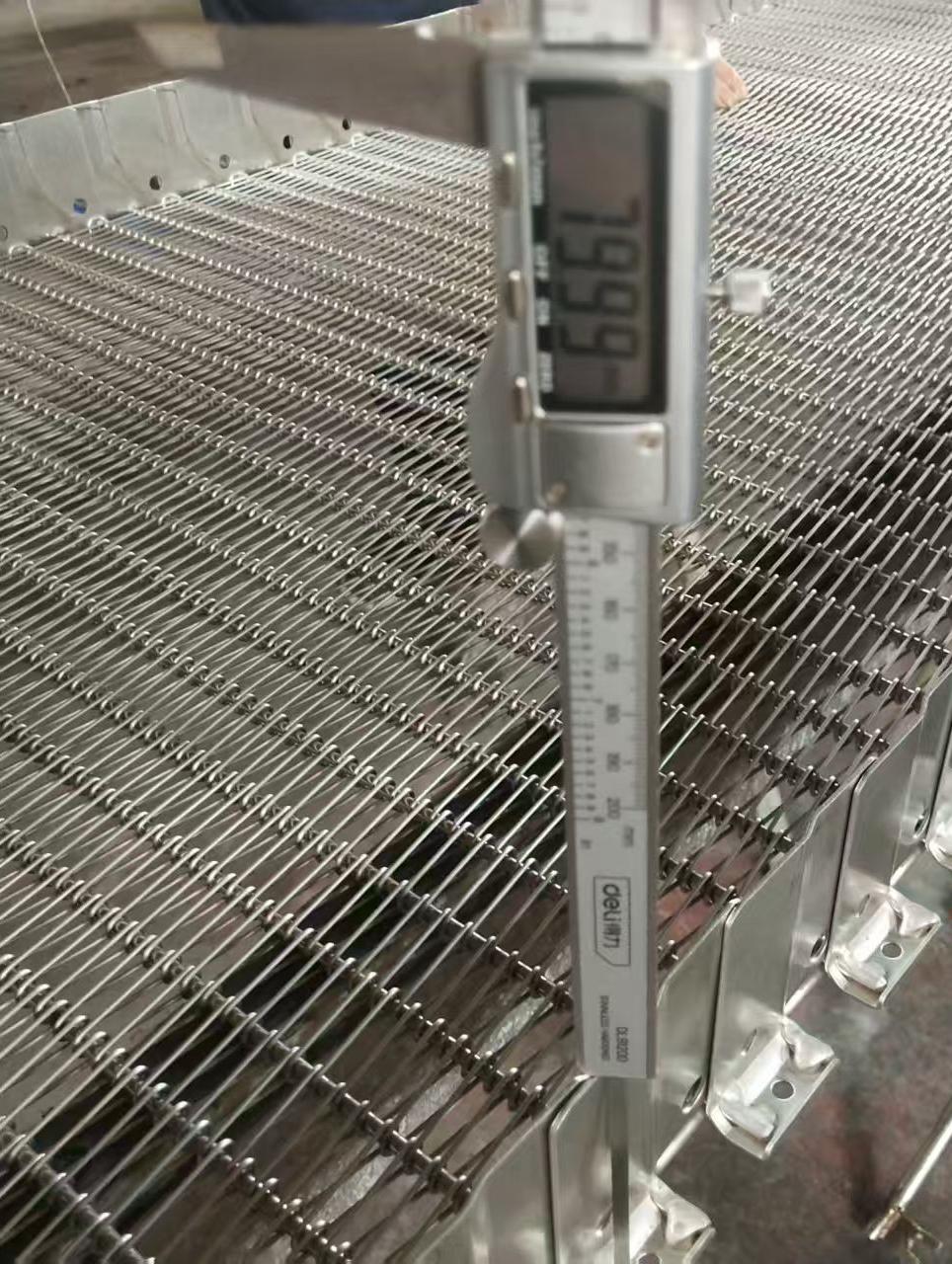
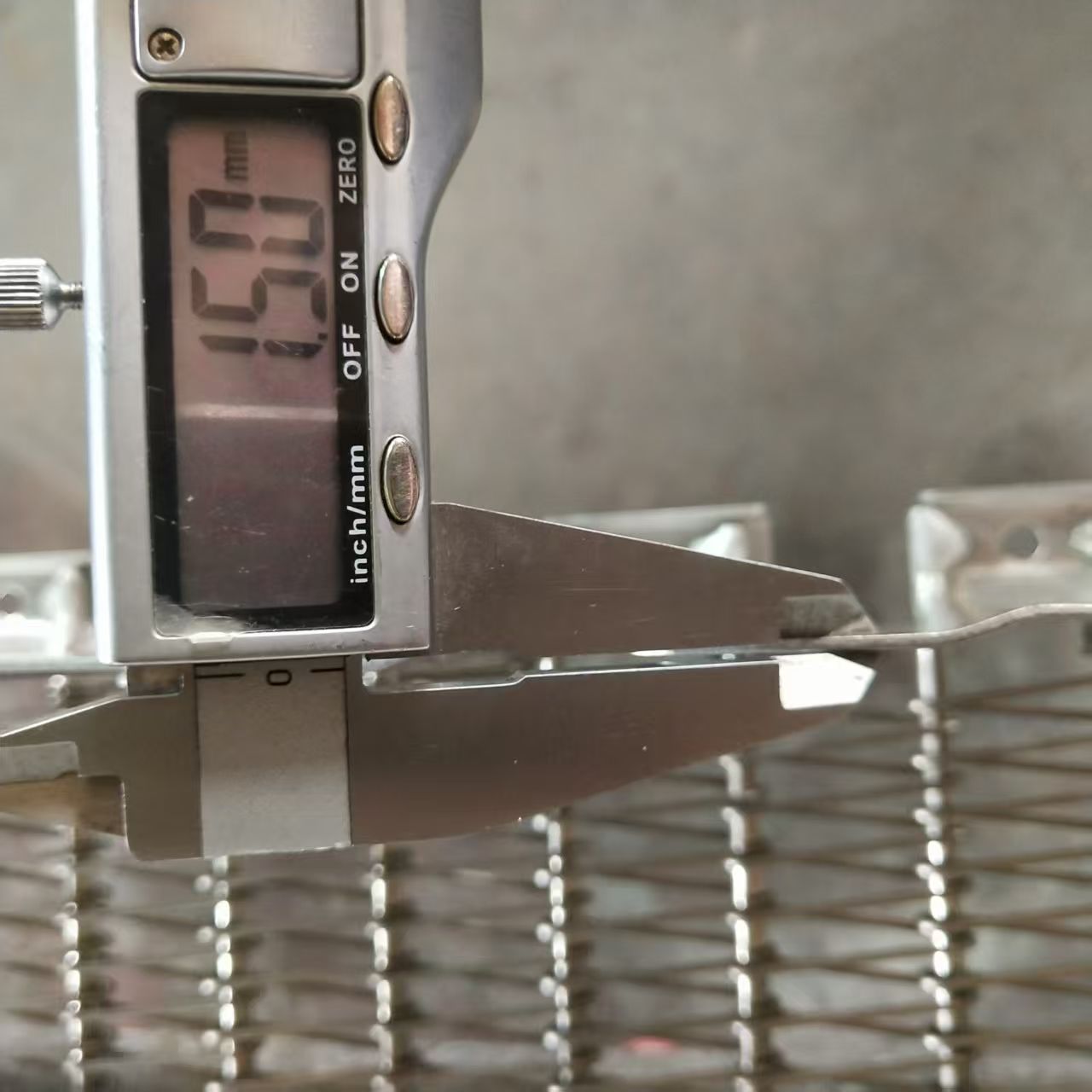
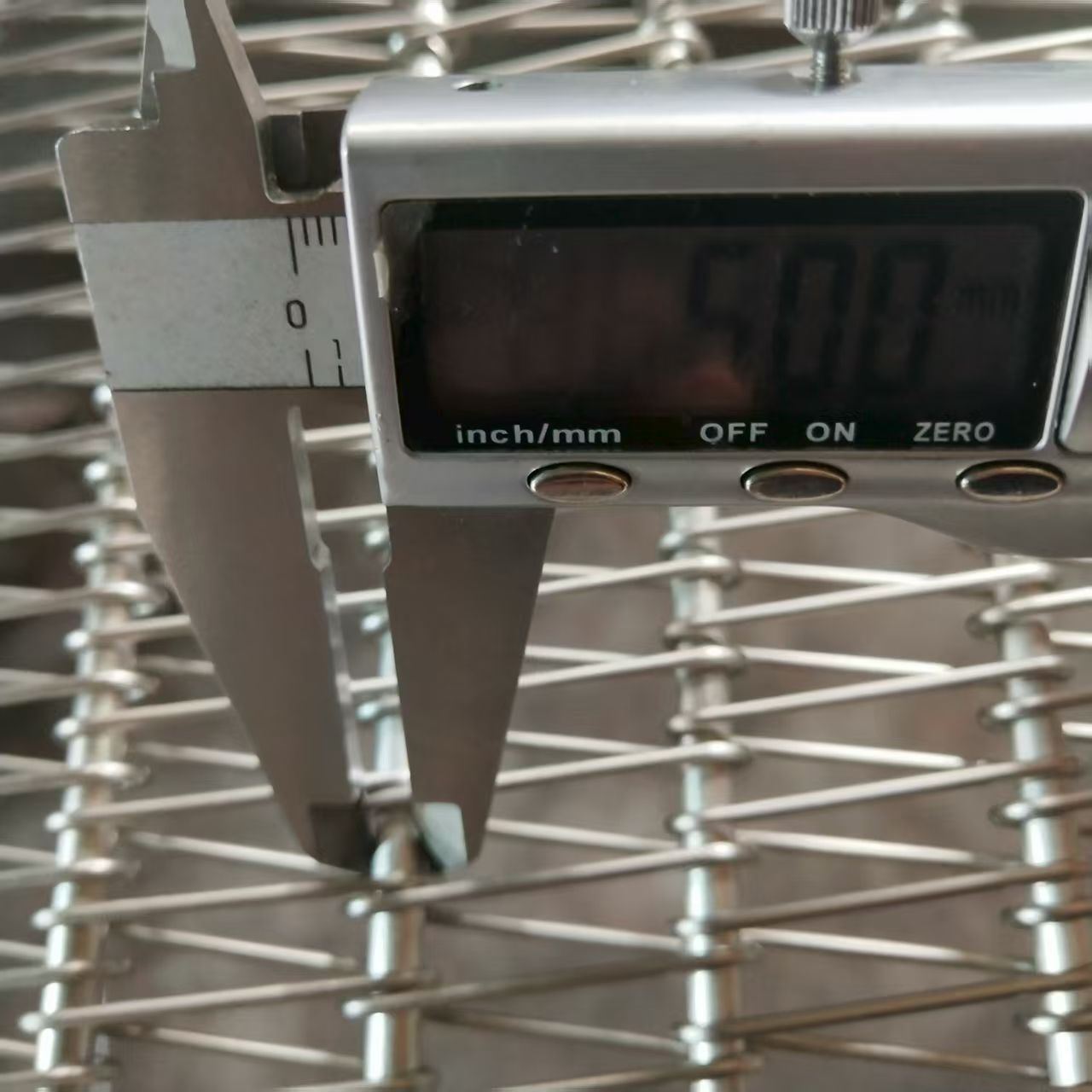
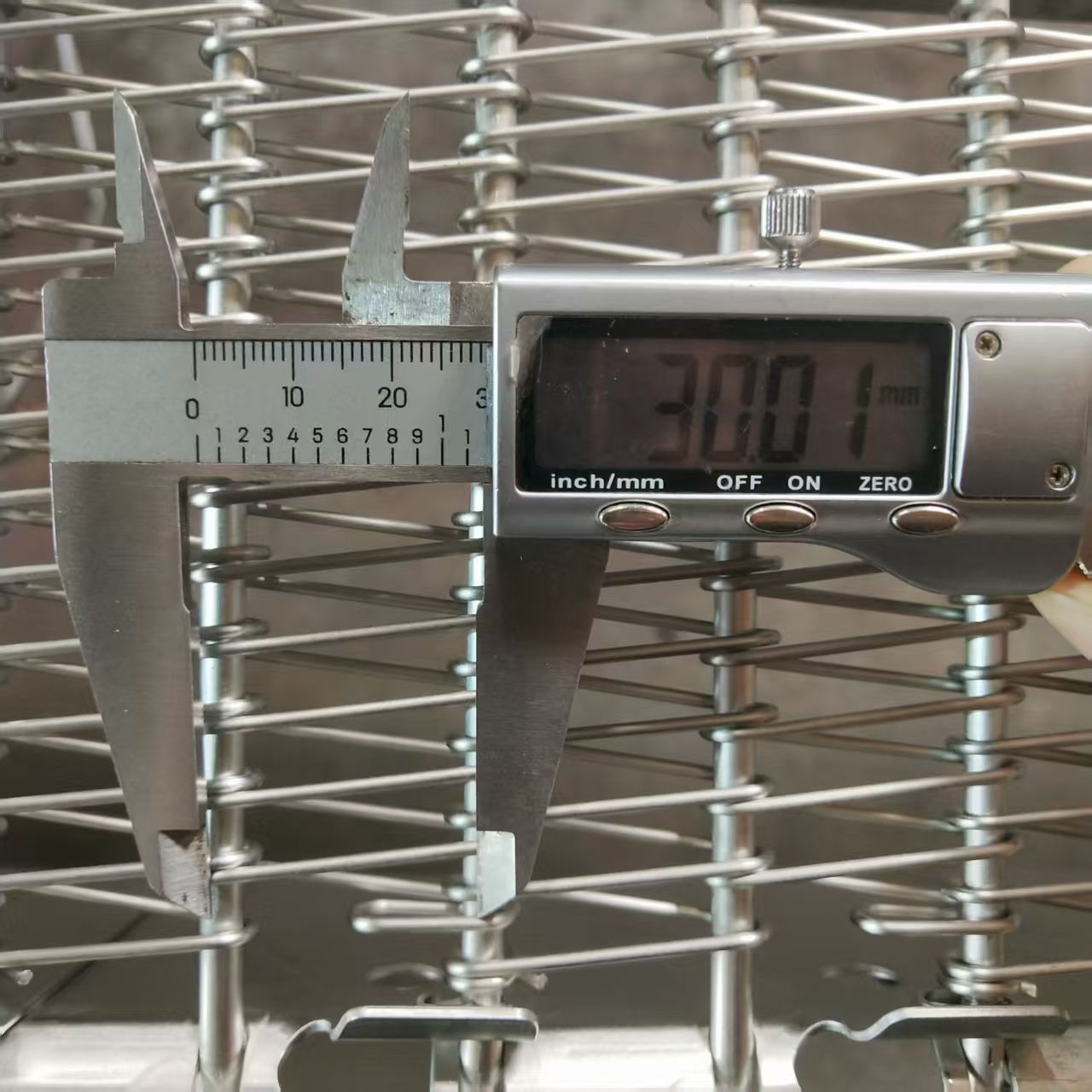
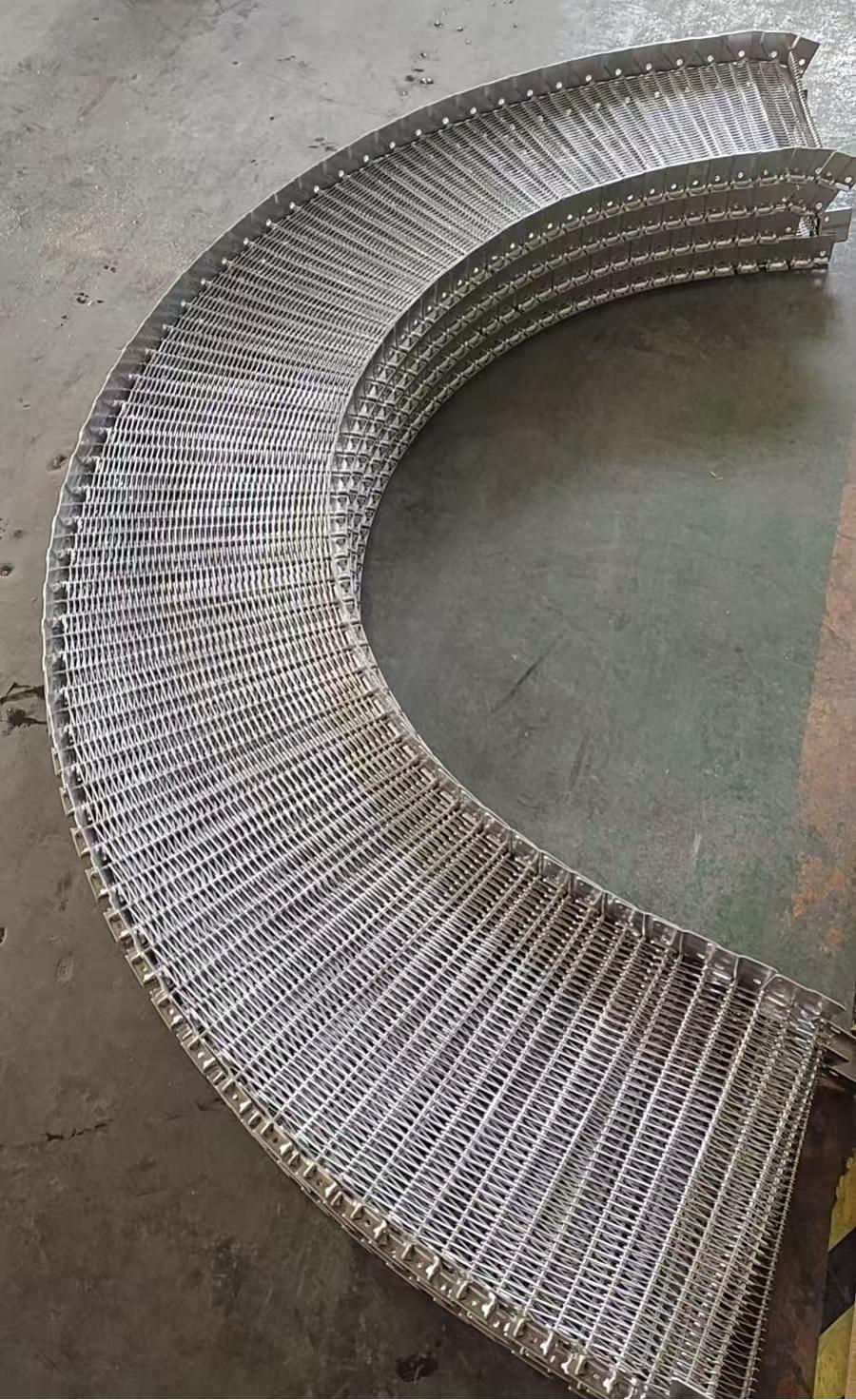
Dimension checks are necessary, but stack behavior must be proven physically. Stack testing verifies upper/lower engagement, binding risk, contraction, and release readiness before shipment.
Self-stacker belt welding is not a simple operation. The stacking plates, slot structures, and edge components must be welded in a precise sequence and held in exact position — or the resulting belt will not stack correctly, regardless of whether individual dimensions appear acceptable on paper.
YIYI Mesh Belt uses two overlapping controls to achieve structural consistency in self-stacker belt welding: welders with 10 or more years of experience on this specific belt structure, combined with custom-designed fixtures that hold every component in the correct position during welding.
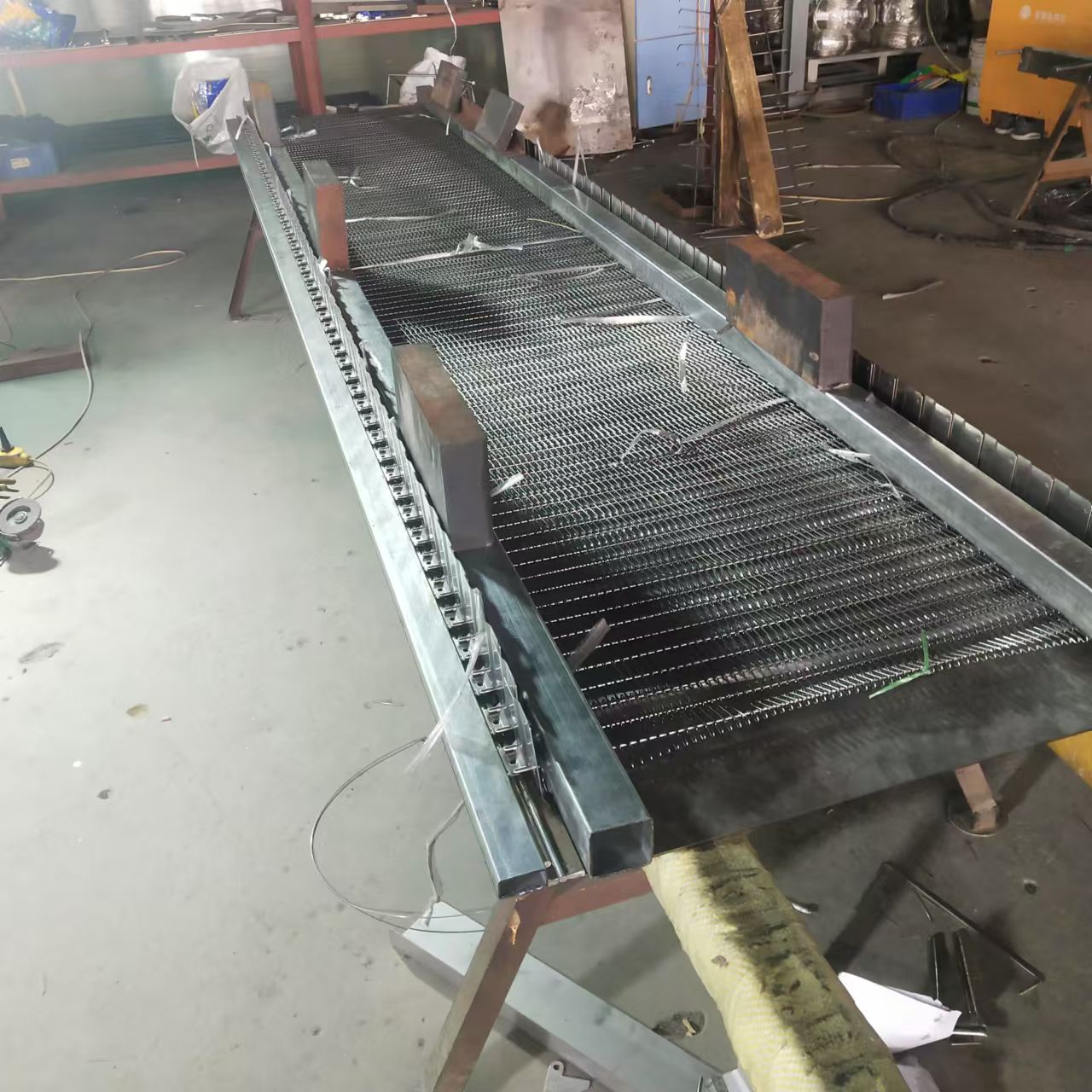
Self-stacker welding must protect stack geometry. Plate position, weld size, heat input, and rod alignment are controlled because small errors affect engagement.
Self-stacker QA focuses on stack behavior, plate position, weld consistency, free contraction, surface cleanliness, and packing readiness.
A self-stacker belt must be compatible with the drive system it operates in. Chain pitch, sprocket engagement, edge chain format, and running direction must all be correct before the belt enters service. Incompatibility in any of these parameters causes drive problems that cannot be corrected after the belt is installed.
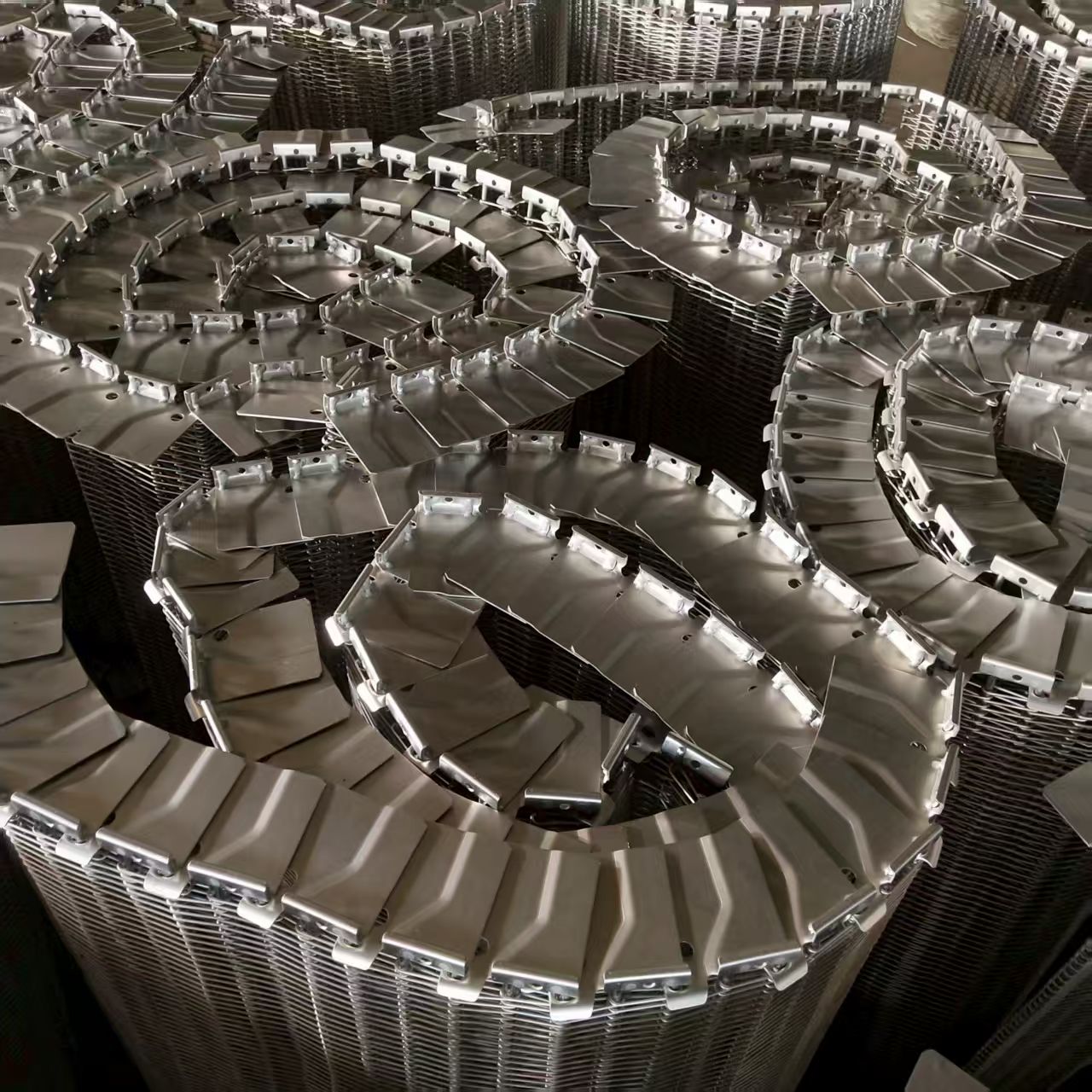
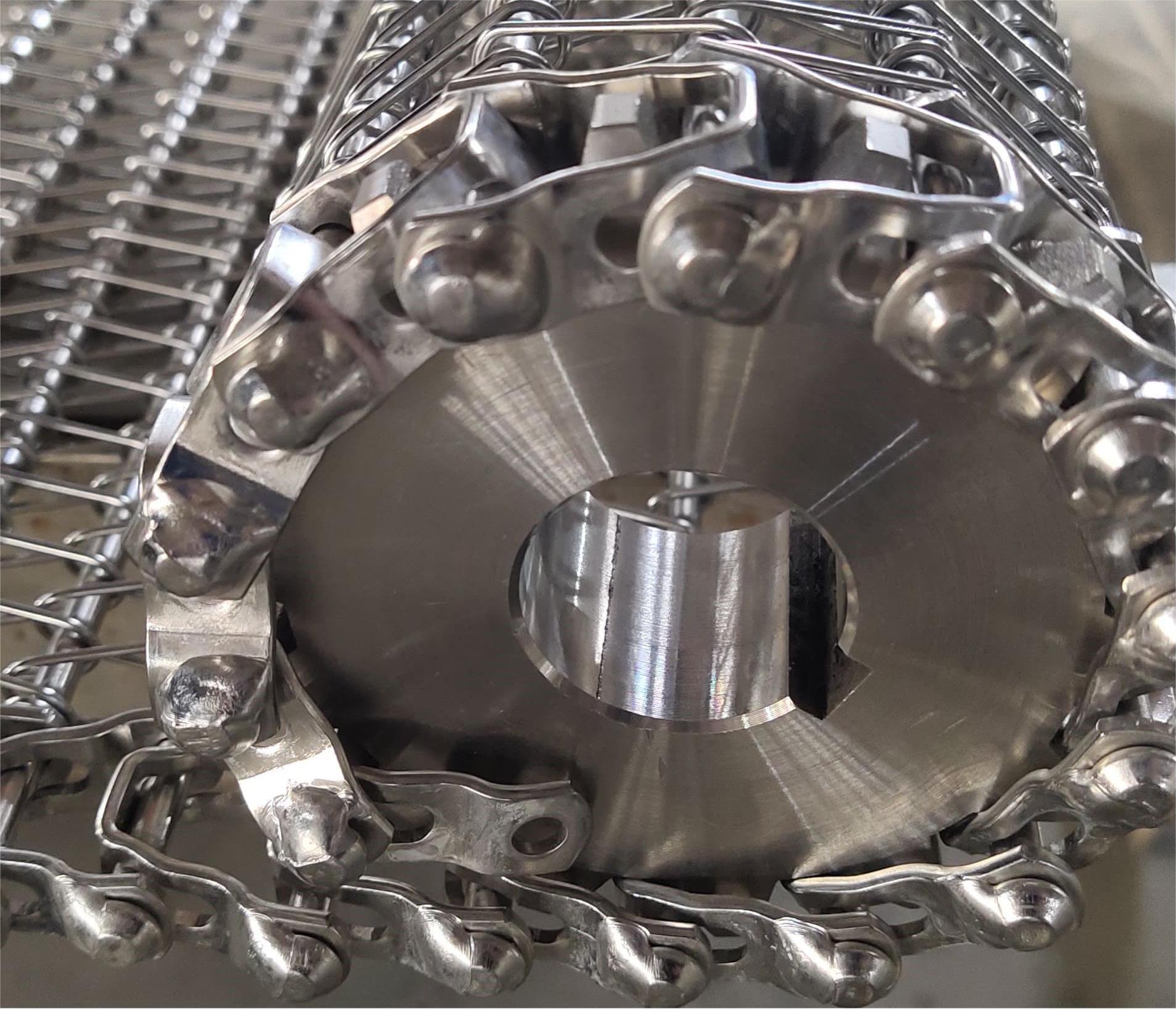
YIYI supports OEM builds, replacement matching, repeat orders, and urgent maintenance projects through the same drawing, sample, stack-test, and inspection workflow.
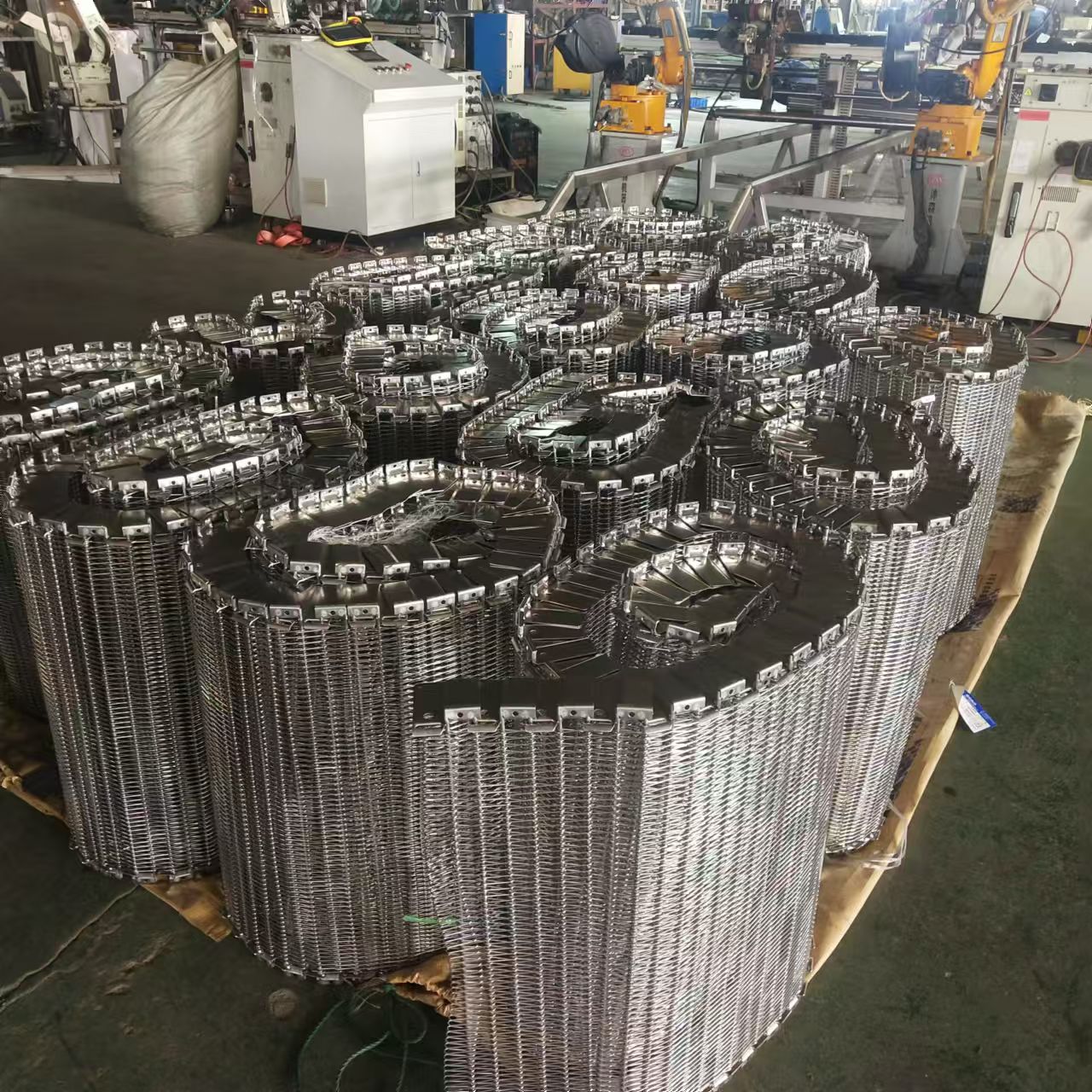
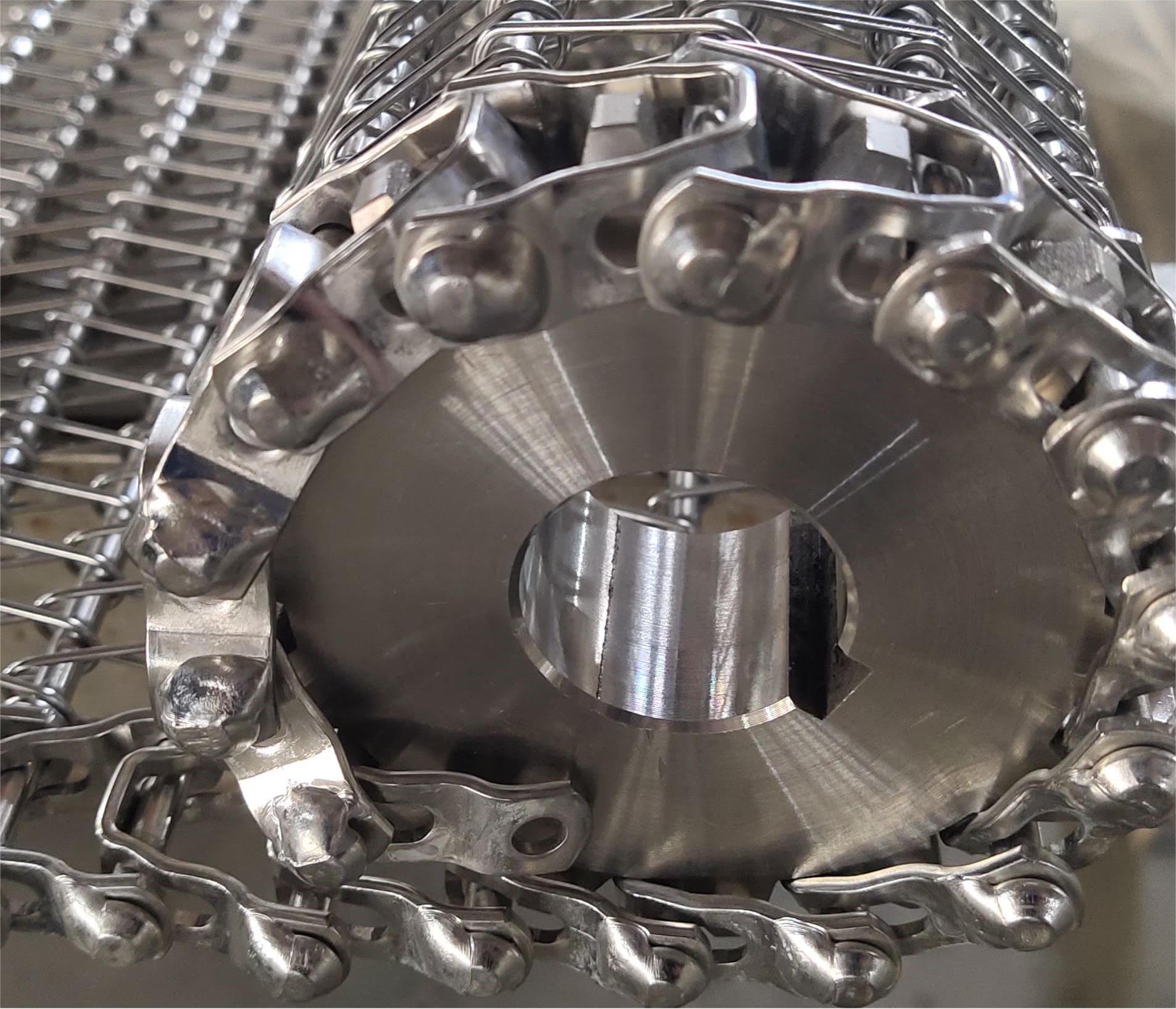
For food-related applications, surface condition affects cleanability and hygienic compliance. Electropolishing is available for self-stacker belts where hygiene-sensitive or cleanroom requirements apply. Post-treatment cleaning, inspection, full drying, neutral packing, and stretch-film protection are completed before export release.
Yes. Every YIYI Mesh Belt self-stacker belt project includes stack testing before final release. Stack testing verifies real stacking behavior, upper and lower engagement, and structural readiness before the belt is approved for shipment.
YIYI Mesh Belt uses custom-designed welding fixtures combined with welders who have 10 or more years of experience on self-stacking belt structures. Fixture-guided welding controls weld position, geometry, and tolerance consistency across every stacking plate and connection point.
Yes. YIYI Mesh Belt supports drawing-based production. Technical drawings, dimensional specifications, and application requirements are used as the primary production reference.
Yes. Replacement projects are supported through sample review, dimensional matching, and engagement compatibility analysis with the existing system before production begins.
Key parameters include overall width, effective width, wire diameter, spiral pitch, rod diameter, chain pitch, one-side or two-side shrinkable layout, long-slot or short-slot structure, edge geometry, stack engagement requirement, and running direction.
Yes. YIYI Mesh Belt can supply matched spare components including stacking plates, rods, chain pieces, and connection parts matched to the original belt specification.
Yes. All self-stacker belts go through 100% final inspection before shipment release, including stack test verification, dimensional check, surface inspection, and packing confirmation.
Electropolishing is available for food-related and hygienic applications. Belts are cleaned, fully dried, and inspected for surface condition before export packing.
Send the drawing if you have it. Send sample measurements if you are matching an existing system. Or send the application details if you are still confirming geometry. We will reply around stacking behavior, matching risk, and supply practicality, not just price.