Why Does In-House Wire Drawing Improve Metal Conveyor Belt Quality?
A belt is as good as its wire. A manufacturer that buys finished wire depends on someone else’s control.

Short answer
In-house wire drawing improves belt quality because the manufacturer controls the wire from the rod: it chooses the mother material, checks composition on arrival, draws to the diameter the belt needs and checks every batch. Stock and records also stay in its hands.
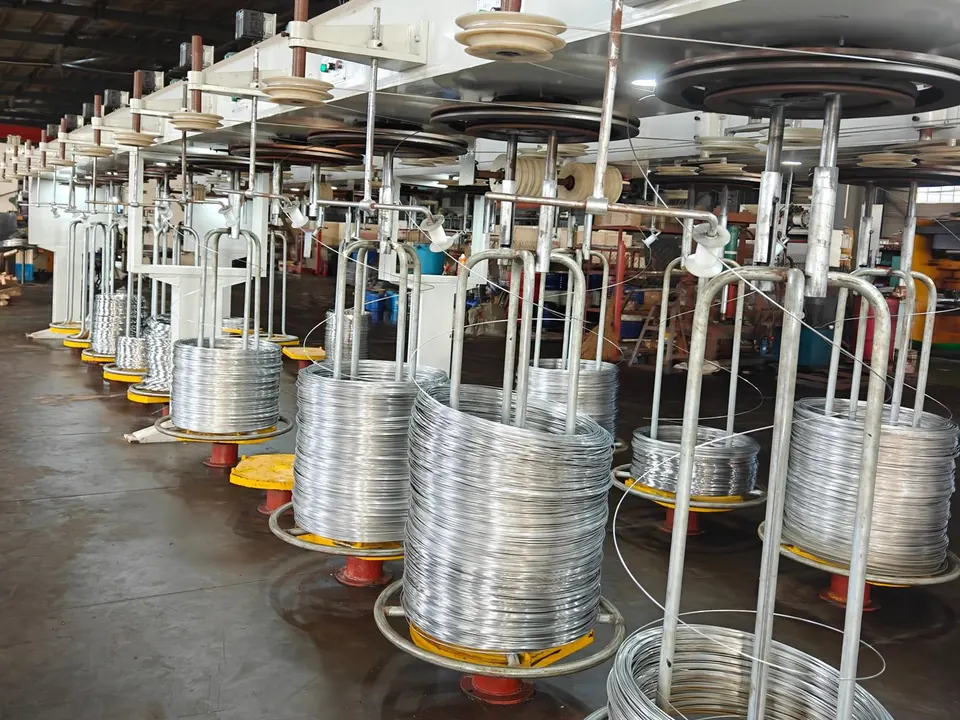
I am Sunny Ye, Global Sales Director at YIYI MESH BELT in Ningjin, Shandong, China. Our manufacturing experience dates back to 1998. We draw stainless wire and round bar in our own workshop.
At a glance
| Product | All belts made from drawn wire and rod |
|---|---|
| Application | Spiral, self-stacking, woven, eye link and other belts |
| Key parameters to confirm | Mother material, composition, diameter, hardness, tensile, stock, records |
| Buyer type | OEM buyers, quality teams, distributors |
| What to send for a quote | Your material and documentation requirements |
What does in-house drawing control?
Control starts one step earlier than at most belt makers.
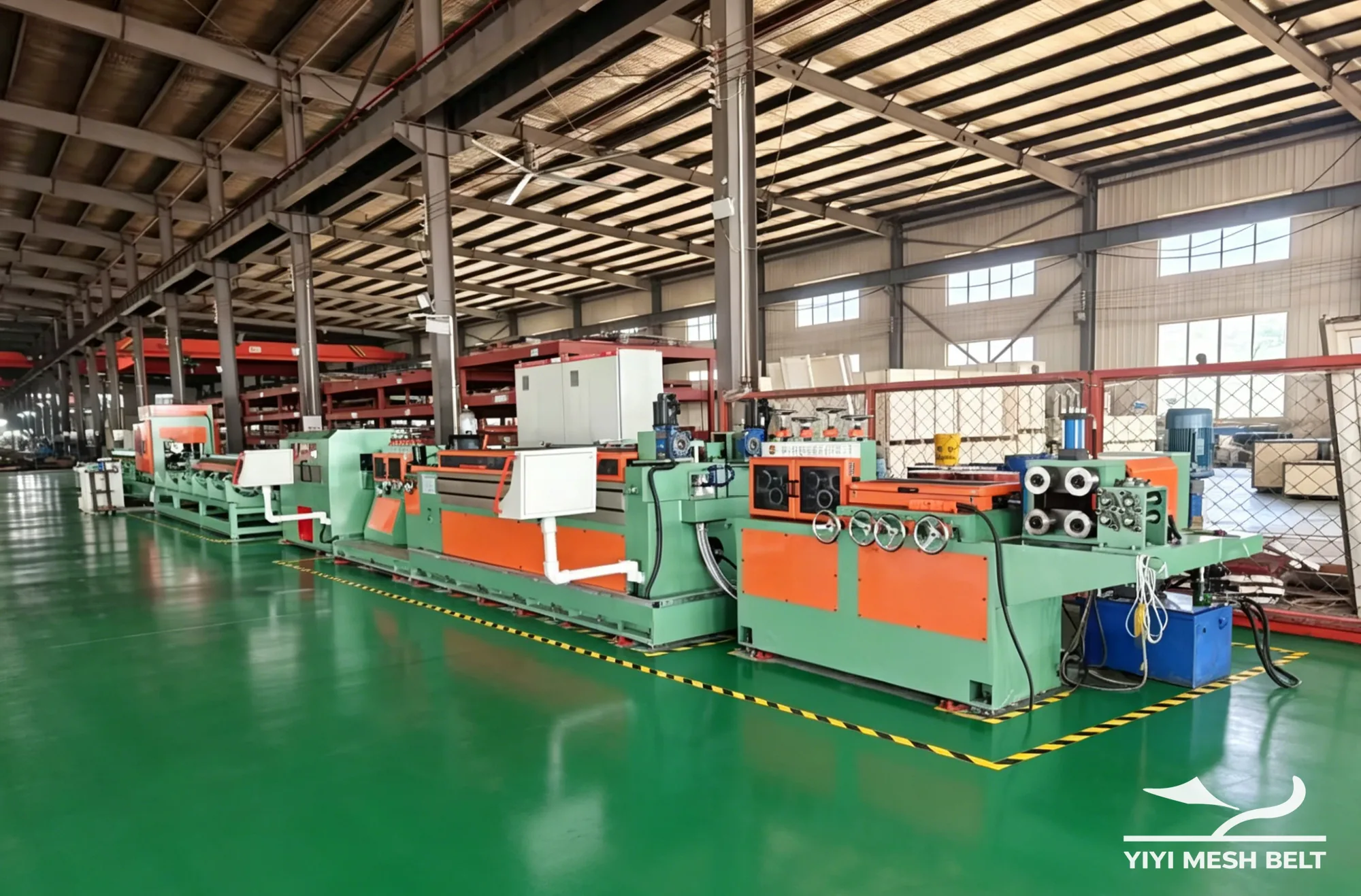
In-house drawing controls the steps between the steel mill and the belt: which wire rod and bar are bought, how each batch is checked, and which diameter is drawn. A belt maker that buys finished wire controls none of these and sees the wire when it arrives.
| Material | Checks |
|---|---|
| 5.0 mm wire rod, on arrival | Composition by spectral analysis, diameter, heat number recorded |
| 12 mm round bar, on arrival | Composition by spectral analysis, diameter, heat number recorded |
| Drawn wire | Diameter, tensile test, hardness, sample kept |
| Drawn rod | Diameter, hardness, sample kept |
How does it improve the belt?
Consistent wire makes a consistent belt.
Consistent wire diameter and properties make spirals form evenly, welds hold the same way and the mesh lie flat along the whole belt. When the material is checked before drawing and the drawn wire is checked again, variation is caught before it reaches forming, not after the belt is built.
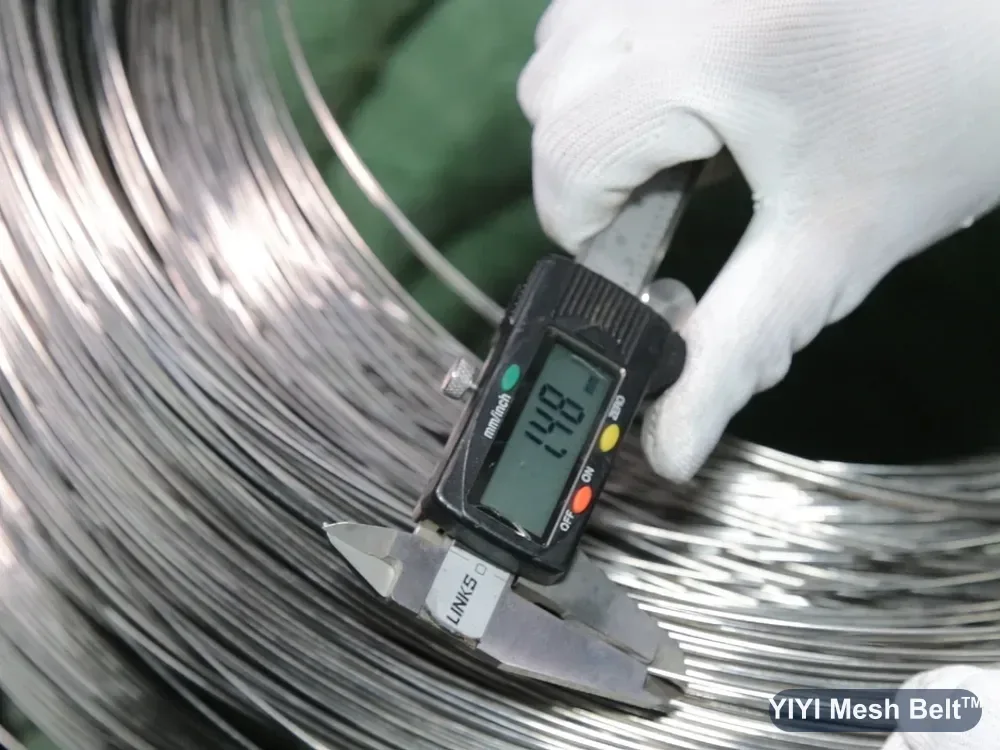
Every drawn batch has a retained sample, and the material used is recorded for every belt, so a question months later can be answered from records.
How does it help supply?
Stock and drawing capacity remove a waiting step.
In-house drawing removes the wait for an outside wire supplier. We keep regular stock of 5.0 mm wire rod and 12 mm raw material and draw the diameters each order needs, so production can be planned from our own material.
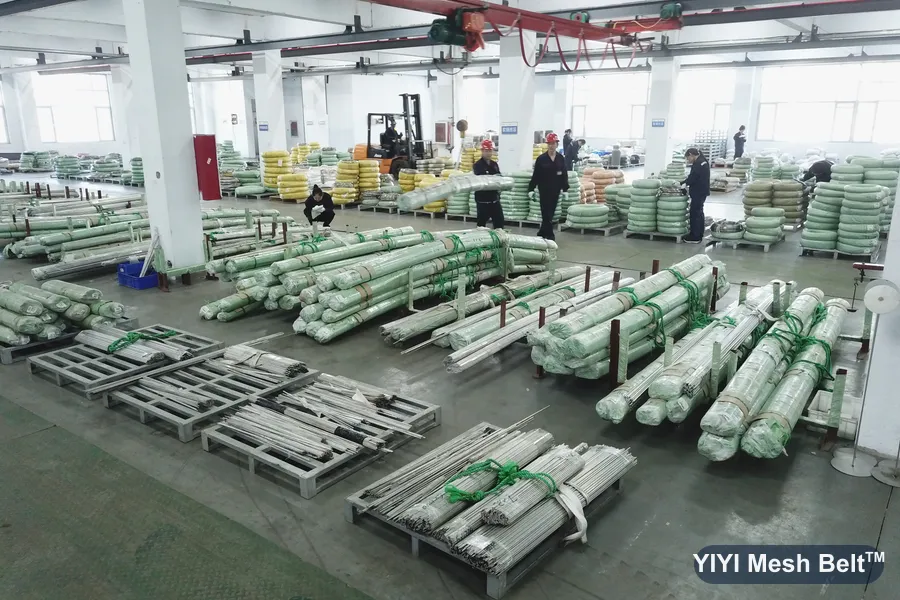
Lead time is still confirmed with each quotation; in-house drawing removes one dependency, it does not make lead time unlimited.
What should a buyer ask about wire?
Three questions show how a supplier controls material.
Ask three questions: does the supplier draw its own wire and rod or buy them finished, how is composition checked on arrival, and what material documentation comes with your order? Clear answers, with photos of the drawing line and the checks, show real material control.
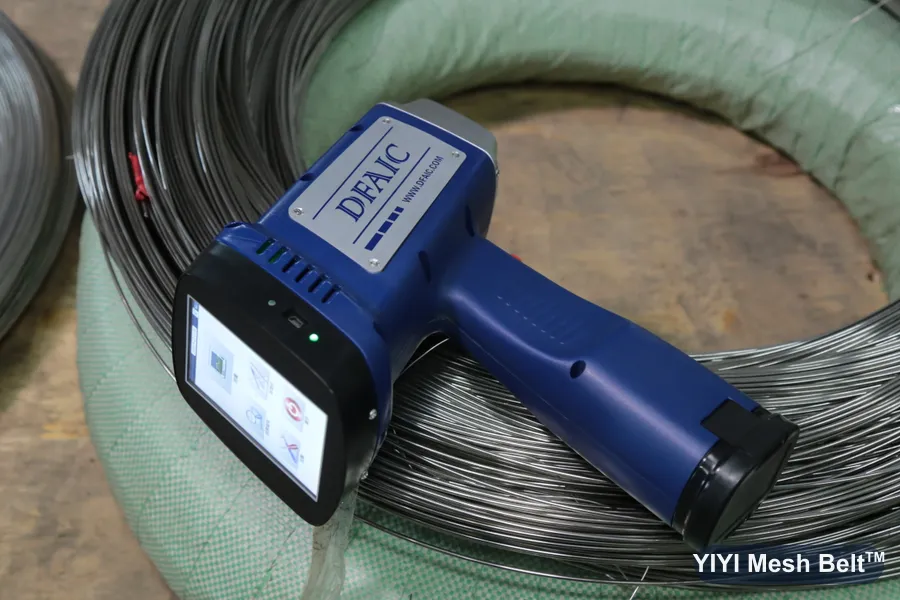
Material documentation for your order is available, and the wire is drawn by us from checked material.
When this is not the right choice
In-house drawing is not a reason to skip checks on the finished belt; final inspection still applies.
A magnet test is not a check of wire grade; spectral analysis is.
From our engineering experience
In our early years, when we bought wire from outside, we met fake 304: it looked fine at first, but after long use the spiral belt rusted and the mesh was no longer flat.
That is why we invested in our own drawing equipment and now buy wire rod from established stainless steel mills, check it ourselves and draw it to size. My advice: ask every supplier where its wire comes from.
Evidence from our work
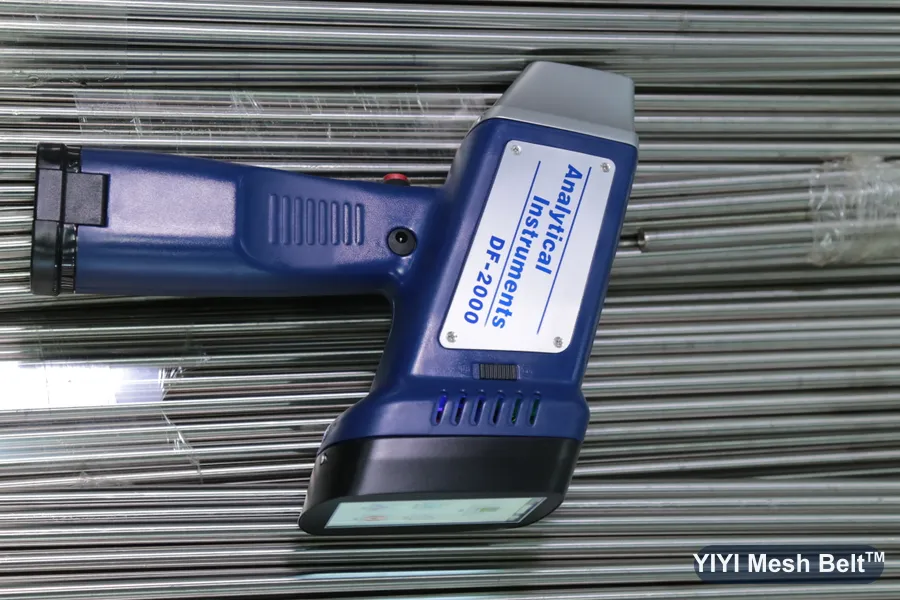
- Situation
- Wire rod and round bar bought from established stainless steel mills and drawn in our own workshop.
- What we checked
- Composition by spectral analysis and diameter on arrival; diameter, tensile and hardness on drawn batches; samples kept; material recorded per belt.
- Why it matters
- Controlling the wire from the rod removes the risk we met when buying finished wire.
- Result
- Regular stock of 5.0 mm wire rod and 12 mm raw material, drawn to each order’s diameters.
- Buyer lesson
- Ask where the wire comes from; it decides the belt.
FAQ
Which diameters do you draw?
Stainless wire, and round bar from 12 mm raw material, drawn to the diameters on each approved drawing.
How is incoming material checked?
Composition by spectral analysis and diameter, with the heat number recorded.
Do you keep raw material in stock?
Yes. We keep regular raw-material stock of 5.0 mm wire rod and 12 mm raw material for drawing.
Which documents do I receive?
Material documentation for your order, prepared per order.
Conclusion
Drawing wire and rod in-house means checked material, consistent wire, records and stock. Ask any supplier where its wire comes from.
Useful files for your project
I work on metal conveyor belt projects, from new spiral freezers to belt replacement. I share project notes and replacement checklists on LinkedIn.
Technical reviewer: Sunny Ye, Global Sales Director, YIYI MESH BELT · Last updated: 2026-10-12