+86 134 5177 3742 info@yiyimeshbelt.com Mon - Fri 08:00 - 17:00 CST
Manufacturing Since 1998 ISO 9001 Certified Third-Party Factory Audit Welcome
CORE PRODUCT - SPIRAL FREEZER BELT

Spiral Freezer Belt for Buyers Who Need It to Fit, Run, and Repeat

Spiral freezer belts must fit the drum, run smoothly in low temperature, and repeat the same specification later. YIYI supports OEM builds and replacement projects with drawing-based production, robotic welding, drum-fit review, and final inspection proof.
Robotic Welding Drawing-Based Production Drum-Matched Configuration Single / Double / Three-Row Chain 100% Final Inspection Replacement Support
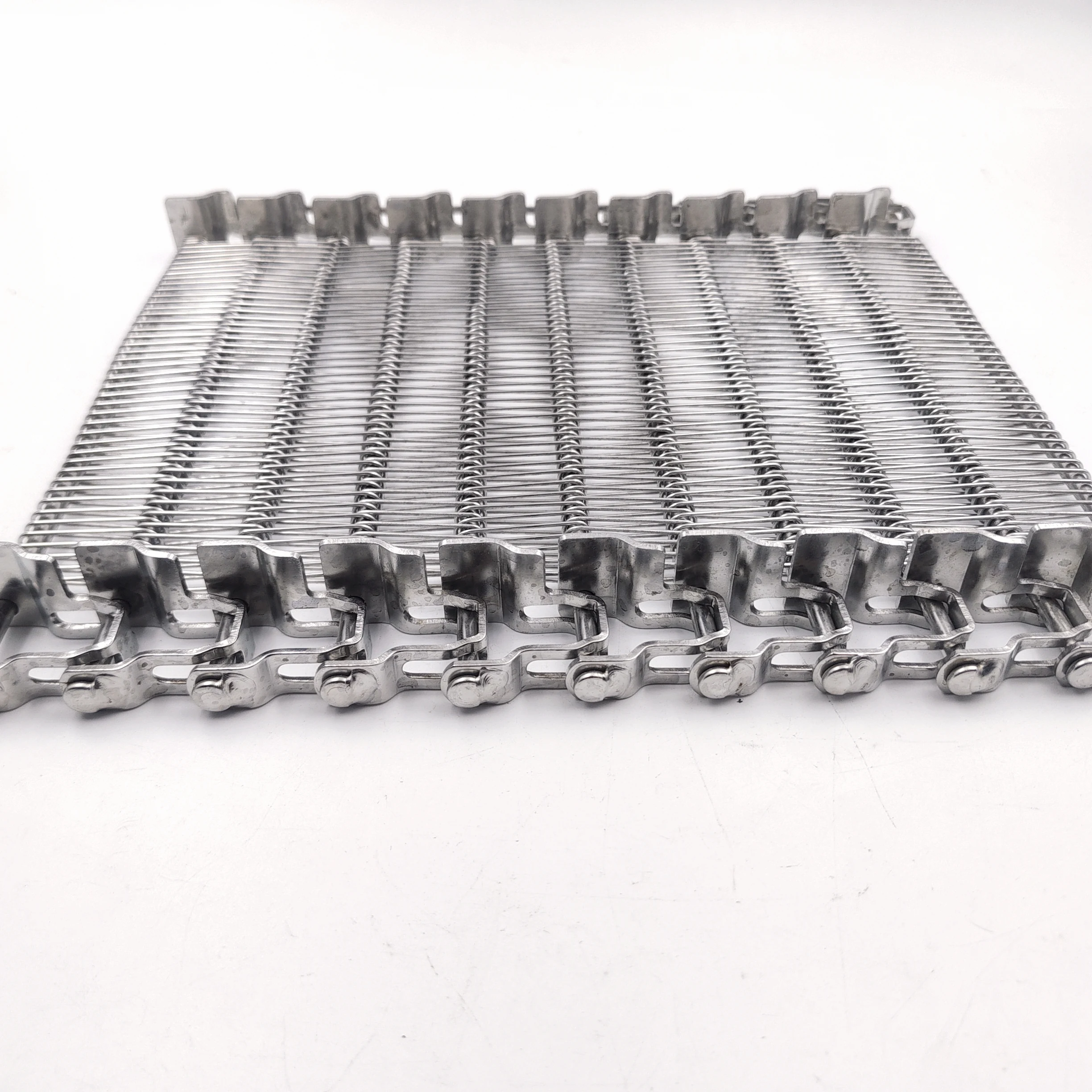
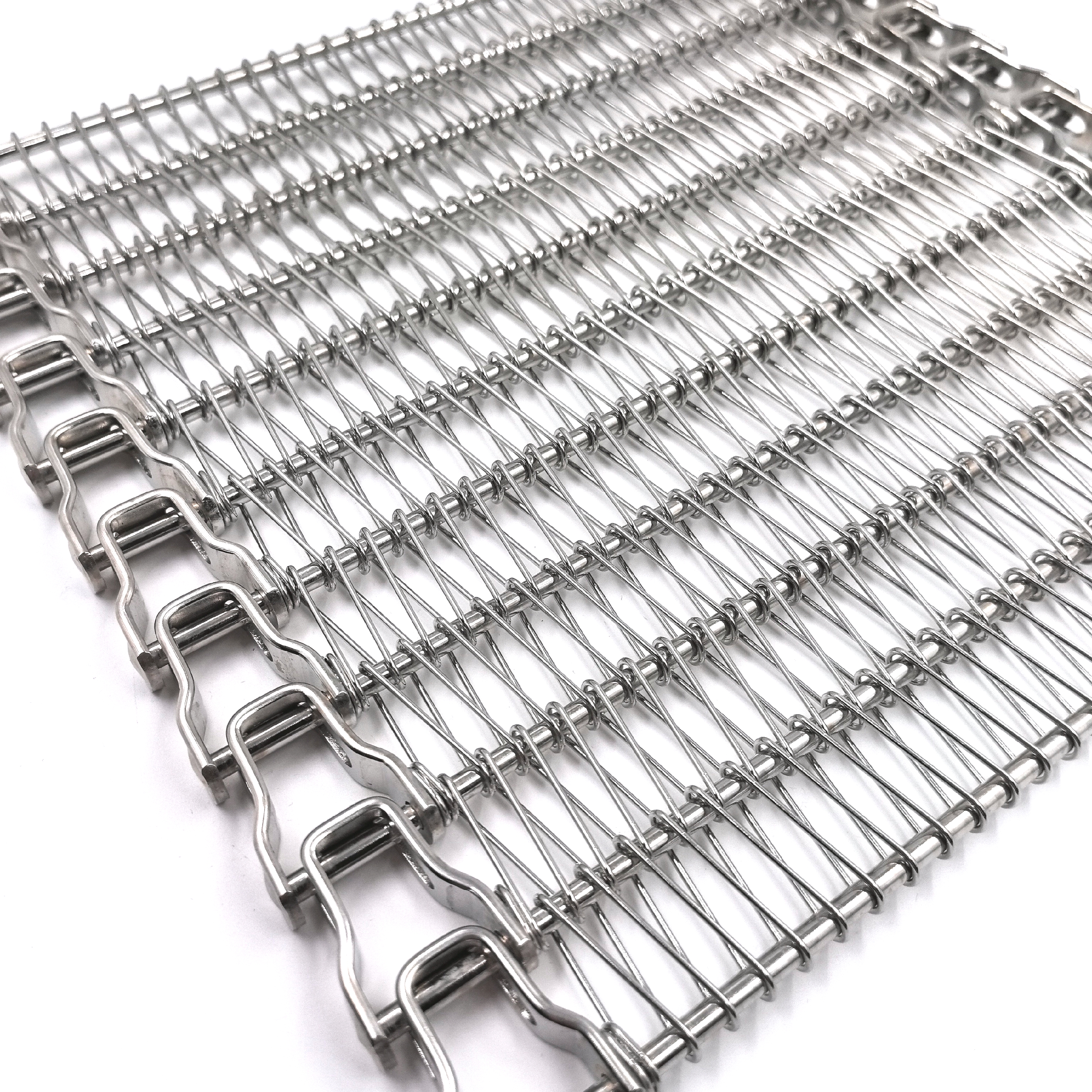
Spiral freezer belt close-up with chain edge and stainless mesh surface on white background
Spiral Freezer Belt
Chain edge, mesh surface, and formed structure shown clearly for buyer review.
OEM Production
Replacement Matching
Robotic Welding
Drum-Matched
Three-Row Chain Option
100% Final Inspection
SPIRAL PROJECT REVIEW DESK

Start With Fit Risk, Not a Generic Belt Quote

For a spiral freezer belt, the buying risk is usually mismatch: chain pitch, rod pitch, belt width, drum diameter, sprocket engagement, running direction, or material condition. YIYI reviews these points before quotation so OEM builders and replacement teams can reduce restart risk.

What should the buyer send first? Drawing, old belt photos, overall width, chain pitch, rod pitch, drum diameter, sprocket details, running direction, material grade, and application temperature. Send Drawing / Old Belt Photo
01 Fit Geometry

Confirm spiral tower and drum fit

  • Overall belt width and usable belt width
  • Drum diameter and inside turn radius
  • Left-hand or right-hand running direction
02 Pitch Data

Check pitch before production

  • Spiral pitch and rod pitch
  • Chain pitch and chain row count
  • Single-row, double-row, or three-row chain option
03 Drive Match

Review sprocket engagement

  • Sprocket tooth profile and shaft layout
  • Chain edge clearance and drive side
  • Replacement fit against existing equipment
04 Production Proof

Robotic welding for repeatability

  • Weld position and weld size consistency
  • Edge finish and burr control
  • Repeat order consistency records
05 Testing Proof

Drum and QA checks before release

  • Drum-fit or contraction review
  • Dimension and surface inspection
  • Pre-shipment photos or video when needed
06 Custom Supply

Built to project specification

  • 304, 316, or project-specified stainless steel
  • Cleaning, drying, and export packing review
  • Neutral shipment proof after privacy check
Recorded spiral freezer belt production examples include overall widths such as 300, 400, 650, 710, 800, 1000, 1100, 1858, 2000, and 2300 mm, plus different chain-row layouts and drum-fit requirements. Final specification is always confirmed by drawing, old belt photo, or sample measurement.
APPLICATION & FIT

Built for Spiral Freezer Systems Where Matching Risk Is Expensive

Most spiral freezer belt inquiries start from three risks: OEM fit, replacement matching, or repeat supply consistency. The belt must match drum geometry, chain layout, turning direction, and drive engagement before production.

YIYI produces custom spiral freezer belts for IQF freezers, spiral cooling systems, and food processing lines. Single-row, double-row, three-row, and special chain structures are confirmed by drawing or sample.

IQF Spiral Freezer Blast Freezer Spiral Cooling System OEM Equipment Build Direct Replacement Repeat Supply
Spiral freezer belt product view for IQF and spiral cooling systems
Application Fit
Designed for stable running in spiral freezing and cooling systems.

Established
Since 1998
Factory Area
27,000 sqm
Production Equipment
280+ Machines
Annual Output
15,000 m/month Belt Capacity
Energy System
6,000 sqm Solar PV

PRODUCTION EVIDENCE

Robotic Welding, Material Check, and Drum Test Proof

For spiral freezer belt projects, the strongest trust proof is not a claim. It is factory evidence: automatic welding, stainless wire control, raw material verification, drum-fit review, and rejected-risk examples before shipment.

Priority Proof
Robotic Welding Process

Repeatable weld position and weld size

Automatic welding is the main production proof for spiral freezer belts because weld uniformity affects running stability and repeat orders.

Raw Material
Stainless Wire and Material Check

Material verification before production

Raw material and wire condition are controlled before forming, welding, and final QA for food and industrial applications.
Spiral freezer belt drum fit and contraction review
Drum Test
Drum Fit / Contraction Review

Matching the spiral tower geometry

Drum diameter, turning direction, chain row count, and sprocket engagement are reviewed before shipment release.

ANONYMIZED SHIPMENT CASES

Actual Production and Shipment Evidence Without Customer Exposure

Public case evidence keeps the engineering value while removing customer names, order numbers, shipping marks, labels, faces, and logistics details.

OEM spiral freezer build

Drawing-based belt configuration with robotic welding, chain row confirmation, drum-fit review, final QA images, and export packing record.

Replacement belt matching

Old belt photo and sample dimensions used to confirm width, wire diameter, chain pitch, rod pitch, edge finish, and drum compatibility.

Custom-built supply

Metal conveyor belts are custom-built. Final quotation should be confirmed with drawings, old belt photos, drum diameter, and application details.

Recorded width examples

Production records include 300, 400, 650, 710, 800, 1000, 1100, 1858, 2000, and 2300 mm overall-width examples. Final width is drawing-based.

Pitch and rod checks

Review points include spiral pitch, rod diameter, rod pitch, chain pitch, plate thickness, plate height, and chain-center distance.

Chain and drum fit

Single-row, double-row, three-row, and multi-row chain layouts are reviewed against drum diameter, inside radius, and sprocket engagement.

Release risk points

Weld position, weld size, burr-free edge, flatness, smooth contraction, cleaning, drying, and neutral packing are checked before release.

SPIRAL FREEZER BELT ENGINEERING REVIEW

Structure, Drive Matching, and Spiral Tower Fit

A spiral freezer belt is not selected by appearance alone. For IQF freezing, spiral cooling, proofing, cooking, steaming, and low-temperature food processing lines, the belt must match the spiral tower geometry, drum diameter, inside turn radius, sprocket engagement, chain pitch, rod pitch, belt width, product load, and running direction.

The main buying risk is mismatch. If the chain row layout, turn radius, or drive engagement is wrong, the belt may track poorly, lift in the curve, create excessive tension, or fail to repeat smoothly in later replacement orders. YIYI reviews these points before quotation so OEM builders and replacement teams can confirm the belt as an engineered component, not just a metal mesh product.

Spiral Tower Geometry

Drum diameter, inside radius, tower direction, belt path, and available tension determine whether the spiral freezer belt can contract and return smoothly.

Chain Edge and Row Count

Single-row, double-row, or three-row chain structures are reviewed together with chain pitch, rod pitch, and side clearance for replacement matching.

Positive Drive Engagement

Sprocket tooth profile, chain engagement, shaft position, and running direction are checked to reduce jumping, side pull, and unstable tracking.

Food Processing Applications

Used for spiral freezing, IQF tunnels, cooling, proofing, cooking, steaming, pasteurizing, bakery, meat, seafood, poultry, and prepared food lines.

Low-Temperature Performance

Material grade, weld consistency, mesh opening, air circulation, drainage, and cleanability are reviewed for cold rooms and hygienic production.

Repeat Supply Control

Drawings, samples, and production records keep the replacement conveyor belt specification repeatable across future OEM and distributor orders.

SPIRAL BELT REVIEW FLOW

From Application Conditions to Final Inspection

The review flow below places the most important spiral freezer belt keywords into the same order an engineer normally uses: application, geometry, drive, production, running check, and packing.

01
Application ReviewFreezing, cooling, proofing, cooking, product load, temperature, sanitation, and air-flow needs.
02
Drawing / Sample CheckBelt width, mesh opening, spiral pitch, rod diameter, chain pitch, and replacement sample condition.
03
Drum and Radius MatchSpiral drum diameter, inside turn radius, contraction behavior, and left-hand or right-hand running.
04
Drive CompatibilitySprocket engagement, chain row count, side drive clearance, shaft position, and positive drive stability.
05
Robotic WeldingControlled weld position, weld size, edge finish, joint profile, and repeatable production record.
06
Inspection and PackingRunning check, surface inspection, drum test where required, export packing, and repeat-order specification.
CLEAN PRODUCT PHOTOS

Spiral Freezer Belt Product Views

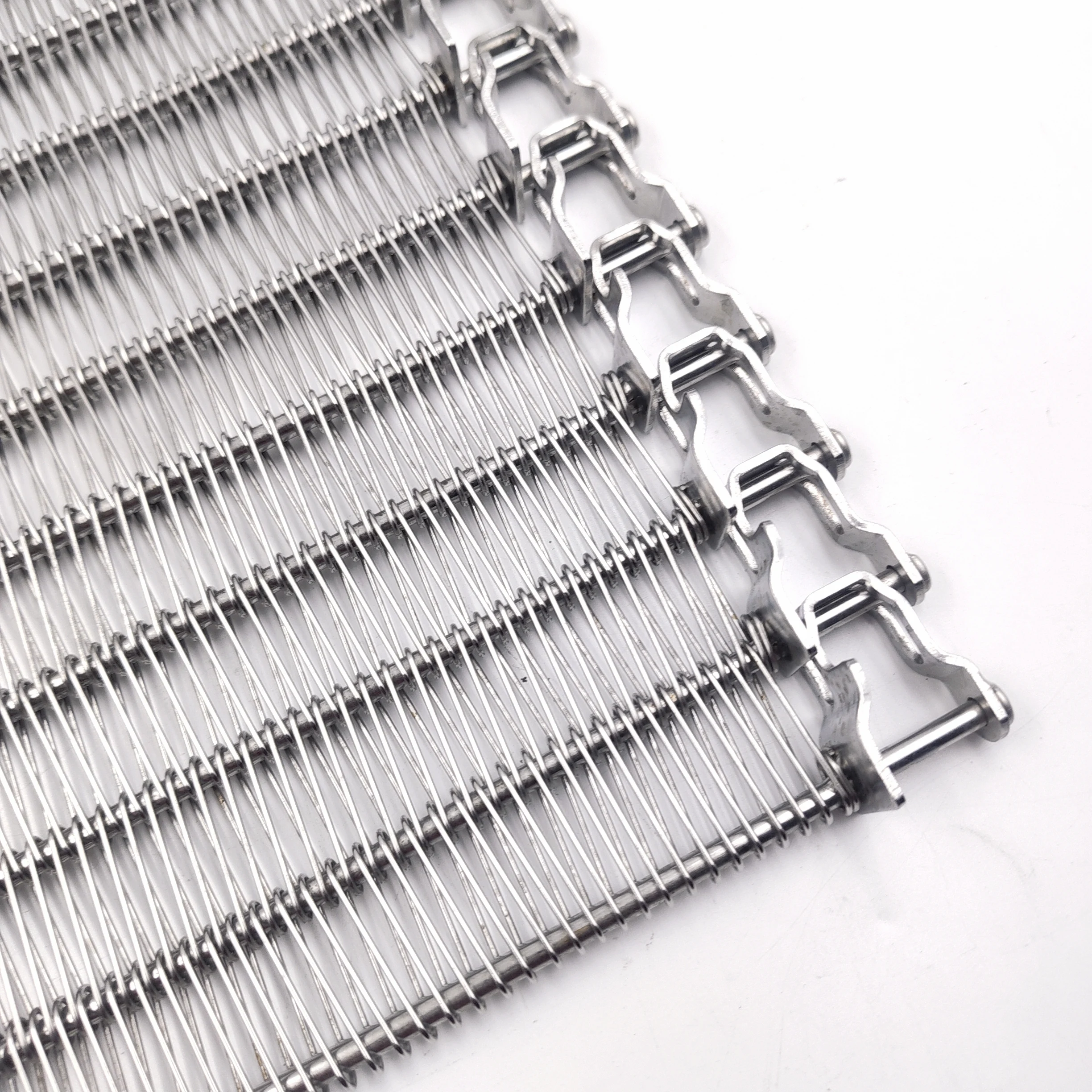
These white-background product views support engineering confirmation: full belt overview, chain edge, mesh surface, rod connection, weld detail, and finished condition before quotation or replacement review.
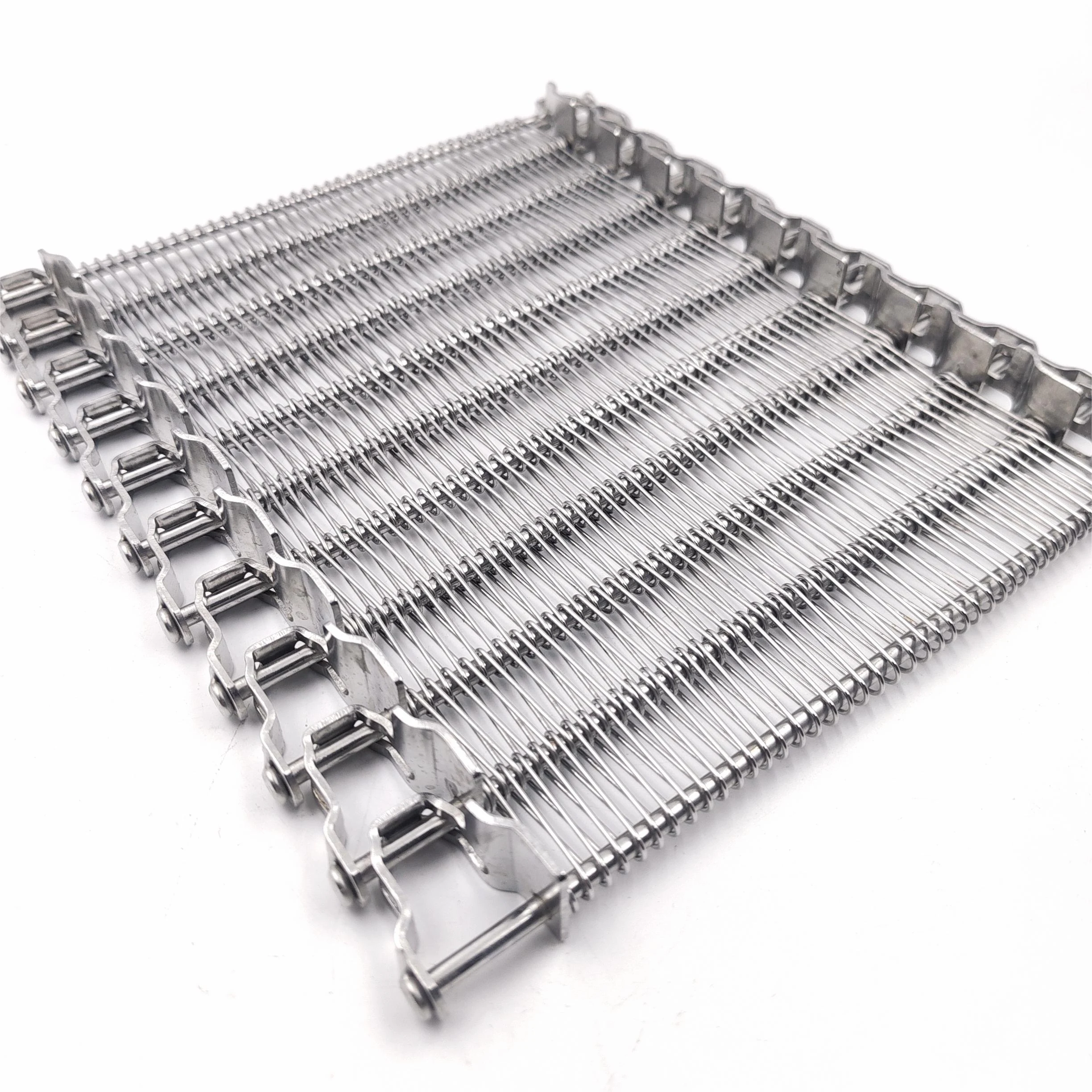
Full spiral freezer belt overview
Product Photo 01
Full Belt Overview
Complete stainless belt structure for first visual review.
Spiral freezer belt chain side view
Product Photo 02
Chain Side View
Drive chain and side structure visible for matching checks.
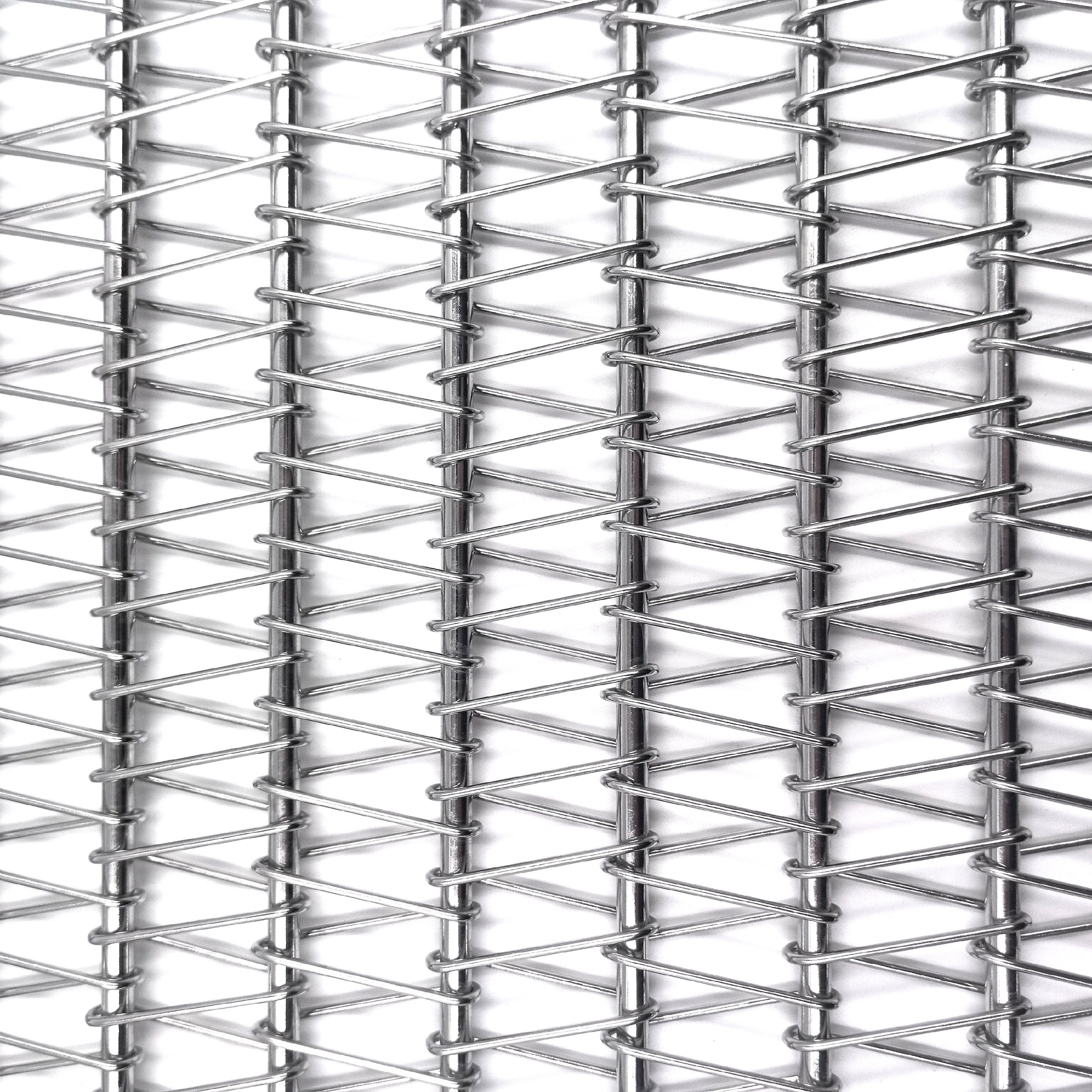
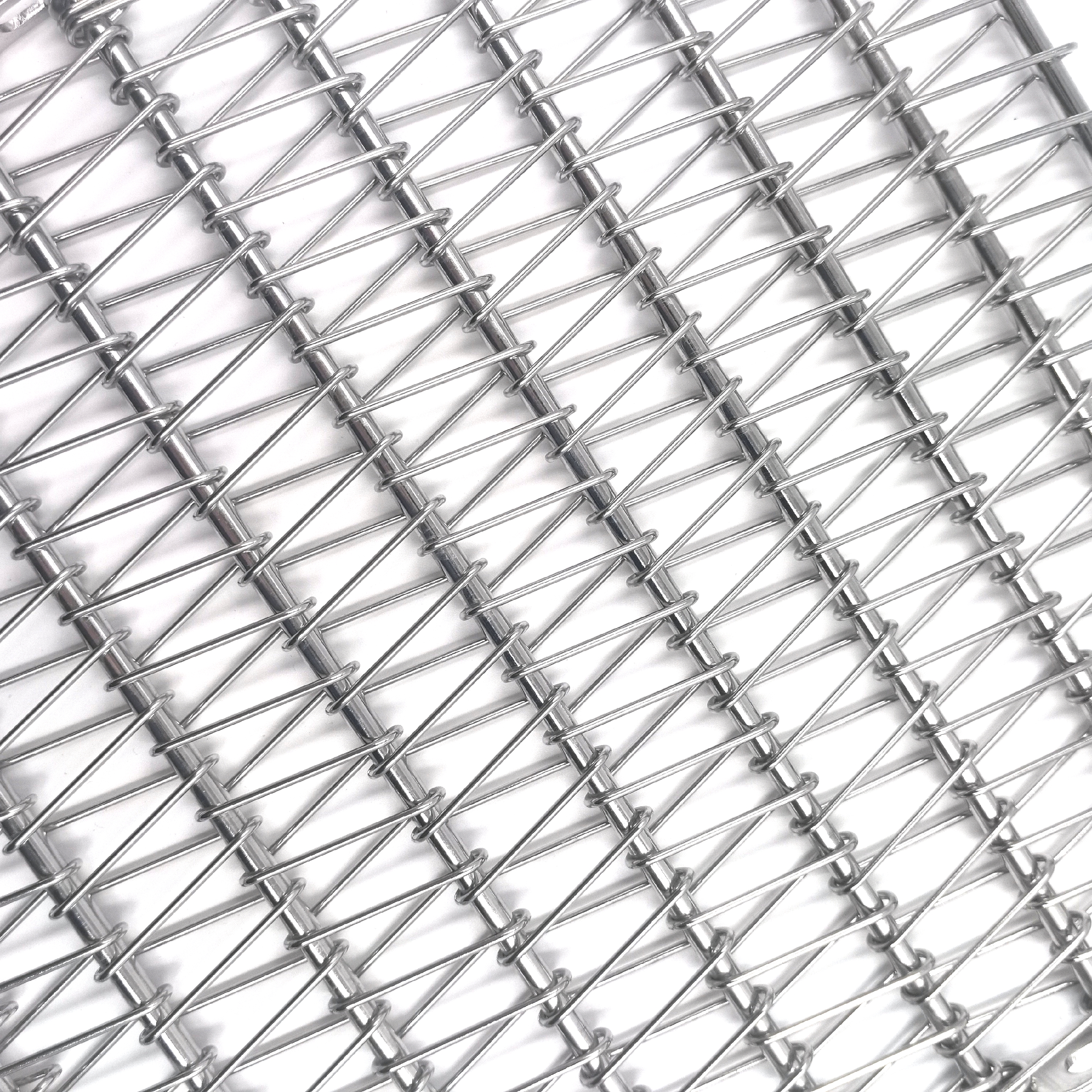
Spiral freezer belt mesh surface detail
Product Photo 03
Mesh Surface Detail
Opening, pitch, and formed wire pattern shown clearly.
Spiral freezer belt weld and joint close-up
Product Photo 04
Weld / Joint Close-Up
Connection points and weld consistency for QA review.
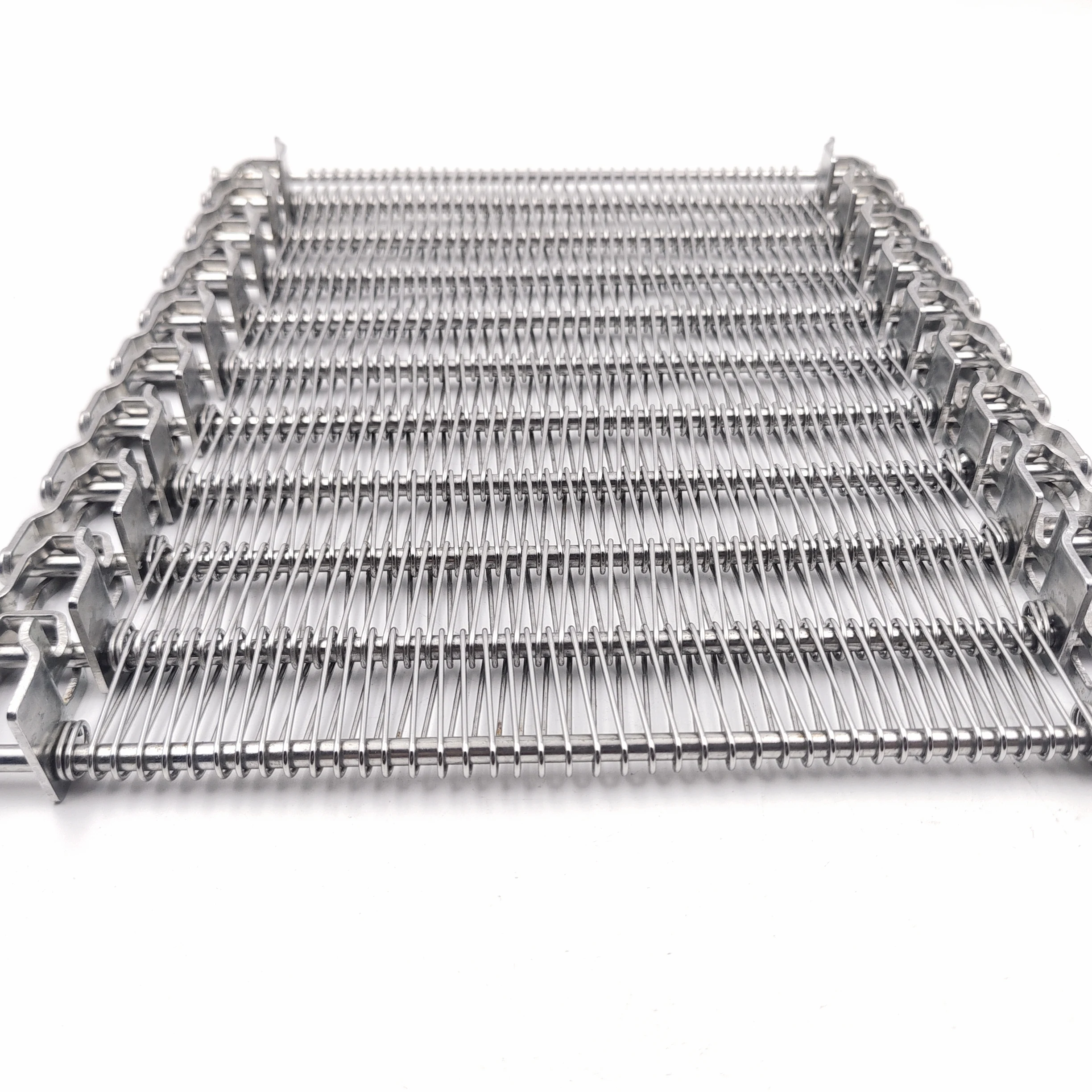
Spiral freezer belt system-ready product angle
Product Photo 05
System-Ready Angle
Product angle for spiral freezer project evaluation.
Spiral freezer belt finished product presentation
Product Photo 06
Finished Product Presentation
Clean product condition before packing and shipment.
CHAIN EDGE AND ROD-END DETAILS

Edge Finish and Chain Connection Views

For spiral freezer belts, the edge is part of the drive and hygiene system. Rod-end finish, weld profile, chain connection, and side structure help determine cleanability, handling safety, sprocket fit, and long-term running stability.
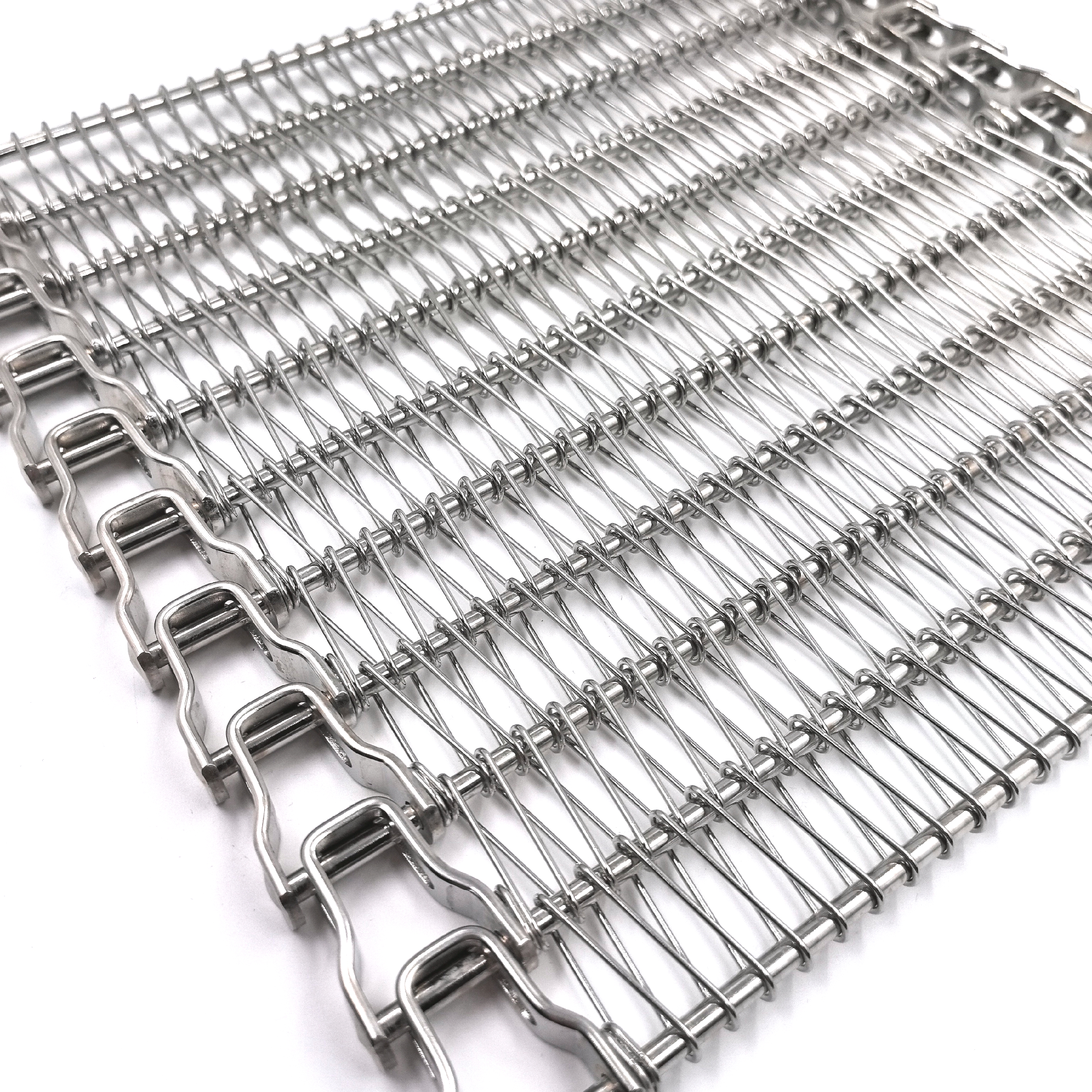
Burr-free welded edge finish on spiral freezer belt
Edge Finish 01
Burr-Free Welded Edge
Button welded edge finish for spiral freezer belt
Edge Finish 02
Button Welded Finish
Rod-end and welded connection detail for spiral freezer belt
Edge Finish 03
Rod-End Connection Detail
Chain side detail for spiral freezer belt
Edge Finish 04
Chain Connection Detail
Custom side structure and edge finish for spiral freezer belt
Edge Finish 05
Custom Side Structure
Finished chain edge and mesh detail for spiral freezer belt
Edge Finish 06
Finished Chain Edge
MANUFACTURING APPROACH

Why Buyers Use YIYI for Spiral Freezer Belt Projects

Many suppliers can quote a spiral freezer belt. Fewer can reduce the specific buying risks behind that quote: wrong drum matching, uneven weld quality, unclear edge execution, or poor repeat-order consistency. That is the gap this page is designed to address.

YIYI Mesh Belt works from drawings, samples, and real application conditions, then converts those inputs into a controlled production specification that can be reviewed, repeated, and supported through future orders.
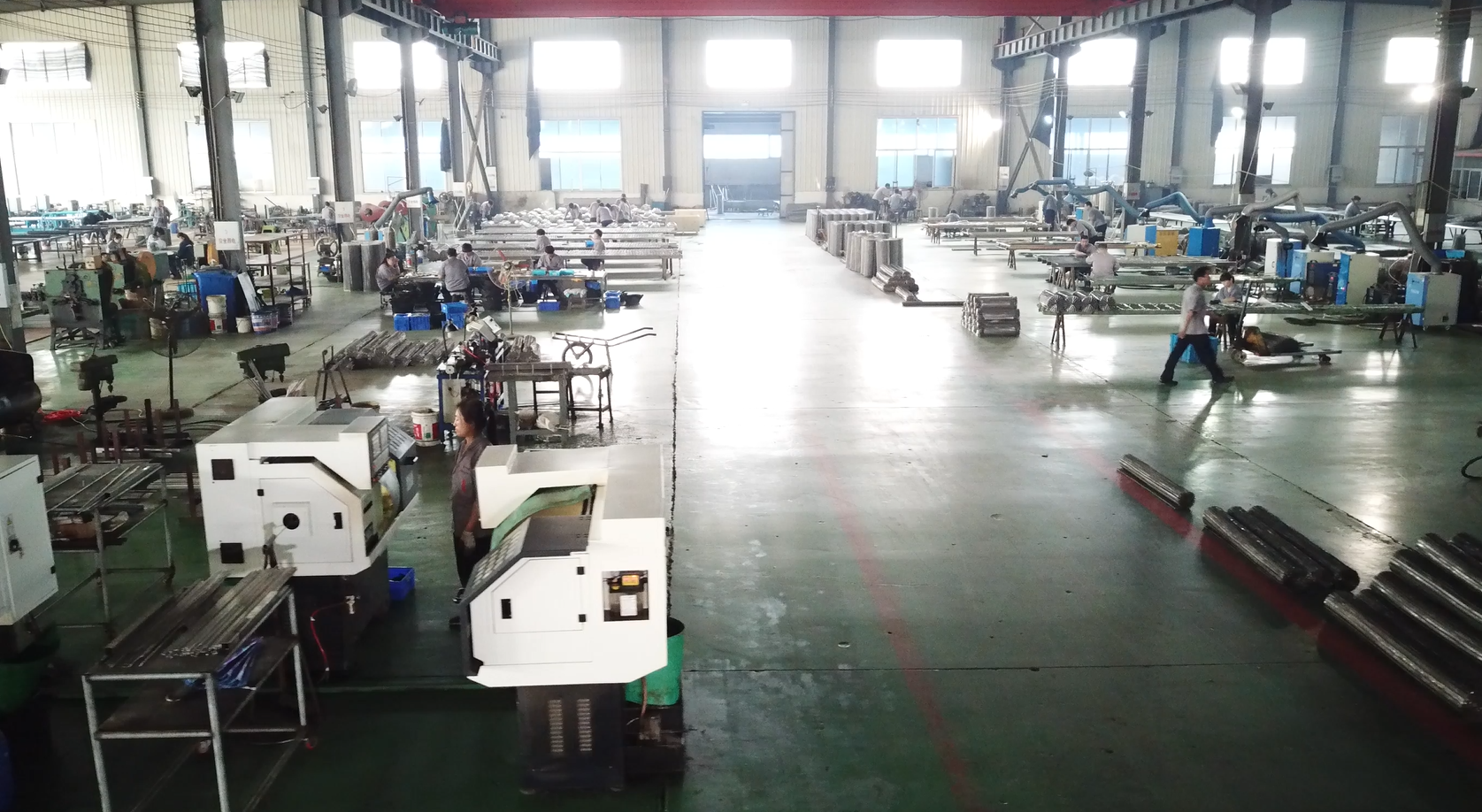
Project matching logic, not catalog selectionConfiguration starts from the customer's real drum, drive, and application conditions instead of a catalog size list.
Real production conditions consideredDrum geometry, running direction, chain row count, chain structure, and edge requirements are addressed before manufacturing begins.
Repeat supply consistencyProduction records and specification tracking support reliable repeat orders without re-confirming every dimension from scratch.
OEM and replacement in the same production systemFirst-build and replacement orders are handled through the same matching and verification workflow.
YIYI production and engineering review context for spiral freezer belt projects
Engineering Review
Project matching starts from real production capability, not catalog selection.

CONFIGURATION LOGIC

How We Configure a Spiral Freezer Belt

A spiral freezer belt is custom-built. Width, wire diameter, rod diameter, chain pitch, drum diameter, running direction, and edge finish must be confirmed before quotation.

01
Overall Width and Effective Width
Total belt width and the usable product-carrying width - both must be specified separately where relevant to the application.
02
Wire Diameter
The diameter of the spiral wire forming the mesh structure. Affects belt weight, flexibility, strength, and forming behavior.
03
Spiral Pitch
The spacing between each spiral loop. Affects mesh opening size, product contact area, and belt contraction behavior in the turn.
04
Cross Rod Diameter
The diameter of the connecting rods running across the belt width. Affects structural integrity, assembly fit, and compatibility with sprocket engagement.
05
Rod Pitch and Chain Pitch
The spacing of cross rods and the pitch of the drive chain. Both must match the sprocket geometry and drive system on the existing or new equipment.
06
Chain Structure and Row Count
The type, link format, connection method, and chain row count. Spiral freezer belts may use single-row, double-row, or three-row chain structures depending on drum layout, load, drive engagement, and replacement matching requirements.
07
Drum Diameter and Turning Requirement
The diameter of the drum around which the belt contracts and turns. This is a critical geometry input that must be correct to ensure smooth running without structural stress.
08
Running Direction
Whether the belt is right-hand or left-hand running. This affects the spiral winding direction and must match the equipment layout.
09
Dividers, Flights, and Side Guards
Additional structural components attached to the belt for product separation, containment, or edge protection. Configuration depends on application and product type.
10
Edge Finish and Rod-End Style
The method of finishing the belt edge and rod ends. Options include welded cap, return bend, clinched edge, or other formats depending on application and hygiene requirements.
11
Material Grade
Stainless steel grade selection based on operating temperature, corrosion environment, and regulatory requirements. Common grades include 304 and 316. Other grades available on request.

Not all parameters are always required upfront. For replacement projects, a sample of the existing belt and basic dimensional information are often sufficient to begin the matching process. For OEM projects, drawings and equipment specifications are preferred. Contact us to discuss your specific project requirements.

MANUFACTURING PROOF - ROBOTIC WELDING

Robotic Welding System - A Core Manufacturing Proof Point

Weld quality is one of the easiest things for suppliers to promise and one of the hardest things for buyers to verify remotely. On a spiral freezer belt, it directly affects running stability, structural consistency, and the confidence to place repeat orders.

YIYI Mesh Belt uses robotic welding because buyers need more than a statement of quality. They need a process that keeps weld position and weld size more consistent across the full belt and across future batches.
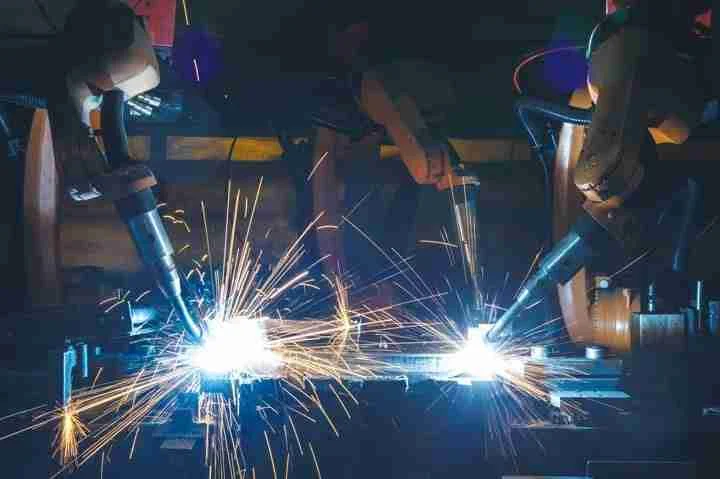
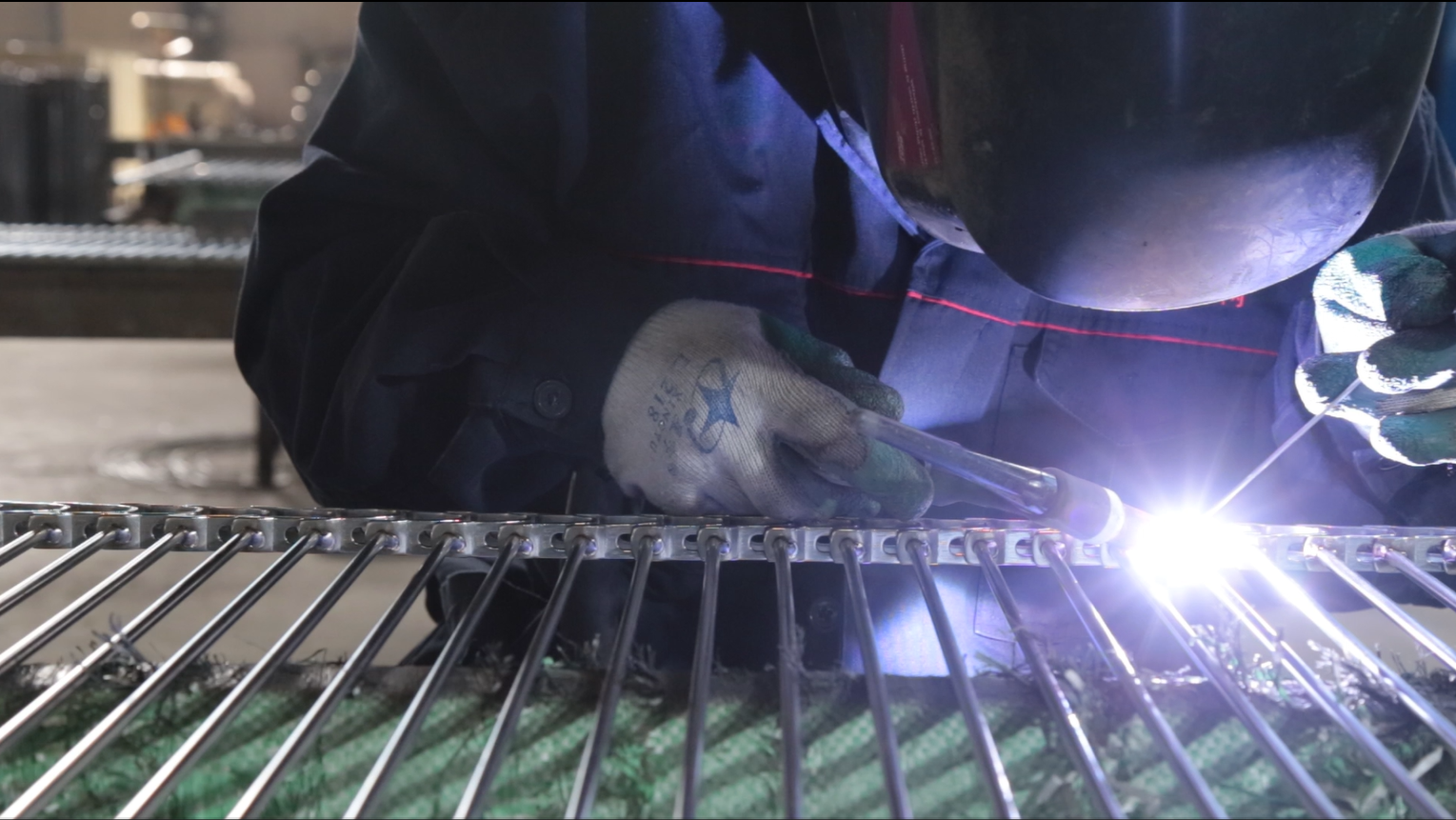
Controlled weld position on every jointRobotic welding holds the weld position to a consistent location across the entire belt width - not subject to operator variation or fatigue.
Consistent weld size across every weld pointWeld size consistency directly affects structural uniformity. Robotic welding produces repeatable weld geometry that manual or semi-manual processes cannot reliably match.
Repeat-order weld consistencyBecause the process is automated and parameterized, the weld profile from one production batch can be reliably reproduced in subsequent orders - critical for OEM customers and long-term distributors.
Running stability through structural uniformityFor spiral freezer belts, structural irregularity at the weld point creates uneven tension distribution across the belt width. Robotic welding reduces this risk by delivering a more uniform joint profile throughout the belt.
Robotic Welding Video
Automatic welding robot process used to support repeatable spiral belt production.
Robotic welding machine for spiral freezer belt production
Robotic Welding Machine
Weld joint close-up for spiral freezer belt
Weld Joint Close-Up
Weld Position Control
Weld location held consistently across every joint point throughout the full belt length and width
Weld Size Consistency
Automated process produces repeatable weld geometry that manual welding cannot achieve reliably at production scale
Batch-to-Batch Repeatability
Parameterized process enables consistent weld reproduction across multiple production batches for OEM and repeat orders
Structural Uniformity
Uniform weld profile across the belt reduces uneven tension distribution that causes premature wear and running instability
QUALITY CONTROL

Critical Quality Control Points for Spiral Freezer Belts

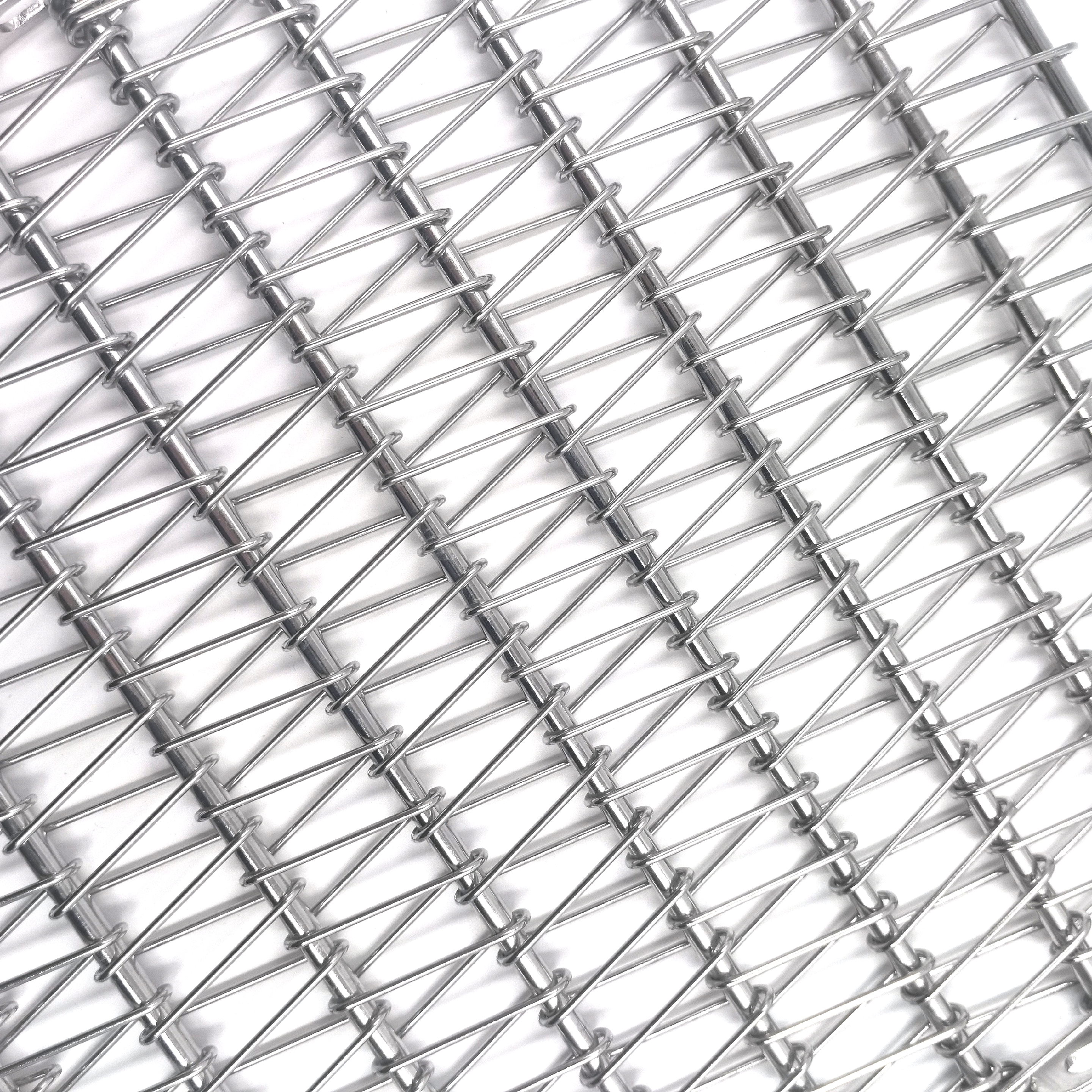
Spiral freezer belt quality control focuses on the failure points that affect running: weld consistency, edge finish, contraction, flatness, surface cleanliness, and packing readiness.
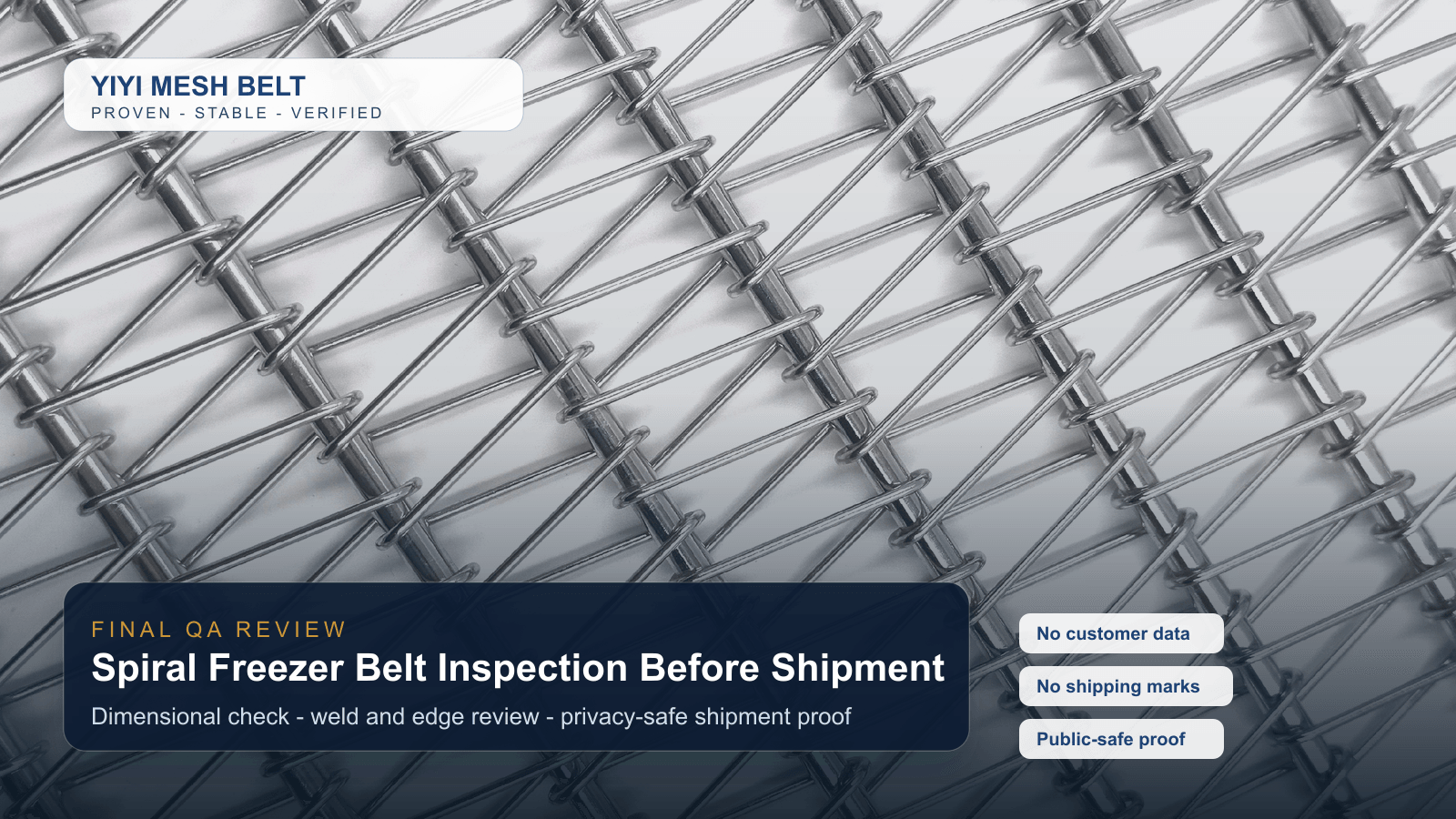
01
Side-to-Side Length Consistency
Both edges of the belt must be equal in length. Asymmetry causes tracking problems and uneven tension on the drum.
02
Diagonal Consistency
Diagonal measurements are verified to confirm the belt is square and free from structural twist before shipment.
03
Flatness
Belt flatness is checked to detect any deformation introduced during forming, welding, or surface treatment stages.
04
Smooth Contraction and Free Movement
The belt must contract freely in the turn without binding, hooking, or resistance that would indicate structural interference.
05
No Missing Hook Engagement
All hook or connection points are inspected to confirm full engagement. Missing engagement creates local stress concentration and early failure.
06
Controlled Weld Position
Weld position on each joint is verified against specification. Offset welds affect load distribution and surface uniformity.
07
Consistent Weld Size
Weld size is checked for consistency across sampled joints. Undersized or oversized welds affect structural reliability and surface condition.
08
Burr-Free Edge Finish
All rod ends and edge details are checked to confirm no sharp burrs or projections that could create hygiene risks or handling hazards.
09
Clean Surface After Treatment
After electropolishing or cleaning, surface condition is inspected for contamination, staining, or process residue before drying.
10
No Residue or Water Marks
Belts are inspected for any residue from the cleaning or treatment process. Water marks or chemical residue are not acceptable on export-ready belts.
11
Full Drying Before Packing
The belt is fully dried before packing to prevent moisture-related surface degradation during transport and storage.
12
100% Final Inspection Before Shipment Release
No belt is released for shipment without passing final inspection. Shipment documentation is prepared only after QA sign-off.
13
Neutral Export Packing Review
Outer packing can be prepared without Chinese text, protected with stretch film, and photographed before dispatch so the case arrives cleaner at the terminal side.
Final QA inspection for spiral freezer belt
QA Proof
Final QA Inspection Scene
Dimensional re-check for spiral freezer belt
Verification
Dimensional Re-Check
Neutral export packing and shipment readiness for spiral freezer belt
Shipment
Clean Export Packing Confirmation
Customer marks, order references, and buyer information are not shown publicly.
DRUM GEOMETRY & RUNNING

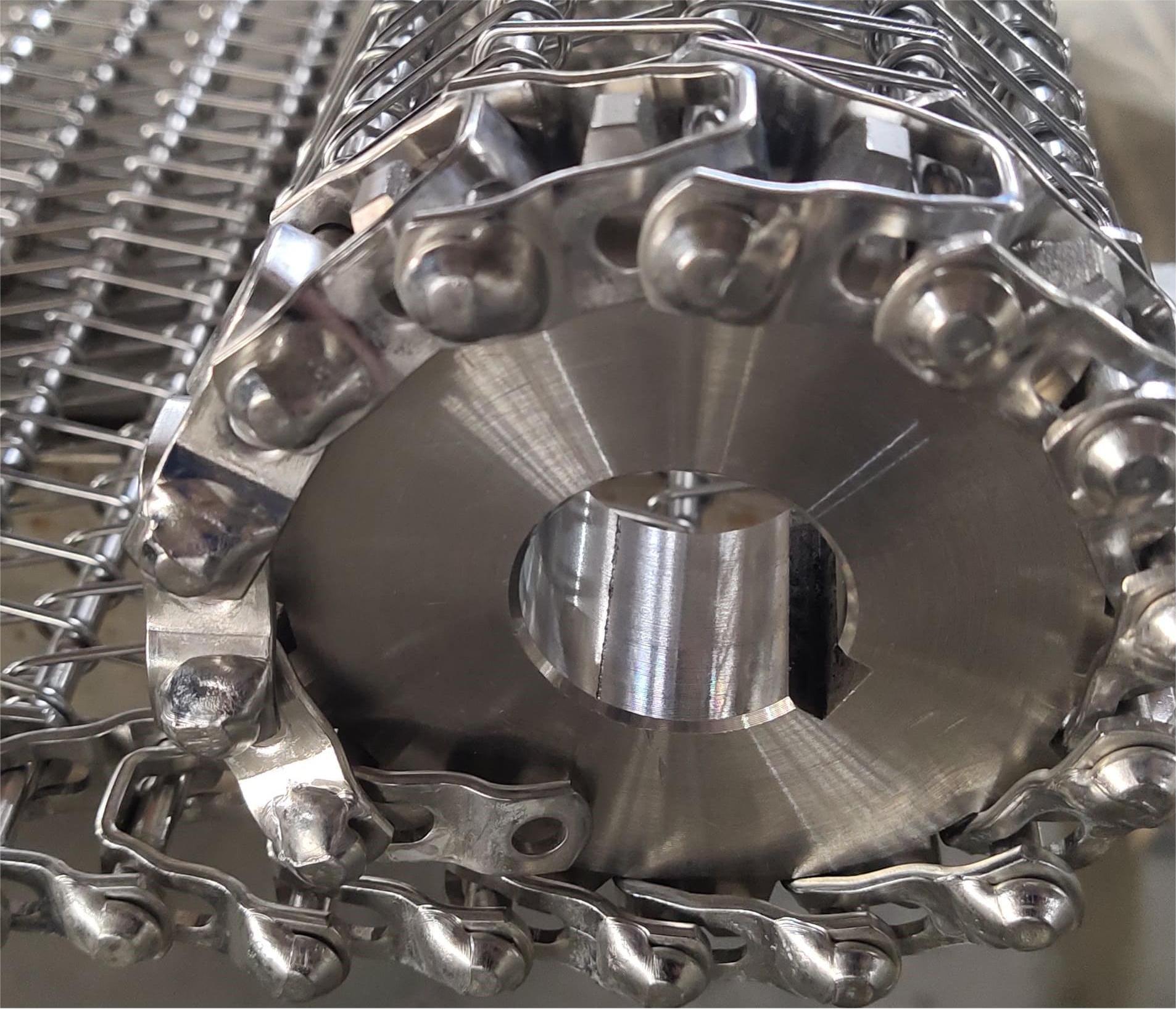
Matching Drum Geometry and Running Requirements

Drum diameter is one of the most critical - and most frequently underestimated - inputs in a spiral freezer belt project. A belt that does not correctly match the drum diameter will not contract and expand smoothly through the turn. This creates running resistance, structural stress, premature wear, and in some cases, chain disengagement or belt deformation.

YIYI Mesh Belt treats drum diameter and turning compatibility as production specifications, not afterthoughts. Where the drum diameter is known, the belt structure is configured to match. Where it is unknown, YIYI Mesh Belt will request this information or work from the existing belt dimensions before production begins.
Drum diameter verified before production specification is finalized
Running direction confirmed to ensure correct spiral winding orientation
Contraction test performed on sample belt where applicable before batch production
Chain pitch, chain row count, and sprocket engagement verified against customer drive system specifications
Spiral freezer belt contraction and drum matching review
Drum Matching
Drum Fit or Contraction Review
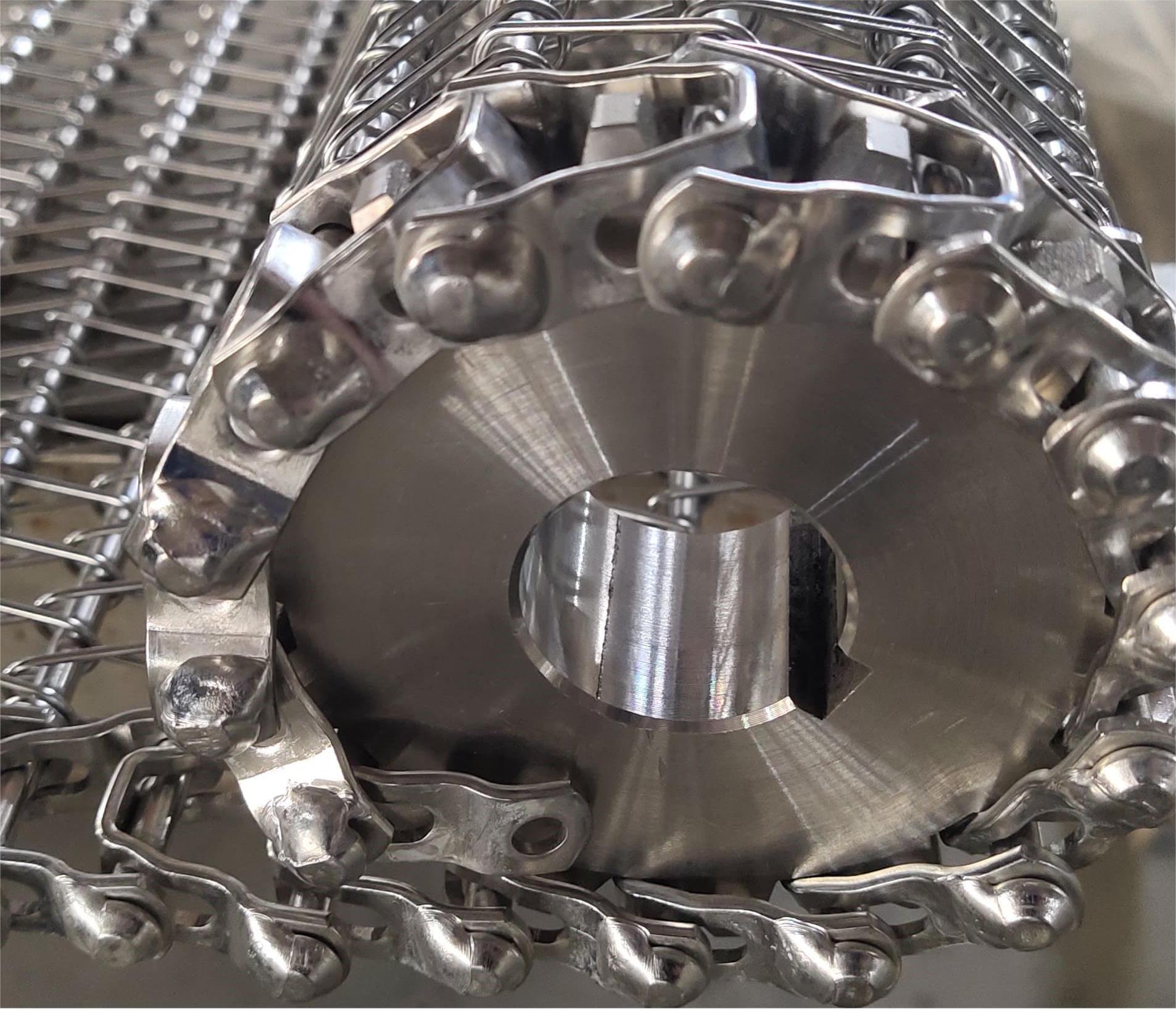
Sprocket engagement and matched drive component for conveyor belt
Matched Drive
Sprocket Engagement Close-Up

OEM & REPLACEMENT

OEM and Replacement Support - From First Build to Long-Term Supply

YIYI supports first OEM builds, replacement matching, repeat orders, and urgent maintenance projects through the same drawing, sample, production, and inspection workflow.
Drawing-Based Production
Technical drawings accepted as the primary production reference. YIYI Mesh Belt reviews the drawing for completeness and raises clarification questions before production begins.
Sample-Based Confirmation
For replacement projects without drawings, a sample of the existing belt is reviewed for dimensional matching before production begins. Reduces mismatch risk significantly.
Repeat Order Consistency
Production records and specification tracking support reliable repeat orders. Repeat batches are produced against the same verified specification used in the original order.
Urgent Maintenance Replacement
Reserve raw material stock supports faster production response on urgent replacement orders where equipment downtime and production disruption are the primary concern.
Matched Spare Parts
YIYI Mesh Belt can supply matched spare components - including rods, chain pieces, and connection parts - matched to the original belt specification for field repair and maintenance support.
Long-Term Supply Partnership
For OEM builders and distributors requiring ongoing supply, YIYI Mesh Belt supports supply planning, scheduling coordination, and consistent product quality across the supply relationship.
Matched spare parts and drive sprockets for belt systems
Spare Parts
Matched Rods, Chains, and Drive Components
Clean export-ready packing for conveyor belt shipment
Export Ready
Neutral Packing and Stretch-Film Protection
SURFACE FINISH & CLEANLINESS

Surface Finish and Cleanliness Requirements

For food-related industrial applications, surface condition is not a cosmetic consideration. It affects cleanability, hygiene compliance, and the acceptability of the belt in regulated food production environments.

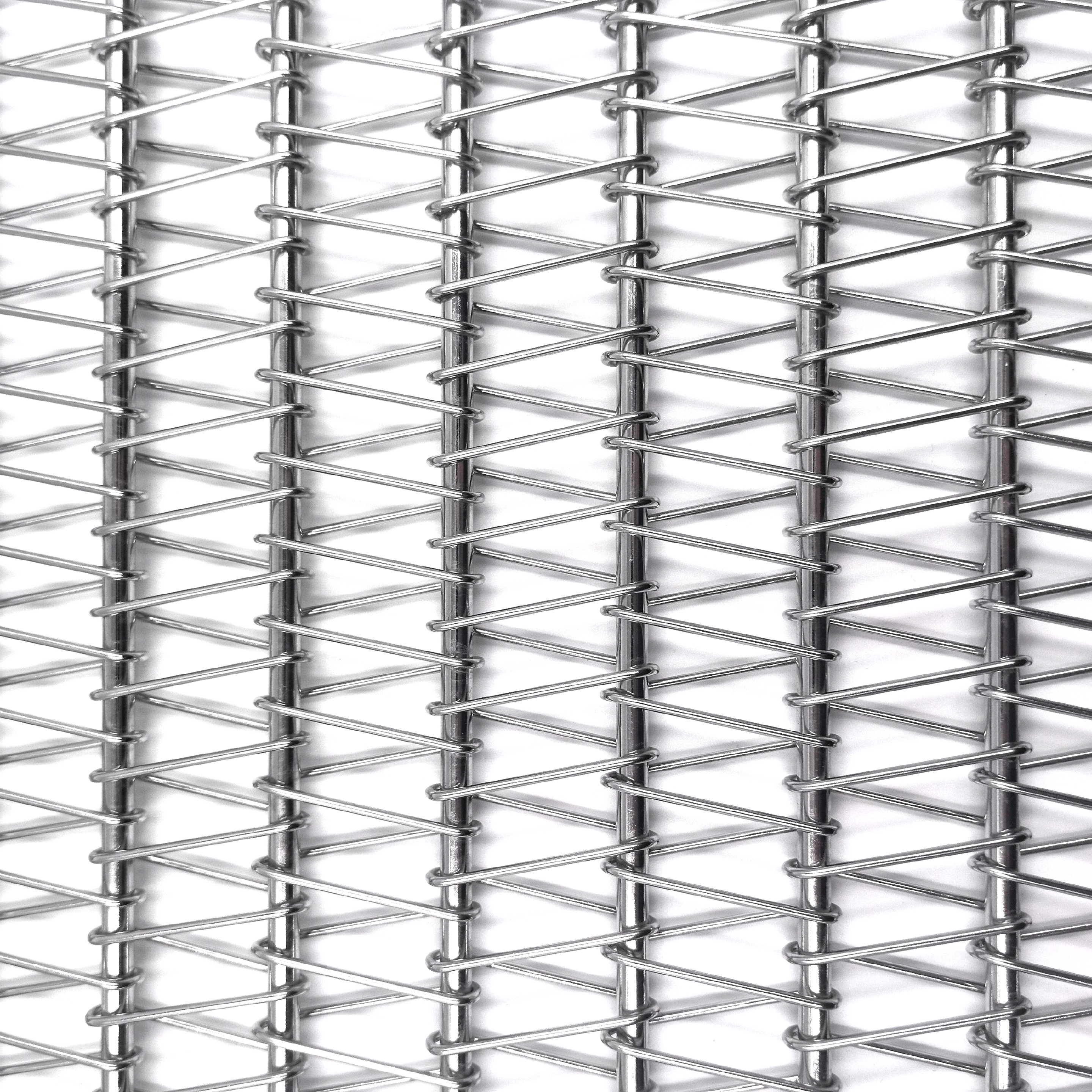
YIYI Mesh Belt applies electropolishing to spiral freezer belts where required. Electropolishing smooths the metal surface, reduces surface roughness, and improves corrosion resistance - supporting better cleanability and longer service intervals in hygiene-sensitive environments.
Electropolishing availableApplied to improve surface smoothness, corrosion resistance, and hygiene compliance for food-related applications
Post-treatment cleaning and rinsingBelt cleaned and rinsed after treatment to remove process residue before inspection and drying
Surface inspection for residue and water marksFinal surface condition inspected before packing - residue or water marks are not accepted on export-ready belts
Full drying confirmed before packingBelt fully dried before wrapping and packing to prevent moisture-related surface degradation in transit
Electropolished spiral freezer belt surface
Surface Finish
Electropolished Belt Surface
Clean, bright surface after treatment - no residue or water marks.
Post-treatment cleaning view for spiral freezer belt
Post-Treatment Cleaning
Dry spiral freezer belt before packing
Drying Before Packing

TYPICAL APPLICATIONS

Where Spiral Freezer Belts Are Used

IQF Spiral Freezers
Individual quick freezing systems for meat, poultry, seafood, vegetables, and ready meals
Blast Freezer Systems
High-capacity freezing tunnels requiring continuous belt operation under low-temperature conditions
Spiral Cooling Systems
Cooling and tempering applications in baking, pastry, confectionery, and prepared food processing
Hygienic Food Processing
Applications requiring electropolished surface, cleanable structure, and compliance with food industry hygiene standards
FAQ

Frequently Asked Questions

Can YIYI Mesh Belt produce spiral freezer belts based on drawings?

Yes. YIYI Mesh Belt supports drawing-based production. Technical drawings, dimensional specifications, and application requirements can all be used as the basis for production planning and sample confirmation.

Does YIYI Mesh Belt support replacement matching for existing spiral freezer systems?

Yes. YIYI Mesh Belt supports replacement projects through sample review, dimensional matching, and compatibility analysis with existing drum geometry and drive systems.

Why is robotic welding important for spiral freezer belts?

Robotic welding improves weld consistency, controls weld position and weld size across every joint, and supports stable repeat production. For spiral freezer belts, weld quality directly affects running stability, structural consistency, and long-term service reliability.

What technical parameters does YIYI Mesh Belt need to configure a spiral freezer belt?

Key parameters include overall width, effective width, wire diameter, spiral pitch, cross rod diameter, rod and chain pitch, chain structure, chain row count such as single-row, double-row, or three-row chain, drum diameter or turning requirement, running direction, divider or flight requirements, and edge finish style.

Can YIYI Mesh Belt supply matched spare parts for spiral freezer belts?

Yes. YIYI Mesh Belt can supply matched spare components including rods, chain pieces, and connection parts matched to the original belt specification.

Does YIYI Mesh Belt perform 100% final inspection before shipment?

Yes. All spiral freezer belts go through 100% final inspection before shipment release, covering dimensional verification, surface condition, edge finish, and structural consistency.

Can YIYI Mesh Belt support urgent replacement orders?

Yes. YIYI Mesh Belt maintains reserve raw material stock to support faster response on urgent replacement and maintenance orders where production lead time is critical.

What surface finish is available for spiral freezer belts?

Electropolishing is available for food-related and hygienic applications. Belts are cleaned, dried, and inspected for surface condition before packing and export.

START YOUR PROJECT

Ready to Review Your
Spiral Freezer Belt Project?

Send the drawing if you have one. Send the sample dimensions if you are matching an existing belt. If your spiral belt uses a three-row chain structure, include chain row count, chain pitch, sprocket details, and drum diameter so we can review fit and drive engagement before quoting.