What Can an Old Spiral Belt Sample Tell You, and What Can’t It?
A sample feels like the full answer, but it shows just the belt. Missing freezer details can still make a perfect copy fail.

Short answer
An old spiral belt sample tells a manufacturer the wire, spiral pitch, cross rods, edge and side guards. A sample cannot show the drum diameter, turning direction, drive, duty or how much the belt has worn. Those details come from the freezer and the plant, and complete the replacement drawing.
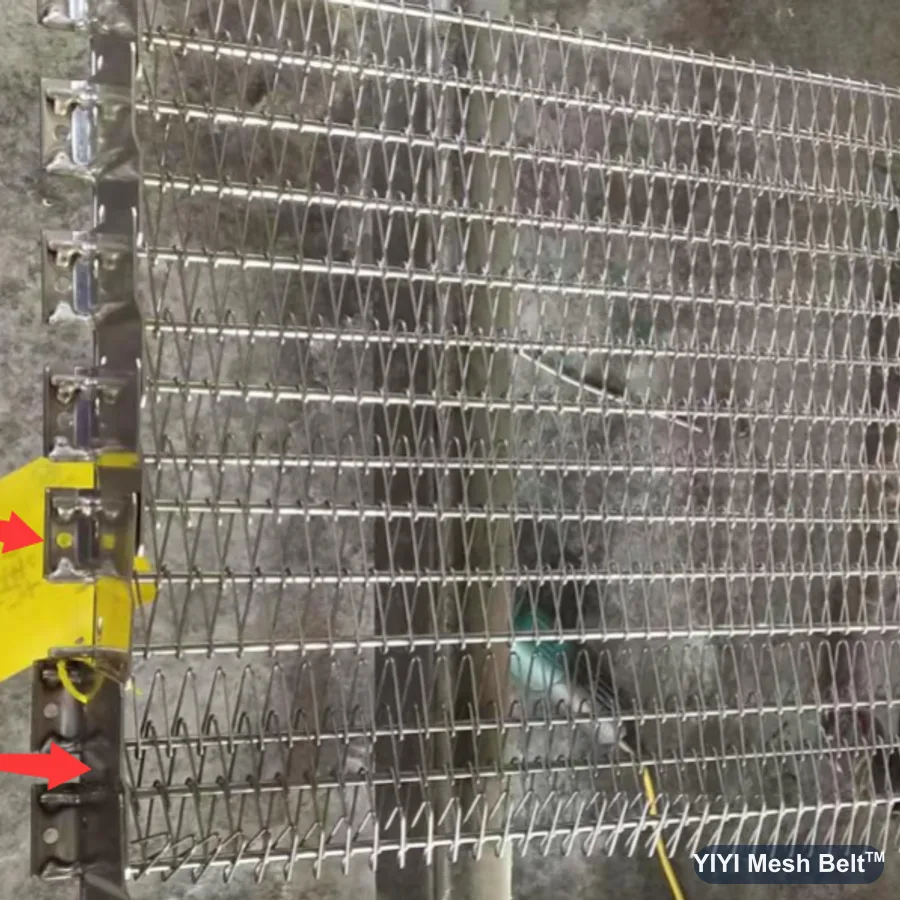
I am Sunny Ye, Global Sales Director at YIYI MESH BELT in Ningjin, Shandong. We have made metal conveyor belts since 1998 and run 280 units of production equipment, including 9 automatic welding robots. We build replacement belts for spiral freezers from customer samples every year, and the sample is always where I start.
At a glance
| Product | Spiral Freezer Belt, Self-Stacking Belt, Side Driven Belt |
|---|---|
| Application | Replacement belt for a spiral freezer, cooler or proofer |
| Key parameters to confirm | Wire, spiral pitch, rod diameter and pitch, edge or side guard, width; plus drum diameter, direction, drive and duty |
| Buyer type | Food plants, distributors, spiral freezer OEMs |
| What to send for a quote | A short sample from an unworn section, drum diameter, turning direction, drive details and operating conditions |
What does an old belt sample show?
The sample shows the construction of the belt in your hands, measured directly.
An old belt sample shows the spiral wire diameter, spiral pitch and hand, the cross rod diameter and pitch, the edge or side guard construction and the belt width. These are measured directly with a caliper, so they are more reliable than any photo or old catalogue reference.
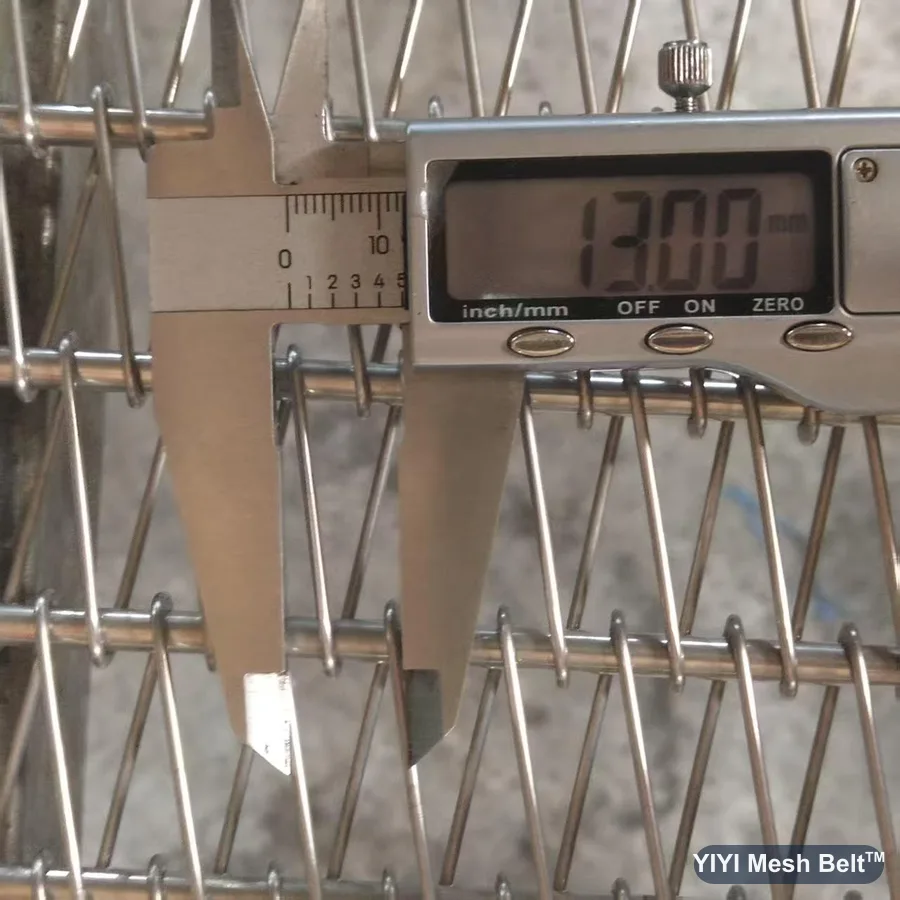
I ask for a sample that includes both edges and several rods. One metre is plenty. With both edges we can see how the inside edge collapses in the turn and how the side guards stack, which a narrow piece cannot show.
| Read from the sample | How we measure it |
|---|---|
| Spiral wire | Caliper in three places |
| Spiral pitch and hand | Over ten spirals, divided by ten; left or right hand noted |
| Cross rod | Diameter with a caliper; pitch over ten rods |
| Edge or side guard | Height, plate thickness and how it is fixed |
| Width | Overall width at several points |
What can’t a belt sample tell you?
The sample knows nothing about the freezer it came from.
A belt sample cannot tell you the drum diameter, the turning direction, the number of tiers, the drive or the operating duty. It cannot show stretch either. These details come from the freezer, the plant and any old drawings, and they are needed before the replacement is drawn.
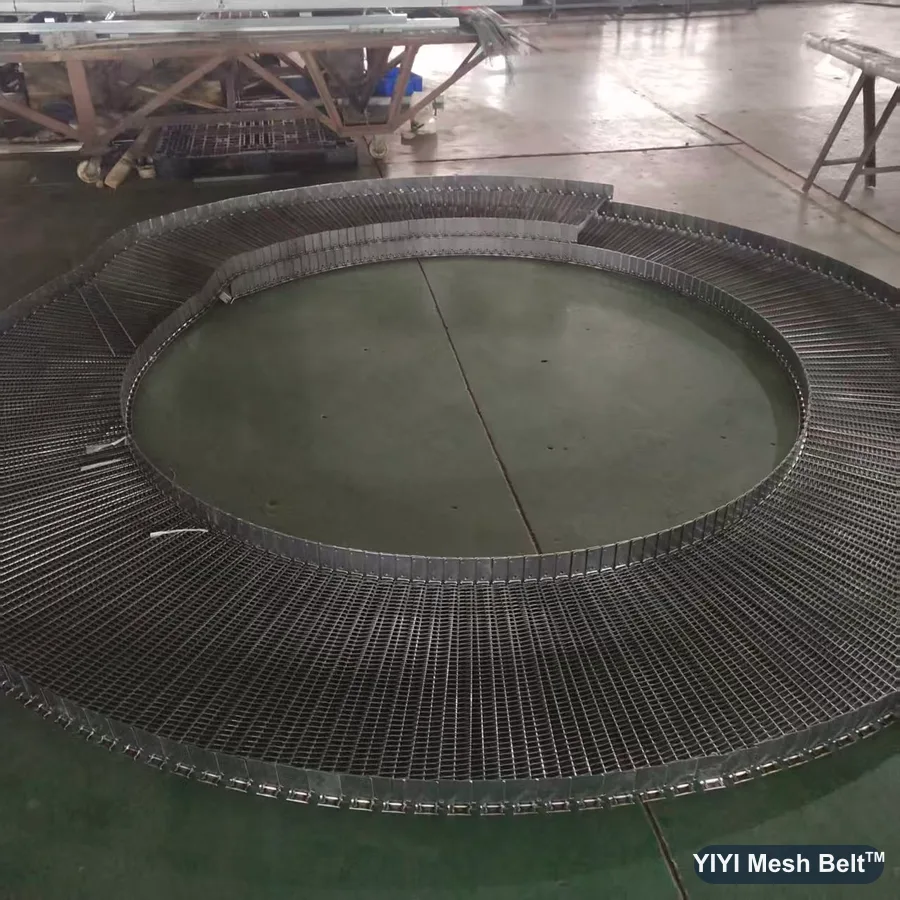
The most common gap I see is the drum diameter. Buyers send a perfect sample and assume the belt will turn the same way. But the turn ratio depends on the drum, and a belt correct in every dimension can still be wrong for the cage.
| Not in the sample | Where it comes from | Why it matters |
|---|---|---|
| Drum diameter | Freezer data or the plant | Decides the turn ratio and how the edge must collapse |
| Turning direction | A photo of the belt entering the drum | A belt built the wrong way will not run |
| Drive type | Freezer maker or a photo of the drive | Belt and drive must match |
| Duty | The plant: temperature, hours, cleaning | Affects material and construction |
| Original design | Old drawings, if any | A worn sample is not the original |
How do you separate wear from the original design?
A belt that ran for years is not the belt that was installed.
Separate wear from design by measuring an unworn part of the sample, comparing it with any old drawing, and asking how long it ran. If the pitch varies along the sample, the belt has stretched; we draw the original value, not the stretched one, and confirm it with you.
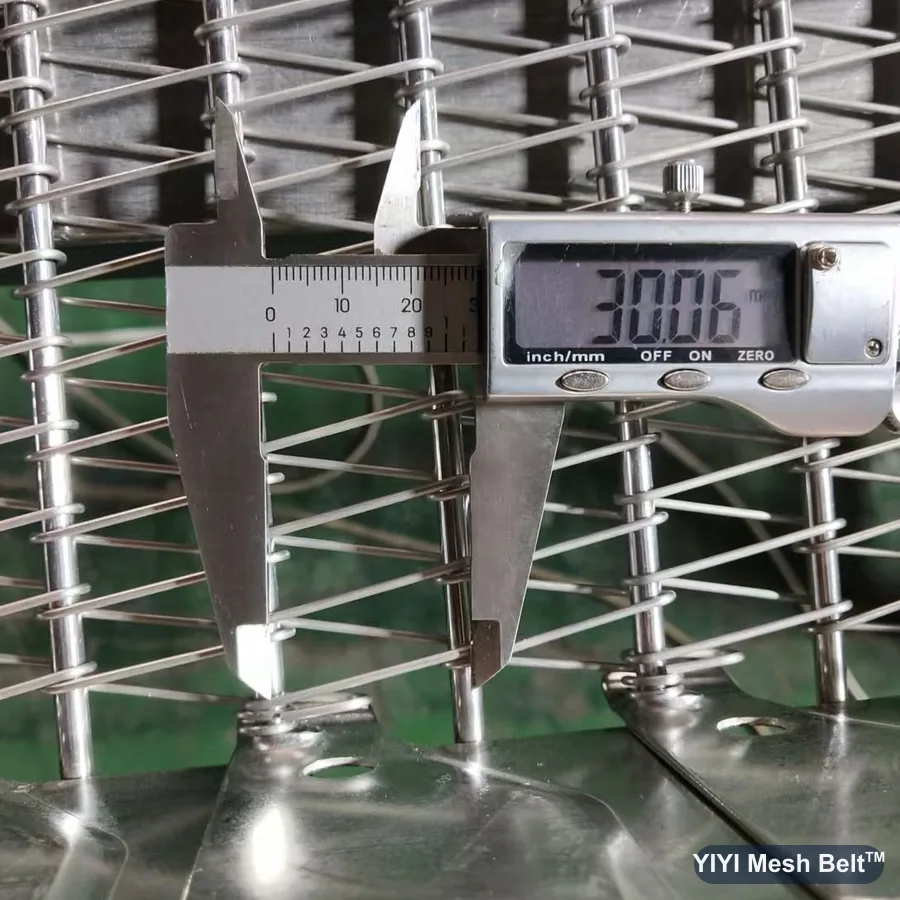
Pitch stretch is the main effect of wear. It is small per pitch but adds up over the belt, and it also changes how the belt meets the drive. So we measure rod pitch in several places and look for a pattern.
Edges and side guards wear too. A guard that has been rubbing on a rail may be lower than designed. When the sample and any drawing disagree, we ask before drawing, because the plant or the freezer maker usually knows the original value.
When we are unsure, we say so on the drawing. It is better to approve a question on paper than to discover it during installation.
What should you send with the sample?
Send the sample and four pieces of freezer information together.
Send the sample together with the drum diameter, the turning direction, a photo of the drive and the operating duty: product, temperature, hours a day and cleaning. With these four, the sample becomes a complete replacement brief, and we can draw the belt for your approval.
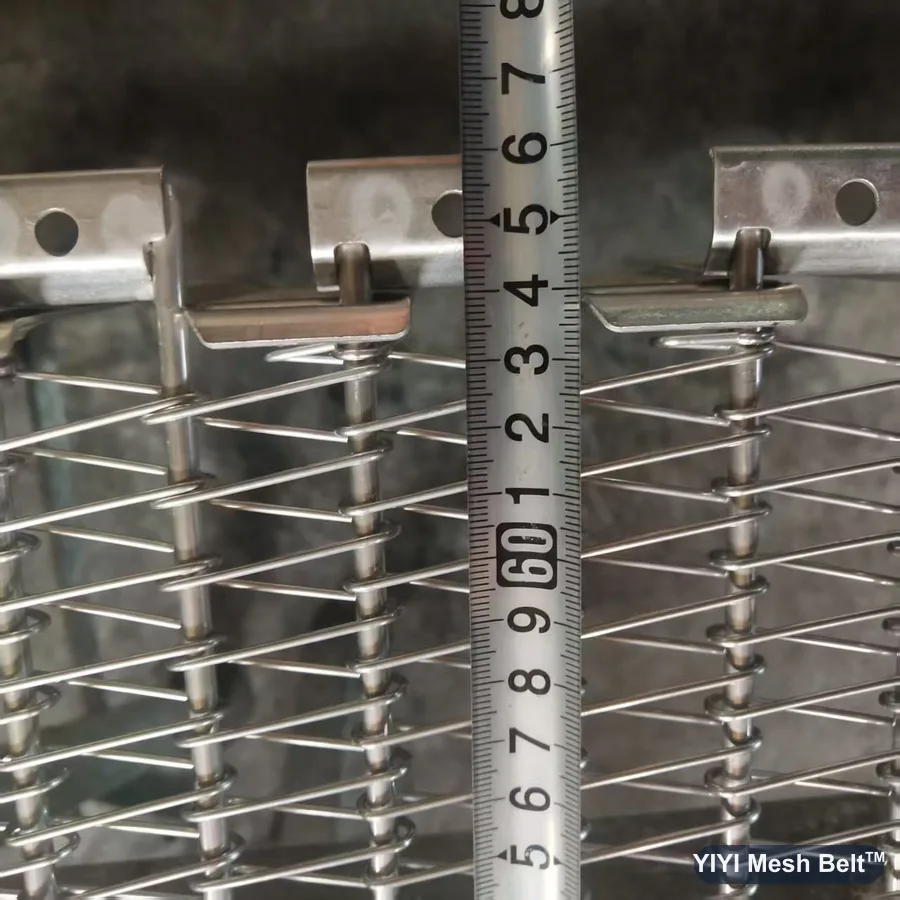
If the belt runs in a freezer from the original equipment maker, tell us the freezer model if you know it. It does not replace the measurements, but it helps us check them.
- SampleOne metre, both edges, from an unworn section.
- Drum diameterFrom the freezer data or measured on site.
- Direction and driveA photo of the belt entering the drum and of the drive.
- DutyProduct, temperature, hours a day and cleaning method.
When this is not the right choice
A sample is not the right basis when the old belt failed early. Copying a belt that collapsed or cracked repeats the problem; send photos of the failure first so the cause can be checked.
A sample alone is also not enough when you change the freezer, the drum or the product. The new conditions decide the belt, and the old sample becomes just a reference.
From our engineering experience
When a distributor sends us an end user’s original belt, we measure it in our workshop, draw it, and build a trial section of the same width. We photograph the trial next to the original before anything goes into production.
The sample answers the belt questions. I still ask for the drum diameter and the duty, because those come from the freezer, not from the belt. My advice to buyers: send the sample, and send the freezer details in the same email.
Evidence from our work
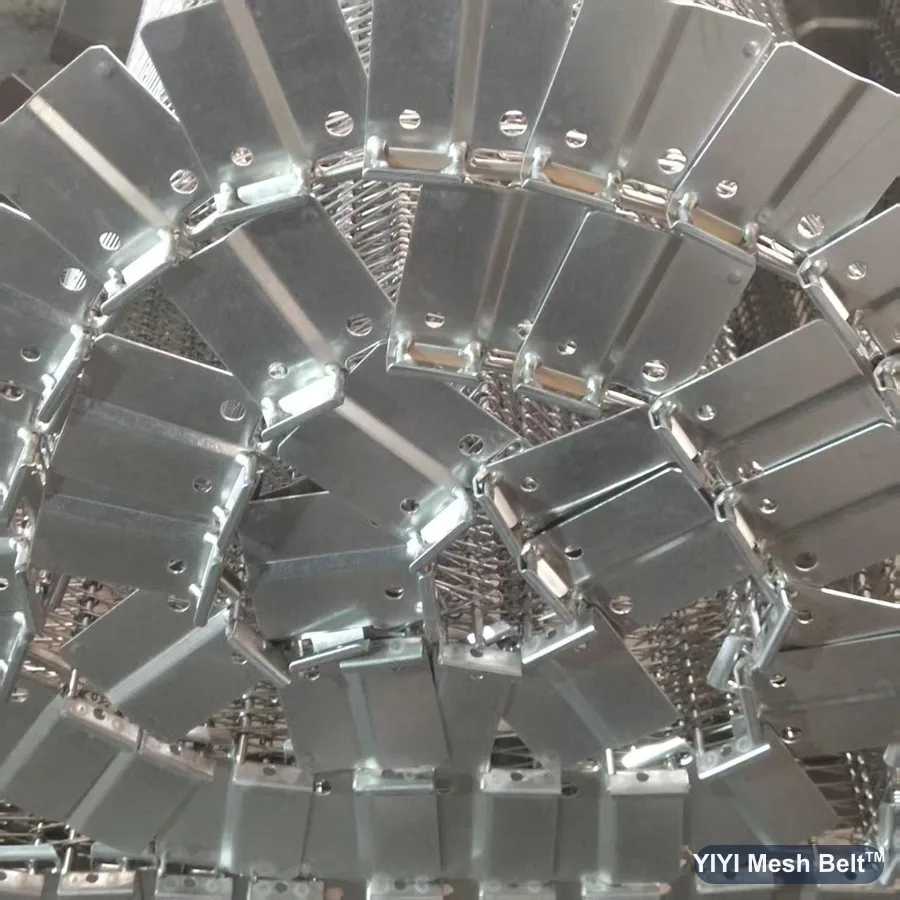
- Situation
- A distributor sent the original belt from an IQF spiral freezer made by the original equipment maker. The belt runs at −40 °C, 16 hours a day.
- What we checked
- From the sample: 660 mm width, 1.5 mm spiral wire at 13 mm pitch, 5 mm rods at 30 mm pitch, 80 mm side guards. From the plant: the 2,170 mm drum and the duty.
- Why it matters
- The sample gave the construction; the drum test needed the freezer data.
- Result
- The trial section was approved against the original, the belt was drum-tested on 2,170 mm, and a repeat order followed to the same drawing.
- Buyer lesson
- A sample plus four freezer details is a complete brief; either one alone is not.
FAQ
How long should a spiral belt sample be?
About one metre, including both edges and several cross rods. Take it from an unworn section if possible.
Can you replace a belt on another maker’s freezer?
We build replacement belts from samples of belts in use, measured and drawn for your approval. The freezer details are confirmed with you before production.
What if I cannot cut a sample?
Send photos with a caliper in view: full width, both edges, spiral pitch, wire and rod. We can quote from photos and confirm on a trial section.
Do you return the sample?
Tell us if you need it back when you send it; we note it on the order.
Will the new belt be identical to the sample?
It follows the drawing you approve. Where the sample is worn, the drawing uses the original values we agree with you, not the worn ones.
Conclusion
The sample gives the belt; the freezer gives the drum, direction, drive and duty. Send both, and approve a drawing before production.
Useful files for your project
I have worked on metal conveyor belt projects for 15 years, from new spiral freezers to belt replacement. I share project notes and replacement checklists on LinkedIn.
Technical reviewer: Sunny Ye, Global Sales Director, YIYI MESH BELT · Last updated: 2026-10-12