Self-Stacking Belt Replacement: What Should You Confirm Before You Order?
A self-stacking belt carries its own stack. If one tier does not seat on the next, the whole freezer stops.

Short answer
Before ordering a replacement self-stacking belt, confirm the width, spiral pitch, rod pitch and diameter, guard height, turn ratio and the gap between rod and stack plate, then check stacking on a trial section. Send the old belt or a sample, because worn dimensions are not the original design.
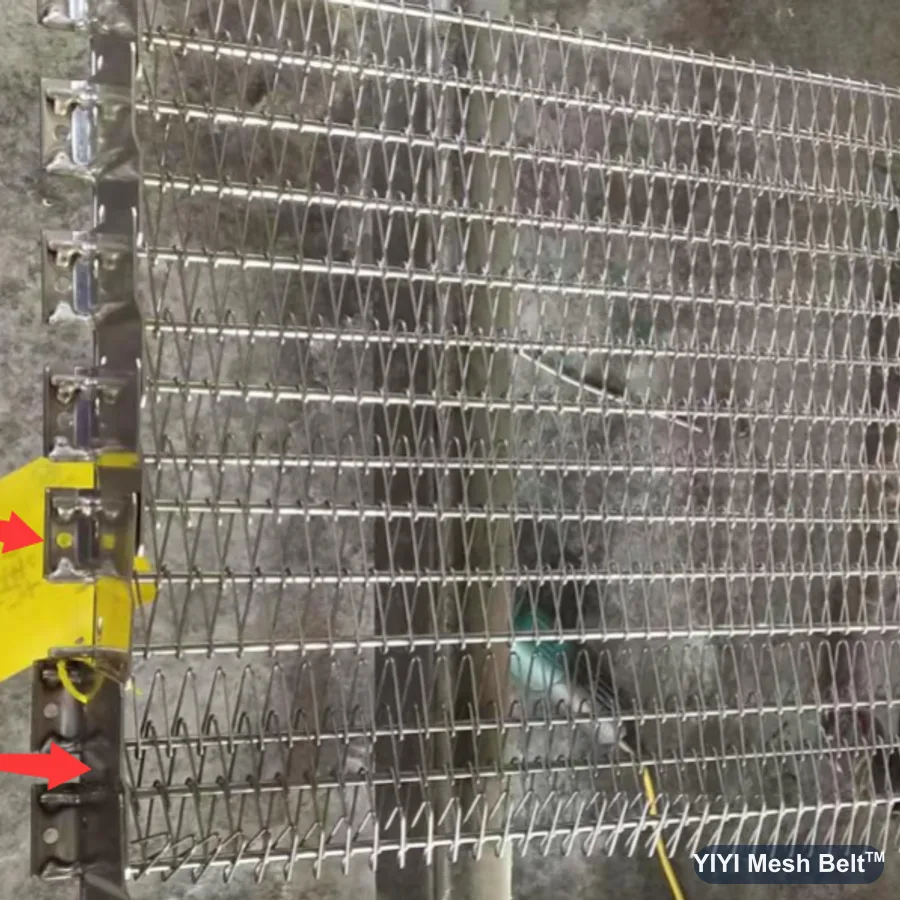
I am Sunny Ye at YIYI MESH BELT. Every self-stacking belt we build has its upper and lower tiers stacked to check engagement before shipment. These are the points I confirm with buyers first.
At a glance
| Product | Self-Stacking Belt (SUS304 / SUS316) |
|---|---|
| Application | Replacement belts for self-stacking spiral freezers |
| Key parameters to confirm | Width, spiral pitch, rod pitch and diameter, guard height, turn ratio, rod-to-stack-plate gap, turning direction |
| Buyer type | Food plants, distributors, freezer OEMs |
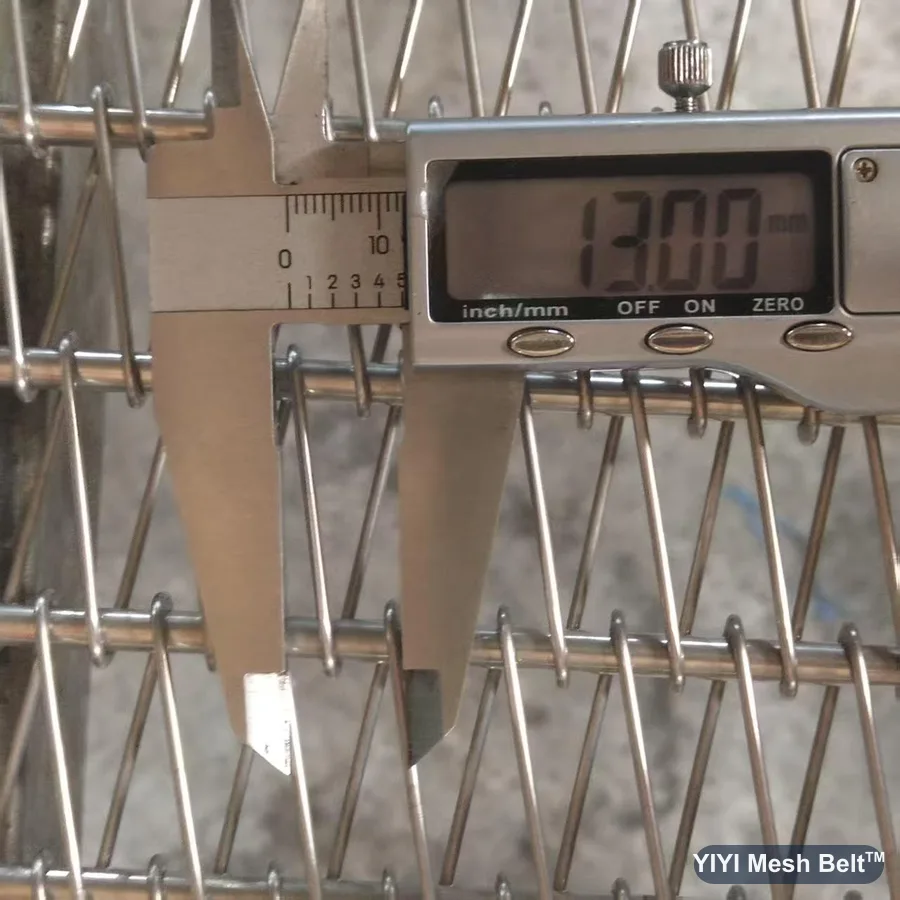
| What to send for a quote | Old belt or sample, photos with a caliper, drum diameter and turning direction |
Which dimensions must match the old belt?
Self-stacking belts are built from a small set of dimensions. Each one has to match the freezer.
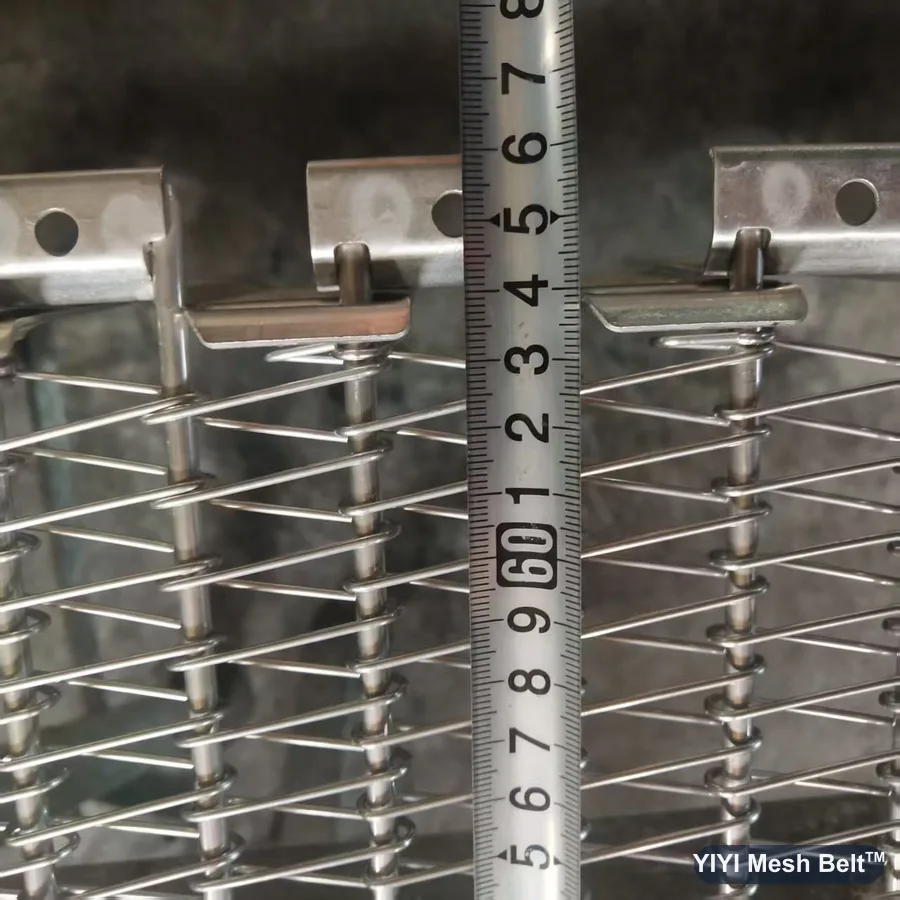
A replacement self-stacking belt must match width, spiral pitch, rod pitch, rod diameter, guard height and turn ratio. YIYI references are widths of 420–760 mm, spiral pitch 6, 9 or 13 mm, rod pitch 30 mm, rod 5 mm and guard heights of 60–120 mm.
| Dimension | YIYI reference | How to measure |
|---|---|---|
| Width | 420 / 580 / 640 / 660 / 760 mm | Tape at several points |
| Spiral pitch | 6 / 9 / 13 mm | Over 10 spirals, divided by 10 |
| Rod pitch | 30 mm | Over several rods |
| Rod diameter | 5 mm | Caliper |
| Guard height | 60 / 80 / 90 / 100 / 120 mm | Ruler at the side guard |
| Turn ratio | 1.6 / 1.7 | From drum diameter and width |
| Rod-to-stack-plate gap | 1–2 mm | Feeler or caliper at the plate |
Why does the rod-to-stack-plate gap matter?
The stack plate guides each tier onto the one below. Its gap to the rod decides how smoothly it seats.
The gap between the rod and the stack plate, 1–2 mm on YIYI self-stacking belts, lets each tier seat on the one below without binding. Too tight and the tiers jam; too loose and they wander. We check the gap and the stacking on every belt before shipment.
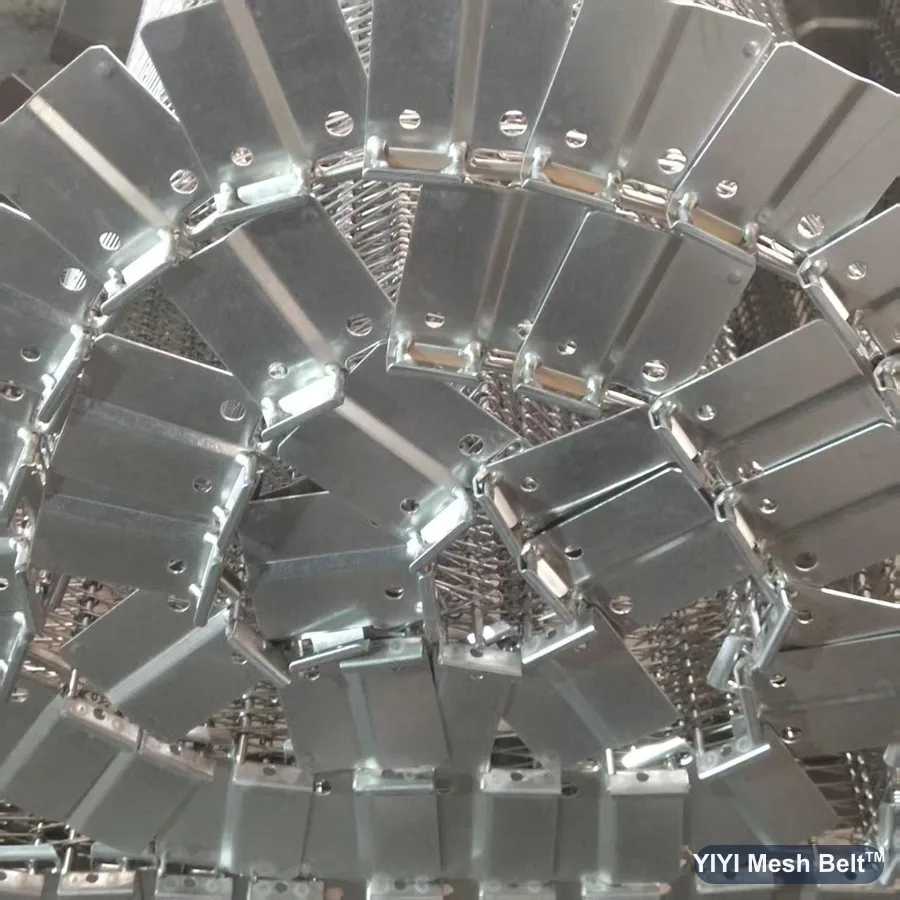
When a self-stacking freezer has stacking problems, the gap and the stack plate angle are among the first things I ask to see. A photo of the plate with a caliper is often enough to tell whether the old belt was already outside the range.
Do you need a drum test before shipment?
For self-stacking belts, a turning check shows whether the belt collapses evenly on the drum diameter.
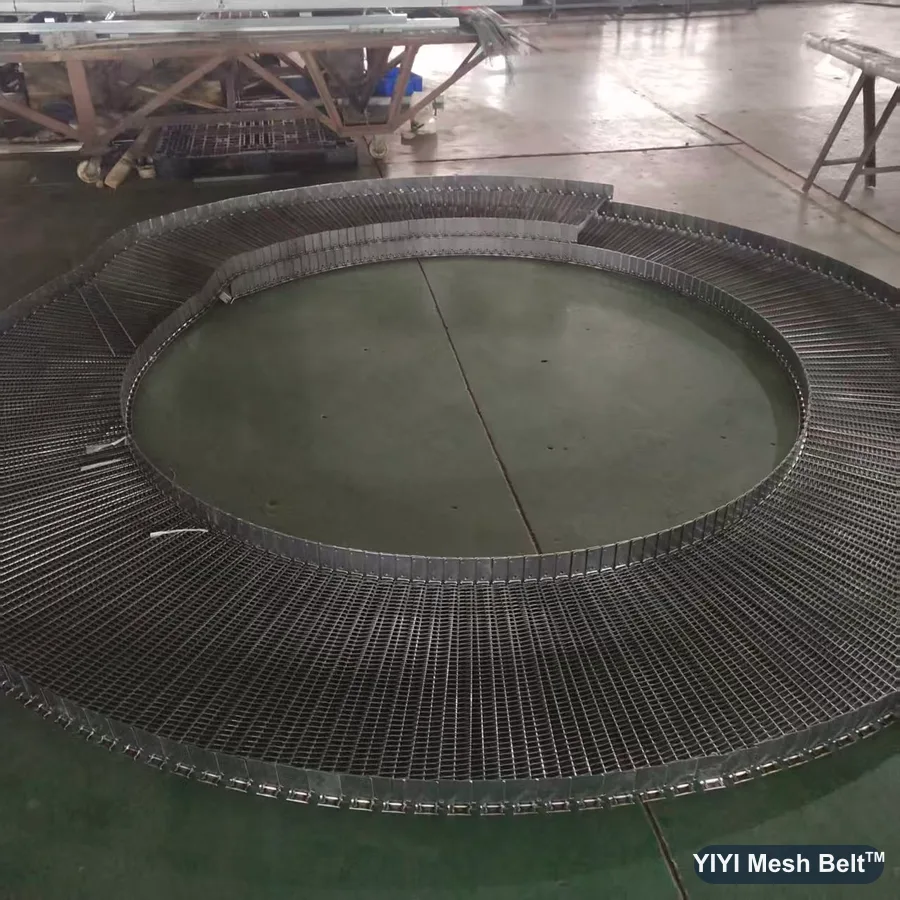
Where the project requires it, the self-stacking belt is turned on the customer’s drum diameter once enough belt is made, and the result is photographed. This checks the turn and the edge before the belt leaves the factory, instead of on the freezer floor.
How does a sample become a specification?
A sample is measured, drawn and approved before a single metre is built.
We measure the sample in our workshop, draw the belt and send the drawing for approval. Then we build a trial section of the same width and photograph it next to the original. Mass production starts after the buyer confirms the trial matches.
- Sample receivedMeasured in the workshop, unworn section first.
- DrawingReturned for approval with production suggestions.
- Trial sectionSame width, photographed next to the original.
- ApprovalMass production starts after the buyer confirms.
- Checks before shipmentDimensions, gap, stacking and turning where required.
When this is not the right choice
Do not order a replacement self-stacking belt from width and length alone. If the guard height, gap or turn ratio is off, the belt may not stack, and the freezer cannot run.
If the freezer is from a well-known equipment maker and you hold its drawing, use the drawing as the basis; the old belt is then a check, not the source.
From our engineering experience
One distributor sent us the end user’s original belt from a spiral freezer made by the original equipment maker. We drew it, built a trial of the same width, photographed it next to the original and started production after approval. Later that year the same customer re-ordered to the same drawing.
My advice: if your freezer depends on a self-stacking belt, keep a short sample of the original. It is the most reliable specification you will ever have.
Evidence from our work
- Situation
- A distributor needed a 660 mm SUS304 self-stacking belt, 350 m, to replace the original on an OEM spiral freezer running IQF at −40 °C, 16 hours a day.
- What we checked
- Wire 1.5 mm, spiral pitch 13 mm, rod 5 mm at 30 mm pitch, guard height 80 mm, then a drum test on Ø 2,170 mm and a stacking check.
- Why it matters
- The freezer cannot run if one tier fails to seat; every dimension has to match the original.
- Result
- The trial was approved against the original belt, the order shipped, and a repeat order followed to the same drawing.
- Buyer lesson
- A physical sample plus a trial photographed next to it removes most replacement risk.
FAQ
Can you replace a self-stacking belt from another manufacturer?
Yes, after review. Send the old belt or a sample and the freezer details; we draw it, build a trial and confirm before production. We do not claim universal stack compatibility.
Which widths do you make?
Reference widths are 420, 580, 640, 660 and 760 mm; other widths are confirmed on the drawing.
Which guard heights are available?
60, 80, 90, 100 and 120 mm.
Do you check stacking on every belt?
Yes. Upper and lower tiers are stacked to check engagement on every self-stacking belt before shipment.
Can I send photos instead of a sample?
Photos with a caliper support a preliminary quote. For the formal replacement we use the old belt or a sample, because worn dimensions can differ from the original design.
Conclusion
Confirm width, pitches, rod, guard height, turn ratio and gap, then approve a trial. A self-stacking replacement is safe when the sample drives the drawing.
Useful files for your project
I have worked on metal conveyor belt projects for 15 years, from new spiral freezers to belt replacement. I share project notes and replacement checklists on LinkedIn.
Technical reviewer: Sunny Ye, Global Sales Director, YIYI MESH BELT · Last updated: 2026-10-12