What Do You Need to Send to Replace a Spiral Freezer Belt?
A replacement spiral belt ordered from width and length alone often arrives wrong. Send the right details once, and the new belt fits the freezer you already run.

Short answer
To replace a spiral freezer belt, send the old belt or a short sample, photos with a caliper in view, the drum diameter, turning direction, edge type and drive details. A worn belt can differ from its original design, so we check measurements before production.
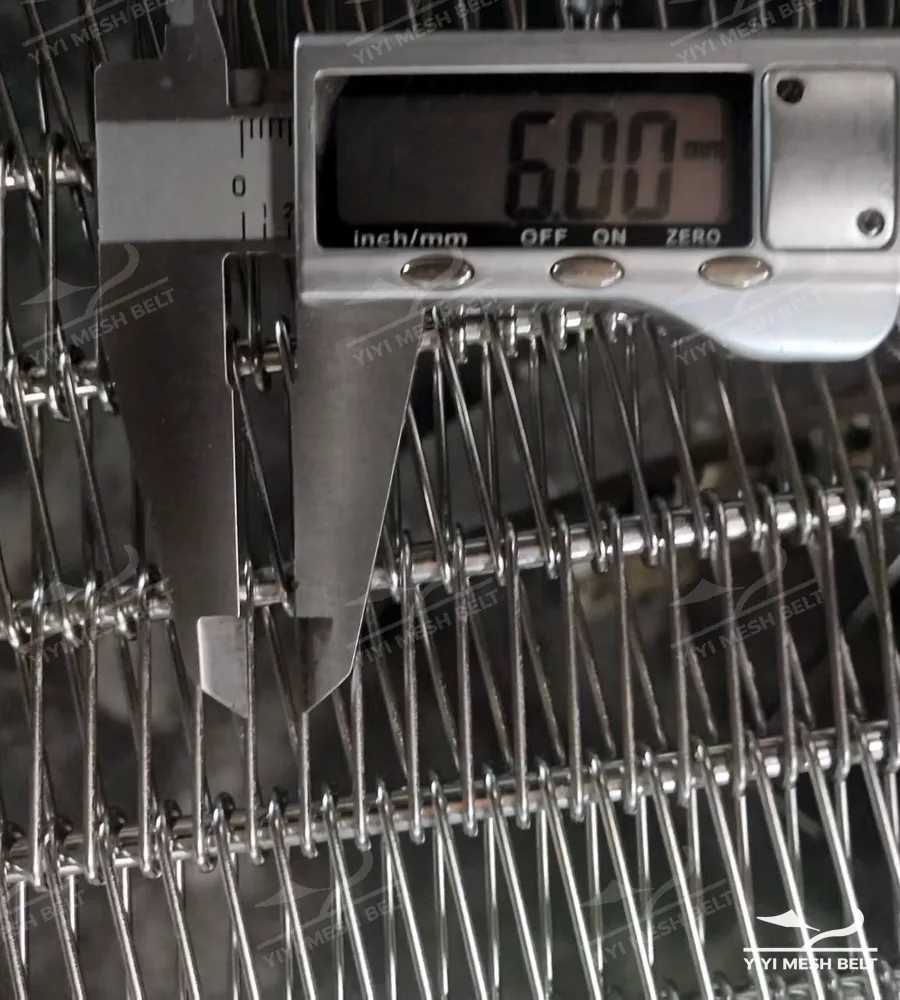
I am Sunny Ye, Global Sales Director at YIYI MESH BELT in Ningjin, Shandong. We have made metal conveyor belts since 1998 and run 280 units of production equipment, including 9 automatic welding robots. Below is the list I send to every buyer who asks for a replacement spiral belt.
At a glance
| Product | Spiral Freezer Belt (SUS304 / SUS316) |
|---|---|
| Application | Replacement belt for an existing spiral freezer or turning conveyor |
| Key parameters to confirm | Spiral pitch, rod pitch and diameter, spiral wire, width, edge type, turn ratio, drum diameter, turning direction, drive |
| Buyer type | Food plants, spiral freezer OEMs, distributors and maintenance buyers |
| What to send for a quote | Old belt or sample, photos with a caliper, drum diameter, turning direction, drive and sprocket details |
Why should you start from the physical old belt?
The old belt shows how the freezer was really built, including details nobody wrote down.
Start from the physical old belt because it shows the edge type, link shape, rod ends and pitch the freezer actually runs on. Photos and basic sizes support a first quotation, but the formal replacement is confirmed from the belt, any drawings and the equipment information together.
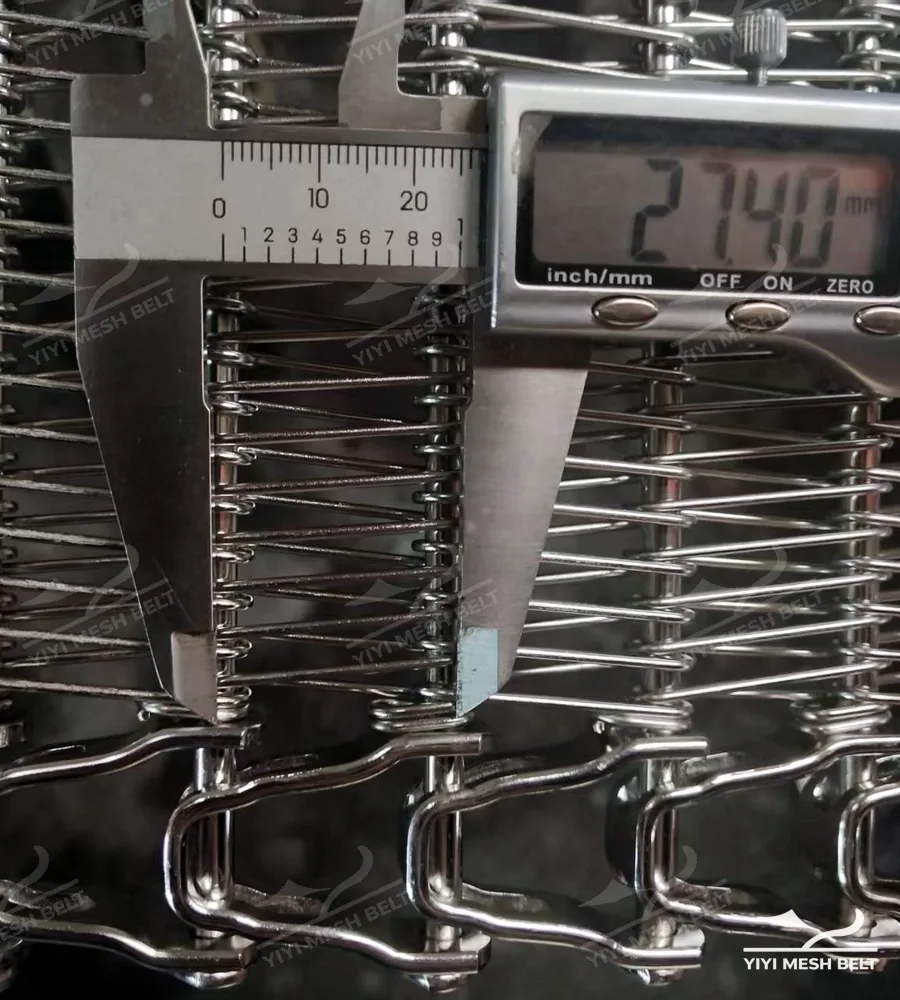
I always ask for a short piece of the old belt when the buyer can send one. A one-metre section is enough. It shows the edge construction, how the rods are fixed and how the inside edge collapses in the turn.
A worn belt is not the same as the original design. After years in a freezer, the pitch can stretch and the edge can deform. So we measure an unworn section, and we compare it with any drawing the buyer still has. Where the two do not agree, we ask before we draw.
If the old belt cannot leave the plant, photos with a measuring tool are the next option. We can quote from them, but we treat that quote as preliminary until the dimensions are confirmed.
Which measurements should you send?
Four measurements decide whether a replacement spiral belt will fit. Each should be photographed with the tool and the reading in view.
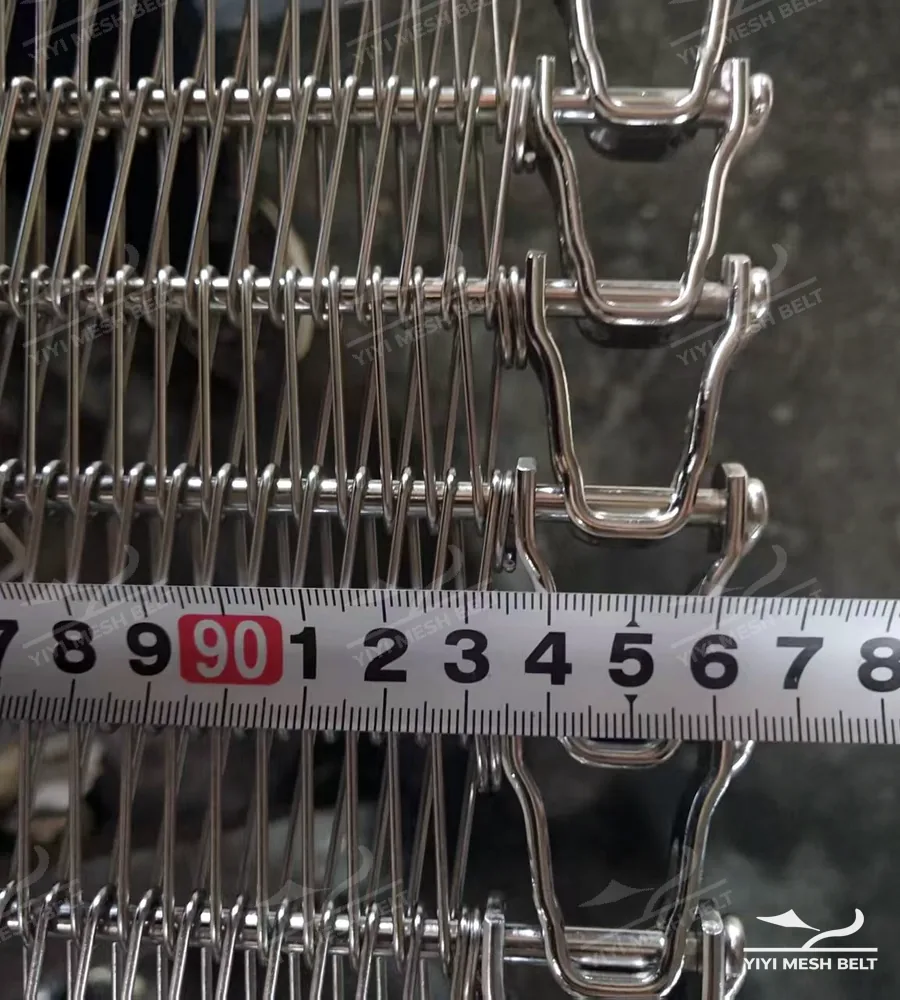
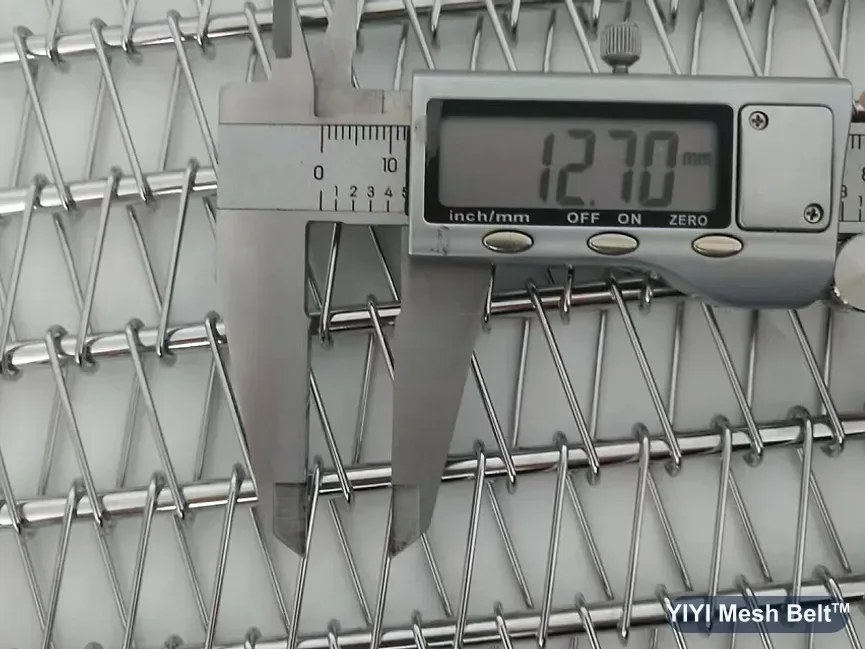
Send four measurements: spiral pitch over 10 spirals divided by 10, spiral wire and cross rod diameter from a caliper, link height and chain pitch at the edge, and overall width. Add the drum diameter and turning direction, because these decide how the inside edge must collapse.
| Measurement | Typical YIYI reference | Why it matters |
|---|---|---|
| Spiral pitch | 5–23 mm | Product support and belt weight |
| Rod pitch | 19.05 / 25.4 / 27 / 27.4 / 38.1 / 40 mm | Drive engagement |
| Rod diameter | 5 / 6 mm or custom | Strength and fit in the links |
| Spiral wire | 1.2–1.8 mm | Open area and load |
| Width | 300–2900 mm or custom | Fit in the cage |
| Turn ratio | 1.15–2.5 (small radius about 1.1) | How the inside edge collapses |
- Spiral pitchMeasure over 10 spirals with a caliper and divide by 10.
- Wire and rodMeasure the spiral wire and the cross rod in three places.
- EdgeMeasure link height and chain pitch at the edge.
- Width, direction, drumMeasure overall width, note the turning direction and give the drum diameter.
These are reference ranges, not free combinations. The approved drawing decides the final belt.
What freezer information is needed?
The belt has to match the freezer, not just the old belt. A few freezer details prevent most fit problems.
Send the drum diameter, the number of tiers or total belt length, the turning direction, the support rail layout if you have it, and how the belt is driven. These details let us check the turn ratio and drive relationship before quoting, instead of finding a problem on installation day.
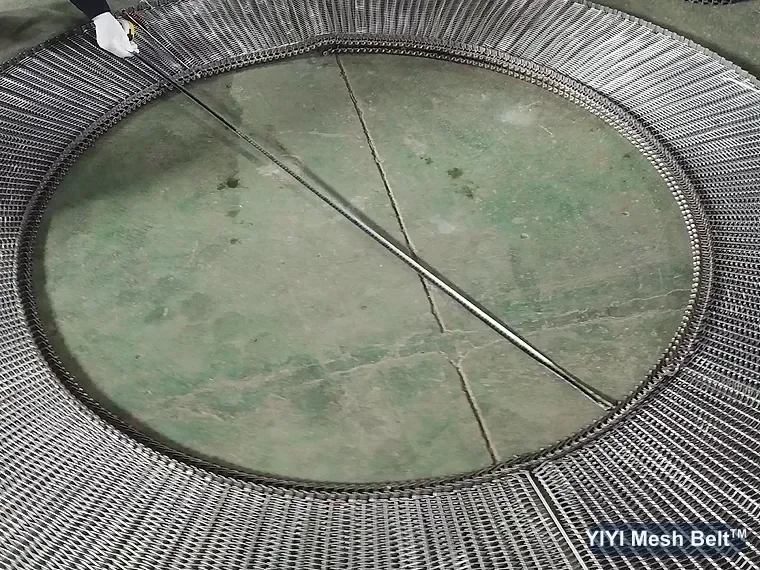
The turn ratio is the link between belt width and drum diameter. A belt that is correct in width can still be wrong for the drum. So I ask for the drum diameter even when the buyer is sure the belt is identical to the old one.
Turning direction matters too. A belt built for the wrong direction will not run. If you are unsure, a photo of the belt entering the drum is enough for us to check.
Where the project requires it, we lay the belt out on the customer’s drum diameter before packing, so the inside edge can be seen collapsing evenly.
Do you need to send drive and sprocket details?
Yes, when the belt is driven at the edge or on sprockets. The belt and the drive are checked as one system.
Send the sprocket tooth count, outside diameter, bore and keyway, or a photo of the drive end with a ruler. If the old sprockets are worn, say so. A new belt on badly worn sprockets can still skip or wear quickly, even when the belt itself is correct.
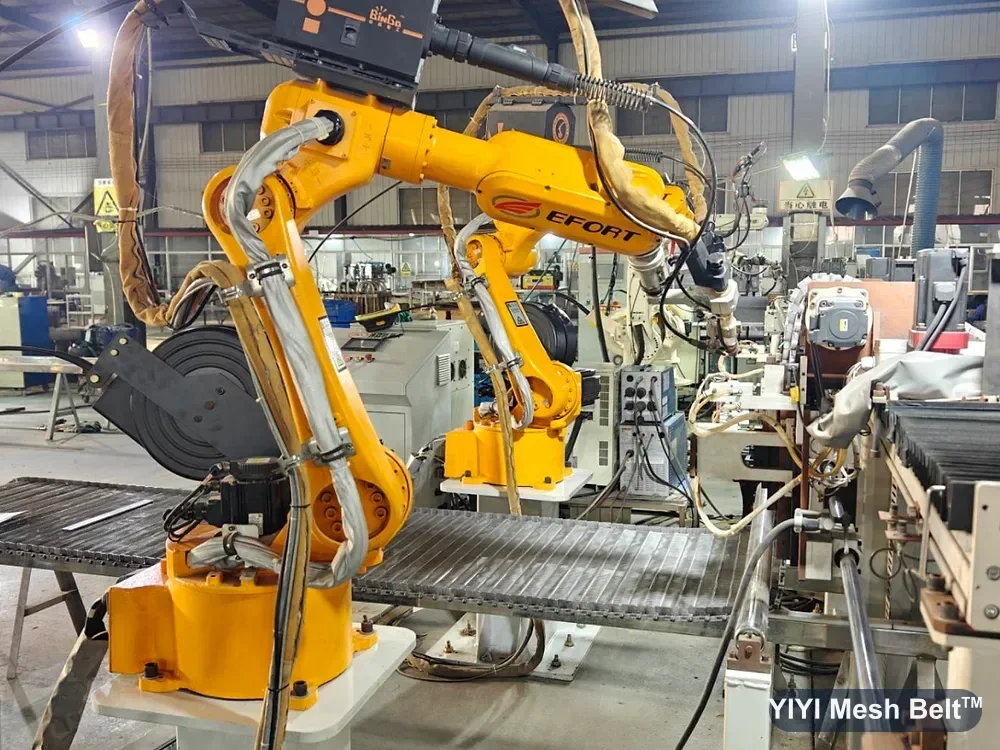
Many replacement problems start at the drive end. The belt pitch has to match the sprocket or drive, and a stretched old belt may have worn the sprockets to its own shape.
If you want sprockets with the belt, we specify them on the same drawing and check them against the belt. If you keep your existing sprockets, we note their condition on the drawing so everyone knows the starting point.
What happens after you send the details?
You approve each step before we build the next one. Nothing is made in volume without your sign-off.
After you send the details, we return a drawing with our production suggestions for your approval. When you send a sample, we build a short trial section first. Production starts after you approve, and you receive measured photos and an inspection report before shipment.
| Step | What you receive |
|---|---|
| Drawing | Our drawing with production suggestions, for your approval |
| Trial section | Measured photos, and a comparison with your sample when you sent one |
| Production | A progress report every Thursday |
| Before shipment | Measured photos, inspection report and the order record of your belt |
Every finished belt is inspected before packing. That means each belt is checked; it is not a zero-defect promise.
When this is not the right choice
Ordering from a catalogue size is not the right choice for a replacement spiral belt. If you know just width and length, a supplier is guessing the edge, pitch and turn ratio, and the risk moves to installation day.
Copying the old belt exactly is also not always right. If the old belt failed early, send photos of the failure first. The cause may be the freezer, the load or the drive, and an identical belt would fail the same way.
From our engineering experience
Many replacement enquiries I receive give just the width and length of the old belt. In those cases I ask for one photo of the edge with a caliper, because the edge type and link height are where most mismatches hide.
When a buyer can send the original belt, we measure it in our workshop, draw it, and build a trial section of the same width. We photograph the trial next to the original before anything goes into production. My advice to buyers is simple: send a sample if you can, and a photo with a ruler if you cannot.
Evidence from our work
- Situation
- A freezer equipment manufacturer re-ordered a 965 mm SUS304 spiral freezer belt, 460 m, for a 3,610 mm drum.
- What we checked
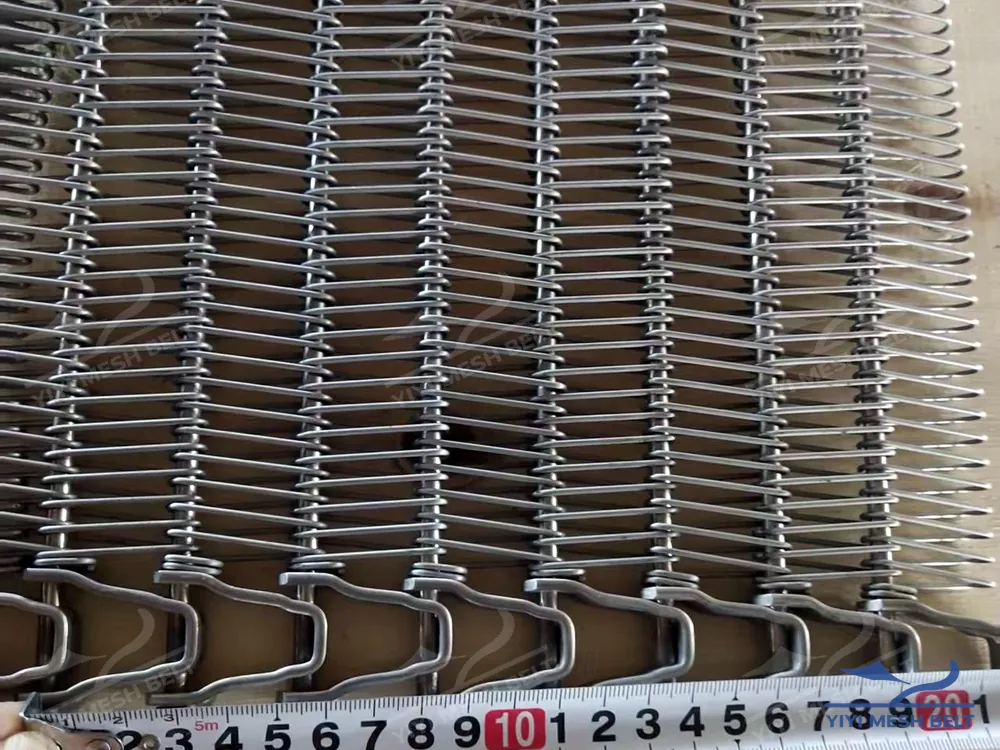
- Wire 1.50 mm, spiral pitch 6.00 mm, rod 5.00 mm, chain pitch 27.40 mm and plate height 12.74 mm, measured at first article.
- Why it matters
- A repeat order is repeatable when the first article matches the approved drawing again.
- Result
- The belt was turned against the customer’s drum before shipment and delivered to the same drawing as the 2025 order.
- Buyer lesson
- Keep the approved drawing and the measured photos of every order; they make the next replacement fast and safe.
FAQ
Can you quote a replacement spiral belt from photos alone?
Yes, as a preliminary quotation. Photos with a caliper or tape in view, plus width and drum diameter, are enough to start. The formal replacement is confirmed from the old belt or a sample, any drawings and the equipment information.
How long a sample should I send?
A short section is enough, ideally one that includes the edge on both sides and several rods. Take it from an unworn part of the belt if you can.
What if I do not know the turn ratio?
Send the drum diameter, the belt width and the turning direction. We work out the turn ratio and check it on the drawing.
Do you replace the sprockets too?
We can supply sprockets specified on the same drawing and checked against the belt, or note the condition of the sprockets you keep.
Which materials do you use for spiral freezer belts?
SUS304 or SUS316. SUS316 is chosen where salt, brine or stronger cleaning chemicals are present; the grade is confirmed against your product and cleaning method.
Conclusion
Send the old belt or a sample, four measured photos, the drum diameter and drive details. We confirm fit on a drawing before anything is built.
Useful files for your project
I have worked on metal conveyor belt projects for 15 years, from new spiral freezers to belt replacement. I share project notes and replacement checklists on LinkedIn.
Technical reviewer: Sunny Ye, Global Sales Director, YIYI MESH BELT · Last updated: 2026-10-12