What 7 Things Should You Confirm Before Replacing a Spiral Freezer Belt?
A new spiral belt on a freezer with an unsolved problem fails again. Confirm seven things first, and the replacement runs the first time.

Short answer
Before replacing a spiral freezer belt, confirm seven things: why the old belt failed, which belt type it is, the drum diameter and direction, the drive and sprockets, the material, how the belt will be delivered, and the approval steps. Together they turn a reorder into a planned replacement.
I am Sunny Ye, Global Sales Director at YIYI MESH BELT in Ningjin, Shandong. We have made metal conveyor belts since 1998 and run 280 units of production equipment, including 9 automatic welding robots. These are the seven questions I go through with every buyer before we draw a replacement spiral belt.
At a glance
| Product | Spiral Freezer Belt, Self-Stacking Belt, Side Driven Belt |
|---|---|
| Application | Planned replacement of a belt in an existing spiral freezer |
| Key parameters to confirm | Failure cause, belt type, drum diameter, direction, drive, material, delivery form |
| Buyer type | Food plants, freezer OEMs, distributors, maintenance managers |
| What to send for a quote | Photos of the old belt and any failure, drum diameter, direction, drive photos, product and cleaning |
Why did the old belt need replacing? (1)
The first check is the reason for the replacement, because it decides whether to copy the belt.
Confirm why the old belt is being replaced. Even wear after years means the design worked and can be copied. Early collapse, cracked links or edge damage point to a cause in the freezer, the load or the drive, which must be checked before a new belt is drawn.
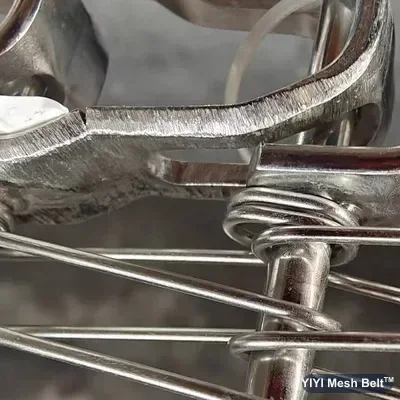
I ask for photos of the damage before anything else. A belt that wore evenly over many years tells me the design suits the freezer. A belt that failed in one area tells me something else is happening there.
Typical causes are tension, a worn drive, a damaged support rail or a load the belt was not designed for. A new belt does not fix any of these. So we look at the photos first, and if the cause is in the freezer, we tell you before quoting a copy.
Which belt type, drum and direction? (2–3)
Two checks belong together: what the belt is, and what it turns around.
Confirm the belt type, for example a spiral freezer belt, a self-stacking belt or a side driven belt, and then the drum diameter and turning direction. The type decides the construction; the drum and direction decide the turn ratio and how the inside edge must collapse.
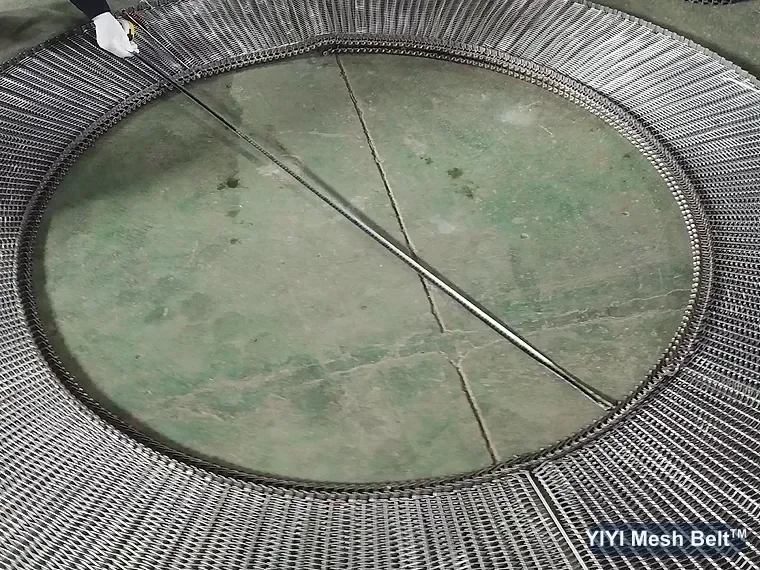
A belt built for the wrong direction will not run, and a belt correct in width can still be wrong for the drum. These two checks take five minutes on site and save weeks later.
| Check | What to confirm | Where it comes from |
|---|---|---|
| Belt type | Spiral, self-stacking or side driven | Photos of the belt and the cage |
| Drum diameter | In mm, from freezer data or measured | Freezer maker or plant |
| Direction | Left or right turn | Photo of the belt entering the drum |
| Tiers or length | Total belt length | Freezer data or the old order |
Does the drive match the new belt? (4)
The belt and the drive wear together, so they are checked together.
Confirm the drive and sprocket condition before ordering. A stretched old belt wears the sprockets to its own shape, and a new belt on worn sprockets can skip or wear early. Decide whether to replace the sprockets and wear strips with the belt, and put them on the same drawing.
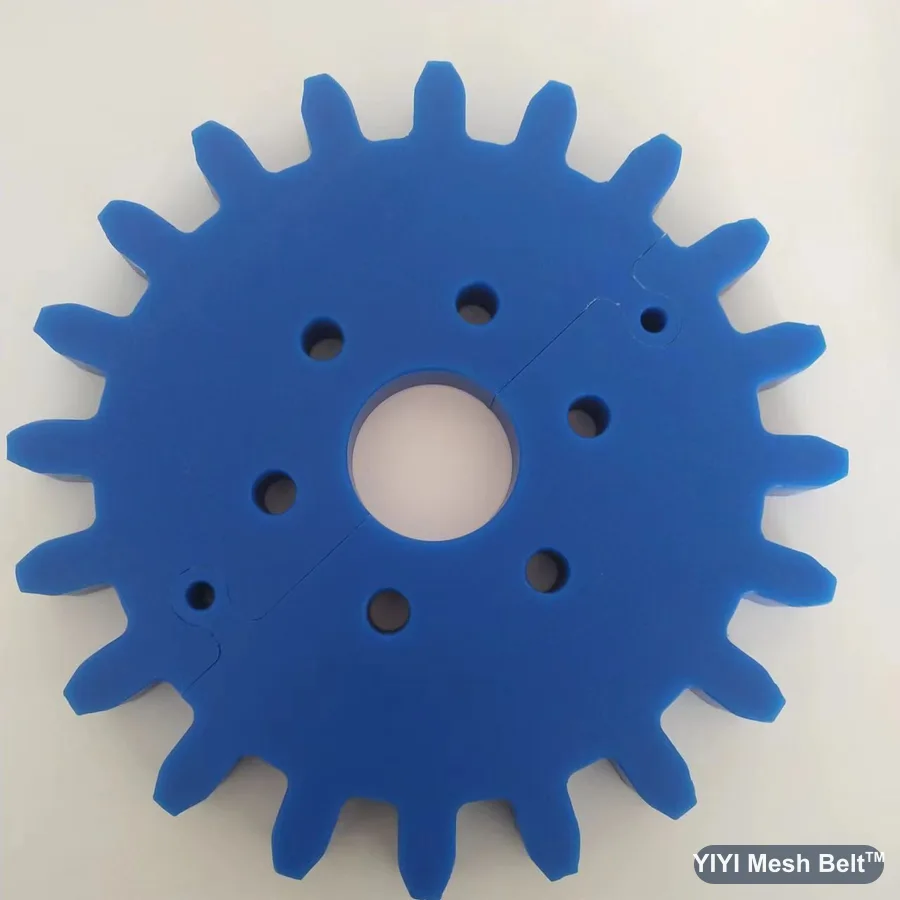
When sprockets and wear strips are supplied with the belt, we specify them on the same drawing and run the sprockets with the belt before shipment. When you keep your existing parts, we note their condition on the drawing, so everyone starts from the same point.
For side driven belts this check matters even more, because the side drive and the guards carry the belt around the cage.
Is the material right for your product and cleaning? (5)
A replacement is a good moment to check that the material still fits the process.
Confirm the material against your product, temperature and cleaning. SUS304 suits most freezing duties; SUS316 is chosen where salt, brine or stronger cleaning chemicals are present. If the product or cleaning changed since the first belt, the material choice may change too, and it is agreed on the drawing.
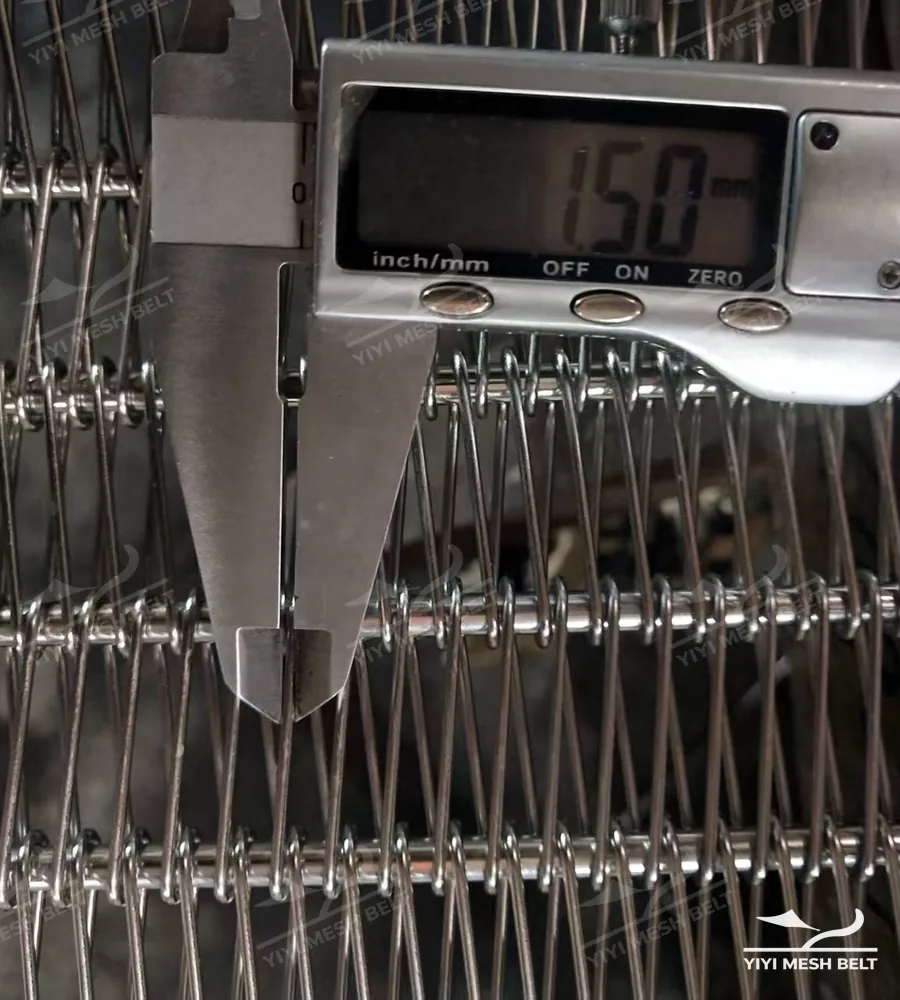
We draw our own stainless wire, 3.2 to 1.0 mm, and round bar, 12 to 4 mm, and check composition with a spectral analyser on arrival. Material documentation is available for your order.
How will the belt be delivered and approved? (6–7)
The last two checks are practical: the form the belt arrives in, and what you approve before production.
Confirm how the belt arrives, in one length or in sections, with spare parts, and which steps you approve: the drawing, a trial section, and measured photos before shipment. Agreeing this before the order means the installation team knows what to expect and nothing is decided after production.
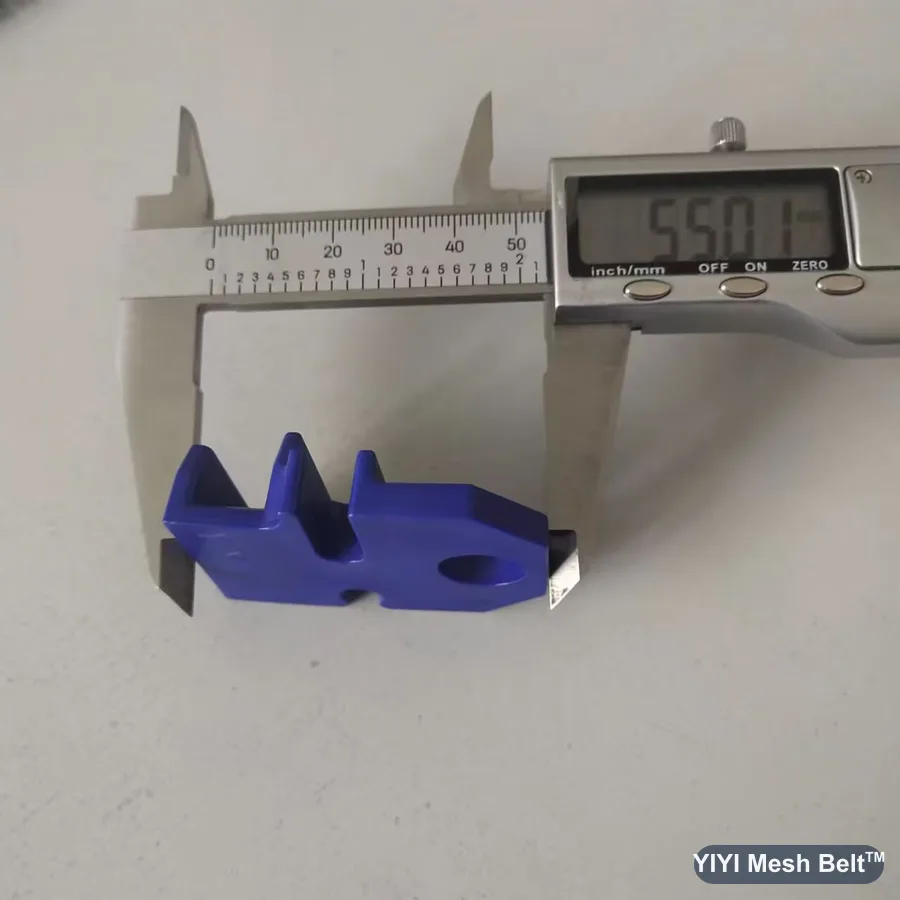
Every finished belt is inspected before packing. That is a check of every belt, not a zero-defect promise; the approved drawing is what the belt is checked against.
| Step | What you receive |
|---|---|
| Drawing | Our drawing with production suggestions, for your approval |
| Trial section | Measured photos, compared with your sample if you sent one |
| Production | A progress report every Thursday |
| Before shipment | Measured photos and the inspection report of your belt |
When this is not the right choice
A straight reorder is not right when the old belt failed early or the freezer has changed. In both cases the seven checks may lead to a different belt, not a copy.
This checklist is also not the right route for a new freezer project. A new freezer starts from the freezer design and the product; see how to specify a spiral freezer belt for a quote.
From our engineering experience
When an OEM sends us the belt, sprocket and side-clip designs together, we review them as one system. We approve the drawing with the customer, measure the first article, and run the sprockets with the belt before shipment.
I go through these seven checks on the phone or in email before we draw anything. Most take minutes. The one buyers skip most often is the drive, and it is the one that causes most trouble after installation.
Evidence from our work
- Situation
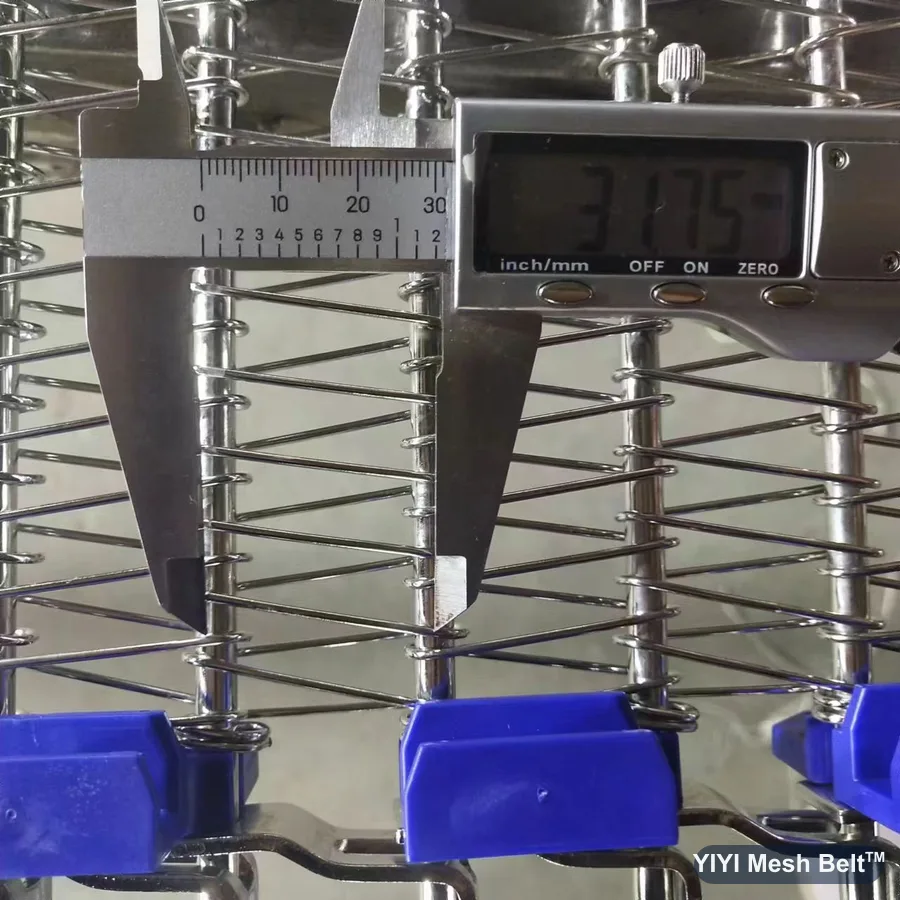
- An equipment manufacturer needed a 780 mm SUS304 and POM side driven spiral belt, 370 m, with sprockets and wear strips.
- What we checked
- We reviewed the customer’s sprocket, side-clip and belt designs together, approved the drawing, measured the first article: 31.75 mm rod pitch, 55 mm side guard.
- Why it matters
- Belt, sprockets and wear strips supplied and checked as one set remove the most common replacement risk: a mismatched drive.
- Result
- Split UHMWPE sprockets and 1,400 m of PE wear strips shipped with the belt after a turning check and a sprocket run.
- Buyer lesson
- Confirm the drive with the belt, not after it.
FAQ
Can I reorder the same belt without these checks?
If the old belt wore evenly over many years and nothing in the freezer changed, a reorder to the old drawing is usually safe. Send photos first so we can confirm.
Should sprockets be replaced with the belt?
Often, yes, when the old belt was stretched. Send a photo of the sprocket teeth and we advise.
How do I find the drum diameter?
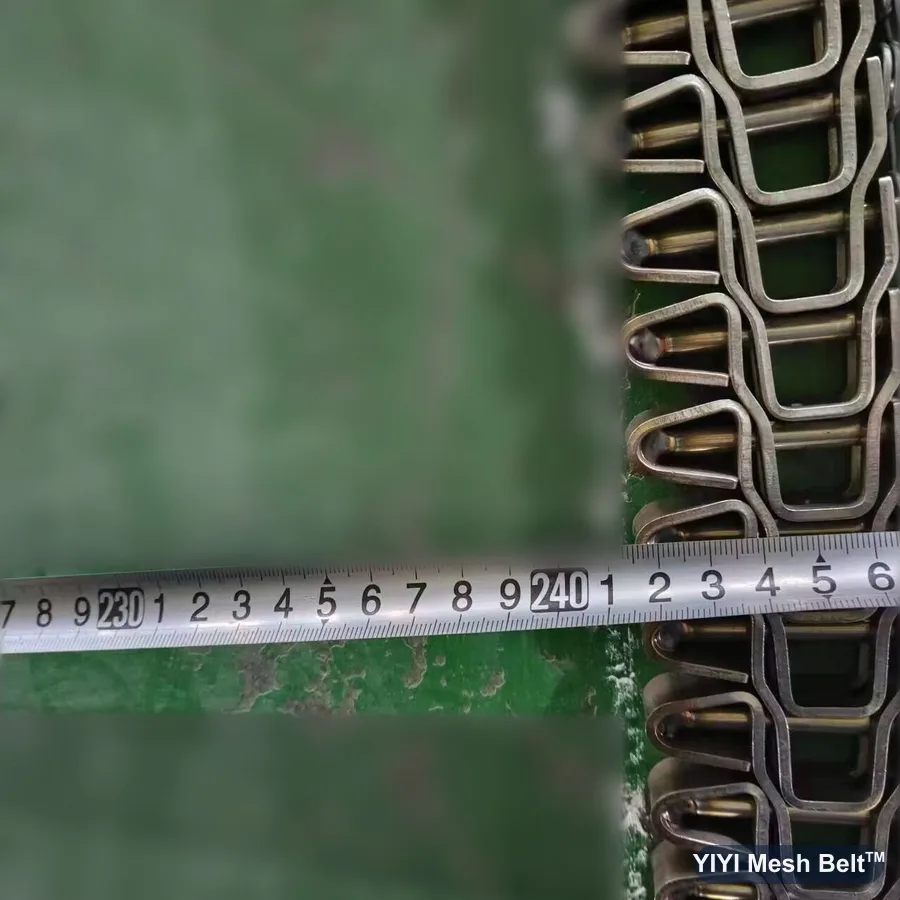
From the freezer data plate or manual, or measure the drum on site. A photo with a tape across the drum works.
Do you supply side driven and self-stacking belts too?
Yes. Spiral freezer belts, self-stacking belts and side driven belts are built to an approved drawing.
What do I approve before production?
The drawing, and a trial section where you send a sample. Measured photos are sent before shipment.
Conclusion
Check the failure cause, belt type, drum and direction, drive, material, delivery and approvals. Then the replacement belt fits, runs and lasts as planned.
Useful files for your project
I have worked on metal conveyor belt projects for 15 years, from new spiral freezers to belt replacement. I share project notes and replacement checklists on LinkedIn.
Technical reviewer: Sunny Ye, Global Sales Director, YIYI MESH BELT · Last updated: 2026-10-12