Pickling or Electropolishing for a Self-Stacking Belt: What Do Most Orders Use?
Welding leaves scale and heat tint on a self-stacking belt, so the belt needs a surface finish. The choice is not only about looks. On tall stack plates, the wrong expectation can end in a colour difference you did not plan for. Here is how the self stacking belt surface finish is decided in our factory. See our self-stacking belts.

What is the short answer?
Most self-stacking belts we build are pickled. Electropolishing is generally limited to stack plates up to 90 mm high, and it can leave a colour difference on the plates. A small number of buyers still choose it because they care about the surface at the weld points.
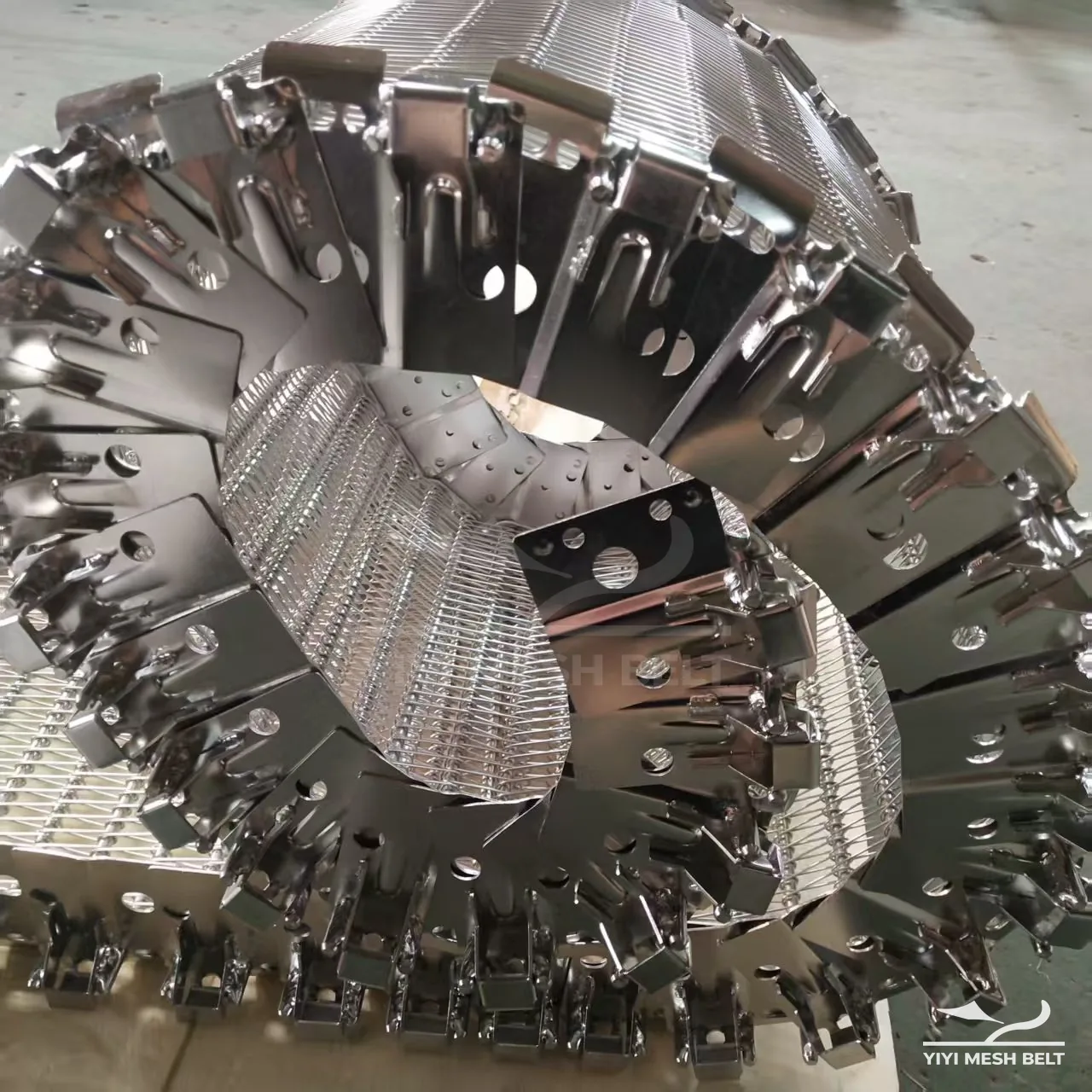
I am Sunny Ye, Global Sales Director at YIYI MESH BELT in Ningjin, Shandong, China. This article explains what our orders use and why. It is only about the self-stacking belt. For the grade question, see SUS304 or SUS316 for a self-stacking belt.
What do pickling and electropolishing do?
Pickling removes the scale and heat tint left by fabrication, and the surface may look matt. Electropolishing removes metal electrochemically to reduce micro-roughness, and it can give a smoother, brighter surface. Results depend on the alloy, the starting surface and the process conditions, so the two are not interchangeable.
| Item | Pickling | Electropolishing |
|---|---|---|
| What it does | Removes scale, heat tint and the chromium-depleted layer beneath them | Removes metal electrochemically to reduce micro-roughness |
| Appearance | May be matt or less reflective | Can be smoother and brighter |
| On our self-stacking orders | The great majority | A small number |
| Stack plate height | 60 to 150 mm on our specification | Generally up to 90 mm |
| Colour to watch | Links from one material batch, so the colour stays even | A colour difference can appear on 60, 80 and 90 mm stack plates |
| Who does it | External supplier | External supplier |
Inch values for stack plate heights are in the next table. The approved drawing governs.
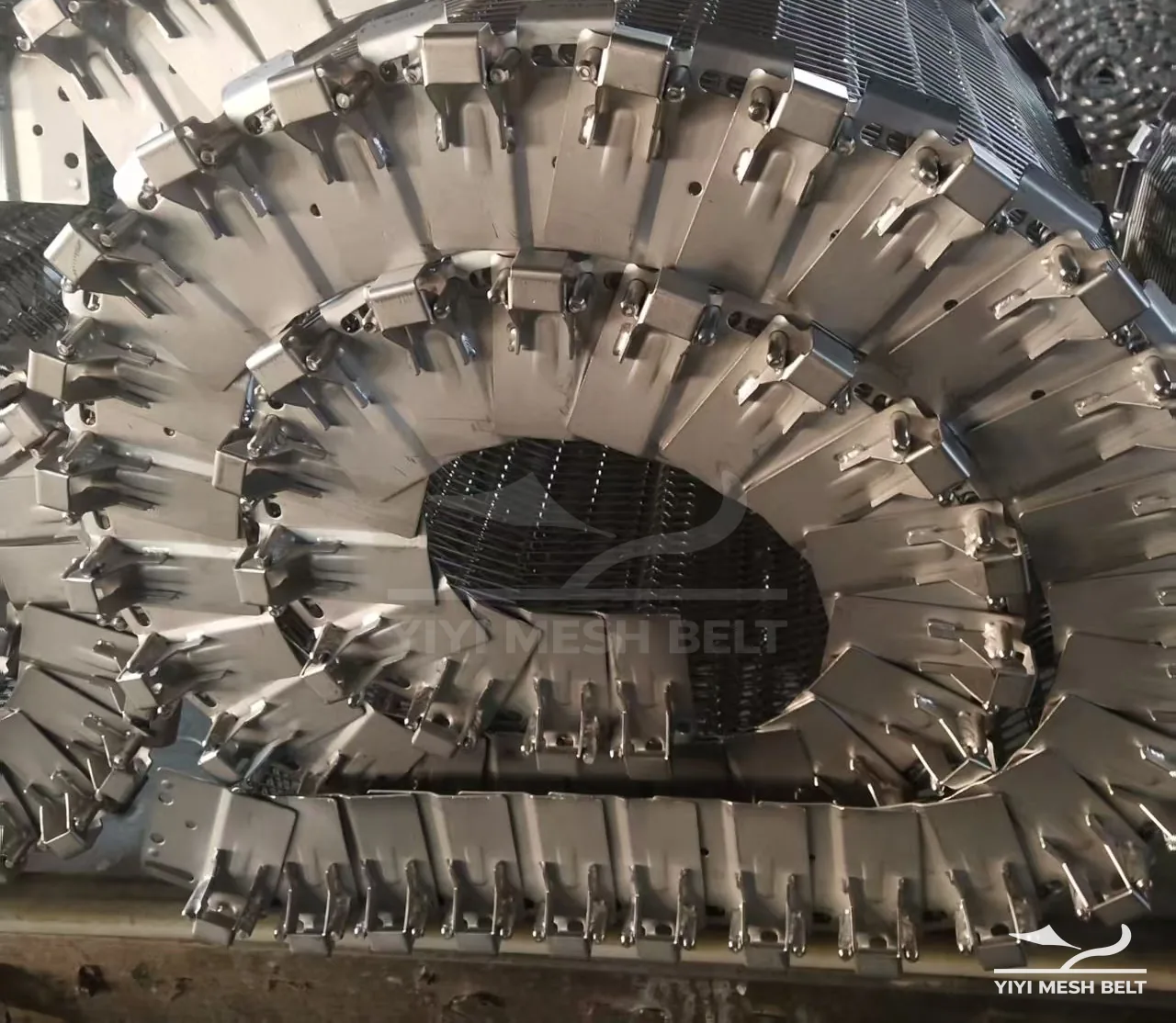
Why do most self-stacking belt orders use pickling?
Because the stack plates set the limit. Electropolishing is limited by stack plate height, and it can leave a colour difference on the plates. That is why I normally recommend pickling for a self-stacking belt, and why the great majority of our self-stacking orders use it.
This is what our orders do. It is not a rule for every line. Your grade, your cleaning and your appearance requirements still go on the approved drawing or in the order confirmation.
What is the limit on electropolishing?
On a self-stacking belt, electropolishing is generally limited to stack plates up to 90 mm high. Our specification lists taller stack plates, up to 120 mm on the standard belt and 150 mm on the heavy-duty belt. For those heights, please confirm the finish with us first.
| Stack plate height (mm) | Inch (in), rounded | Configuration | Electropolishing |
|---|---|---|---|
| 60 | 2.36 | Standard | Generally possible; colour difference can occur |
| 80 | 3.15 | Standard, heavy duty | Generally possible; colour difference can occur |
| 90 | 3.54 | Standard | Generally the upper limit; colour difference can occur |
| 100 | 3.94 | Standard, heavy duty | Confirm before ordering |
| 120 | 4.72 | Standard | Confirm before ordering |
| 150 | 5.91 | Heavy duty | Confirm before ordering |
Inch values are rounded references. Options are not free combinations; the approved drawing governs.
Who chooses electropolishing?
A small number of our buyers choose it. They care about the weld points and weld slag on the surface. We make it at the customer's request, and where appearance matters, we agree a finish sample first. Please tell us your stack plate height too.
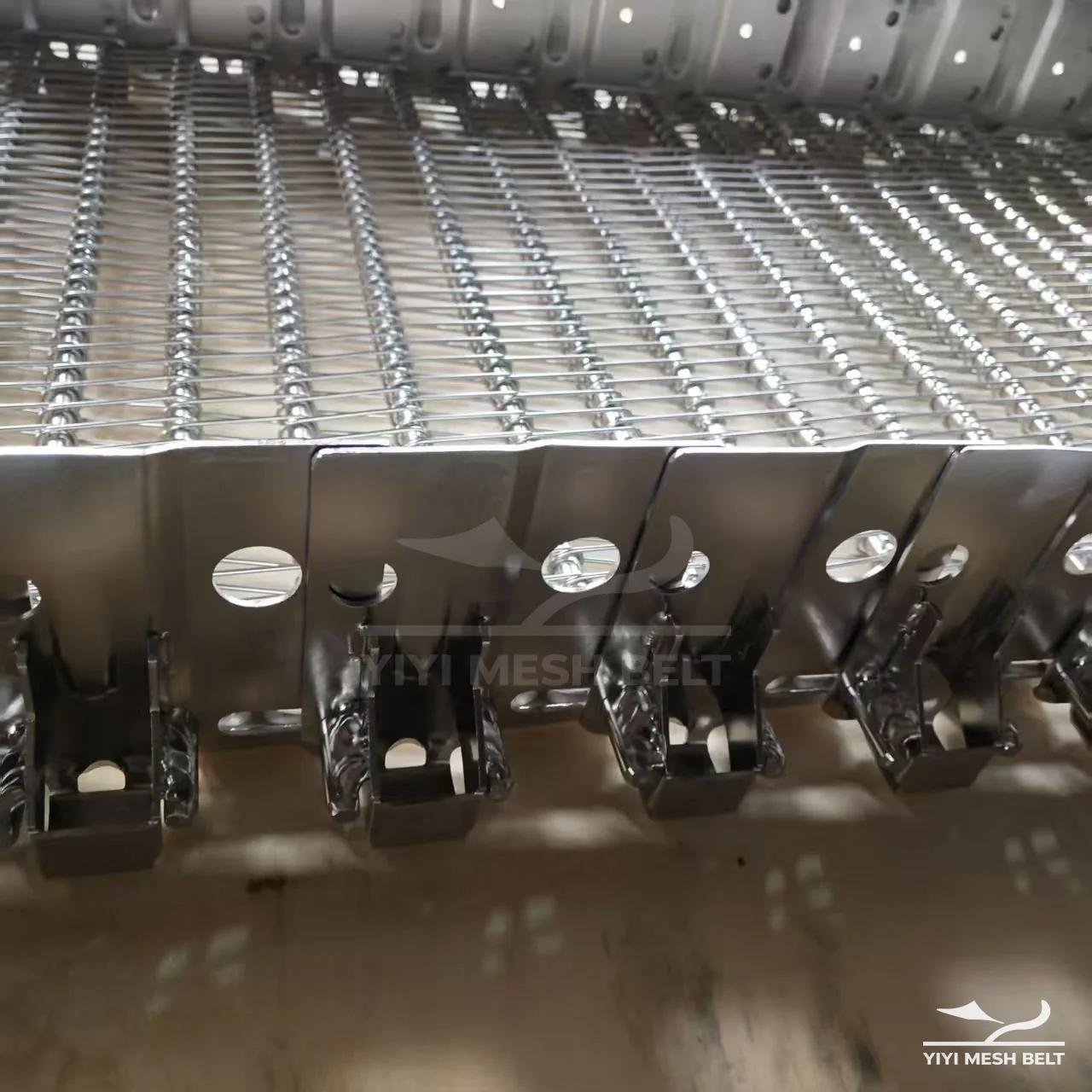
What about colour difference?
Colour needs attention with both finishes. With electropolishing on 60, 80 and 90 mm stack plates, a colour difference can appear. With pickling, our production orders ask for links from the same batch of material, so the colour stays even after treatment. If appearance matters, agree a finish sample first.
Lighting, geometry and the starting surface also affect how a finish looks. So a photo is a guide, not an acceptance standard. Our surface treatment guide shows both finishes side by side.
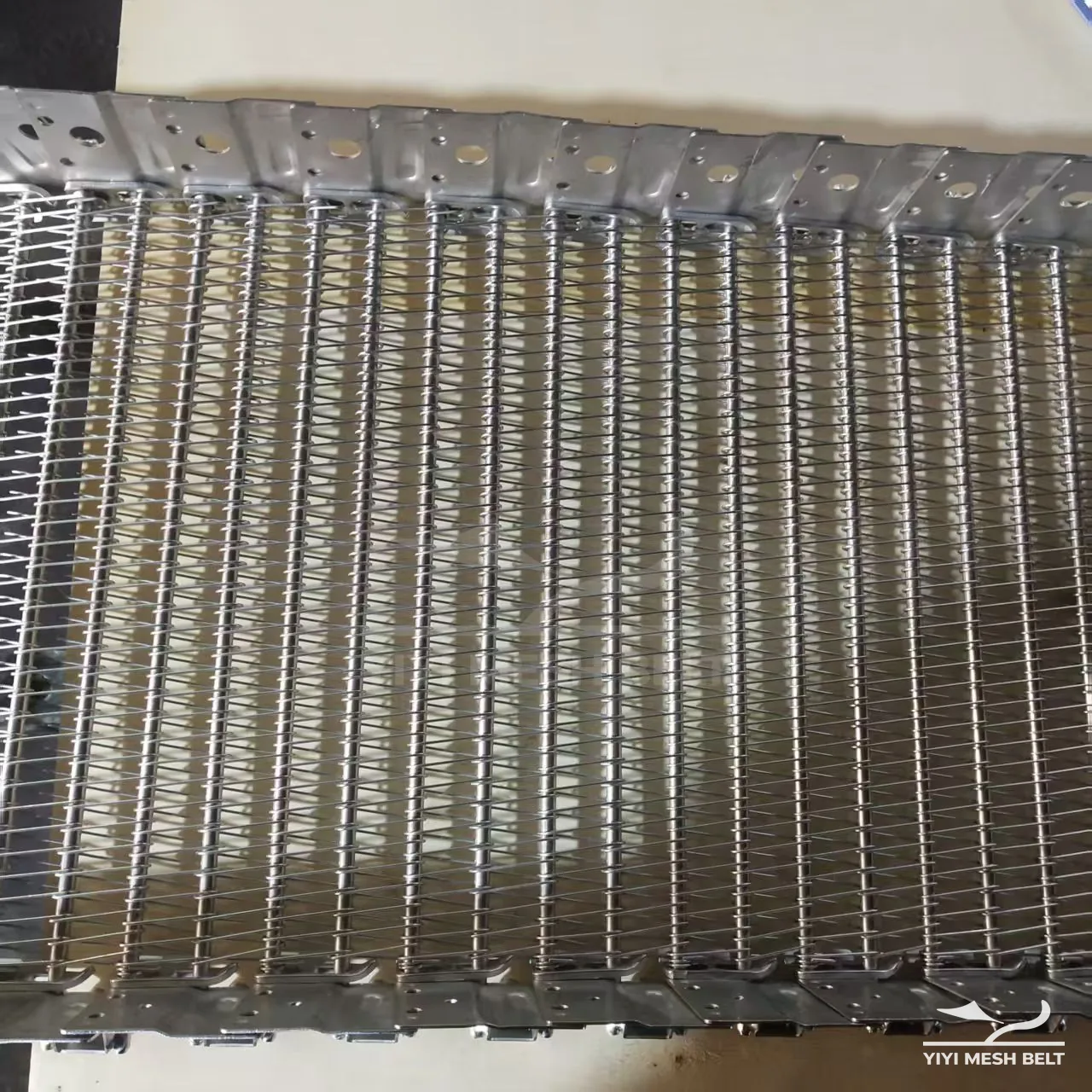
How do we check the belt after surface treatment?
Pickling and electropolishing are done by external suppliers, so the belt is checked again when it comes back. We re-inspect the surface against the selected material and finish, and we measure the dimensions with a caliper. Every finished belt then goes through 100% final inspection before packing.
| Check | How | Against |
|---|---|---|
| Dimensions | Measured with a caliper | Approved drawing |
| Surface condition | Inspected after treatment | Selected material and finish |
| Edges, joints and rods | Reviewed | Agreed sample and drawing |
| Finished belt | 100% final inspection before packing | Approved specification |
See our quality control and inspection page for the wider checks.
What should you tell us about the finish?
Tell us the stainless steel grade, the stack plate height, your preferred treatment and any approved finish sample. Also tell us your product contact, cleaning chemicals and cleaning cycle. If you have a roughness target, send the value and the measurement locations, and we confirm the scope during quotation.
| Item | Details we need |
|---|---|
| Belt and material | Stainless steel grade, drawing and critical dimensions in mm / in, including stack plate height |
| Service conditions | Product contact, operating temperature, cleaning chemicals and cleaning cycle |
| Finish | Preferred treatment, approved sample, roughness target and measurement locations if specified |
| Acceptance and records | Inspection criteria, required standards, test reports and packing requirements |
You can see where our belts are used on our industries page.
Where have we done each finish?
We have made electropolished self-stacking belts for projects in South Korea and Spain. The South Korean belt was electropolished at the customer's request. The Spanish customer's earlier orders were not electropolished, and later orders were. The grade on both projects was SUS304.
| Situation | An equipment manufacturer ordered a heavy-duty SUS304 belt, 420 mm (16.54 in) wide, with 7 mm (0.28 in) rods and 1.5 × 80 mm (0.06 × 3.15 in) stack plates |
|---|---|
| Finish | Electropolished at the customer's request |
| Before shipment | Rod, wire, spiral pitch and stack plates measured again on the electropolished belt |
| What you can ask for | Finish photos and measured values before shipment |
| Situation | A belt distributor reorders SUS304 belts in 420 mm (16.54 in) and 760 mm (29.92 in) widths |
|---|---|
| Finish | Earlier orders were not electropolished; later orders were |
| Colour control | On a pickled order, side links came from a single batch of material so the colour stayed even |
| What you can ask for | Links from one material batch, if appearance matters |
What do buyers ask about the finish?
Which finish do most self-stacking belts use?
Pickling. The great majority of our self-stacking belt orders are pickled. A small number of buyers choose electropolishing.
Is there a limit on electropolishing a self-stacking belt?
Yes. It is generally limited to stack plates up to 90 mm high. For taller stack plates, please confirm the finish with us before ordering.
Why would a buyer choose electropolishing?
Usually because they care about the surface at the weld points and weld slag. It can give a smoother, brighter surface, and results depend on the alloy, starting surface and process conditions.
Will electropolishing change the colour of the stack plates?
It can. On 60, 80 and 90 mm stack plates, a colour difference can appear after electropolishing. If appearance matters, agree a finish sample first.
Do you do the surface treatment yourselves?
No. Pickling and electropolishing are done by external suppliers. When the belt comes back, we check the dimensions with a caliper and re-inspect the surface.
What should you take from this?
Pickling is what most self-stacking belt orders use. Electropolishing is possible, generally on stack plates up to 90 mm, for buyers who care about the surface at the weld points. It can leave a colour difference. Whichever you choose, agree a finish sample if appearance matters.
What have I learned about this choice?
On a self-stacking belt, the great majority of buyers choose pickling. Electropolishing has a limit, generally stack plates up to 90 mm, and only a small number of customers who care about the weld points and weld slag on the surface choose it. We have done it for customers in South Korea and Spain. Because the stack plates are 60, 80 or 90 mm high, electropolishing can leave a colour difference, so for this belt I recommend pickling.
Which files can help your project?
I work on metal conveyor belt projects, from new spiral freezers to belt replacement. I share project notes and replacement checklists on LinkedIn.
Technical reviewer: Sunny Ye, Global Sales Director, YIYI MESH BELT · Last updated: 2026-11-04
© 2026 Ningjin Yiyi Mesh Belt Co., Ltd. All rights reserved. Photos, drawings and data on this page belong to YIYI Mesh Belt and may not be copied or reused without written permission.