What Does Our Factory Need to Quote a Custom Conveyor Belt?
With the items below, our factory can draw your belt and quote on that drawing instead of sending back a list of questions. Here is what we read from each item and how we confirm it. See our metal conveyor belts.

Short answer
A manufacturer needs eight items to quote a custom conveyor belt: the belt type, the application, the main dimensions, the edge and drive, the material, the quantity, the documents you require and the delivery terms. A drawing or sample covers most; the rest fit in a short email.
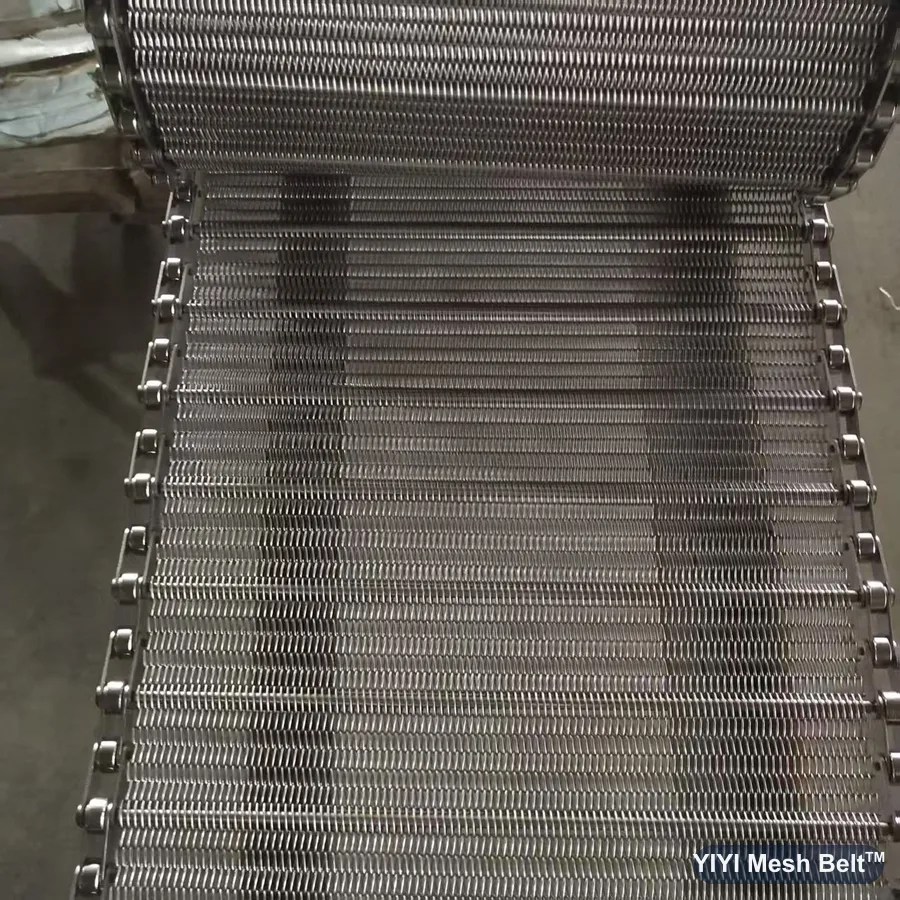
I am Sunny Ye, Global Sales Director at YIYI MESH BELT in Ningjin, Shandong, China. Our manufacturing experience dates back to 1998. This is the list our sales team works from when a custom belt enquiry arrives.
At a glance
| Product | Custom metal conveyor belts: chain driven, eye link, flat wire, balanced weave, trapezoidal and more |
|---|---|
| Application | New equipment, OEM supply, line upgrades |
| Key parameters to confirm | Belt type, width, length, pitch, wire and rod, edge, drive, material |
| Buyer type | Equipment makers, OEM engineers, distributors, food plants |
| What to send for a quote | Drawing or sample, application, quantity, required documents, delivery terms |
Self-Stacking Belt RFQ Checklist for Freezer OEMs
To start a drawing review, send your contact details, freezer application, drawing and revision, or the dimensions you already have. Identify what is confirmed and what is still unknown. An old drawing or an incomplete dimension sheet can open a discussion. It is not a manufacturing approval.
For a new freezer or a repeat equipment build, separate the initial enquiry from the engineering decisions that must be closed before production. Keep the drawing number and revision on the correspondence.
| Item | What to provide | Why it matters | If information is missing |
|---|---|---|---|
| Application | Freezing process, new or repeat equipment, quantity and unit. | Defines the project being reviewed. | Describe the process and decisions still open. |
| Drawing | Number, revision, approval status and changes from earlier builds. | Identifies the quotation and first-article basis. | Send the old drawing marked reference only, with known changes listed. |
| Belt structure | Width, length, spiral pitch, rod pitch and diameter, side-guard height, material and reinforcement. Include units. | Separates component dimensions from assumptions based on a product name. | Send annotated measurements and top, side and edge photographs. Mark unmeasured fields unknown. |
| Stack and equipment | Available stack layout, turn direction, drive interface and operating conditions. | Shows the equipment relationships to review. | Provide available equipment information and identify the details the OEM engineer must confirm. |
| Product and cleaning | Product dimensions, loading, process conditions and cleaning method. | Provides context for mesh, material and finish review. | Describe the product and process. Do not select a specification from the food name alone. |
| First article | Required checks, acceptance criteria, records and approval responsibility. | Separates a sample photograph from approval of the complete belt. | State that the inspection plan is not agreed. Request proposed checks before trial production. |
| Commercial scope | Quantity, destination, delivery terms, packing and document needs. | Defines the quotation scope. | List provisional requirements. Price and lead time remain project-specific. |
What if we have a drawing but have not agreed first-article requirements?
Send the drawing and state: “First-article inspection requirements are not yet agreed.” Name the person who will review the proposed inspection points. Agree the drawing revision, complete first-article scope, evidence required and approval responsibility before proceeding. A quotation or enquiry acknowledgement is not approval for mass production.
Formal customized orders follow the customer-approved drawing, trial production, complete first-article confirmation, mass production and inspection. Every self-stacking belt order is hand-stacked and checked at the turning diameter before shipment. These checks do not establish a universal load rating or replace project-specific acceptance requirements.
Can we start with an old drawing or partial measurements?
Yes. Keep the original document unchanged and add a separate list of measurements, unknowns and proposed changes. Photos and basic dimensions support preliminary review. Formal old-belt replacement also uses the physical old belt, available drawings and equipment information. A worn dimension is not automatically the original design dimension.
See the construction review checklist and first-article inspection article.
How do the drawing, first article and production records fit together?
Record the drawing revision or agreed reference sample, the checks to perform on the first article, and who confirms the results. Keep those results with the production record for a repeat order. See the published repeat-order example for the process, not for acceptance criteria on a different project.
Start OEM review. If the form cannot accept your drawing, attach it to an email to info@yiyimeshbelt.com. Include the revision and the inspection requirements still to be agreed.
Which eight items does a quotation need?
Eight items cover almost every custom belt we quote.
A custom belt quotation needs the belt type, application, dimensions, edge and drive, material, quantity, required documents and delivery terms. Each one changes the cost or the design. When one is missing, the manufacturer either asks, which takes time, or assumes, which moves the risk to you.
| Item | What to send | Why it matters |
|---|---|---|
| Belt type | Name or photo | Decides the construction |
| Application | Product, temperature, process | Decides material and mesh |
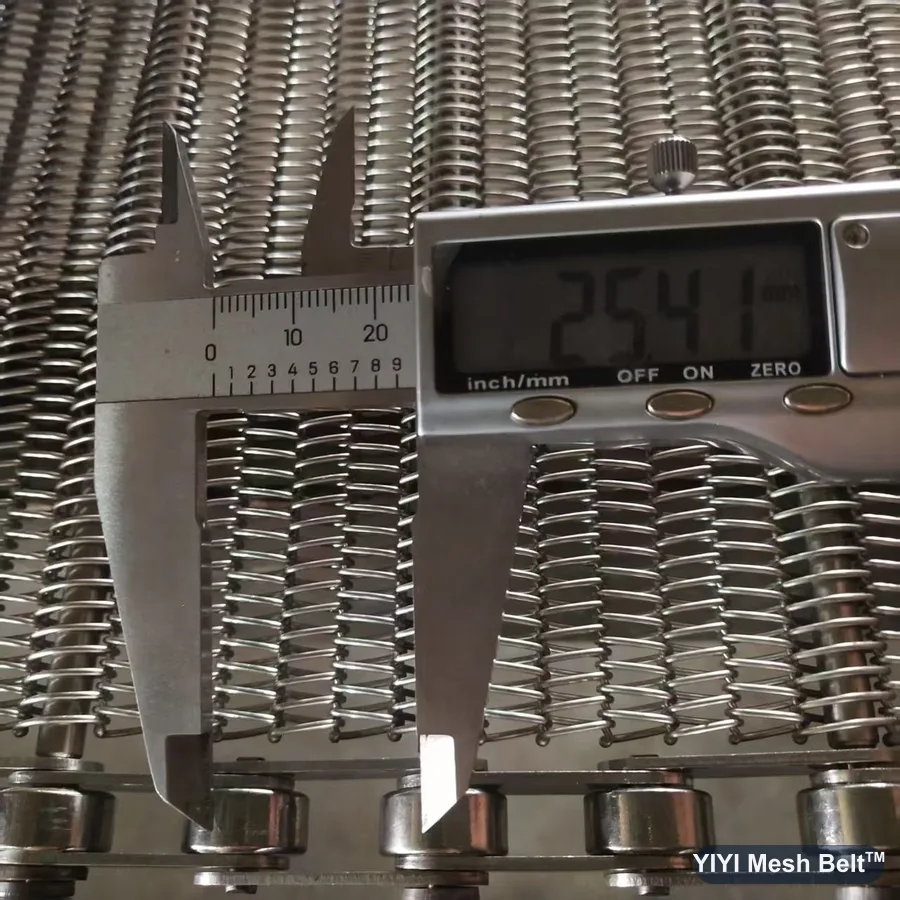
| Dimensions | Width, length, pitch, wire, rod | Fit in the machine |
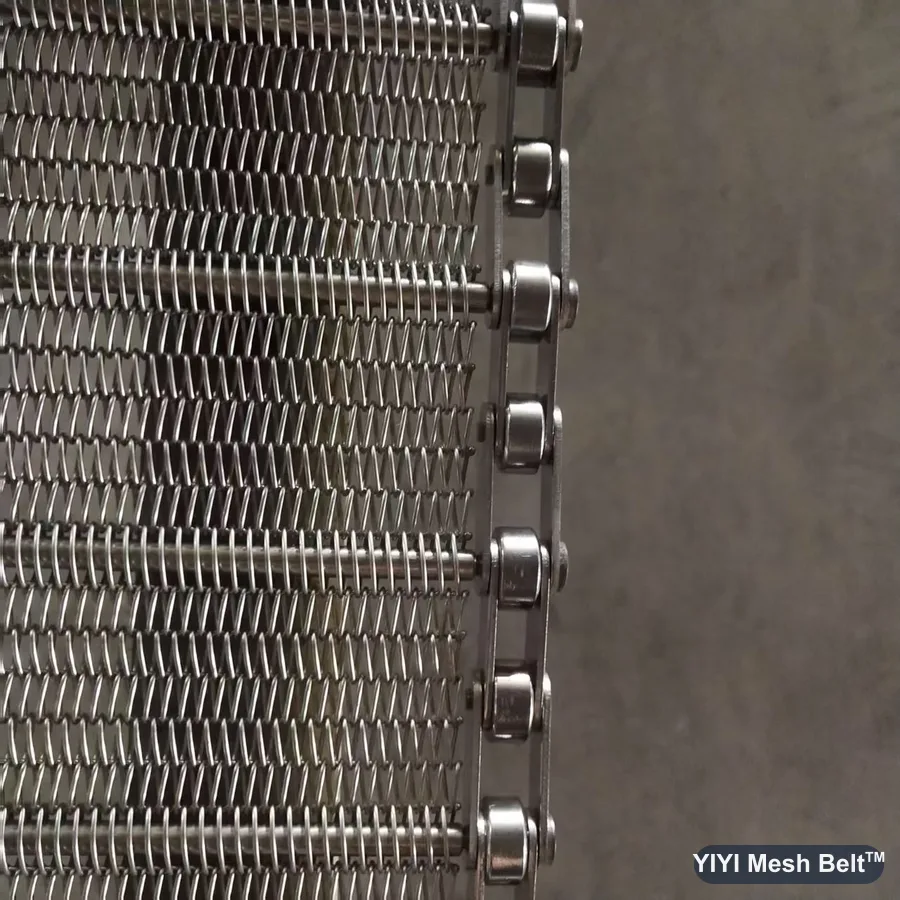
| Edge and drive | Edge type, chain or sprocket details | Belt and drive must match |
| Material | Grade, or the conditions | Corrosion and strength |
| Quantity | Metres or pieces, spares | Tooling and planning |
| Documents | Material documentation, reports | Prepared with the order |
| Delivery | Incoterm, port, packing | Freight and packing design |
Do you need a drawing to get a quote?
A drawing helps most, but a sample or measured photos also work.
A drawing is the fastest route to a firm quotation, but you can start without one. A sample or measured photos let the manufacturer draw the belt for you. Either way, the quotation is linked to a drawing, and production follows the drawing you sign, not the first email.
When an equipment maker sends a drawing, we quote against it and then return our own production drawing for signature. That second drawing matters. It shows how we will build the belt, with our suggestions, and it is what the belt is checked against before shipment.
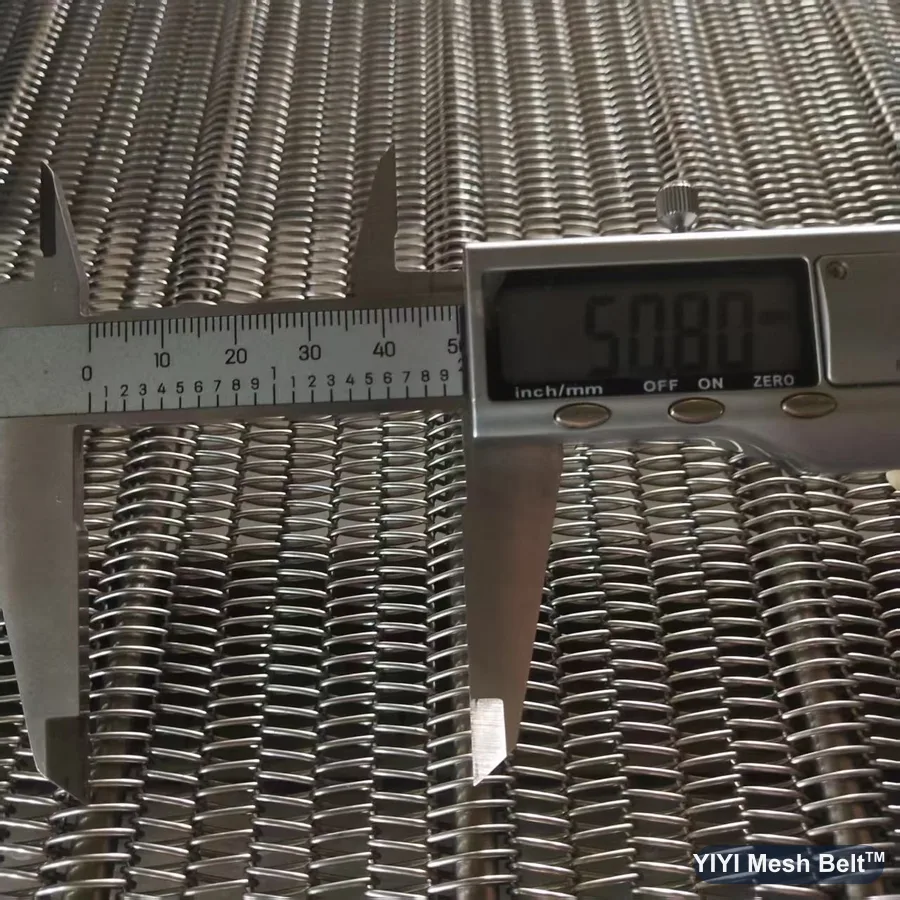
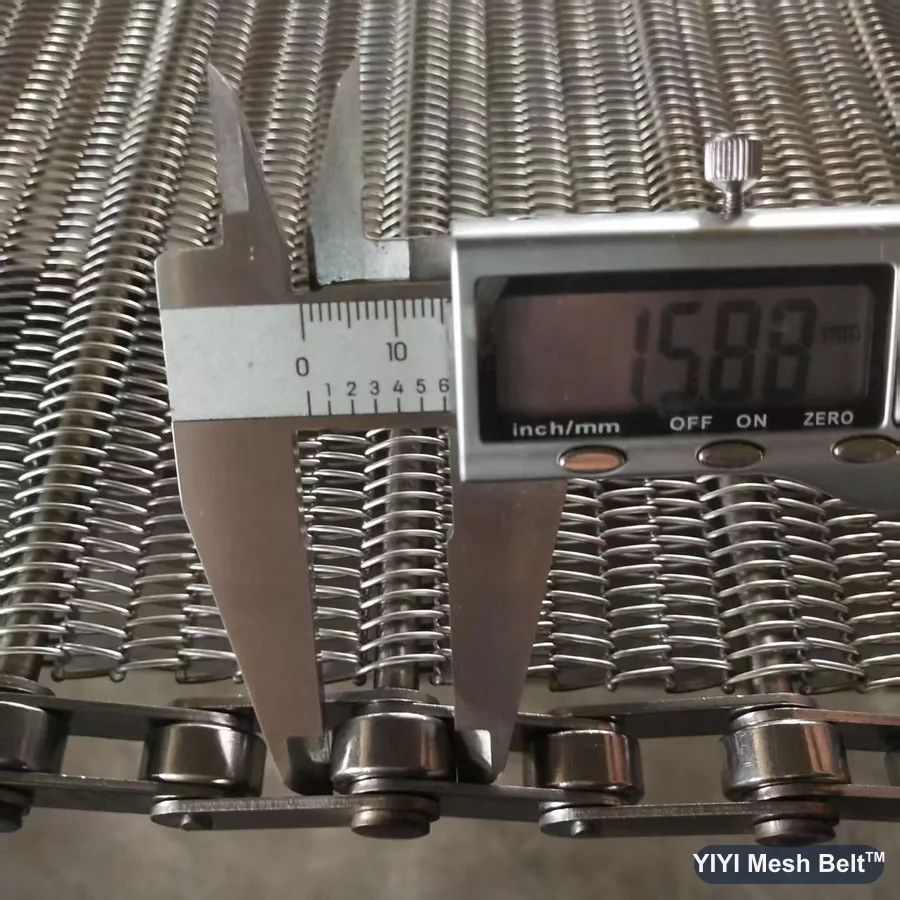
When there is no drawing, a sample or photos with a caliper are the next option. We draw the belt, you approve it, and the quotation is confirmed against the approved version.
Dimensions and tolerances for custom belts follow the drawing the customer signs. That rule protects both sides.
Why does the application change the quotation?
The same width and length can need different belts in different processes.
The application changes the quotation because it decides the material, the mesh, the edge and the finish. A frying line, a freezer and a washing line can use belts of the same size, but the grade, the open area and the cleaning finish differ, and so does the cost.
Tell us the product, the temperature, how the belt is loaded and how it is cleaned. From that we propose the material, for example SUS304, SUS316 or carbon steel, and any finish such as cleaning or electropolishing.
If you already know the grade, still tell us the process. A grade that suits one product may be the wrong choice for another, and the quotation is the right moment to check.
What commercial details should you include?
Commercial details are short, but they change the quotation as much as the drawing.
Include the quantity with any spares, the documents you need, the Incoterm and destination, and any packing requirements. Quantity affects tooling and planning; documents are prepared with the order; destination and packing decide the export cases. Lead time is confirmed with each quotation, not before.
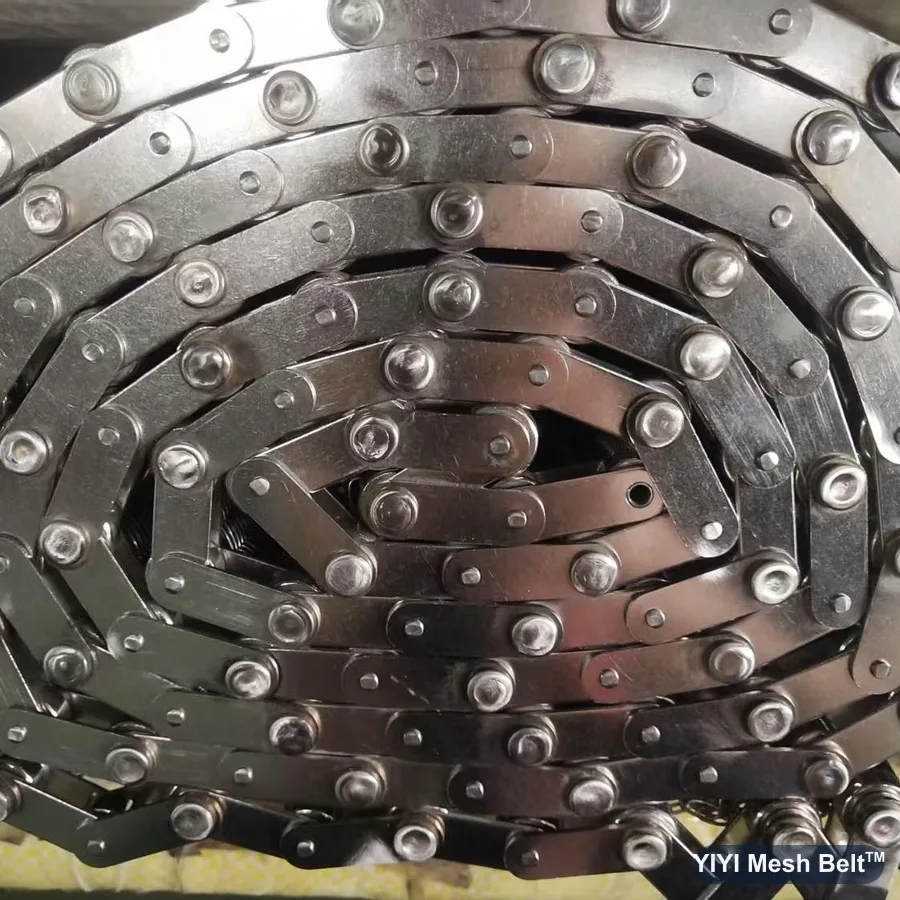
Spare parts are easy to forget. For chain driven belts we often supply spare rods, washers, spiral wires and chain pins with the belt. If you want them, put them in the RFQ so they appear on the drawing.
For documents, tell us what your customer or market requires. Material documentation for your order, measured photos and an inspection report are prepared with the order when requested.
When this is not the right choice
A full RFQ is not needed for a first conversation. If you are still choosing a belt type, ask that question first; the eight items come once the type is clear.
An RFQ based on another maker’s catalogue code alone is not a reliable basis. Codes differ between makers; send the dimensions or a sample instead.
From our engineering experience
When an equipment maker sends us drawings, we quote, then draw the belt ourselves and ask the customer to sign our drawing back. A trial section is measured and photographed for approval before mass production.
The RFQs that move fastest are short and complete: a drawing, the product, the quantity and the port. My advice to buyers: send the eight items once, and let the drawing carry the details.
Evidence from our work
- Situation
- An equipment maker sent drawings for three SUS304 chain driven belts for frying equipment, 145 m per width.
- What we checked
- We quoted, drew the belts with 25.4 mm chain pitch and 6 mm rods at 50.8 mm, and the customer signed our drawings back. A trial section was measured for approval.
- Why it matters
- A quotation linked to a signed drawing leaves nothing open between the enquiry and production.
- Result
- About 436 m of belt shipped with spare rods, washers, spiral wires and chain pins, after a white-glove cleanliness check.
- Buyer lesson
- A complete RFQ leads to a drawing; the signed drawing leads to the belt.
FAQ
Can I get a quotation from width and length alone?
That gives a rough indication at most. A quotation needs the belt type, the main dimensions and the application; a photo with a caliper is enough to start.
Do you quote from a sample?
Yes. We measure the sample, draw the belt for your approval and confirm the quotation against that drawing.
What documents can you supply?
Material documentation for your order, measured photos and an inspection report, prepared with the order when requested.
Is lead time included in the quotation?
Lead time is confirmed with each quotation, based on the specification, quantity and our schedule.
Can you quote sprockets with the belt?
Yes. Sprockets can be specified on the same drawing and checked against the belt.
Conclusion
Send the belt type, application, dimensions, drive, material, quantity, documents and delivery once. We return a drawing and a quotation built on it.
Useful files for your project
I work on metal conveyor belt projects, from new spiral freezers to belt replacement. I share project notes and replacement checklists on LinkedIn.
Original article: Sunny Ye, Global Sales Director, YIYI Mesh Belt. Checklist updated: . Project-specific dimensions and acceptance criteria require engineering confirmation.