How Do You Measure a Metal Conveyor Belt for an Initial Enquiry?
One wrong measurement can make a new belt miss the sprockets. Five measurements, taken the right way, are enough for a first enquiry.

Short answer
To measure a metal conveyor belt for an enquiry, record the overall width, the total length, the pitch over ten pitches divided by ten, the wire and cross rod diameter with a caliper, and the edge. Add one type-specific measurement, such as spaces across a trapezoidal belt.
I am Sunny Ye, Global Sales Director at YIYI MESH BELT in Ningjin, Shandong. We have made metal conveyor belts since 1998 and run 280 units of production equipment, including 9 automatic welding robots. These are the measurements I ask for before we draw any metal conveyor belt.
At a glance
| Product | Balanced weave, flat wire, eye link, chain driven, trapezoidal, spiral and other metal belts |
|---|---|
| Application | First enquiry for a replacement or a new belt |
| Key parameters to confirm | Width, length, pitch, wire and rod, edge, plus one type-specific measurement |
| Buyer type | Maintenance teams, distributors, equipment makers, food plants |
| What to send for a quote | The five measurements with photos of each, and the machine type |
Which tools do you need?
Two tools cover every measurement: a tape and a caliper.
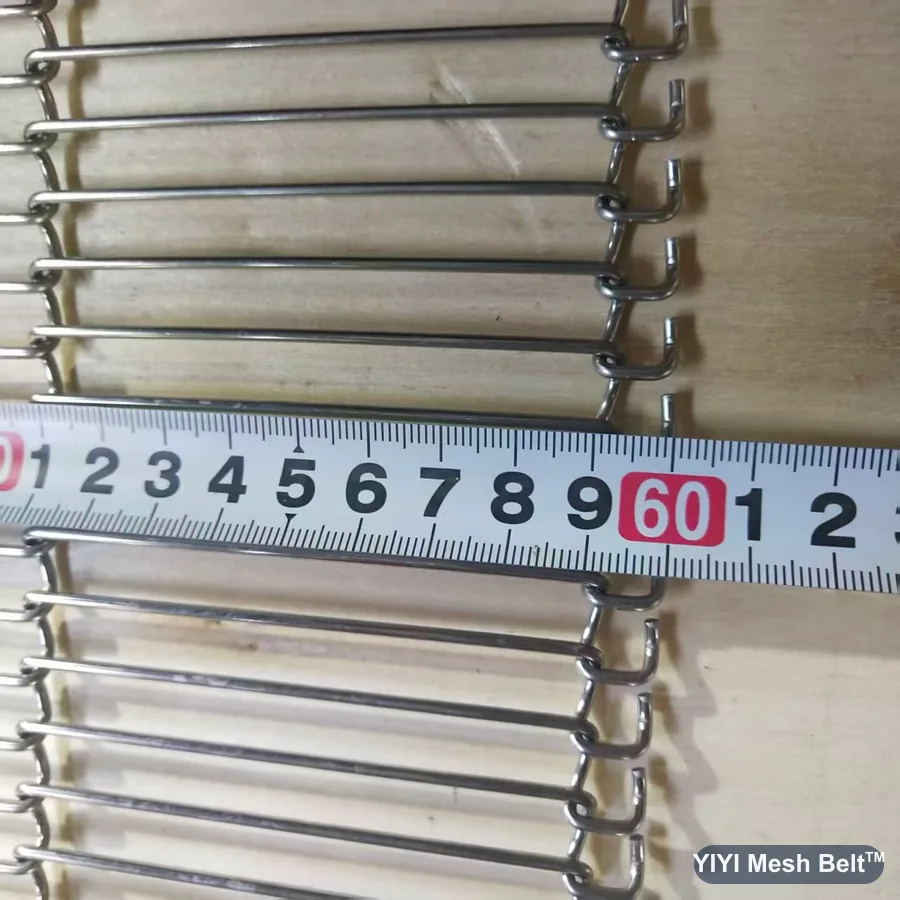
You need a steel tape for width, length and pitch over ten pitches, and a caliper for wire, rod and small dimensions. A digital caliper is easiest to read in a photo. A ruler can replace the tape, but nothing replaces a caliper for wire and rod diameter.
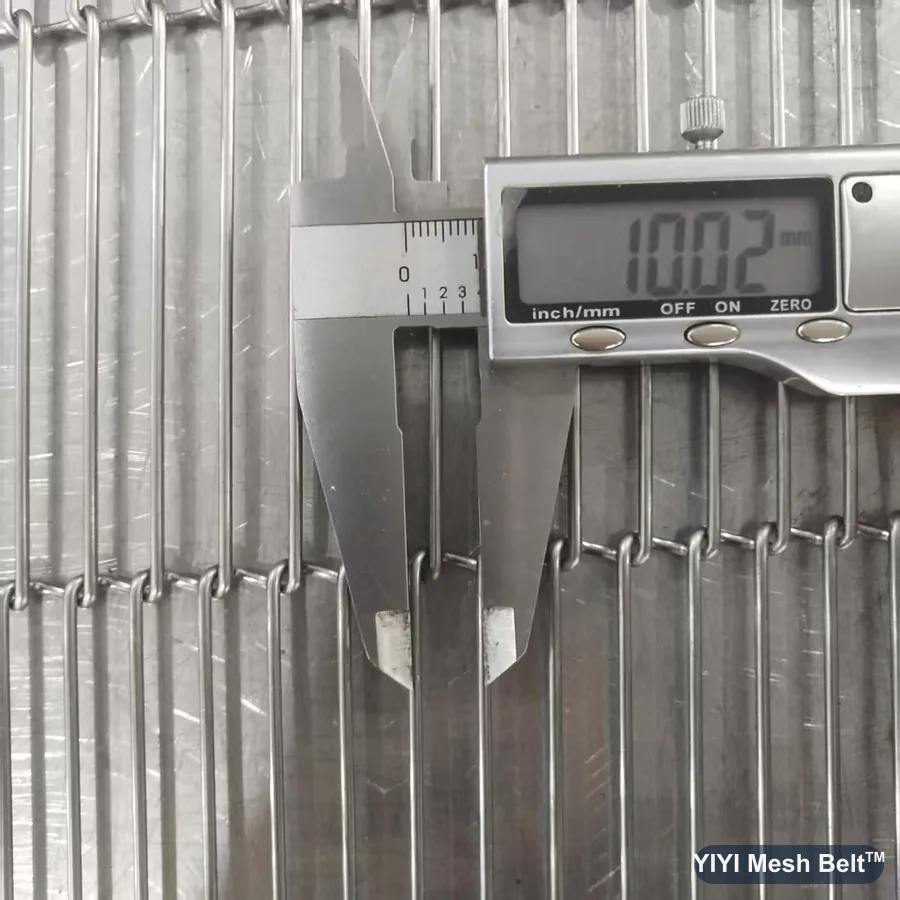
Measure each value in more than one place. Belts wear unevenly, and three readings show whether you are measuring the design or the wear. Note the highest and lowest values if they differ.
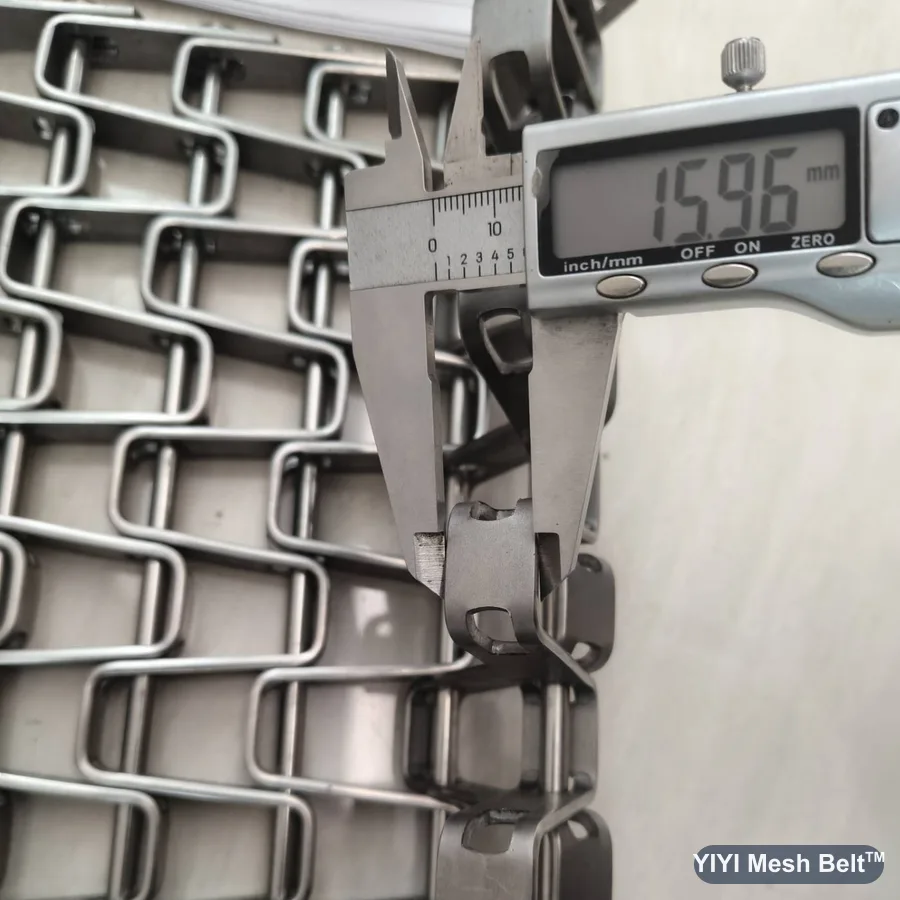
Photograph every measurement with the reading visible. The photo lets us check the number, and it often shows details you did not think to measure, like the edge finish or how the rods are fixed.
Which five measurements are needed for every belt?
Five measurements describe the size of almost any metal belt.
For every metal belt, measure the overall width, the total length, the pitch over ten pitches divided by ten, the wire and cross rod diameter, and the edge height or type. These five describe the size; the belt type and machine show how it is built and driven.
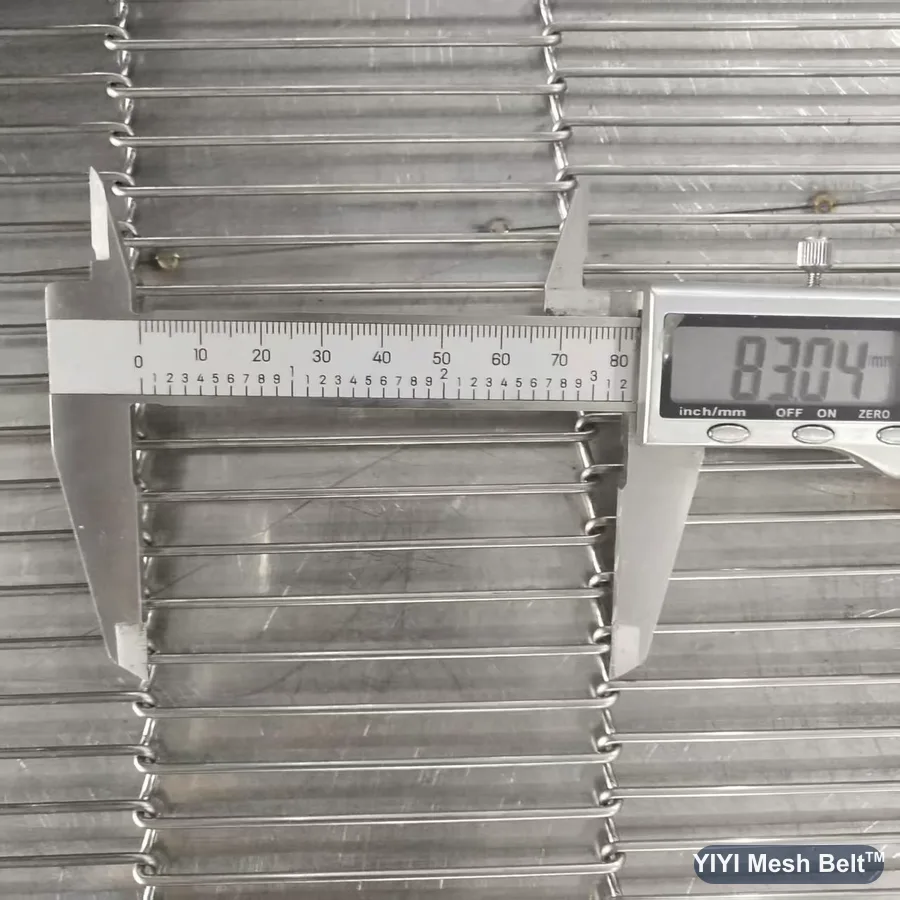
- WidthOverall, edge to edge, at three points.
- LengthTotal belt length in the machine, or the old order length.
- PitchOver ten pitches with a tape or caliper, divided by ten; both directions where the belt has two.
- Wire and rodWith a caliper, in three places.
- EdgeHeight or type: pressed, welded, chain, guard.
Pitch is the measurement most often taken wrongly. Measuring one pitch on a worn belt gives the wear, not the design. Ten pitches give a number we can trust.
What extra measurement does each belt type need?
Each belt type has one detail that the five general measurements miss.
Each belt type adds one measurement: spaces across a trapezoidal belt, strip height on a flat wire belt, chain pitch and roller on a chain driven belt, spiral and crimp pitch on a balanced weave belt, and link pitch on an eye link belt. Without it, drawing is guesswork.
| Belt type | Extra measurement | How |
|---|---|---|
| Trapezoidal Mesh Belt | Number of spaces across the width, edge type | Count spaces, not wires |
| Flat Wire Belt | Strip height and thickness, mesh pitch | Caliper on the strip |
| Chain Driven Belt | Chain pitch, roller diameter, inner width | Caliper over several links |
| Balanced Weave Belt | Spiral pitch and crimp pitch | Over ten pitches each |
| Eye Link Belt | Eye-link pitch and rod pitch | Over ten pitches |
| Spiral Freezer Belt | Link height, chain pitch, drum diameter | Caliper and freezer data |
Which measuring mistakes cause the most problems?
Three mistakes cause most of the wrong belts we see.
The three most common mistakes are measuring one pitch instead of ten, measuring a worn section instead of an unworn one, and counting wires instead of spaces. Each produces a belt that is correct on paper and wrong in the machine, so we check all three before drawing.
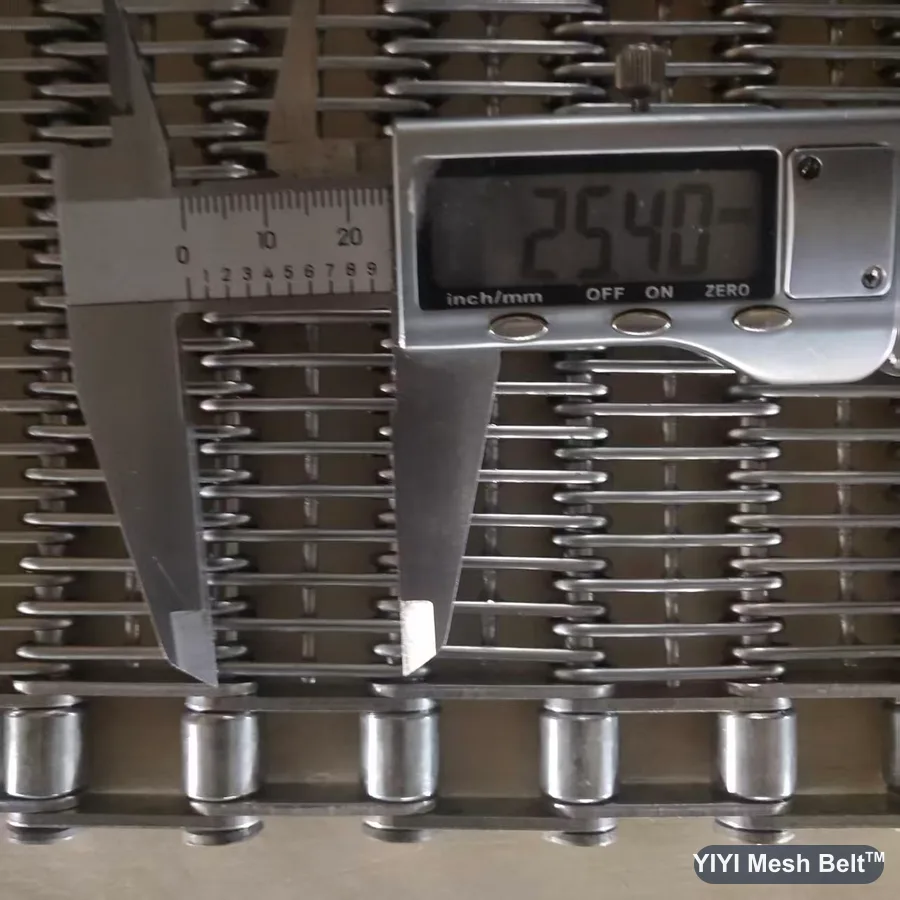
A fourth mistake is guessing the length. If the old belt is still in the machine, the old order or the machine data usually has the length. If not, measure the belt path and tell us how you measured it.
When the readings disagree, do not average them. Send all of them with photos. A spread of readings tells us the belt has worn, and we decide the drawing value with you.
When this is not the right choice
Measurements alone are not enough for belts where the drive defines the geometry, for example spiral freezer and side driven belts. There the drum diameter, direction and drive details matter as much as the belt.
Measuring is also not the right first step if you plan to change the machine or the product. Start from the new conditions, and use the old belt just as a reference.
From our engineering experience
When a distributor sends us samples with no drawings, we measure every sample in our workshop, draw each belt and send the drawings for approval. Trial sections are then photographed next to the original samples.
The measurements I trust most are the ones that come with a photo of the reading. My advice to buyers: measure ten pitches, measure in three places, and photograph every reading.
Evidence from our work
- Situation
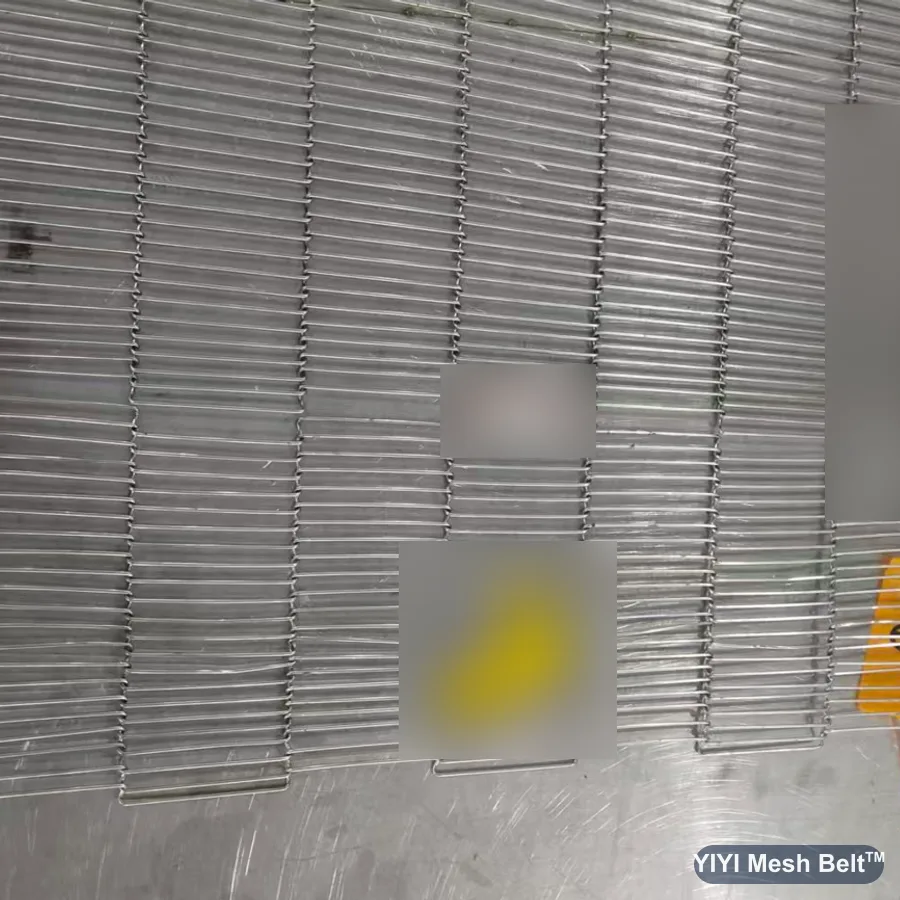
- A distributor sent samples of four trapezoidal mesh belts in use at an end user, with no drawings.
- What we checked
- We measured every sample: widths 200 to 650 mm, wire 1.6 to 2.0 mm, pitch 7 to 10.2 mm, 3 to 9 spaces, pressed edges 9 to 11 mm. Each belt was drawn and approved.
- Why it matters
- Four belts from four samples work when every measurement is checked against a drawing and a trial.
- Result
- Trial sections matched the samples; the first order of 350 m shipped, and the distributor re-ordered 400 m to the same drawings.
- Buyer lesson
- Careful measurements become drawings, and drawings make repeat orders simple.
FAQ
How do I measure pitch correctly?
Measure over ten pitches with a tape or caliper and divide by ten. Do it in an unworn section and, where the belt has two pitches, in both directions.
What if the belt is still in the machine?
Measure width, pitch, wire and rod on the running side where you can reach it, and take the length from the machine data or the old order.
Do you need metric or inch values?
Either. Tell us which you used; we draw in millimetres and can add inch values.
How do I count spaces on a trapezoidal belt?
Count the openings across the width, not the wires, and photograph the full width with a tape.
Can you work from my measurements without a sample?
Yes. We draw the belt from your measurements and photos and confirm it with you; a trial section is built before production where needed.
Conclusion
Measure width, length, ten pitches, wire and rod, and the edge, plus one type-specific value. Photograph each reading, and we draw the belt for approval.
Useful files for your project
I have worked on metal conveyor belt projects for 15 years, from new spiral freezers to belt replacement. I share project notes and replacement checklists on LinkedIn.
Technical reviewer: Sunny Ye, Global Sales Director, YIYI MESH BELT · Last updated: 2026-10-12