How Do You Photograph an Old Conveyor Belt for a Replacement Quote?
Blurry photos without a ruler lead to guessed sizes and a belt that does not fit. Six planned photos give a supplier what a drawing would.

Short answer
To photograph an old conveyor belt for a replacement quote, take six photos: the full width, the edge, the pitch with a caliper, the wire or rod with a caliper, the drive end, and the belt running in the machine. Keep the measuring tool and its reading inside every picture.
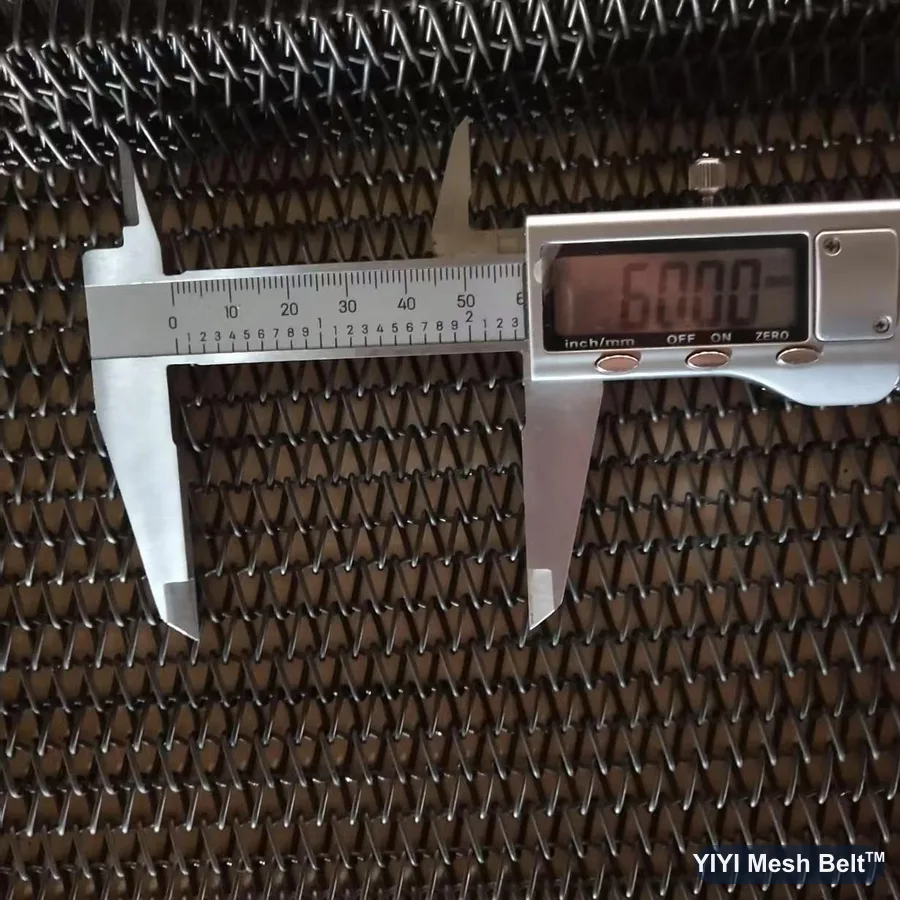
I am Sunny Ye, Global Sales Director at YIYI MESH BELT in Ningjin, Shandong. We have made metal conveyor belts since 1998 and run 280 units of production equipment, including 9 automatic welding robots. Many of our replacement belts start from photos alone, so here is the photo list I send to buyers.
At a glance
| Product | Any metal conveyor belt: balanced weave, spiral, flat wire, eye link, chain driven, trapezoidal |
|---|---|
| Application | Replacement of a worn belt when no drawing is available |
| Key parameters to confirm | Pitch, wire or rod diameter, width, edge type, drive |
| Buyer type | Food plants, maintenance teams, distributors, equipment makers |
| What to send for a quote | Six photos with a ruler or caliper in view, belt length, and the machine type |
Why do photos decide the quality of a replacement quote?
A supplier quotes what it can see. Every missing detail becomes a guess.
Photos decide the quote because they replace the drawing you do not have. With the tool and the reading in view, a supplier can draw the belt, check the edge and match the drive. Without them, the supplier guesses, and the guess shows up at installation.
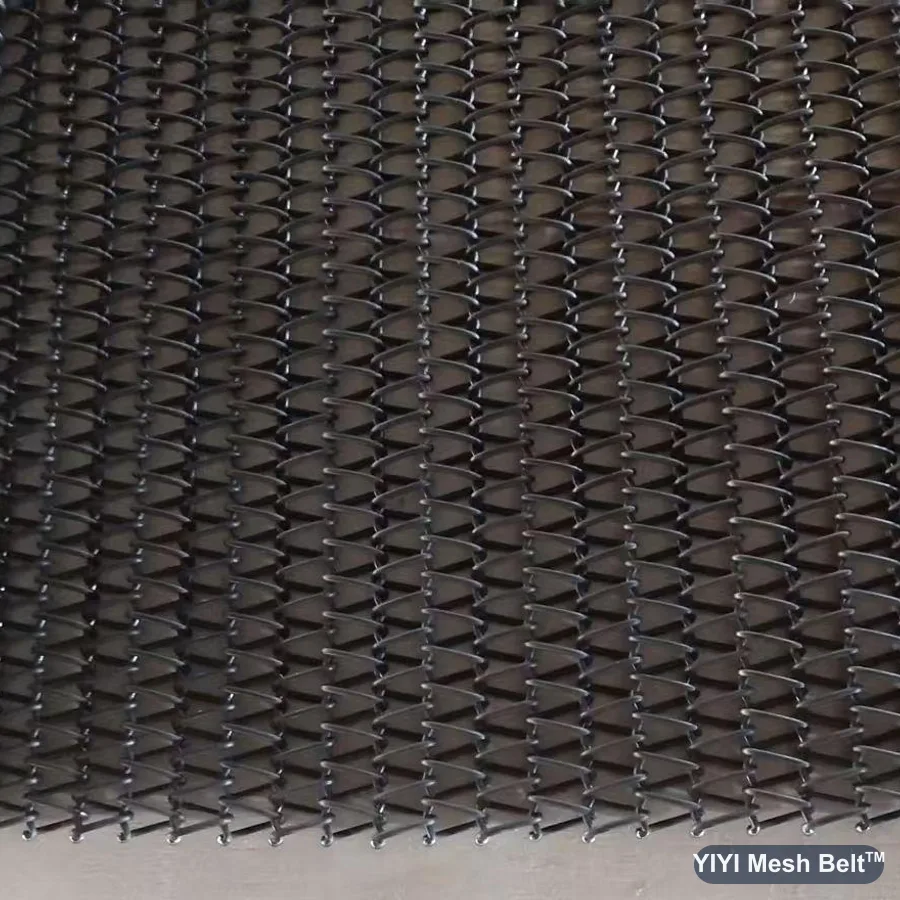
I receive many replacement enquiries that say just “belt, 1,200 mm wide, 50 m”. A width and a length describe hundreds of different belts. The weave, the pitch, the wire size and the edge decide whether the belt fits the machine, and none of these are in the width.
Good photos let us do three things before we quote. We can identify the belt type. We can read the main dimensions. And we can see how the belt is driven and supported. That is enough for a preliminary drawing.
Photos are not the final word. A worn belt has stretched, and a camera angle can distort a reading. So we always confirm the drawing with you, and when the belt matters most, we build a trial section and send measured photos before production.
Which six photos should you take?
Take them in this order. Each one answers a question the supplier would otherwise have to ask.
Take six photos: the full belt width, a close-up of each edge, the pitch over ten pitches with a caliper, the wire and cross rod with a caliper, the drive end with sprockets or drums, and the belt running in the machine. Add the total belt length in your message.
- Full widthStand above the belt and include a tape along the full width.
- Both edgesClose-up of each edge, so we see how the rods end and how the edge is finished.
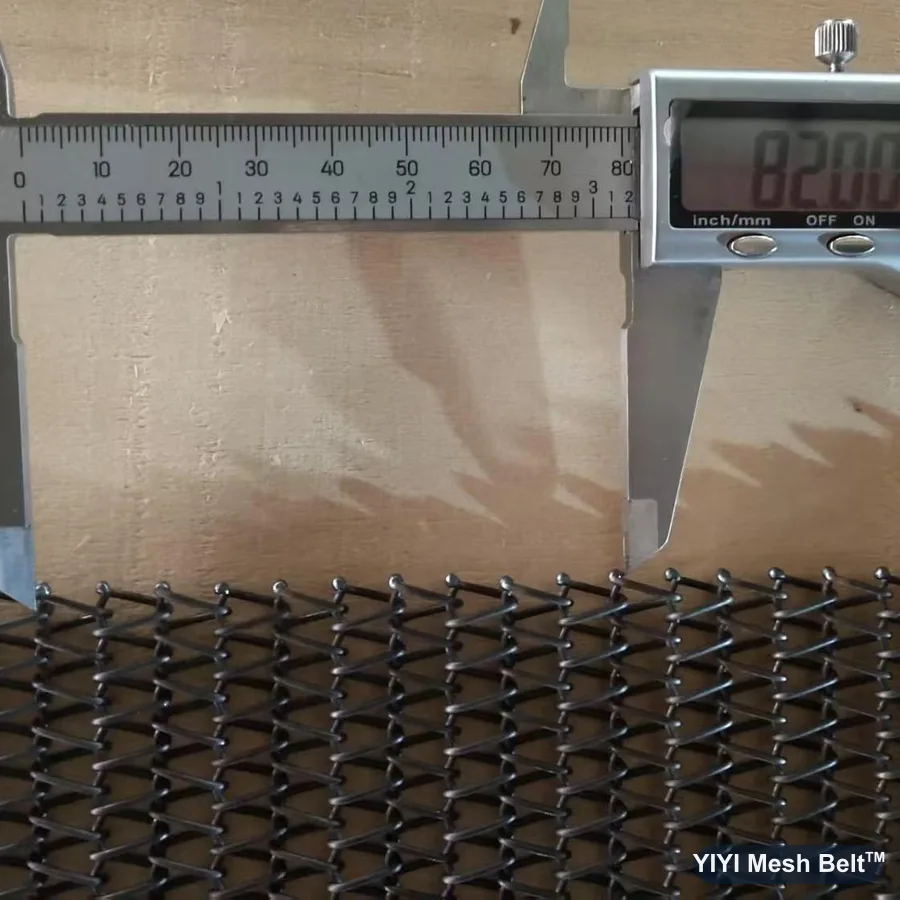
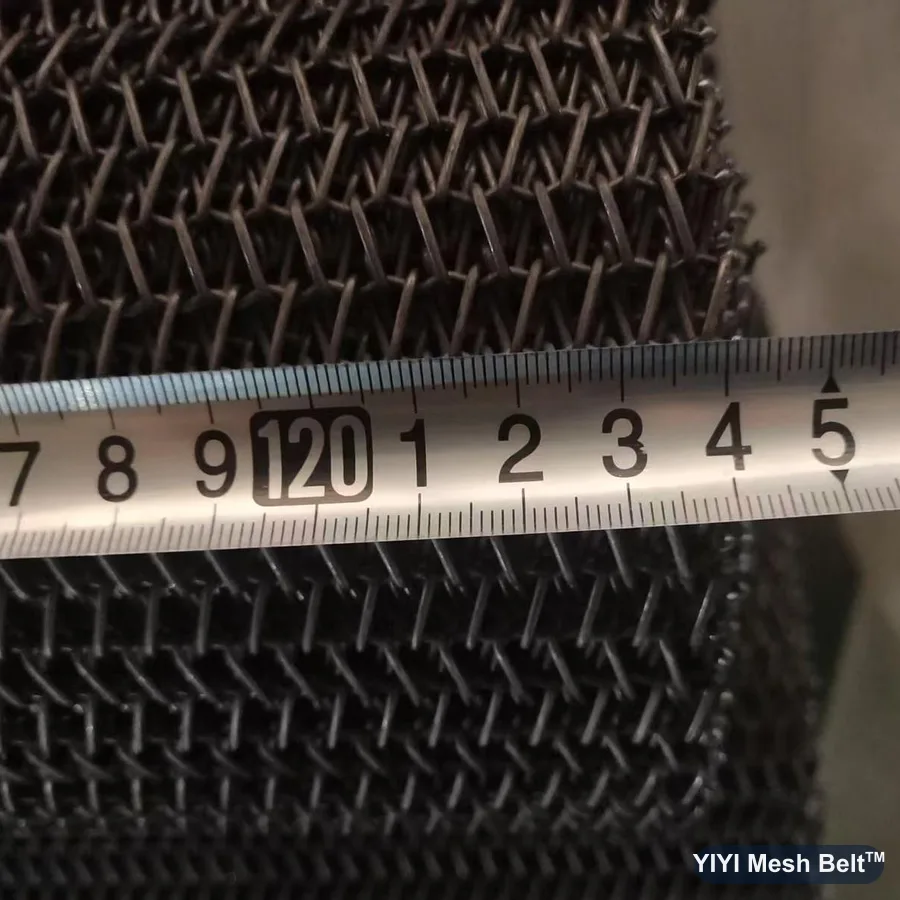
- PitchCaliper across ten pitches, in both directions where the belt has two.
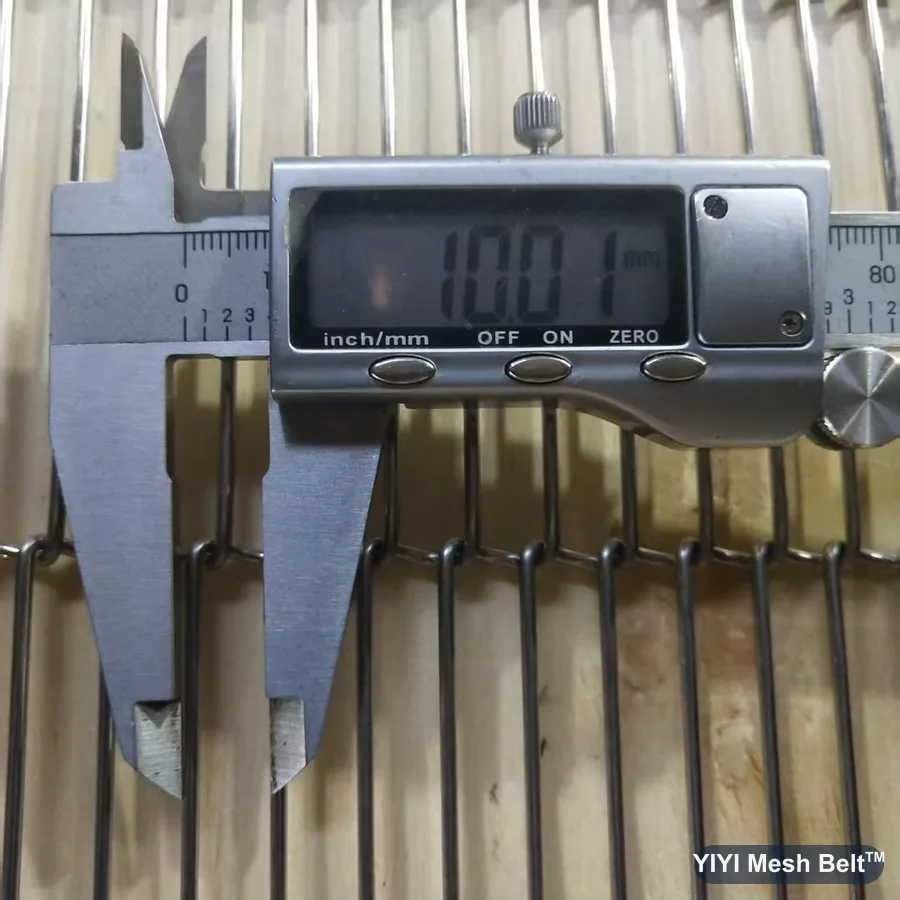
- Wire and rodCaliper on the wire and on the cross rod, reading clearly visible.
- Drive endSprockets, drums or chain, with a ruler on the sprocket face.
- In the machineOne wide photo of the belt running, to show support and direction.
Measure over ten pitches rather than one. A single pitch reading on a worn belt can be off by a millimetre; ten pitches divided by ten is much closer to the original design.
How do you take a photo a supplier can measure from?
A measurable photo is sharp, square to the belt, and shows the tool and the reading.
Hold the camera straight above the belt, fill the frame with the area you measure, and keep the caliper jaws or tape markings sharp. Clean grease or ice off first. One sharp photo with a readable caliper is worth more than ten wide photos taken from the side.
I also ask buyers to measure from an unworn part of the belt, for example near the edge or a section that ran less. Worn areas stretch, and the replacement should follow the original design, not the wear.
| Problem | What it causes | Fix |
|---|---|---|
| Photo taken at an angle | Pitch looks shorter than it is | Hold the phone parallel to the belt |
| No tool in the photo | Size has to be guessed | Always include a caliper or tape |
| Reading not visible | We cannot check the number | Turn the caliper so the display faces the camera |
| Dirty or iced belt | Wire edges hidden | Wipe the area before the photo |
| One edge shown, not both | Edge type unknown on the other side | Photograph both edges |
What should you write next to the photos?
A few lines of text turn photos into a specification.
Write the total belt length, the machine type, the product and temperature, the material if you know it, and whether the drive parts will be replaced. Say if the old belt failed early and how. These details tell us whether to copy the old belt or to change it.
The material matters as much as the size. A carbon steel belt and a stainless steel belt can look the same in a photo. If you do not know the grade, tell us what the belt carries and how it is cleaned, and we will propose a material for your approval.
Tell us about failures too. If the old belt broke at the edge or stretched in a year, an exact copy may fail the same way. In that case we look at the cause first, and the drawing may change.
Finally, tell us how you want to receive the belt: in one length or in sections, and whether you need spare spirals or rods. We put this on the drawing so it is approved with everything else.
When this is not the right choice
Photos are not enough when the belt is safety-critical or the machine is unusual, for example a spiral freezer with a special drive. In that case a short sample of the old belt is the safer route.
Photos are also not the right basis if the old belt has been repaired many times. Repairs change the pitch and the edge; we then need a drawing from the machine maker or a sample of an unrepaired section.
From our engineering experience
Many buyers send us one wide photo of a belt in a machine and ask for a quotation. I always reply with the six-photo list, because the edge and the pitch are where most replacement mistakes start.
When the photos are good, we can draw the belt and build a trial section without ever seeing the old belt. We then send measured photos of the trial for approval, so the buyer checks our work the same way we checked theirs. My advice is simple: one caliper in every photo saves a week of questions.
Evidence from our work
- Situation
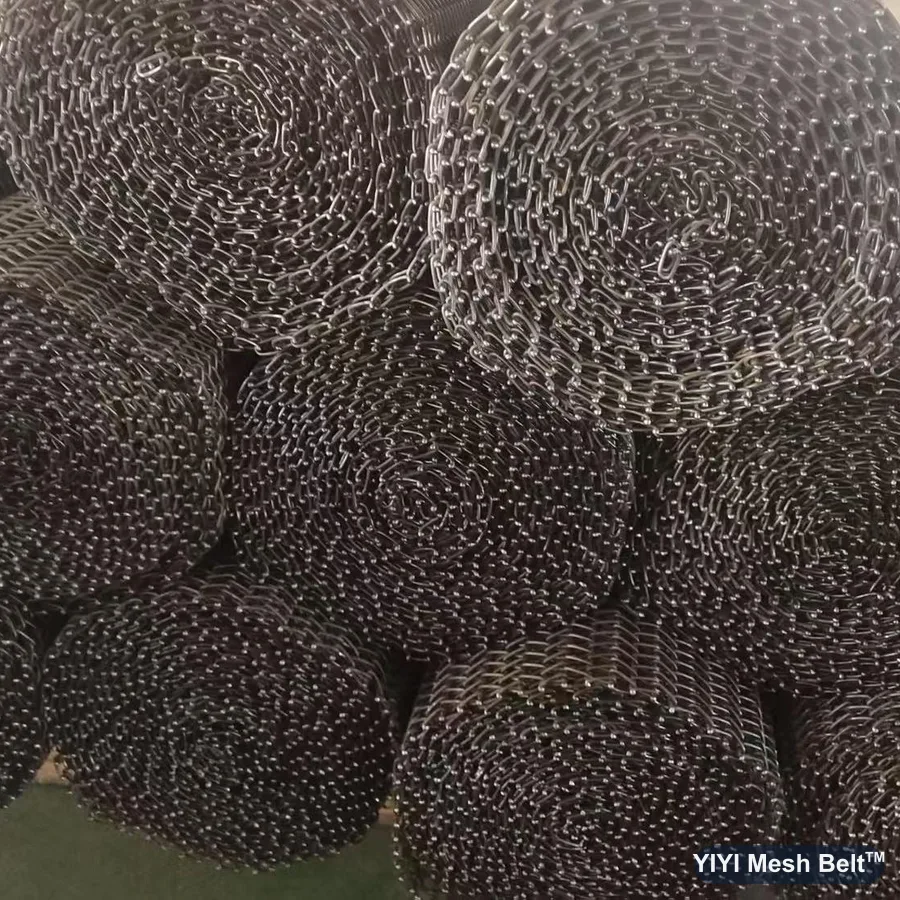
- An equipment maker needed a 1,241 mm carbon steel balanced weave belt and sent photos of the belt they use, with no drawing and no sample.
- What we checked
- From the photos we drew the belt: 1.2 mm wire, 6 mm spiral pitch, 8.2 mm crimp pitch. We built a trial section and sent measured photos for approval.
- Why it matters
- Photos without a sample can still give a reliable belt when every number is checked on a trial before production.
- Result
- Mass production started after the customer approved the trial. The belt shipped in two rolls with spare spirals and rods.
- Buyer lesson
- Good photos are enough to start; the approved trial is what makes them safe.
FAQ
Can you quote a replacement belt from photos alone?
Yes, as a preliminary quotation. When the photos show the width, the edge, the pitch and the wire with a measuring tool, we can draw the belt and confirm the details with you before production.
What if I do not have a caliper?
A steel ruler or tape works for width and for pitch measured over ten pitches. For wire and rod diameter a caliper is much better; if you cannot get one, a short sample is the safer option.
How many photos should I send?
Six planned photos are usually enough: full width, both edges, pitch, wire and rod, drive end and the belt in the machine.
Should I send a video?
A short video of the belt running helps us see tracking, the drive and the support. It does not replace the measured photos.
Do you need the old belt’s material?
It helps. If you do not know it, tell us the product, temperature and cleaning method, and we propose a material for your approval.
Conclusion
Six sharp photos with a caliper in each, plus length and machine type, give us enough to draw your belt and confirm it before production.
Useful files for your project
I have worked on metal conveyor belt projects for 15 years, from new spiral freezers to belt replacement. I share project notes and replacement checklists on LinkedIn.
Technical reviewer: Sunny Ye, Global Sales Director, YIYI MESH BELT · Last updated: 2026-10-12