How Should a Metal Conveyor Belt Be Packed for Export?
A correct belt that arrives bent, wet or mixed up with other parts is still a failed delivery. Packing is the last production step.

Short answer
A metal conveyor belt should be cleaned and dried, wrapped in waterproof film and packed in an export wooden case: laid flat, rolled, or rolled on a drum or tubes depending on the belt type. Spare parts are sealed and listed, and an English packing list goes with every case.
I am Sunny Ye, Global Sales Director at YIYI MESH BELT in Ningjin, Shandong. We have made metal conveyor belts since 1998 and run 280 units of production equipment, including 9 automatic welding robots. We pack every belt in our own packing area, and buyers see the photos before anything ships.
At a glance
| Product | All metal conveyor belts, sprockets and spare parts |
|---|---|
| Application | Sea, air, rail and express shipments |
| Key parameters to confirm | Belt type, length, width, weight, destination, unloading method |
| Buyer type | Importers, distributors, OEMs, food plants |
| What to send for a quote | Destination port, unloading method, marking and neutral-packing requirements |
Why does packing start with cleaning?
What goes into the case is what arrives. Dirt and moisture travel too.
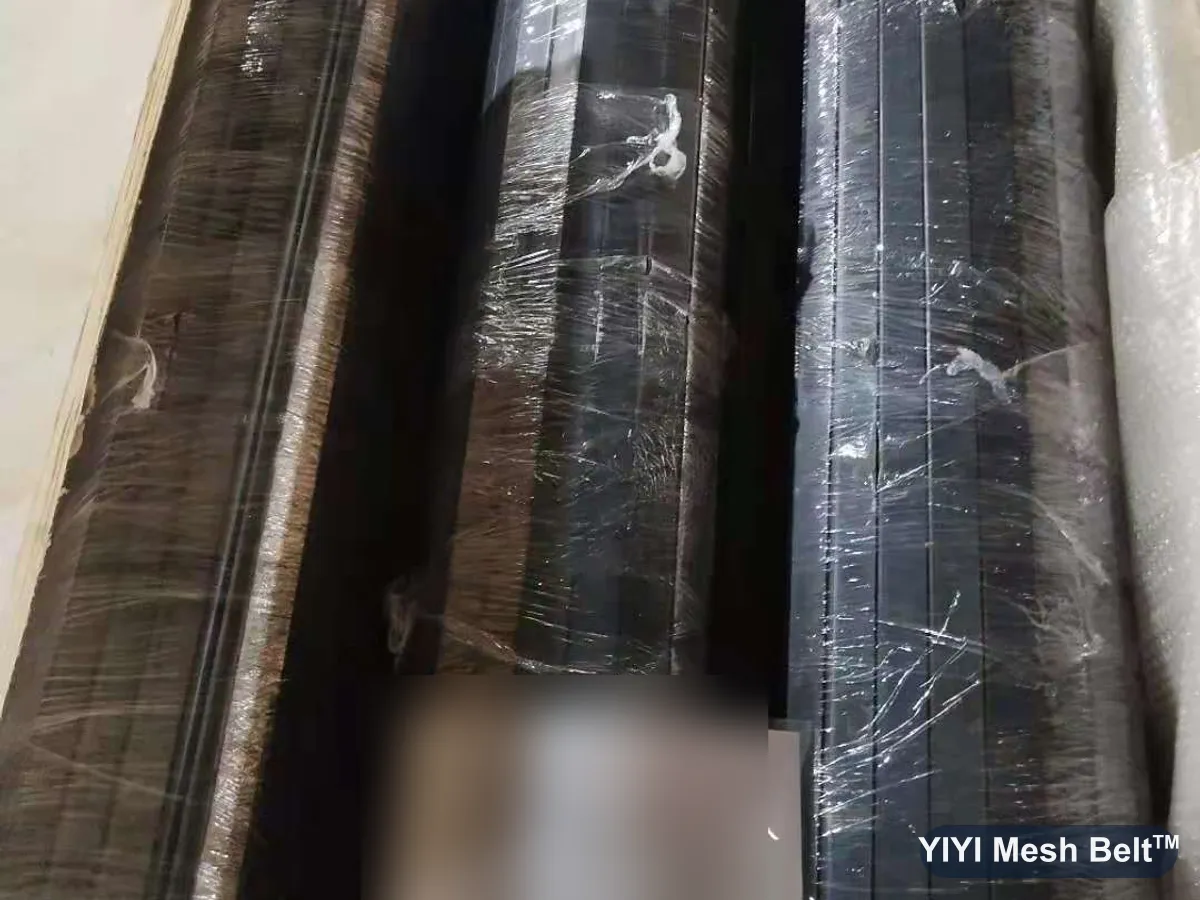
Packing starts with cleaning because oil, dust and moisture sealed in film can mark a stainless surface or cause rust on carbon steel during weeks at sea. Belts are cleaned and dried first; food-line belts can be ultrasonically cleaned, and carbon steel belts get a light rust-preventive oil.
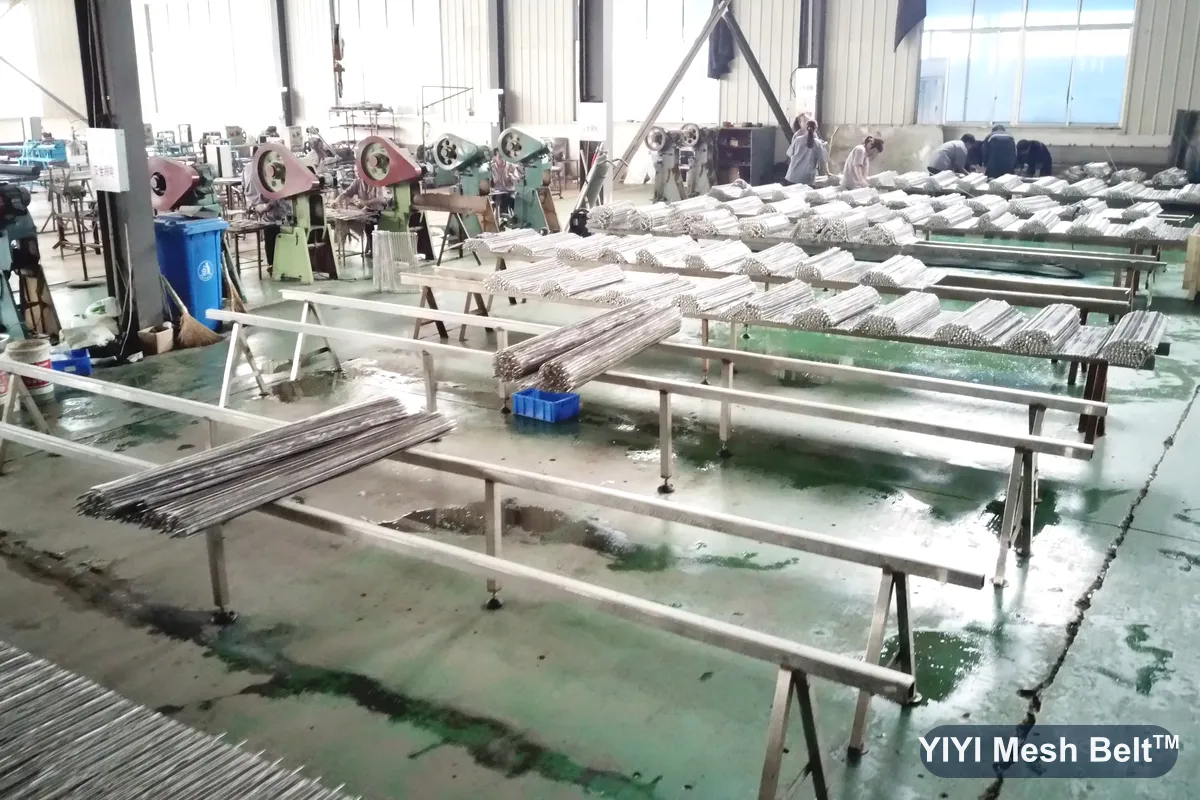
For a frying-equipment maker we wiped the finished belts with white gloves before packing to show they were clean and oil-free. For a Central Asian equipment maker, the carbon steel belt was given a light, even coat of rust-preventive oil instead.
Which treatment fits depends on the material and the product. We confirm it on the order.
How is each belt type packed?
The packing follows the belt, so it arrives flat and ready to install.
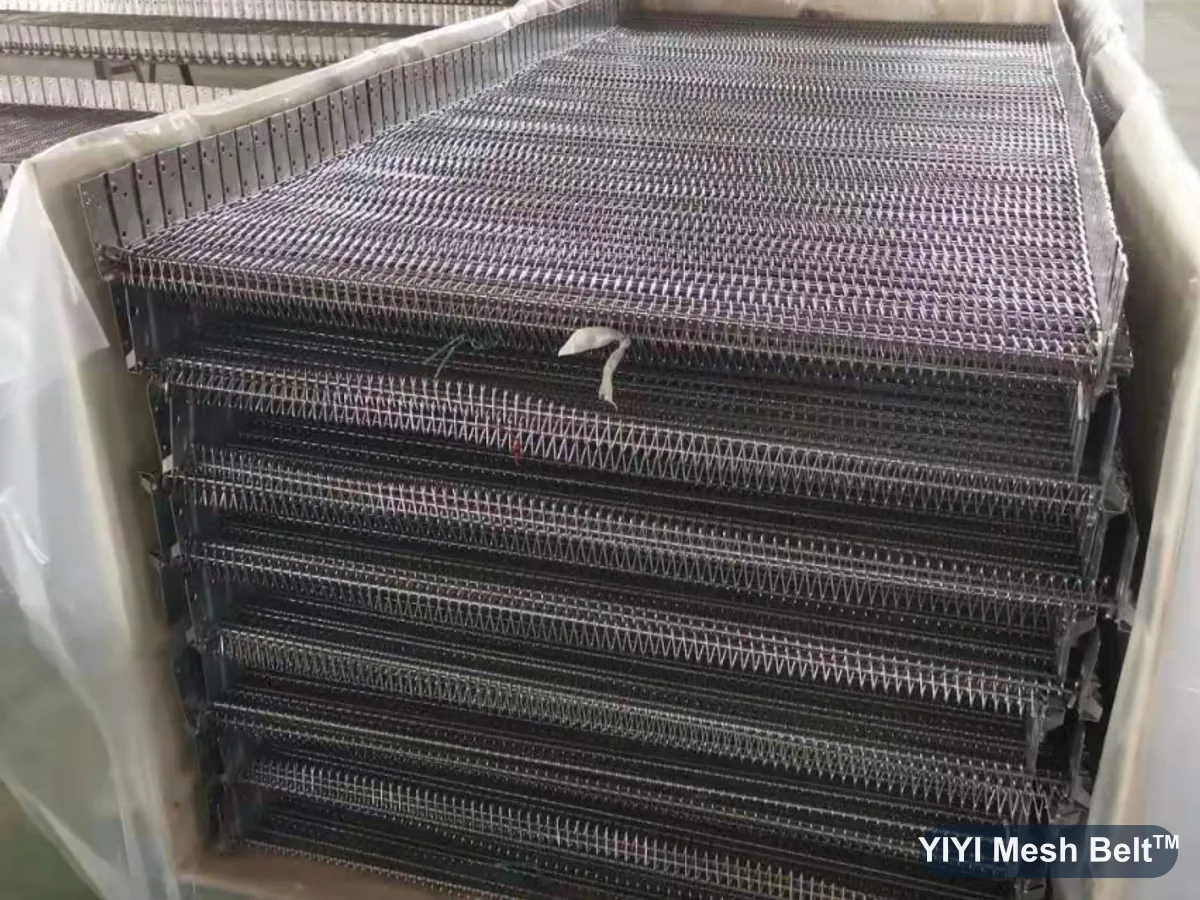
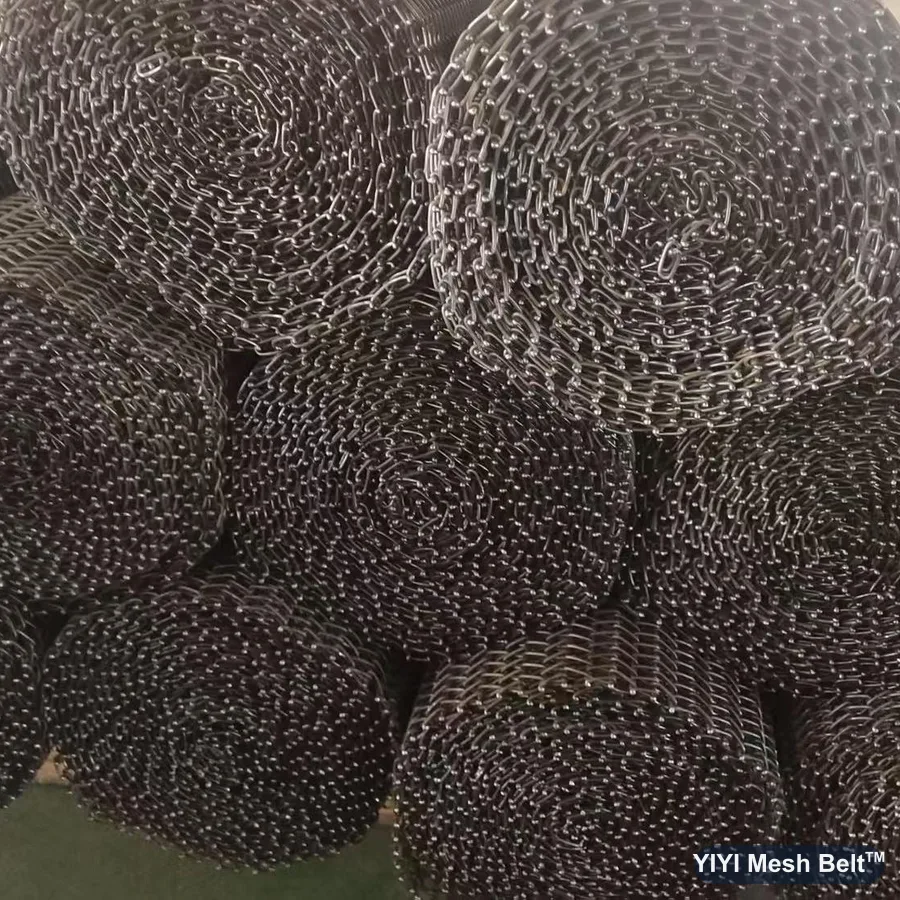
Short and rigid belts are laid flat in film-lined cases; long belts are rolled and wrapped in waterproof film; wide belts are rolled on galvanized tubes; biscuit belts are rolled on a steel drum so they cannot kink; self-stacking belts are stacked in tiers with the guards protected.
| Belt | Packing | Why |
|---|---|---|
| Flat, short belts | Laid flat in film-lined cases | No bending |
| Long belts | Rolled and wrapped in film | Compact, protected |
| Wide belts | Rolled on galvanized tubes | Keeps the belt round and flat |
| Biscuit belts | Rolled on a steel drum | No kinks in the thin mesh |
| Self-stacking belts | Stacked in tiers | Guards stay straight |
| Sprockets and parts | Sealed in film, in the case | Nothing lost or mixed |
Which cases and documents should you expect?
The case protects the belt; the documents protect the clearance.
Expect export wooden cases, either fumigation-free plywood or fumigated wood, strapped and marked as agreed, with an English packing list on every case. The commercial invoice and packing list travel with the shipment; other documents are prepared on request. Neutral packing without our name is available on request.
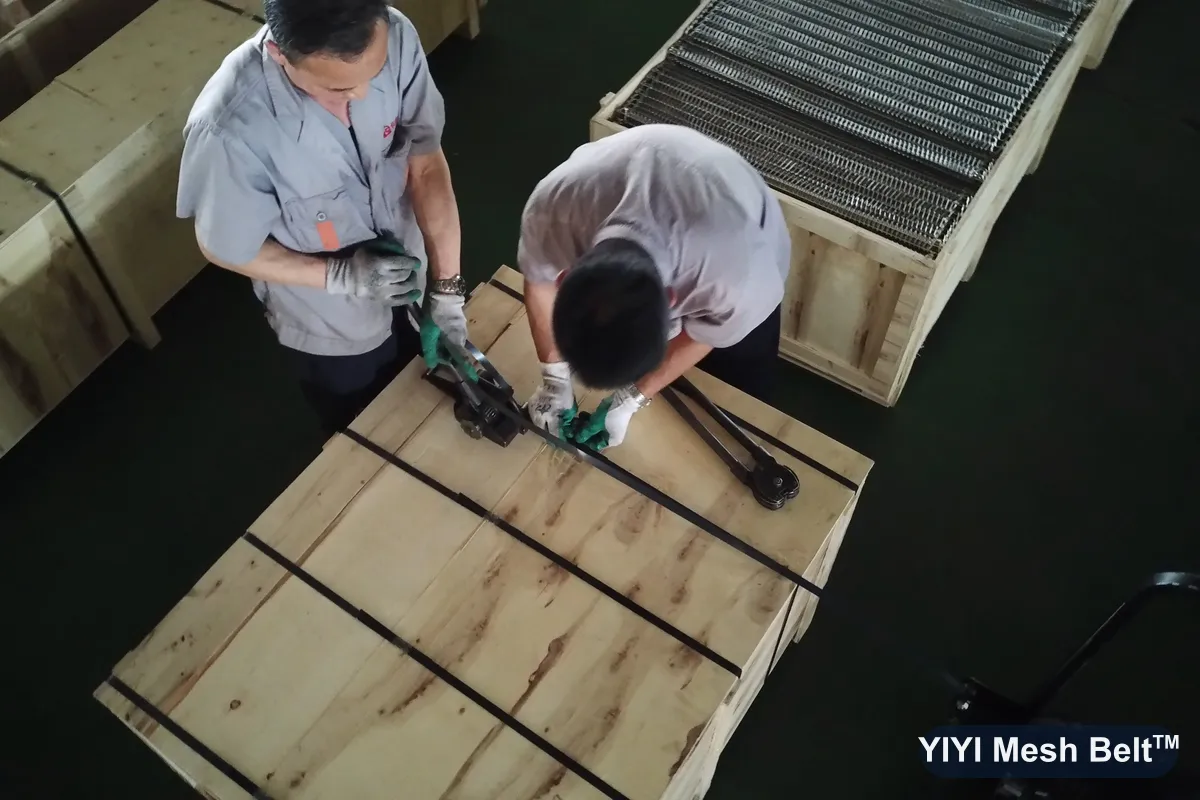
Plywood cases do not need fumigation, which helps in markets with strict wood rules. Where a fumigated case is required, we arrange it.
Distributors often ask for neutral packing: no Chinese text, no YIYI name and their own shipping marks. We do that on request and send photos so they can check before their customer sees the cases.
What should you check before the belt ships?
The last chance to fix a packing problem is before the case is closed.
Before dispatch, check the packing photos: the belt in the case, the parts and spares, the closed cases and the marks. Compare the packing list with your order. We send these photos with the inspection report, so you approve the shipment with the same evidence we have.
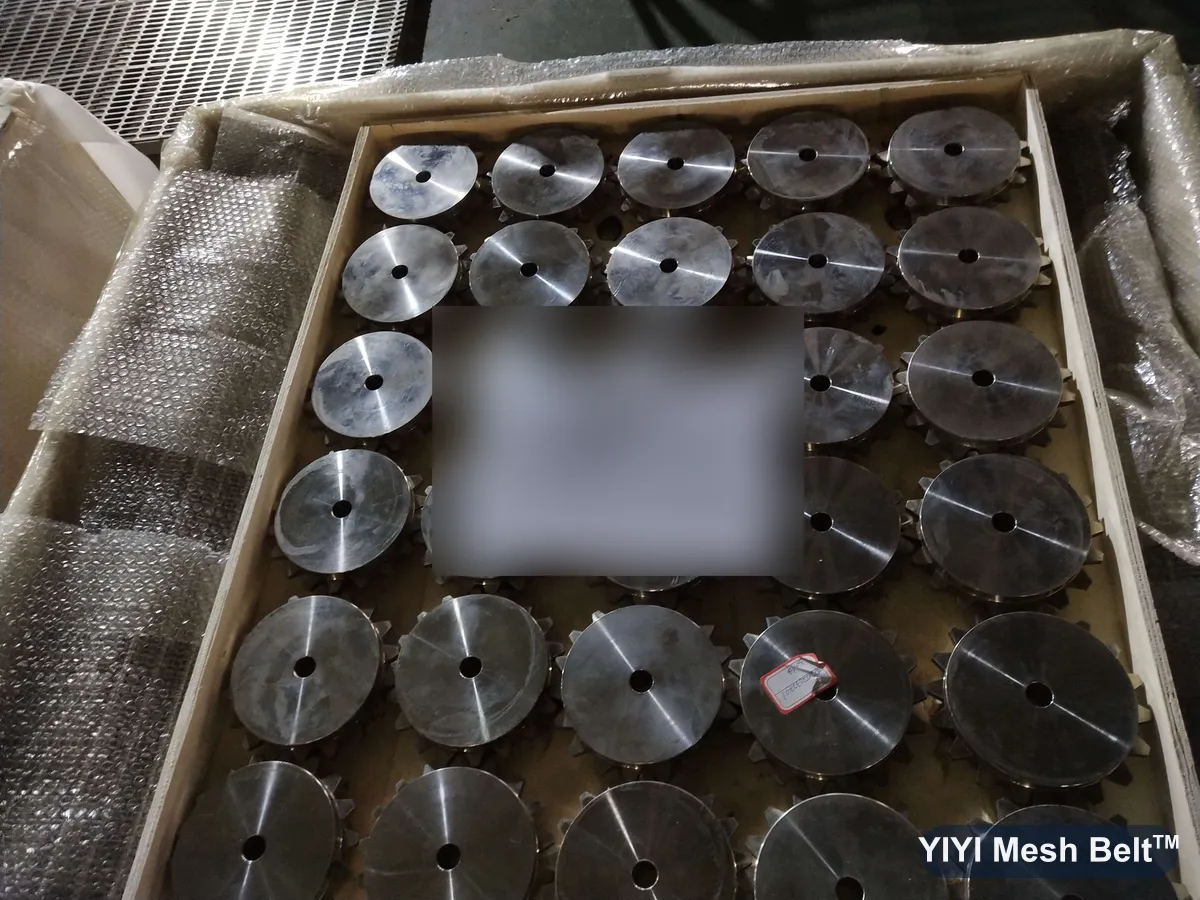
Spare parts are where mistakes hide. Spare rods, washers, spirals and chain pins should be on the packing list and visible in a photo.
When this is not the right choice
Air and express shipments are not packed like sea cargo. Weight and size matter more, so the packing is lighter, but the belt is still in film and protected; tell us the mode early.
Standard packing is not right if your site has special unloading limits, such as no forklift. Tell us before packing, not after the case arrives.
From our engineering experience
For a European distributor, a 2,550 mm balanced weave belt was ultrasonically cleaned and rolled on galvanized tubes for shipment. For an equipment maker in Central Asia, a carbon steel belt shipped in two rolls with spare spirals and rods, lightly oiled against rust.
My advice: tell us the port, the unloading method and any marking rules when you order, and ask for the packing photos before the shipment leaves.
Evidence from our work
- Situation
- A 1,241 mm carbon steel balanced weave belt, 55 m, for an equipment maker.
- What we checked
- Light, even rust-preventive oil on the carbon steel; two rolls on galvanized tubes; 3 left- and 3 right-hand spare spirals and 3 rods packed and listed.
- Why it matters
- Carbon steel needs rust protection, and spares packed with the belt save a second shipment.
- Result
- The belt shipped in two rolls with its spares, after measured photos were approved.
- Buyer lesson
- Packing is part of the specification; agree it with the drawing.
FAQ
Do you use plywood or solid wood cases?
Fumigation-free plywood or fumigated wood, depending on the destination and your requirements.
Is neutral packing possible?
Yes, on request: no Chinese text, no YIYI name, your shipping marks.
Will I see the packing before shipment?
Yes. We send packing photos and the packing list before dispatch.
How are spare parts packed?
Sealed in film, packed with the belt and listed on the packing list.
Which shipping methods do you use?
Sea, air, rail and express, chosen with you by urgency, size and destination.
Conclusion
Clean, dry, film-wrapped and cased to suit the belt, with spares listed and photos before dispatch. That is how a belt should arrive.
Useful files for your project
I have worked on metal conveyor belt projects for 15 years, from new spiral freezers to belt replacement. I share project notes and replacement checklists on LinkedIn.
Technical reviewer: Sunny Ye, Global Sales Director, YIYI MESH BELT · Last updated: 2026-10-12