Why Should Belt, Chain and Sprocket Be Checked Together When Replacing a Chain Driven Belt?
A new chain driven belt on worn sprockets can jump teeth in week one. The belt, chain and sprocket wear as a set.

Short answer
Belt, chain and sprocket should be checked together because they wear together. The chain pitch, roller diameter and centre distance must match the sprockets, and a stretched old chain wears the teeth to its own shape. Checking all three before ordering prevents a new belt from skipping or wearing early.
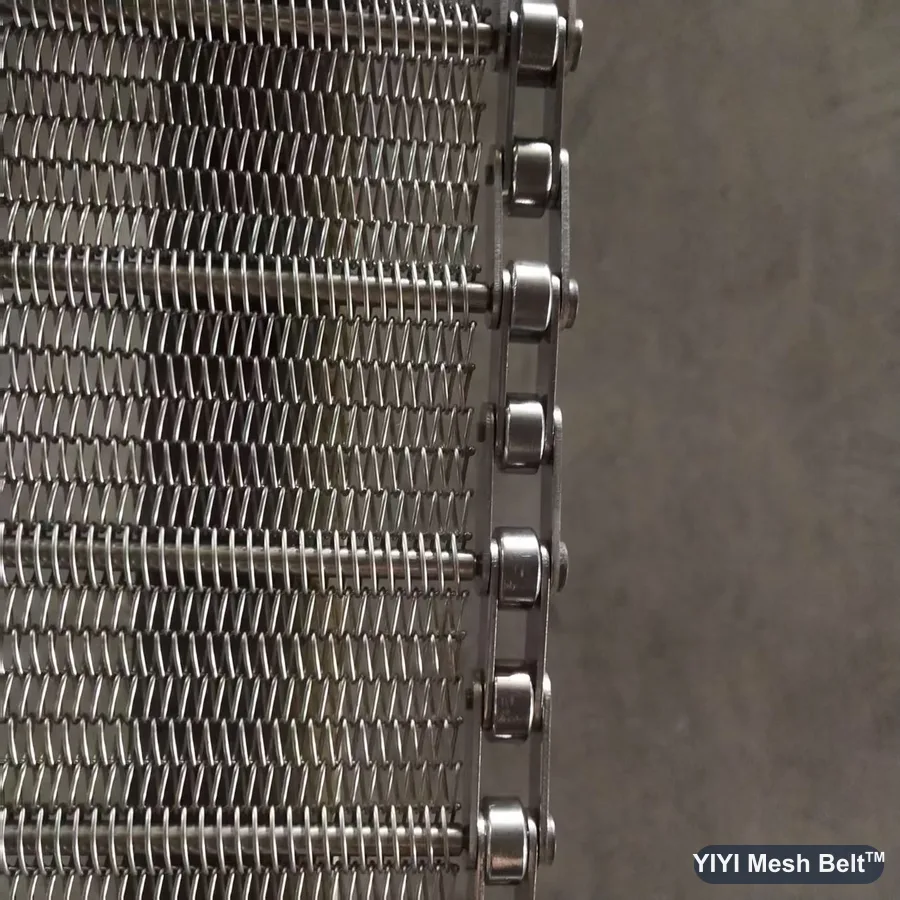
I am Sunny Ye, Global Sales Director at YIYI MESH BELT in Ningjin, Shandong. We have made metal conveyor belts since 1998 and run 280 units of production equipment, including 9 automatic welding robots. We build chain driven belts for frying, washing and processing lines, and the drive is where I look first in every replacement.
At a glance
| Product | Chain Driven Belt with matched sprockets |
|---|---|
| Application | Replacement on frying, washing, cooling and processing lines |
| Key parameters to confirm | Chain standard and pitch, roller, inner width, centre distance, rod, mesh, sprocket teeth and bore |
| Buyer type | Food plants, equipment makers, maintenance teams |
| What to send for a quote | Chain model, photos with a caliper, centre distance, sprocket photos and tooth count |
Why do belt, chain and sprockets wear as a set?
Every rotation, the chain and the sprocket teeth wear against each other.
They wear as a set because the chain rollers and the sprocket teeth rub on every turn. As the chain stretches, the teeth wear to fit the stretched pitch. A new chain on those teeth no longer sits correctly, so it rides up, skips or wears quickly.
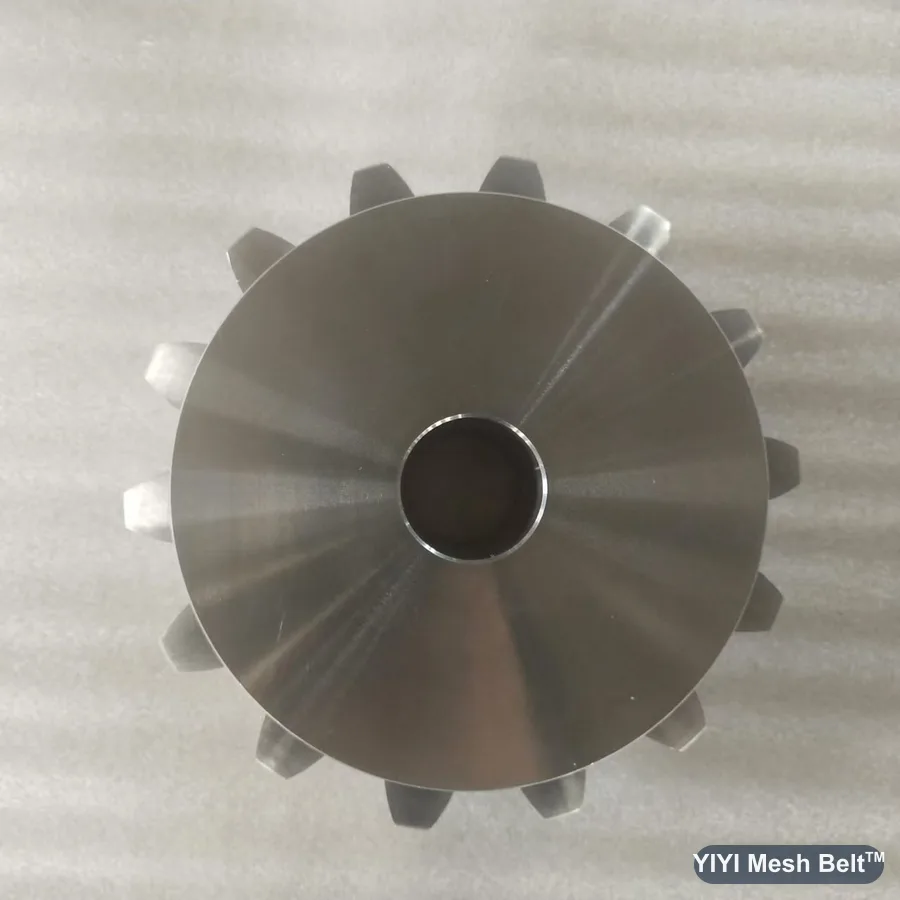
I ask for a photo of the sprocket teeth in every chain driven replacement. Hooked or thinned teeth tell me the sprockets should be replaced with the belt.
If the sprockets are in good shape, we note their condition on the drawing and keep them. Either way, the decision is made before ordering, not on installation day.
Which chain details must you confirm?
A chain model name alone does not fix the drive.
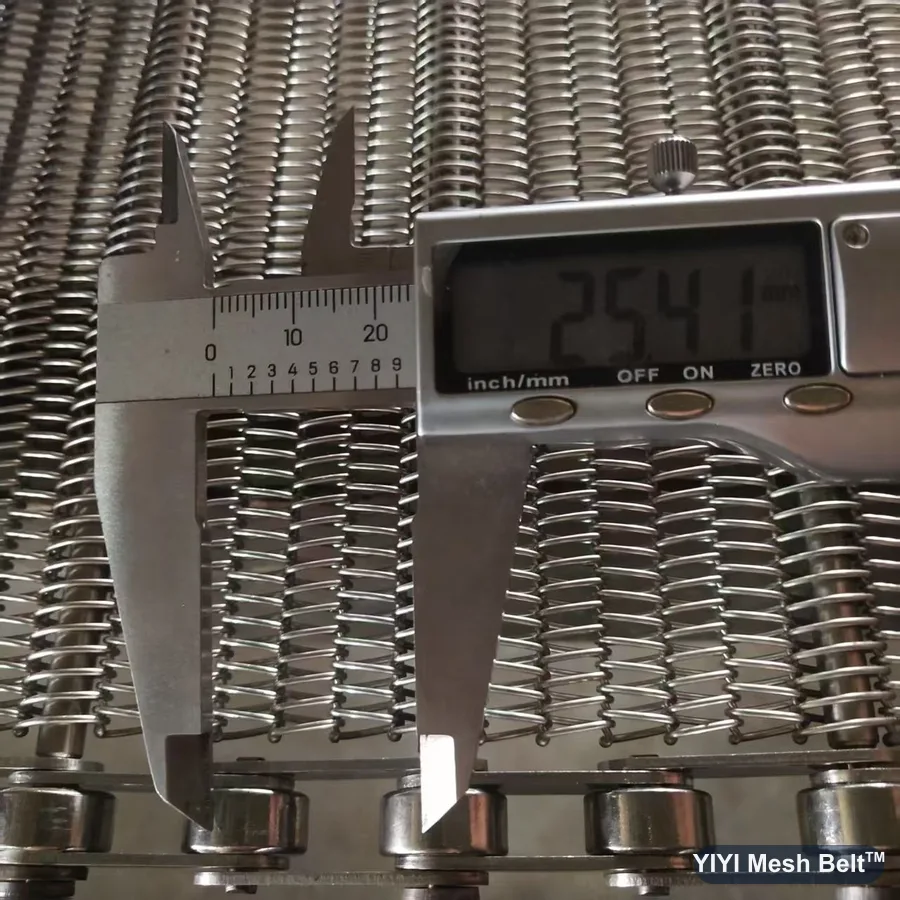
Confirm the chain standard and pitch, the roller diameter, the inner width and the centre distance between the two chains. A chain model alone does not fix pitch, material or sprocket; the chain standard, the selected pitch and the sprocket profile are confirmed together on the drawing.
| Chain detail | How to measure | Example from our work |
|---|---|---|
| Pitch | Over several links, divided | 25.4 mm (C2042) |
| Roller Ø | Caliper | 15.88 mm |
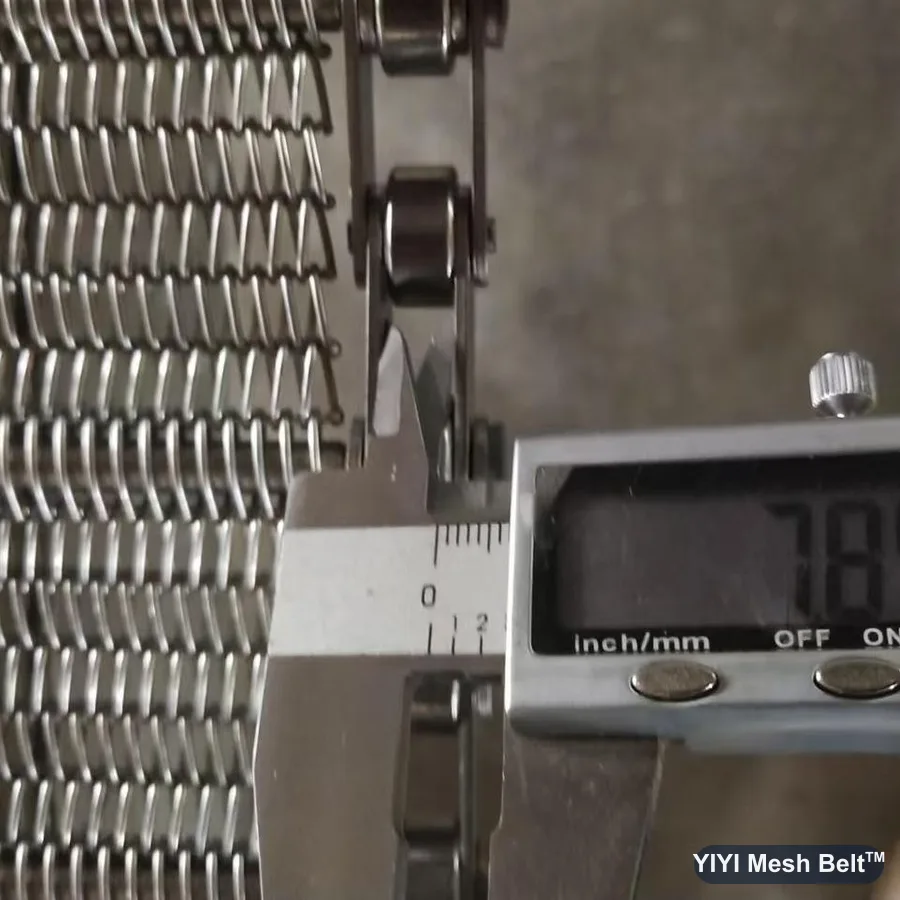
| Inner width | Caliper between plates | 7.85 mm |
| Centre distance | Tape between chain centres | 350 / 500 / 650 mm |
| Material | Ask or test | SUS304 |
Our chain pitch range covers 12.7 to 63.5 mm. Selected stainless chains of about 25.4–50.8 mm pitch can be made in-house depending on specification; carbon steel and special chains are sourced to specification and checked before shipment.
What should you check on the sprockets?
Check the sprockets with the same care as the belt.
Check the tooth count, the outside diameter, the bore and keyway, the thickness and the tooth condition. If you order new sprockets, put them on the same drawing as the belt; we then check them against the belt geometry and can send a running video before shipment.
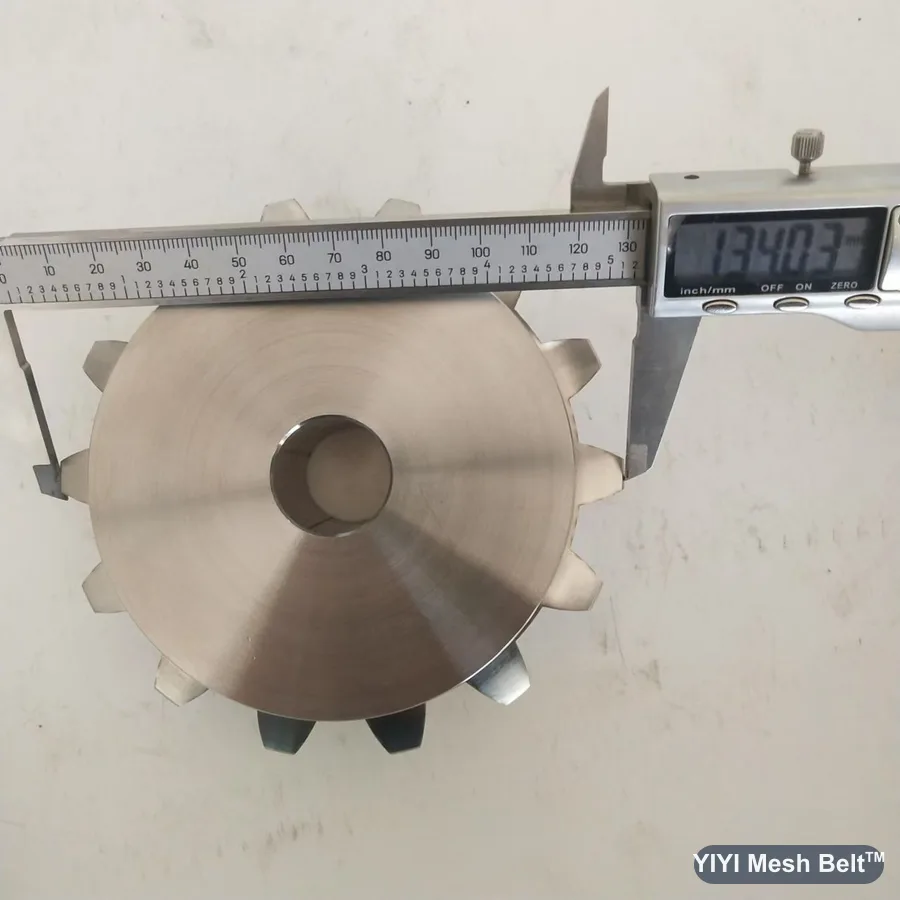
For one equipment maker we supplied 40 sprockets with two belts. Every sprocket was measured for outside diameter, bore, thickness and teeth, and a running video of sprocket and belt was sent before shipment.
Sprockets are machined by partners to our drawing; we check them against the belt in our workshop.
What should you send for a chain driven belt replacement?
One email with these items is enough to start.
Send the chain model if stamped, photos of the chain and mesh with a caliper, the centre distance, the overall width and length, the rod and mesh pitch, and a photo of the sprocket teeth with the tooth count. Add the product and temperature so we can confirm the material.
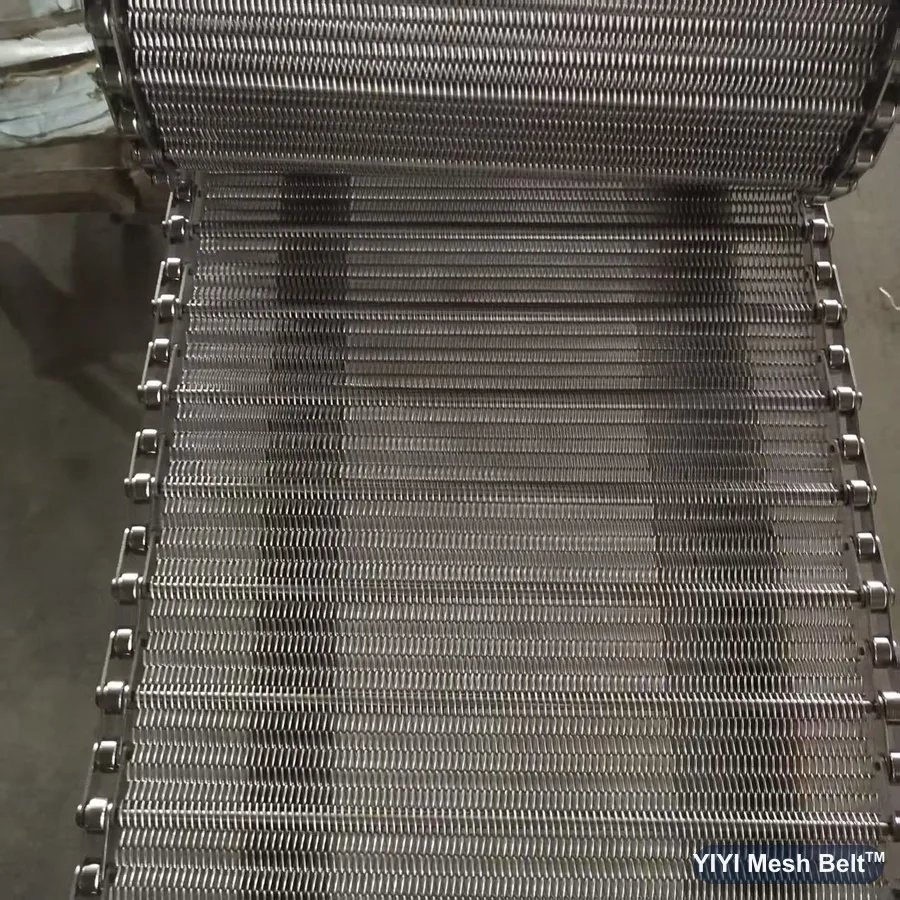
- ChainModel, pitch over several links, roller and inner width.
- BeltWidth, length, rod pitch and mesh.
- Centre distanceBetween the two chains.
- SprocketsTooth count, bore and a photo of the teeth.
- ProcessProduct, temperature and cleaning.
When this is not the right choice
Replacing just the belt is not right when the sprockets are visibly worn; the new belt will pay for the old teeth.
Copying the old chain is not right if it failed early. Send photos of the failure; the chain grade or the load may need to change.
From our engineering experience
For a frying-equipment maker we drew three chain driven belts with C2042 chain at 25.4 mm pitch, got the drawings signed, and supplied spare rods, washers, spiral wires and chain pins with the belts.
For a seafood plant in Northern Europe we supplied 100 mm pitch SUS304 conveyor chain, sourced to a drawing the customer signed, with every dimension checked and photographed before shipment. My advice: look at the sprocket teeth before you order the belt.
Evidence from our work
- Situation
- Three SUS304 chain driven belts, 145 m each, with chain centre distances of 350, 500 and 650 mm.
- What we checked
- Chain pitch 25.4 mm, roller 15.88 mm and inner width 7.85 mm measured against the signed drawing on the trial section.
- Why it matters
- The chain dimensions decide how the belt meets the sprockets.
- Result
- About 436 m of belt shipped with spare rods, washers, spiral wires and chain pins.
- Buyer lesson
- Specify chain, belt and spares together, and the replacement fits the drive.
FAQ
Can I keep my old sprockets?
If the teeth are not hooked or thinned, often yes. Send a photo of the teeth and we advise.
Do you make the chains?
Selected stainless chains of about 25.4–50.8 mm pitch can be made in-house depending on specification. Carbon steel and special chains are sourced to specification and checked before shipment.
Which chain pitches do you supply?
12.7 to 63.5 mm (0.500–2.500 in), with references such as #40, #50 and C2042 to C2102.
Can you supply sprockets with the belt?
Yes. They are specified on the same drawing and checked against the belt before shipment.
Which spares should I order?
Spare rods, washers, spiral wires and chain pins are the most common. List them on the drawing.
Conclusion
Check chain pitch, roller, centre distance and sprocket teeth with the belt. Order them together, on one drawing, and the drive runs as designed.
Useful files for your project
I have worked on metal conveyor belt projects for 15 years, from new spiral freezers to belt replacement. I share project notes and replacement checklists on LinkedIn.
Technical reviewer: Sunny Ye, Global Sales Director, YIYI MESH BELT · Last updated: 2026-10-12