Why Does a Chain Driven Belt Jump on Its Sprockets?
A chain that jumps teeth stops the line and damages the chain. It is almost always a mismatch between chain and sprocket.

Short answer
A chain driven belt jumps on its sprockets when the chain and the teeth no longer match: the chain has stretched, the teeth are worn or have the wrong profile, the tension is too low, or the two chains are out of line. Check pitch, teeth and alignment together.
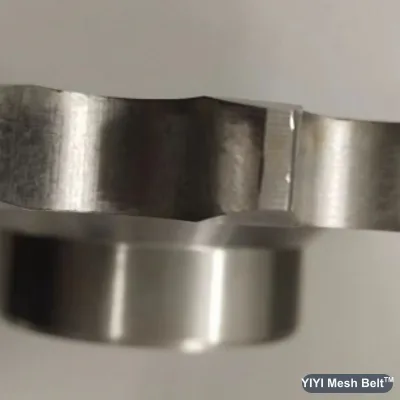
I am Sunny Ye, Global Sales Director at YIYI MESH BELT in Ningjin, Shandong, China. Our manufacturing experience dates back to 1998. We build chain driven belts for frying, washing and processing lines and check every sprocket against the belt.
At a glance
| Product | Chain Driven Belt, Drive Sprockets |
|---|---|
| Application | Frying, washing, cooling and processing lines |
| Key parameters to confirm | Chain pitch, roller diameter, tooth profile, tension, chain alignment |
| Buyer type | Food plants, equipment makers, maintenance teams |
| What to send for a quote | Chain model, chain pitch over several links, tooth photos with a ruler, centre distance |
What makes a chain jump teeth?
Four causes cover almost every case.
A chain jumps teeth when its pitch has stretched beyond what the teeth accept, when the teeth are hooked or thinned, when the sprocket profile does not suit the chain standard, or when slack lets the rollers ride up. Misaligned chains on the two sides make each of these worse.
| Cause | How to spot it |
|---|---|
| Chain stretch | Pitch over several links longer than nominal |
| Worn teeth | Hooked or thinned tips |
| Wrong profile | Rollers do not seat in the tooth gap |
| Low tension | Slack on the return side |
| Misalignment | One chain leads the other |
How do you measure chain and sprocket?
Measure the chain and the teeth before ordering anything.
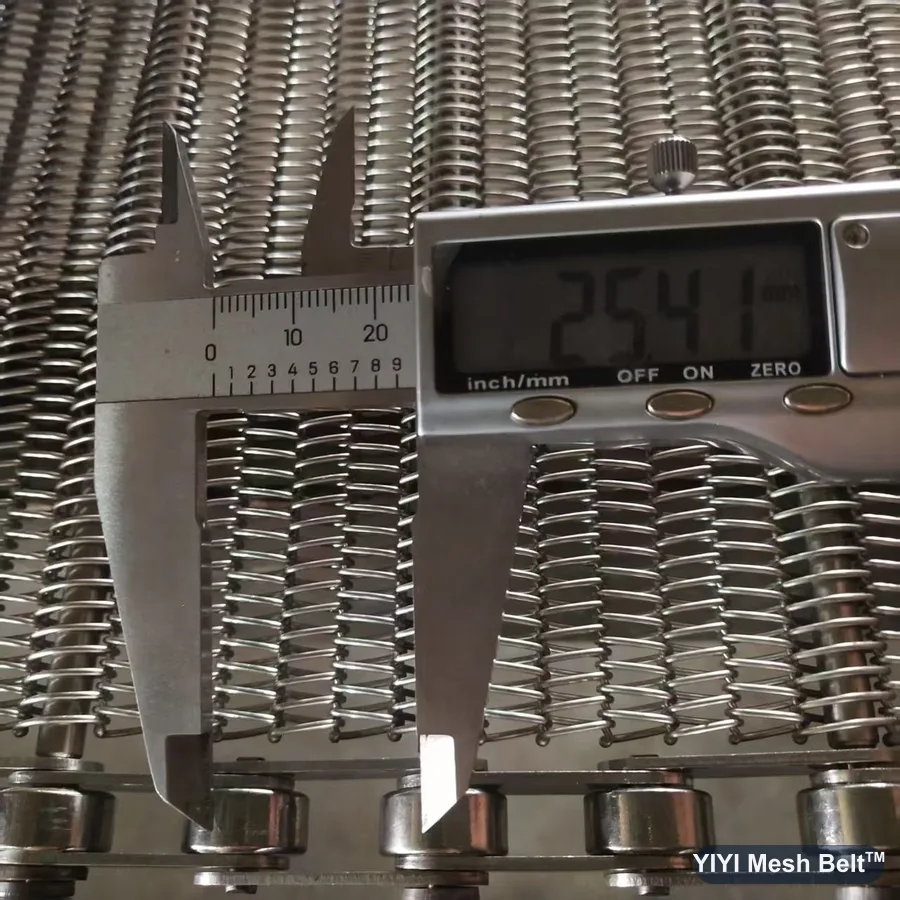
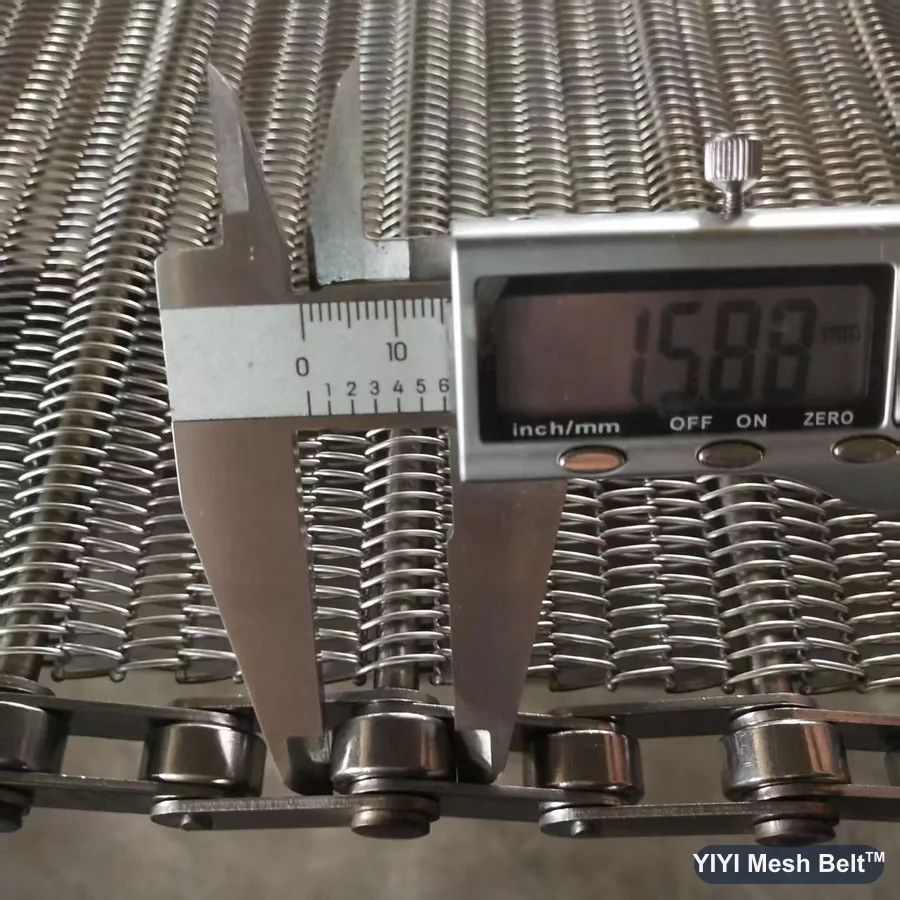
Measure the chain pitch over several links and divide, the roller diameter and inner width, and photograph the teeth with a ruler. Note the stamped chain model. Compare with the nominal chain pitch: a clearly longer reading means the chain has stretched and the teeth have probably worn with it.
- Chain pitchOver several links, divided.
- Roller and inner widthWith a caliper.
- TeethPhoto with a ruler, both sides.
- AlignmentDo both chains engage at the same moment?
Replace the chain, the sprockets or both?
Worn parts wear each other, so the answer is often both.
Replace both when the chain has stretched and the teeth are worn, because each has worn to the other. Replace just the sprockets when the chain measures as nominal but the teeth are damaged. Specify the chain standard, pitch and sprocket profile together on one drawing so they match.
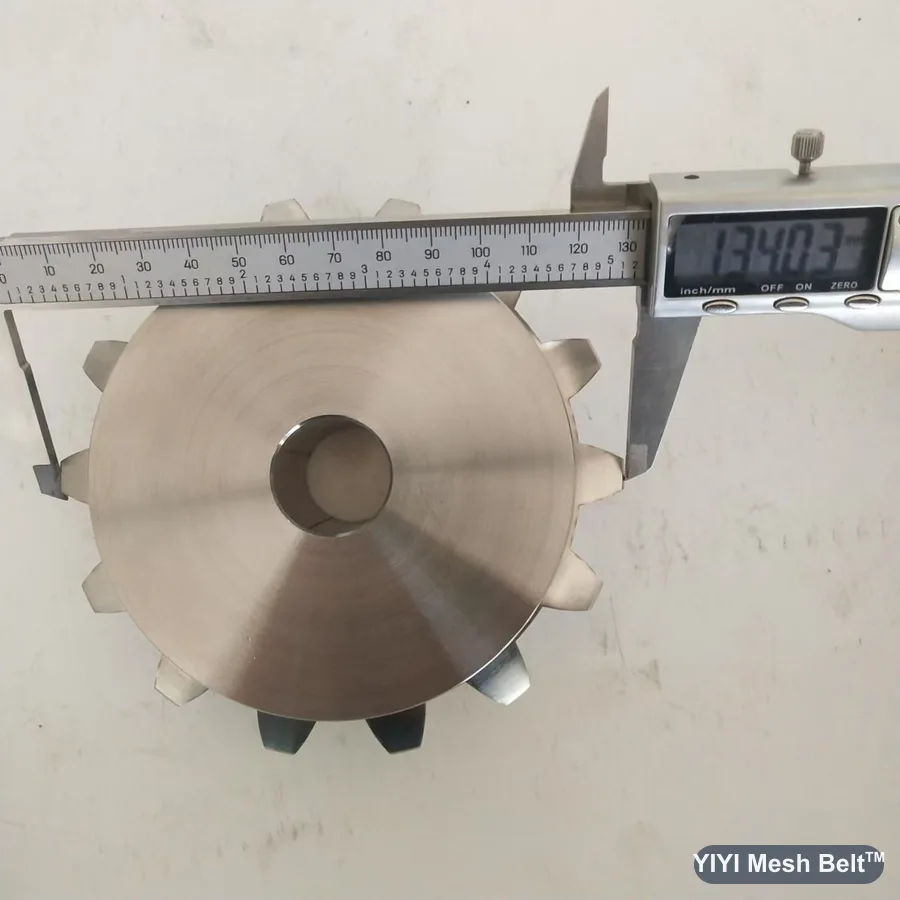
A chain model alone does not fix pitch, material or sprocket. The chain standard, selected pitch and sprocket profile are confirmed together on the drawing.
How do you stop it happening again?
Prevention is mostly about checking the match before shipment.
Prevent jumping by ordering the belt and sprockets on one drawing, checking the sprocket against the belt before shipment, setting tension to the machine maker’s value and checking chain alignment at installation. A short running test of sprocket and belt catches most mismatches before the belt leaves the factory.
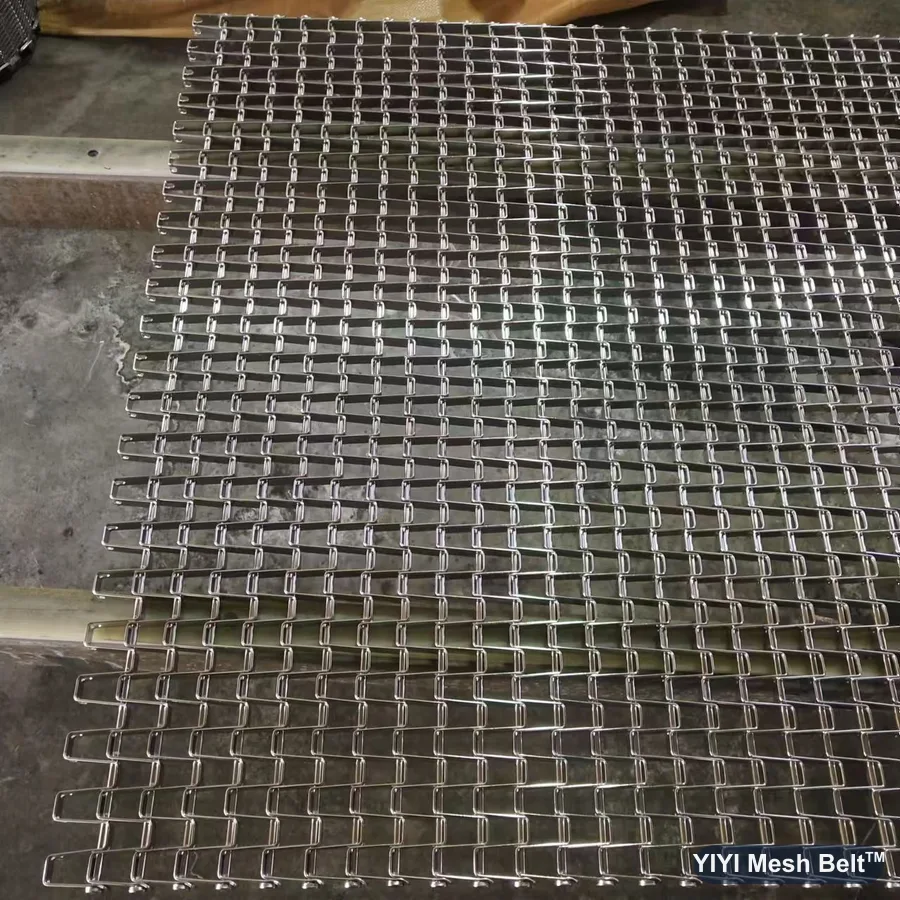
For one equipment maker, every sprocket was measured and a running video of sprocket and belt was sent before shipment.
When this is not the right choice
Tightening the chain until it stops jumping is not the right fix; it accelerates wear on worn teeth.
Ordering sprockets by tooth count alone is not right; the chain standard and profile matter.
From our engineering experience
For a frying-equipment maker we drew three chain driven belts with C2042 chain at 25.4 mm pitch, measured chain pitch, roller and inner width on the trial, and supplied spare pins with the belts.
For an equipment maker in East Asia we checked 40 sprockets against the belt and sent a running video before shipment. My advice: measure the chain over several links before you blame the belt.
Evidence from our work
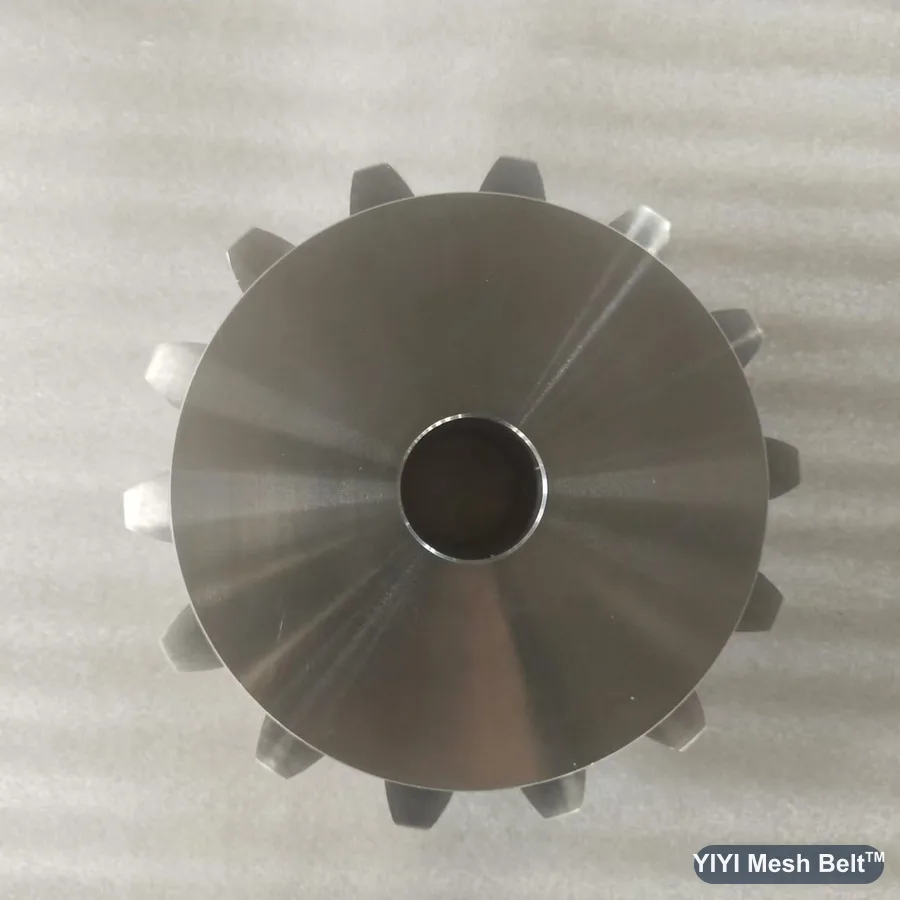
- Situation
- 40 SUS304 sprockets with two flat wire belts.
- What we checked
- Belt samples approved first; sprocket checked against the belt geometry; OD 134 mm, bore 25 mm, thickness 50 mm and teeth measured on every sprocket.
- Why it matters
- A sprocket checked against the real belt cannot surprise the customer at start-up.
- Result
- Tooth tips polished; a running video of sprocket and belt sent before shipment.
- Buyer lesson
- Check the sprocket on the belt, not just on the drawing.
FAQ
Can I fit a new chain on old sprockets?
Yes, if the teeth are not worn. Send a tooth photo with a ruler.
Which chain pitches do you supply?
12.7 to 63.5 mm (0.500–2.500 in), with references such as #40, #50 and C2042 to C2102.
Do you make sprockets?
Sprockets are machined by partners to our drawing and checked against the belt by us.
What should I send for a check?
Chain model, chain pitch over several links, roller size, tooth photos and centre distance.
Conclusion
Measure chain pitch, check the teeth and alignment, and replace worn parts as a matched set on one drawing. Then the chain stays on the teeth.
Useful files for your project
I work on metal conveyor belt projects, from new spiral freezers to belt replacement. I share project notes and replacement checklists on LinkedIn.
Technical reviewer: Sunny Ye, Global Sales Director, YIYI MESH BELT · Last updated: 2026-10-12