What Changes in a Flat Wire Conveyor Belt for Food Processing?
Flat wire belts look alike, but strip size, rod pitch and finish decide how one carries your product. Our factory builds them to your old belt or drawing and confirms each on the drawing you approve. See our flat wire belts.

Short answer
Choose a flat wire belt for food by sizing the strip and rod pitch to the load and product, counting openings to the width, choosing SUS304 or SUS316 for the cleaning, picking an edge and finish, and matching the sprockets. Each choice is confirmed on a drawing before production.
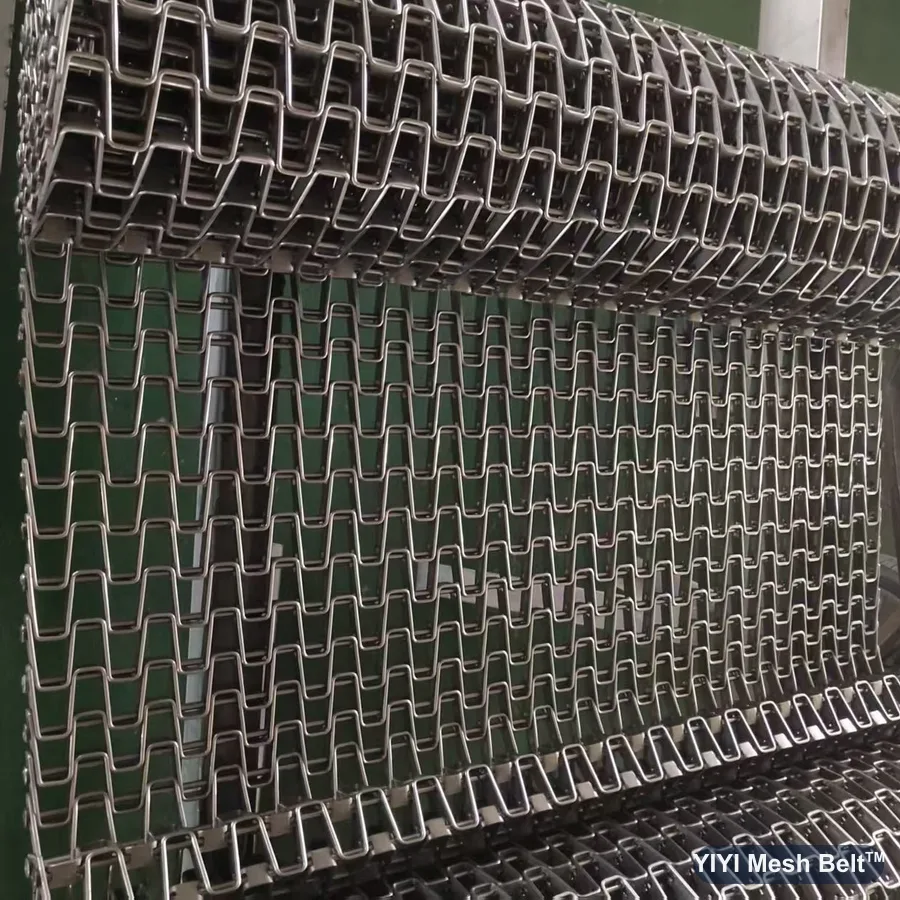
I am Sunny Ye, Global Sales Director at YIYI MESH BELT in Ningjin, Shandong, China. Our manufacturing experience dates back to 1998. We form flat wire belts on our own tooling, from 1.2 × 9.5 mm to 2.8 × 16 mm strip.
At a glance
| Product | Flat Wire / Honeycomb Belt |
|---|---|
| Application | Baking, cooling, freezing, washing, food handling |
| Key parameters to confirm | Strip size, rod pitch, mesh pitch, rod Ø, openings, material, edge, finish, sprockets |
| Buyer type | Food plants, bakeries, equipment makers |
| What to send for a quote | Product and load, width and length, sprocket details, cleaning method |
How do you size the strip and rod?
Strip and rod set the strength of a flat wire belt.
Size the strip and rod from the load and the span between supports: light products on short spans need a light strip, heavier products or longer spans need a taller, thicker strip and a larger rod. Strips run 1.2 × 9.5 to 2.8 × 16 mm.
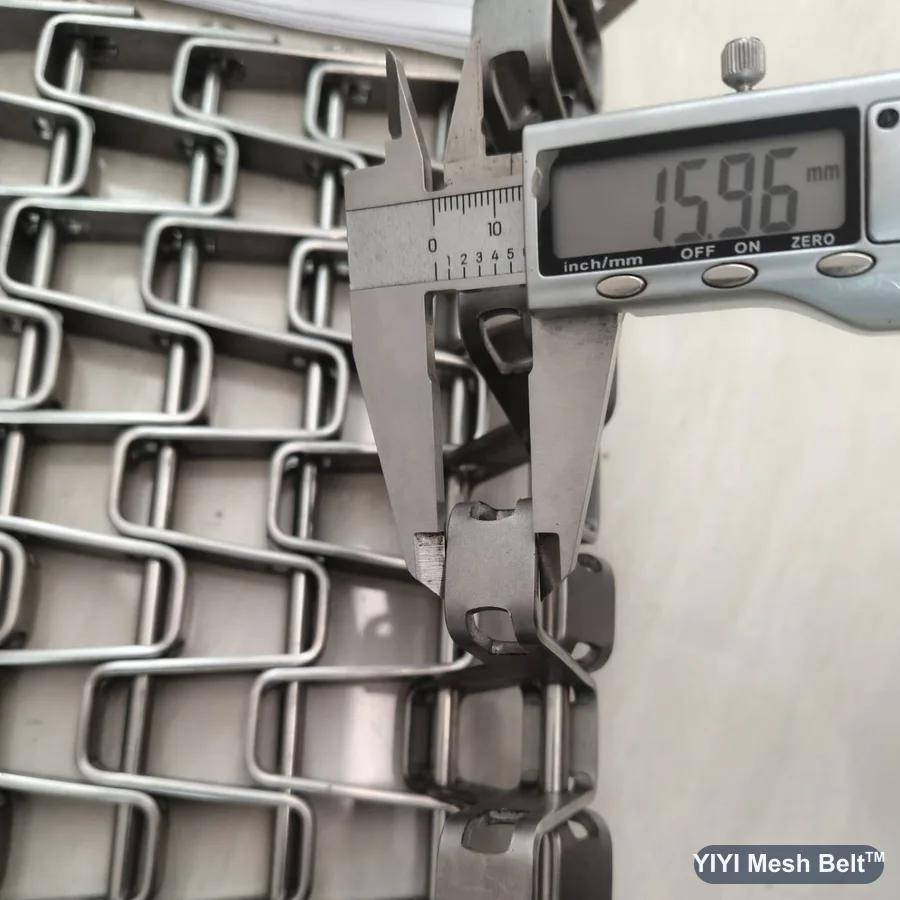
| Dimension | Range |
|---|---|
| Flat strip | 1.2×9.5 to 2.8×16 mm |
| Rod pitch | 12.7 / 25.4 / 27.4 / 38.1 / 50.8 mm |
| Mesh pitch | 12.7–40 mm or custom |
| Rod Ø | 3 / 4 / 5 / 6 / 8 mm |
| Width | 200–4000 mm |
How do mesh pitch and openings affect the product?
The opening size decides what the belt can carry.
The mesh pitch and rod pitch set the opening size: small products need smaller openings, while products that need airflow or drainage benefit from larger ones. Openings are counted across the width and are usually an odd number, so the belt is symmetrical about its centre.
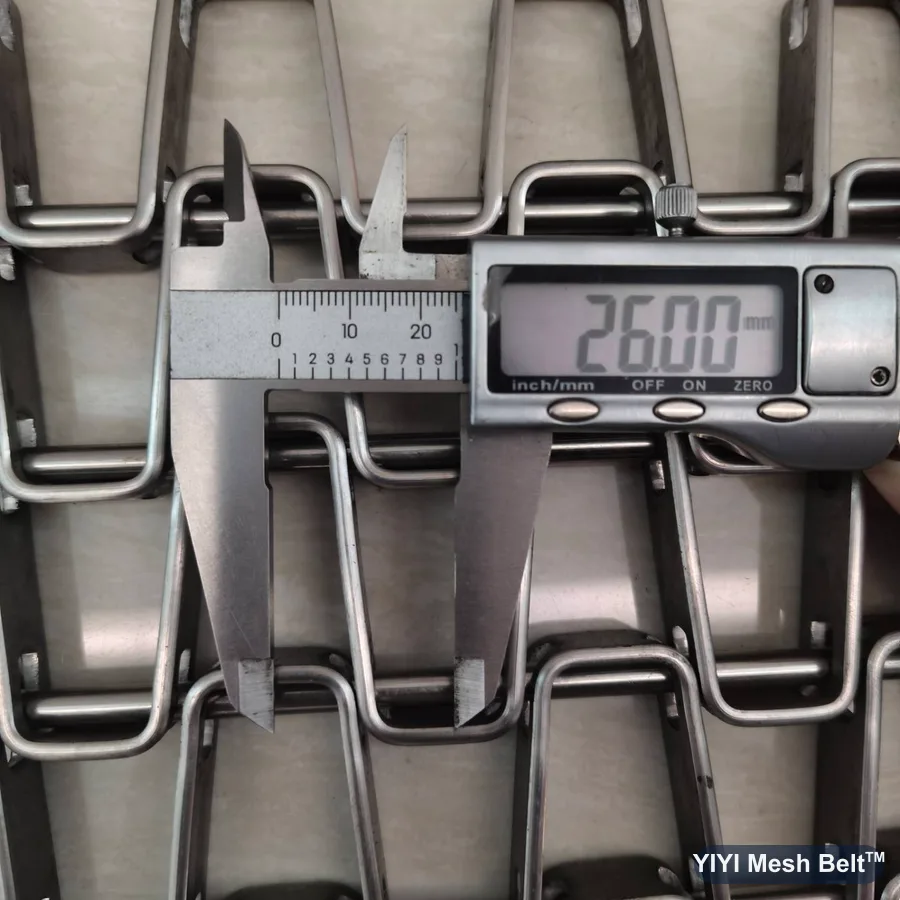
Send the smallest product size and whether it must not fall through. We check the openings on the drawing.
Which material, edge and finish should you choose?
Material and finish follow the cleaning and the product.
Choose SUS304 for general food lines, SUS316 or SUS316L where salt, brine or stronger cleaning chemicals are used, and mild steel for dry, non-food conveying. Edges can be washer welded, clinched or rod welded; finishes are mill, pickled or electropolished, chosen with the material.
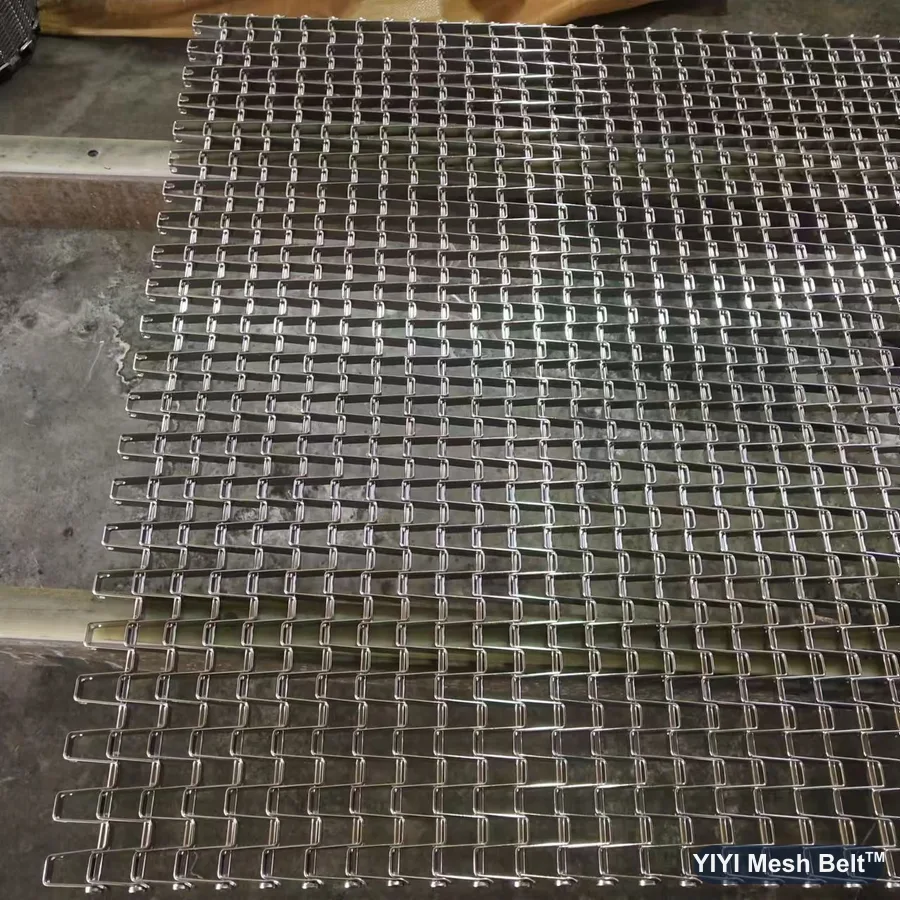
Electropolishing is arranged with qualified partners where specified; it gives a smoother surface that is easier to clean.
Why must sprockets be chosen with the belt?
Flat wire belts are driven through their openings.
Sprockets must be chosen with the belt because their teeth engage the openings: tooth pitch, count and position must match the mesh. When sprockets are on the same drawing, we check them against the belt before shipment, so the belt drives evenly from day one.
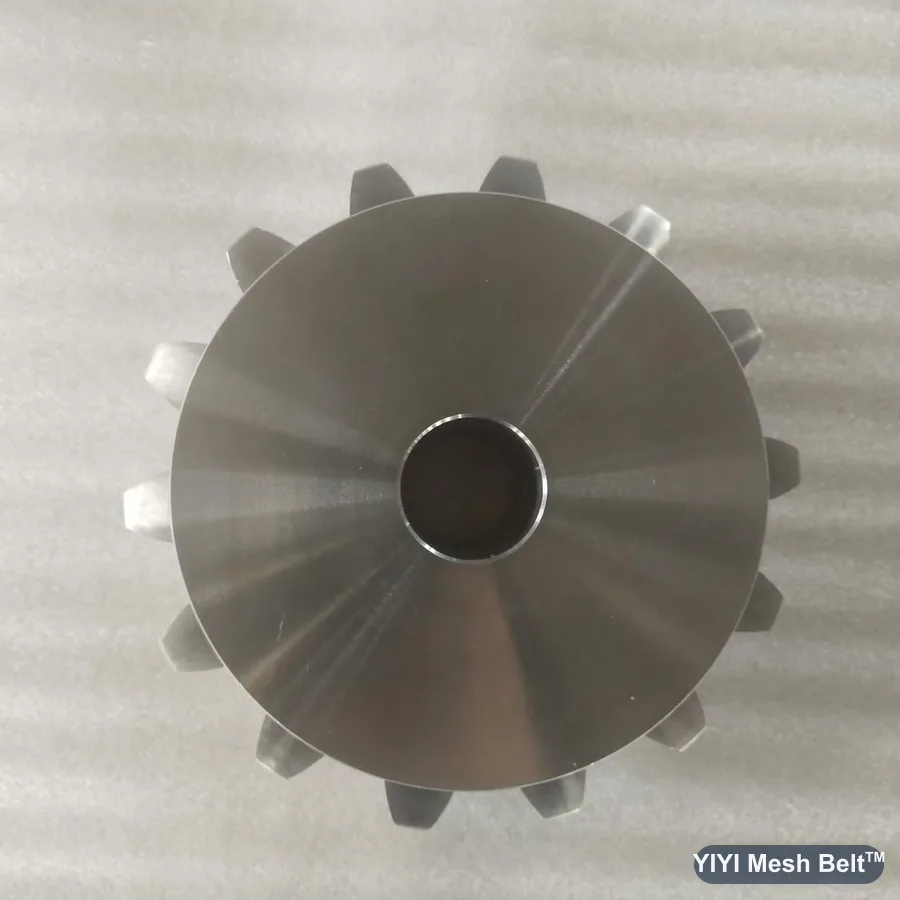
For a fishing equipment maker we checked 14-tooth sprockets against the approved belt sample before the order was placed.
When this is not the right choice
A flat wire belt is not right for heavy cooking loads on wide spans; an eye link or chain driven belt carries more.
A belt chosen by width alone is not right; strip, pitch and sprockets matter as much.
From our engineering experience
For a distributor in Southeast Asia we made new forming tooling for a 982 mm flat wire belt with 2.8 × 16 mm strip and 38.2 mm rod pitch, and compared the trial with the end user’s old belt.
My advice: send the product, the load and a photo of the sprocket. The belt follows from those three.
Evidence from our work
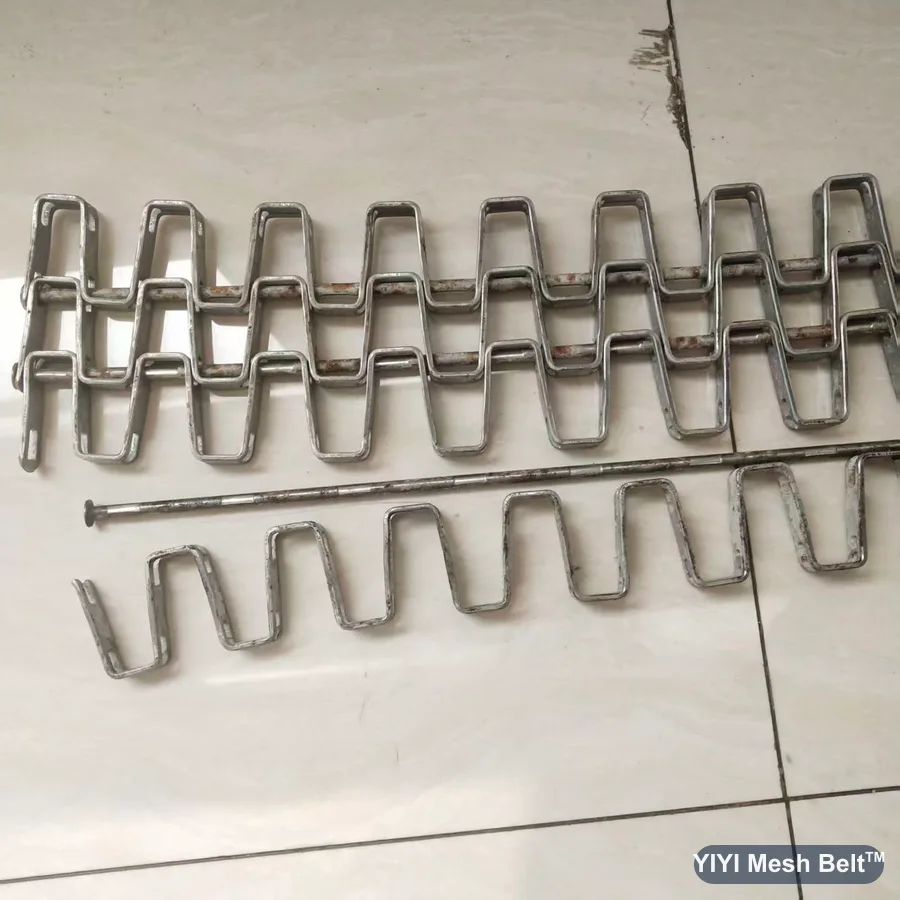
- Situation
- A SUS304 flat wire belt, 982 mm wide with 37 openings, 100 m.
- What we checked
- Strip 2.8 × 16 mm, rod pitch 38.2 mm, mesh pitch about 26 mm, rod 6 mm washer welded; new forming tooling.
- Why it matters
- A heavy strip and the right pitch matched the end user’s load and sprockets.
- Result
- Trial approved against the old belt; mass production, measured photos and an inspection video before shipment.
- Buyer lesson
- Size strip and pitch to the job, and check sprockets with the belt.
FAQ
Which strip sizes do you make?
1.2×9.5, 1.2×10, 1.42×9.4, 1.6×12, 1.6×12.7 and 2.8×16 mm.
Can you make new tooling?
Yes, when a specification needs it.
Is SUS316L available?
Yes, for flat wire belts where the project requires it.
Do you supply sprockets?
Yes, specified on the same drawing and checked against the belt.
Conclusion
Size strip and rod to the load, openings to the product, material to the cleaning, and sprockets to the belt. Confirm all on one drawing.
Useful files for your project
I work on metal conveyor belt projects, from new spiral freezers to belt replacement. I share project notes and replacement checklists on LinkedIn.
Technical reviewer: Sunny Ye, Global Sales Director, YIYI MESH BELT · Last updated: 2026-10-12