Why Does a Flat Wire Belt Deform During Operation?
A flat wire belt that bows, twists or opens up stops carrying product evenly. The strip, the rod and the sprockets all play a part.

Short answer
A flat wire belt deforms when the strip is too light for the load, when corner gaps or uneven forming weaken the mesh, when the sprockets do not match the mesh pitch, or when heat and tension stretch it. Compare strip, pitch and sprockets with the load.
I am Sunny Ye, Global Sales Director at YIYI MESH BELT in Ningjin, Shandong, China. Our manufacturing experience dates back to 1998. We form flat wire belts on our own tooling and make new tooling when a replacement needs it.
At a glance
| Product | Flat Wire / Honeycomb Belt |
|---|---|
| Application | Baking, cooling, freezing, washing, processing |
| Key parameters to confirm | Strip size, rod pitch, mesh pitch, rod diameter, sprockets, load, temperature |
| Buyer type | Food plants, bakeries, equipment makers |
| What to send for a quote | Photos of the deformed area, strip size, rod and mesh pitch, sprocket tooth count |
What kinds of deformation do you see?
The shape of the deformation points to the cause.
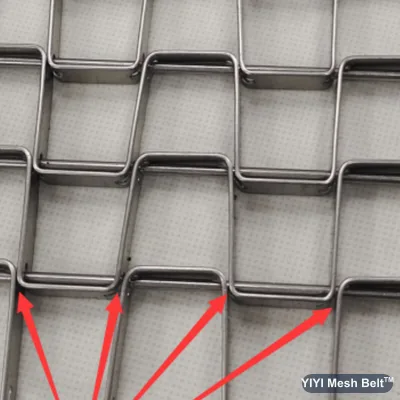
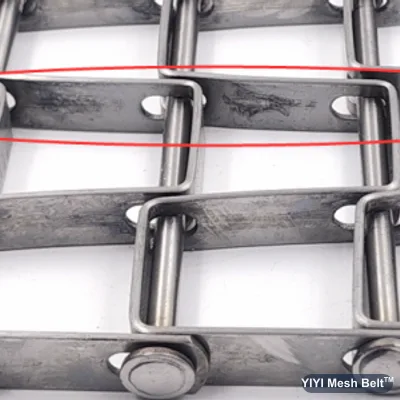
Flat wire belts deform in three typical ways: the mesh bows or dips between supports, openings widen or close unevenly, and the belt twists or runs off at the sprockets. Bowing points to load and strip size; uneven openings to forming; running off to sprockets or tension.
| Deformation | Likely cause |
|---|---|
| Bowing between supports | Strip too light for load or span |
| Uneven openings | Corner gaps or forming variation |
| Twisting or running off | Sprocket mismatch or uneven tension |
| Stretch along the belt | Heat, tension or wear |
Which dimensions should you check?
Strip and pitch tell you whether the belt matches the job.
Measure the flat strip height and thickness, the rod pitch and mesh pitch over ten pitches, the rod diameter and the number of openings across the width. Compare with the drawing if you have one. A light strip on a long unsupported span is the most common reason for bowing.
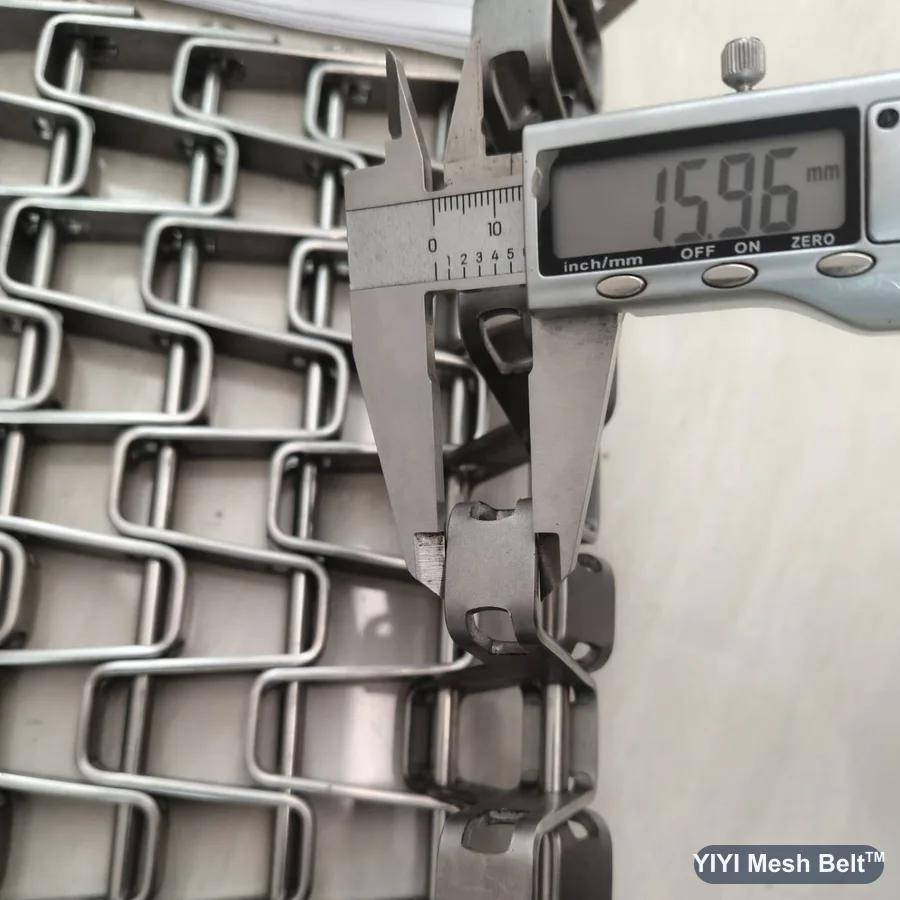
- StripHeight and thickness.
- PitchRod and mesh pitch over ten pitches.
- RodDiameter and end finish.
- OpeningsCount across the width.
How do sprockets cause deformation?
A flat wire belt is driven through its openings, so the sprocket must fit them.
Sprockets cause deformation when the tooth pitch does not match the mesh, when sprockets on the same shaft are out of line, or when teeth are worn. The belt is then pulled unevenly and the mesh distorts. Check the sprockets against the belt and replace worn ones with the belt.
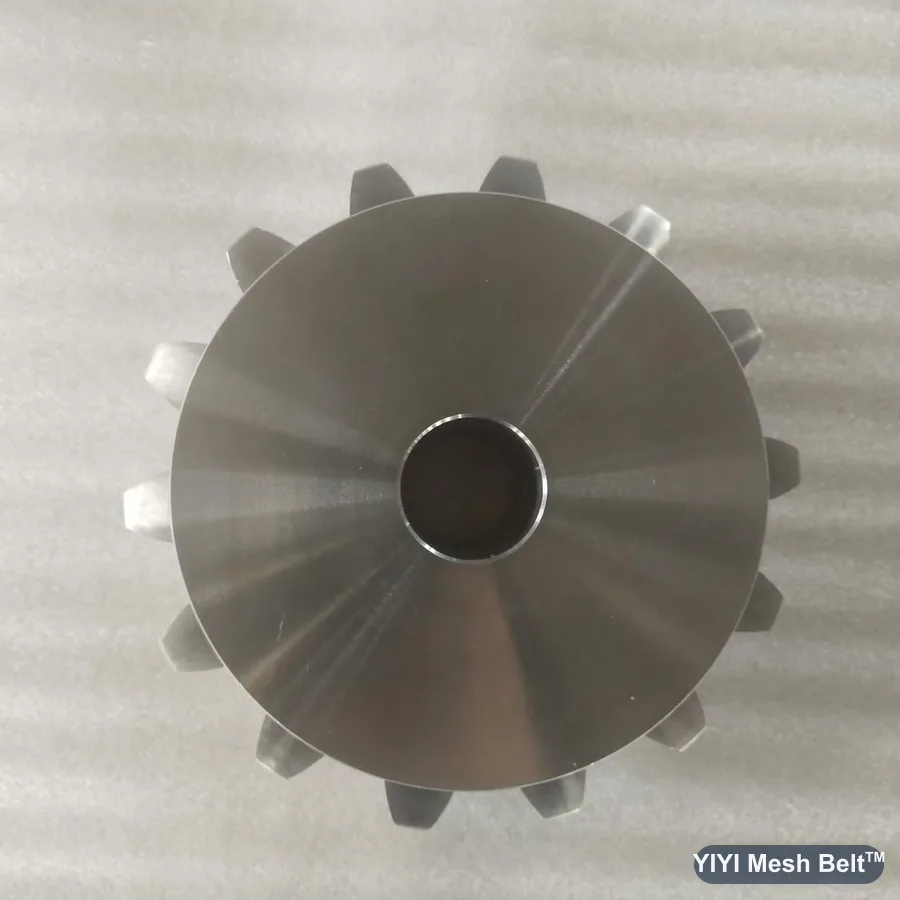
For an equipment maker in East Asia we checked the 14-tooth sprockets against the belt after the samples were approved, and sent a running video before shipment.
How do you specify the fix?
Change what caused the deformation, then draw it.
Specify the fix on a drawing: a heavier strip or closer rod pitch for load, new tooling for even forming, matched sprockets for drive, and the right material and finish for temperature. A trial section compared with the old belt confirms the change before production.
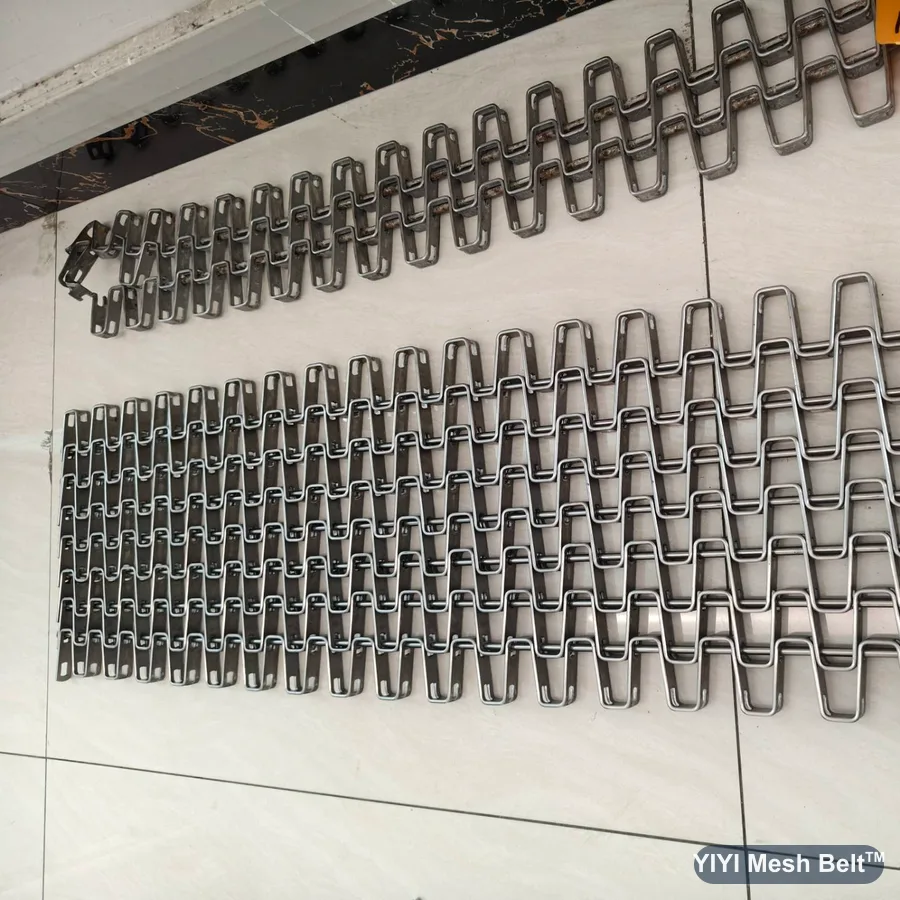
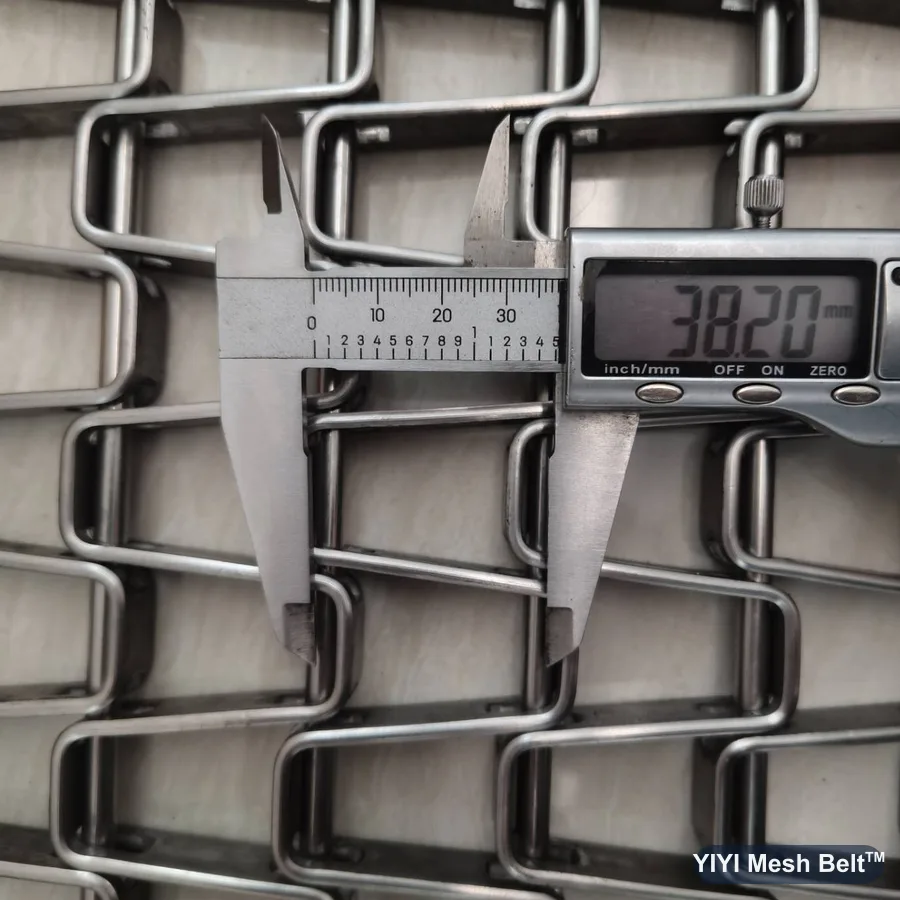
For a distributor in Southeast Asia we made new forming tooling for a 982 mm belt with 2.8 × 16 mm strip and 38.2 mm rod pitch, and compared the trial with the end user’s old belt before production.
When this is not the right choice
Adding supports without checking the strip is not always right; a light strip may still deform between them.
Copying a deformed belt is not right until the cause is known.
From our engineering experience
For a distributor in Southeast Asia we built a replacement flat wire belt on new forming tooling and photographed the trial next to the end user’s worn sample before mass production.
My advice: send a photo of the deformation with the strip size and the sprocket. Most cases are clear from those three.
Evidence from our work
- Situation
- A SUS304 flat wire belt, 982 mm wide, 100 m, to match an end user’s worn belt.
- What we checked
- Strip 2.8 × 16 mm, rod pitch 38.2 mm, mesh pitch about 26 mm, rod Ø 6 mm washer welded; new forming tool; trial compared with the original.
- Why it matters
- Even forming on the right tooling keeps the openings regular and the mesh flat.
- Result
- Mass production after the distributor’s approval; measured photos and an inspection video before shipment.
- Buyer lesson
- Match the strip and the tooling to the job, and prove it on a trial.
FAQ
Can a heavier strip stop bowing?
Often, together with the right rod pitch and supports. We confirm it on the drawing.
Do you make new tooling for replacements?
Yes, when the specification needs it, as for a recent 982 mm replacement belt.
Can worn sprockets deform a flat wire belt?
Yes. Uneven pull distorts the mesh. Replace worn sprockets with the belt.
What should I send?
Photos of the deformation, strip size, pitches and sprocket tooth count.
Conclusion
Check strip, pitch, forming and sprockets against load and temperature. Specify the fix on a drawing and prove it on a trial.
Useful files for your project
I work on metal conveyor belt projects, from new spiral freezers to belt replacement. I share project notes and replacement checklists on LinkedIn.
Technical reviewer: Sunny Ye, Global Sales Director, YIYI MESH BELT · Last updated: 2026-10-12