What Changes in a Metal Conveyor Belt for a Washing Line?
A washing belt lives in water and chemicals. Our factory builds it from your old belt or drawing and confirms mesh, material grade and edge on the drawing you approve before production. See our metal conveyor belts.

Short answer
Choose a washing-line belt that drains well, resists the water and chemicals used, and has no places where dirt collects: an open belt such as flat wire, balanced weave or chain driven mesh, in SUS304 or SUS316 chosen for the chemistry, with smooth edges and a reliable wet drive.
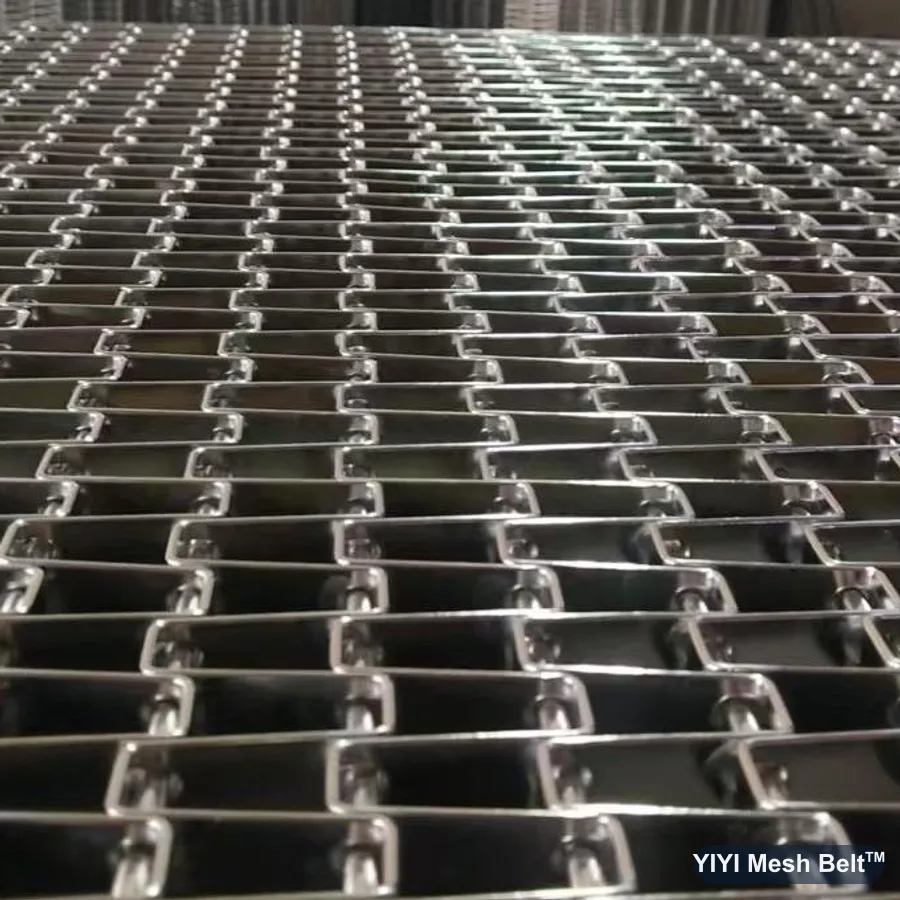
I am Sunny Ye, Global Sales Director at YIYI MESH BELT in Ningjin, Shandong, China. Our manufacturing experience dates back to 1998. We build belts for food washing, parts washing and other wet processes.
At a glance
| Product | Flat Wire, Balanced Weave, Chain Driven Belt |
|---|---|
| Application | Food washing, parts washing, rinsing, drying |
| Key parameters to confirm | Open area, material, chemicals, temperature, edge, drive |
| Buyer type | Food plants, washing line makers |
| What to send for a quote | Product, water and chemical type, temperature, width, load and drive |
Why does open area matter on a washing line?
Water has to pass through the belt, and dirt has to leave it.
Open area matters because water and cleaning solution must reach the product from below and drain away quickly. An open belt such as flat wire or balanced weave lets spray pass through, dries faster and leaves fewer places for residue to settle than a close or solid belt.
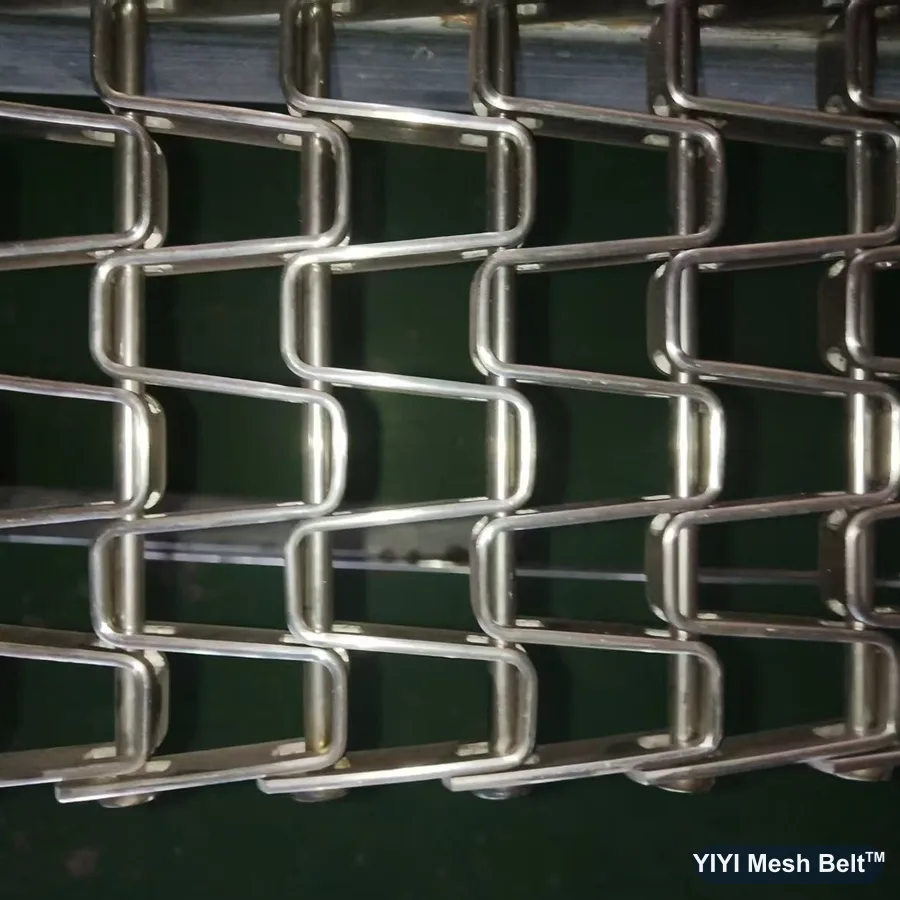
| Belt | Open area | Typical washing use |
|---|---|---|
| Flat Wire | High | Food washing, rinsing |
| Balanced Weave | Medium to high | Parts and food washing |
| Chain Driven | Medium | Heavy parts, inclines |
| Compound Weave | Lower | Small products |
Which material resists the washing chemistry?
Water alone is easy; chemicals and salt are not.
SUS304 suits most water washing; SUS316 is chosen where salt, brine or chlorinated or stronger cleaning chemicals are used. Carbon steel suits dry conveying, not washing. Tell us the chemical, its concentration and the temperature, so the grade is checked against the real process, not assumed.
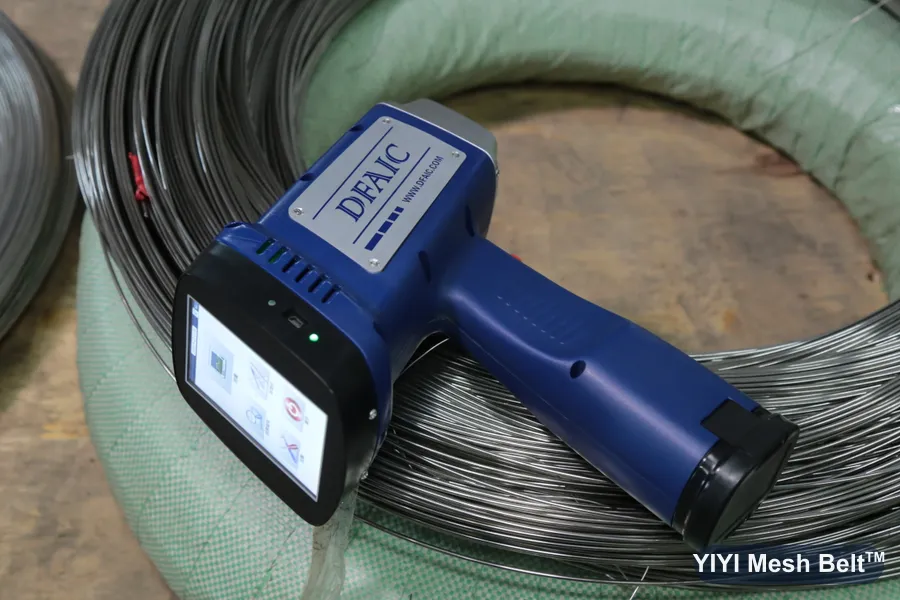
Design matters as much as grade: a belt or frame that traps water can corrode even in SUS316. Smooth, drained surfaces help any grade last.
Which edges and drive work well when wet?
Wet edges and drives need to stay smooth and engaged.
Smooth welded, clinched or washer-welded edges suit washing lines because they do not trap dirt. For heavy parts or inclines, a chain driven belt keeps a positive drive when wet. Sprockets matched to the belt avoid slipping, which wet drums are more prone to.
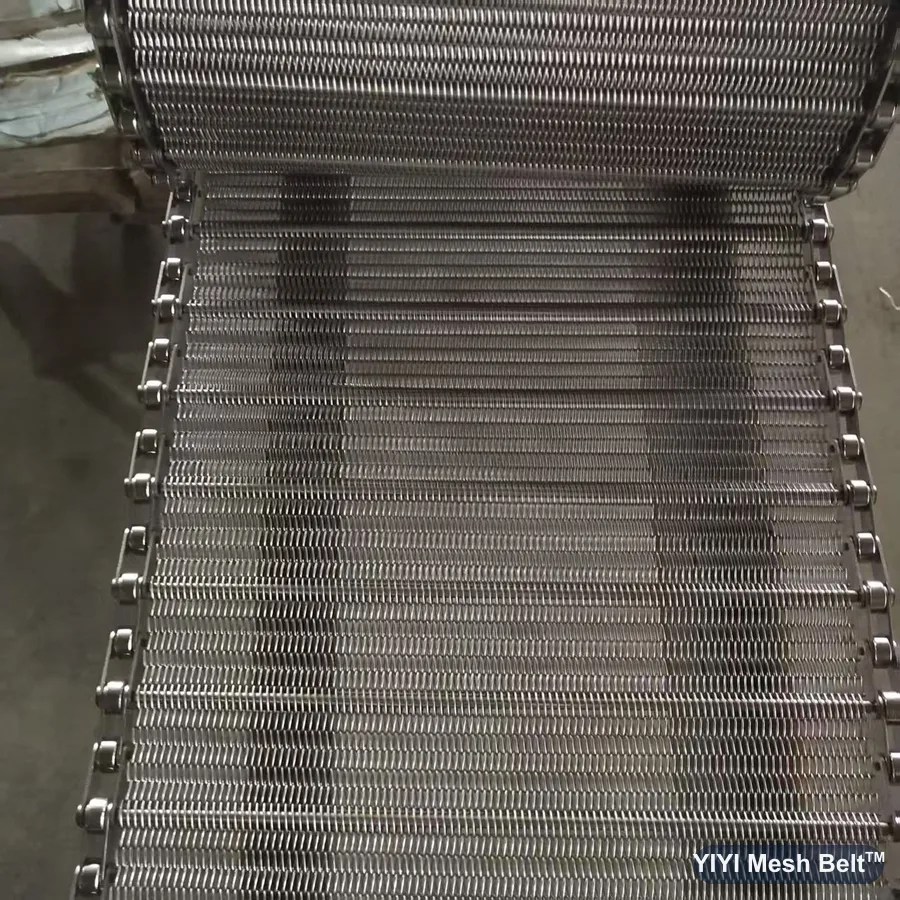
For a frying-equipment maker, finished chain driven belts were wiped with white gloves before packing to show they were clean and oil-free.
How should the belt arrive?
A washing-line belt should start clean.
The belt should arrive cleaned and dry, with any oil removed, so the first production run is not spent washing the belt. Stainless belts can be pickled or electropolished where specified; carbon steel belts for dry sections get a light rust-preventive oil instead.
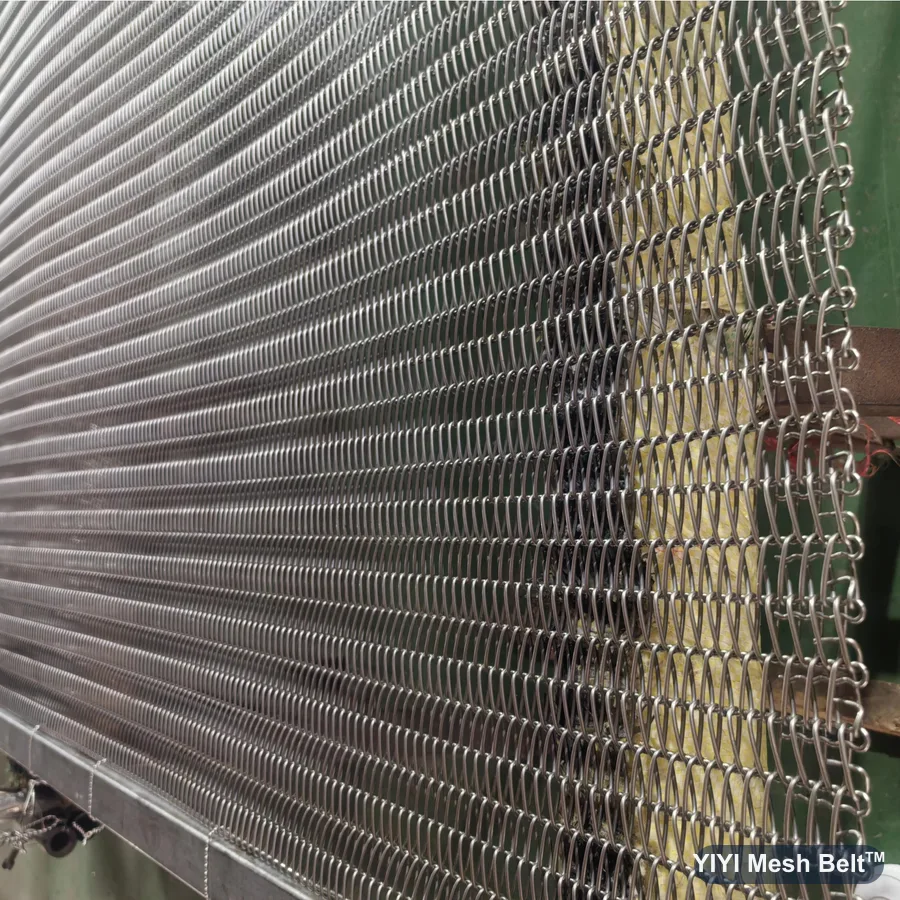
A 2,550 mm balanced weave belt for a European distributor was ultrasonically cleaned before it was rolled for shipment.
When this is not the right choice
A close or compound weave is not a good choice for washing unless the product is very small; it drains slowly.
Carbon steel is not right in washing zones; keep it to dry sections.
From our engineering experience
For a deep-sea fishing equipment maker worried about rust, we sent samples first and built electropolished SUS304 flat wire belts with welds cleaned.
My advice: tell us the chemical and the temperature, not just "washing". The grade and finish follow from them.
Evidence from our work
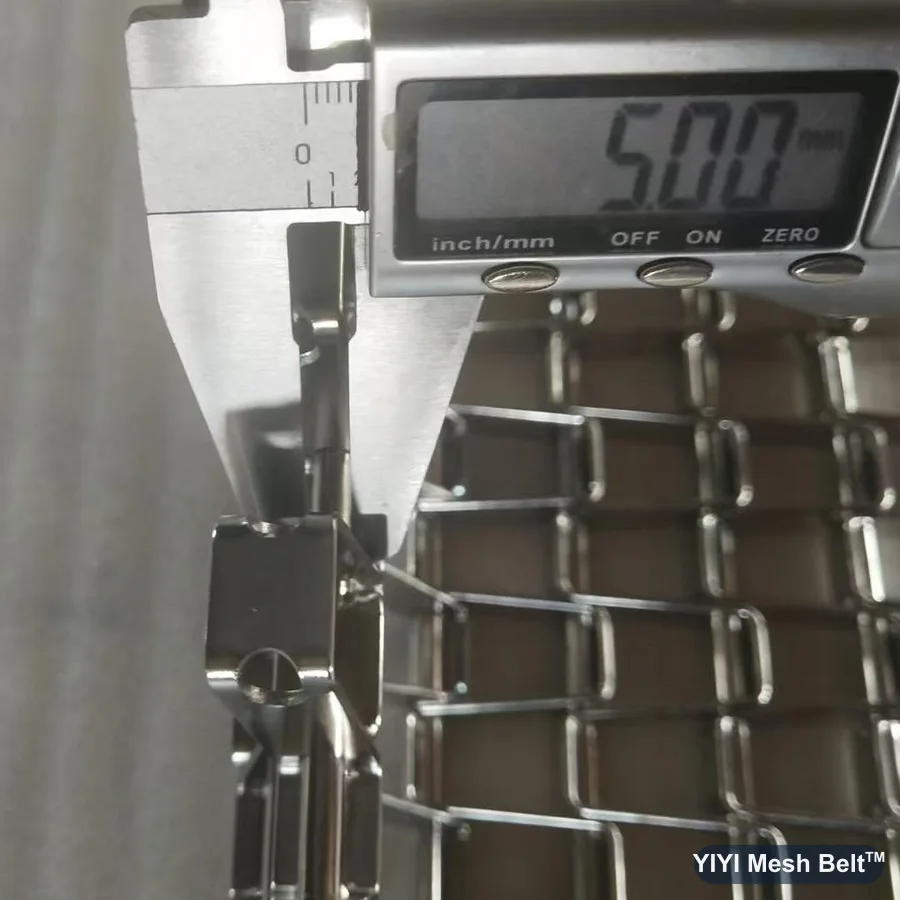
- Situation
- Two SUS304 flat wire belts for a wet, salty process, after rust problems with a previous supplier.
- What we checked
- Samples approved first; electropolished, welds cleaned; sprockets checked against the belt.
- Why it matters
- An open, smooth, cleanable belt resists the conditions that caused the earlier rust.
- Result
- Two belts with 40 sprockets and 310 flight clip sets shipped clean and dry.
- Buyer lesson
- Choose material and finish for the chemistry, and design for drainage.
FAQ
Is SUS316 always needed for washing?
No. SUS304 suits most water washing; SUS316 is chosen for salt, brine or stronger chemicals.
Can belts be electropolished?
Yes, arranged with partners where specified.
Which belt drains fastest?
Open belts such as flat wire and balanced weave.
What should I tell you about the process?
Product, water and chemical type, concentration, temperature and drive.
Conclusion
Open, drained, the right grade for the chemistry, smooth edges and a positive drive. That is a washing-line belt that lasts.
Useful files for your project
I work on metal conveyor belt projects, from new spiral freezers to belt replacement. I share project notes and replacement checklists on LinkedIn.
Technical reviewer: Sunny Ye, Global Sales Director, YIYI MESH BELT · Last updated: 2026-10-12