What Changes in a Chain Driven Belt for an Industrial System?
A chain driven belt is a belt and a chain system in one. Our factory builds both to your old belt or drawing and confirms the chain and mesh on the drawing you approve before production. See our chain driven belts.

Short answer
Select a chain driven belt by choosing the chain standard and pitch for the drive and load, the mesh and rods for the product, the width and chain centre distance for the machine, any attachments, the material for the process, and sprockets matched to the chain. All on one drawing.
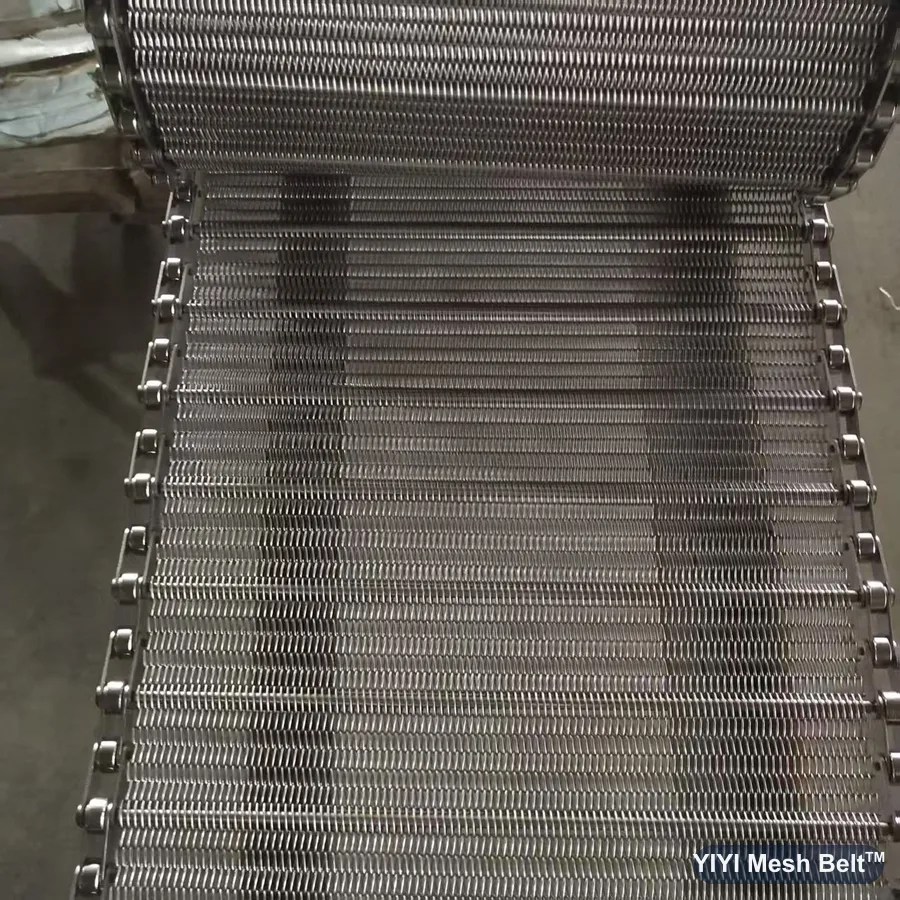
I am Sunny Ye, Global Sales Director at YIYI MESH BELT in Ningjin, Shandong, China. Our manufacturing experience dates back to 1998. We build chain driven belts from 300 to 5,000 mm wide for frying, washing, heat treatment and processing.
At a glance
| Product | Chain Driven Belt with sprockets |
|---|---|
| Application | Frying, washing, heat treatment, heavy processing |
| Key parameters to confirm | Chain standard and pitch, mesh, rods, width, centre distance, attachments, material |
| Buyer type | Equipment makers, process engineers, maintenance teams |
| What to send for a quote | Drawing or chain model, load, width, centre distance, temperature |
How do you choose the chain?
The chain carries the drive and most of the load.
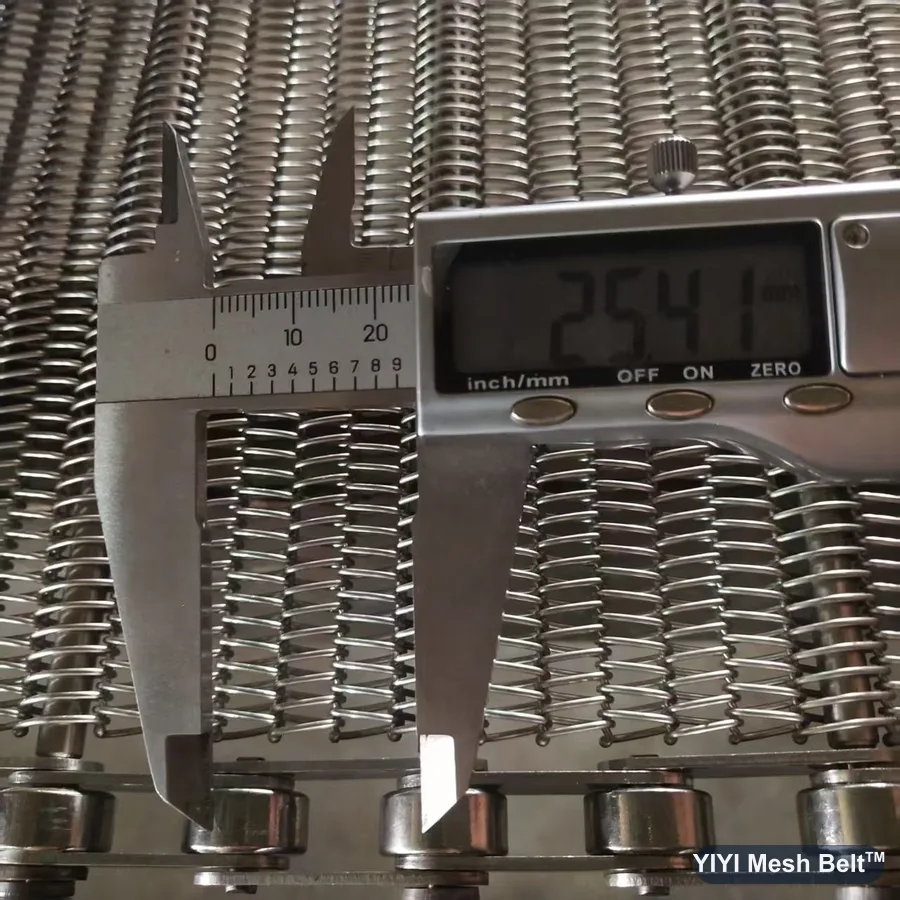
Choose the chain by load, speed and conveyor length: chain pitch from 12.7 to 63.5 mm, with references such as #40, #50 and C2042 to C2102, solid or hollow pins. A chain model alone does not fix pitch, material or sprocket; they are confirmed together on the drawing.
| Dimension | Range |
|---|---|
| Chain pitch | 12.7 / 15.875 / 25.4 / 31.75 / 38.1 / 50.8 / 63.5 mm |
| Spiral pitch | 3–20 mm |
| Mesh rod pitch | 4–20 mm |
| Wire Ø | 1–3 mm |
| Cross rod Ø | 4 / 5 / 6 / 8 / 9 mm |
| Width | 300–5000 mm |
How do you choose the mesh and rods?
The mesh is chosen for the product, not for strength.
Choose the mesh for the product: spiral pitch and wire for the product size and airflow, cross rod and spacing for support between the chains. Because the chains carry the pull, the mesh can be lighter or more open than on a belt driven through the mesh.
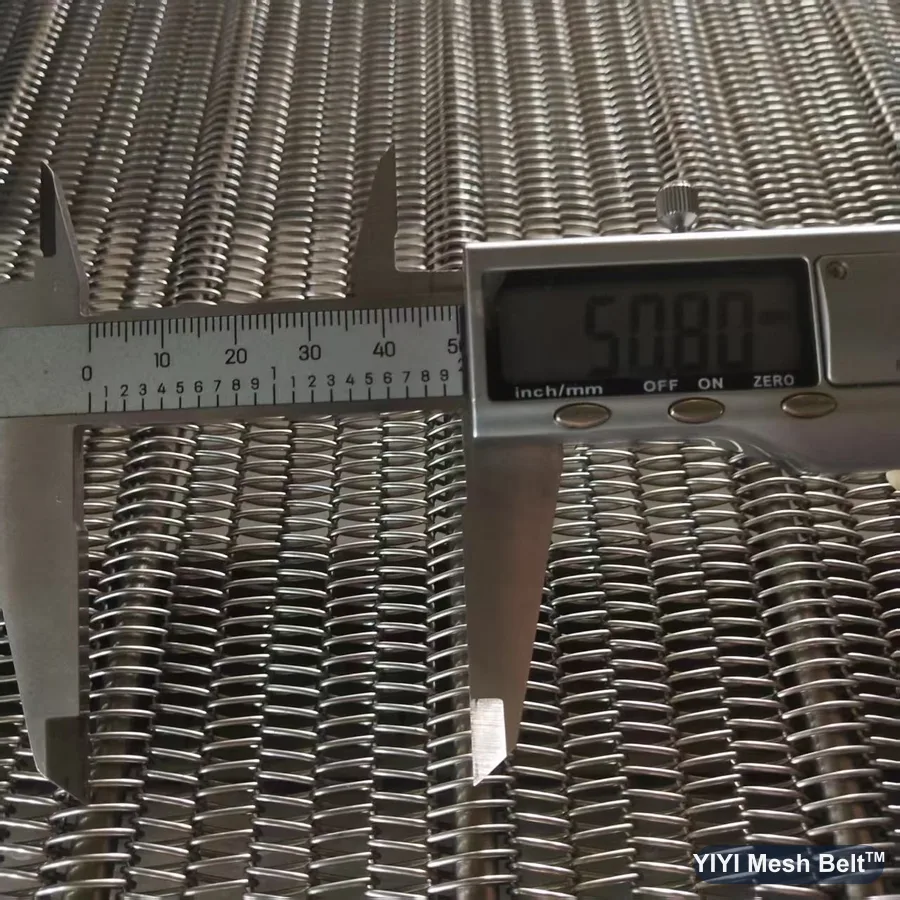
For a frying-equipment maker the mesh was 1.0 mm spiral wire at 3 mm pitch on 6 mm rods at 50.8 mm spacing.
Which attachments can be added?
Chain driven belts take attachments easily.
Side guides, tubes, side rollers, square bars, spiral wire or L-type flights and side plates can be added to a chain driven belt, built to the approved drawing. Attachments are fixed to the chain or rods, so they do not weaken the mesh that carries the product.
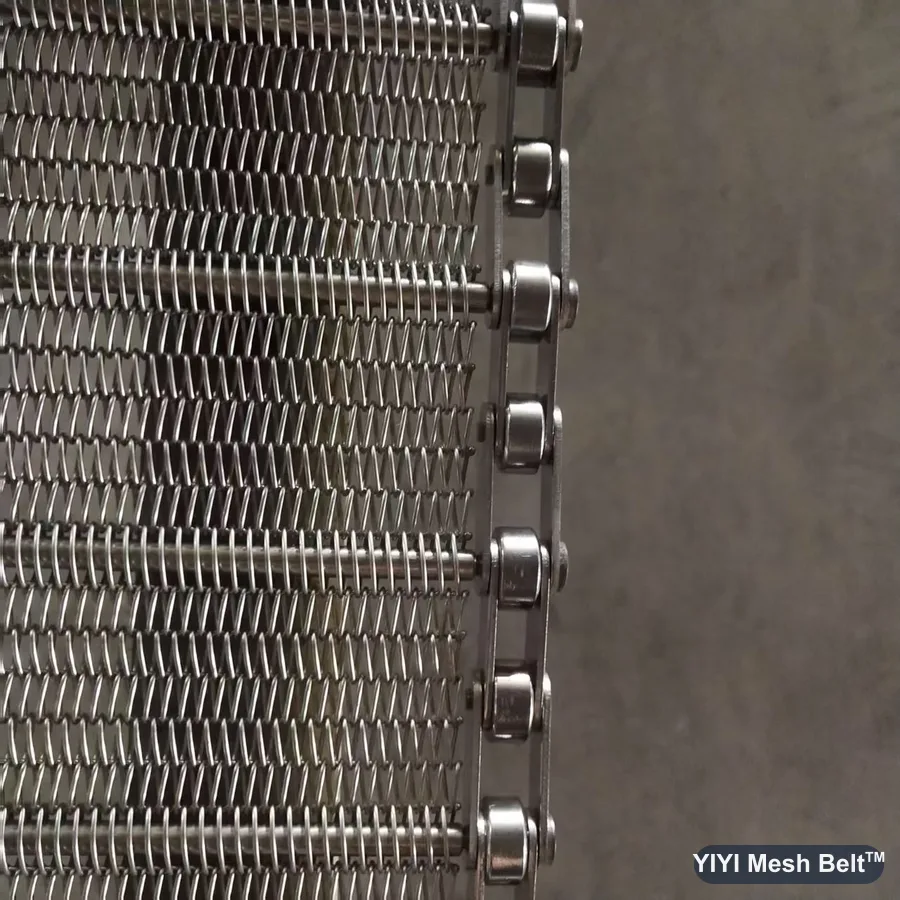
List attachments in the RFQ; they change the drawing, the weight and the packing.
Which material and sprockets?
Material follows the process; sprockets follow the chain.
Choose SUS304 or SUS316 for food and wet processes and carbon steel for dry or heat-treatment duty where cost matters. Sprockets are specified on the same drawing as the chain and checked against it, and spare rods, washers, spirals and pins are listed with the order.
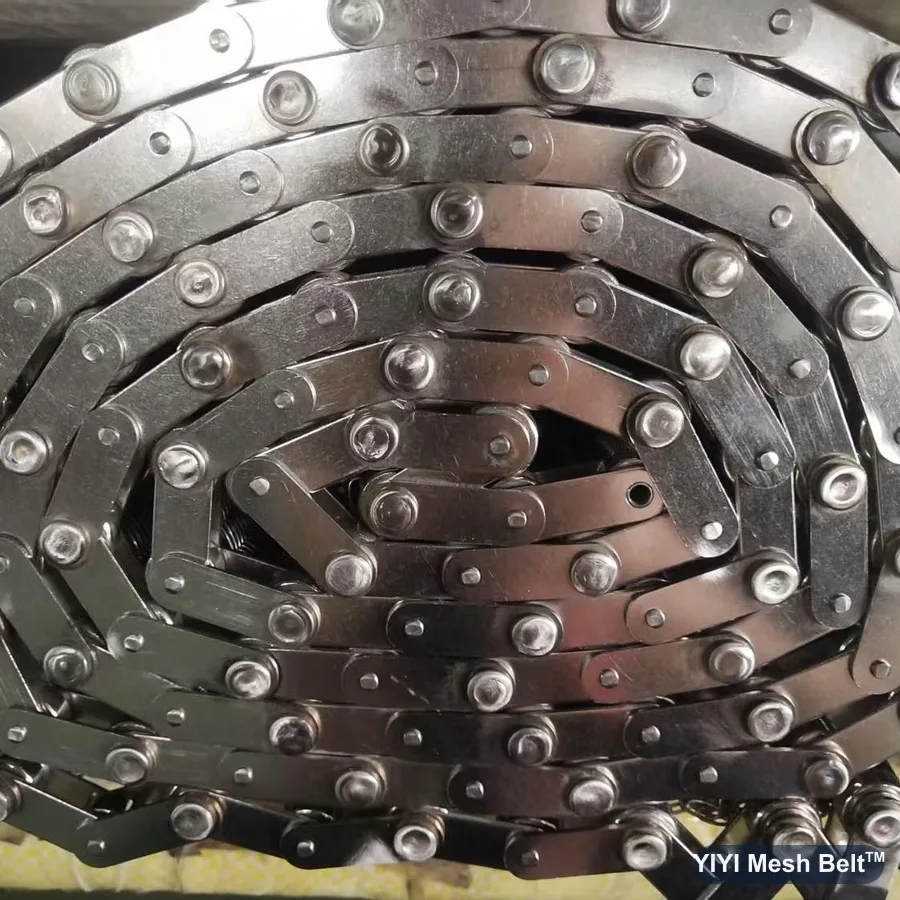
Selected stainless chains of about 25.4–50.8 mm pitch can be made in-house depending on specification; carbon steel and special chains are sourced to specification and checked before shipment.
When this is not the right choice
A chain driven belt is not the right choice for light, flat conveying; a balanced weave belt is simpler.
Selecting the chain by model name alone is not right; pitch, profile and sprocket must be confirmed together.
From our engineering experience
For a frying-equipment maker we quoted from their drawings, drew three chain driven belts with C2042 chain at 25.4 mm pitch, got them signed back and measured a trial section before mass production.
My advice: start the RFQ with the chain, the load and the centre distance. The rest of the belt follows.
Evidence from our work
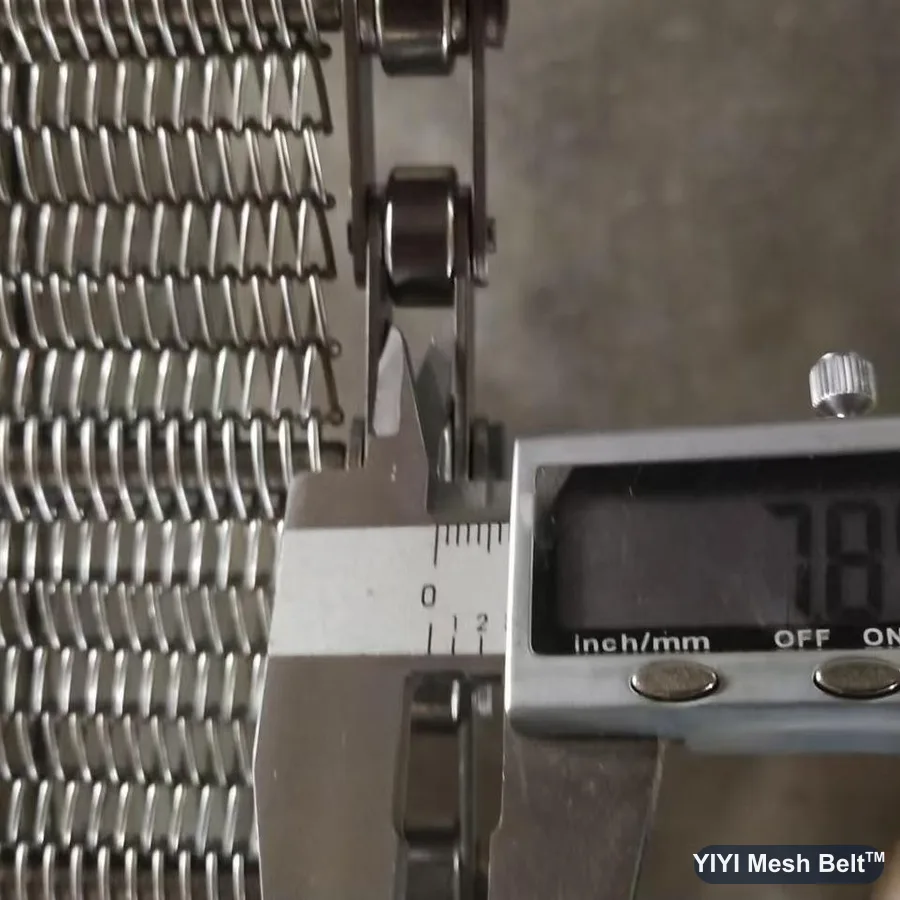
- Situation
- Three SUS304 chain driven belts, 145 m each, chain centre distances 350, 500 and 650 mm.
- What we checked
- C2042 chain at 25.4 mm pitch, roller 15.88 mm; 6 mm rods at 50.8 mm; 1.0 mm spiral wire at 3 mm pitch; rod ends washer welded.
- Why it matters
- Chain, mesh and spares on one signed drawing leave nothing to interpret.
- Result
- About 436 m shipped with spare rods, washers, spiral wires and chain pins after a white-glove check.
- Buyer lesson
- Select the chain first, the mesh second, and keep both on one drawing.
FAQ
Which chain pitches are available?
12.7, 15.875, 25.4, 31.75, 38.1, 50.8 and 63.5 mm.
Can you add flights or side plates?
Yes, built to the approved drawing.
Do you make the chains?
Selected stainless chains of about 25.4–50.8 mm pitch in-house, depending on specification; others are sourced and checked.
Which materials?
SUS304, SUS316 or carbon steel, chosen for the process.
Conclusion
Choose the chain for the drive, the mesh for the product, attachments and material for the process, and sprockets for the chain, on one drawing.
Useful files for your project
I work on metal conveyor belt projects, from new spiral freezers to belt replacement. I share project notes and replacement checklists on LinkedIn.
Technical reviewer: Sunny Ye, Global Sales Director, YIYI MESH BELT · Last updated: 2026-10-12