Welded Edge or Chain Edge: What Changes in the Belt?
The edge decides how the belt is guided and driven. Our factory copies the edge from your old belt or drawing, confirms it on the drawing you approve and checks every weld before packing. See our metal conveyor belts.

Short answer
Choose a welded edge when the belt is driven through the mesh or by drums and needs a smooth, clean edge, and a chain edge when roller chains must carry the drive, the load or attachments. The edge type is confirmed from the conveyor’s drive and guides.
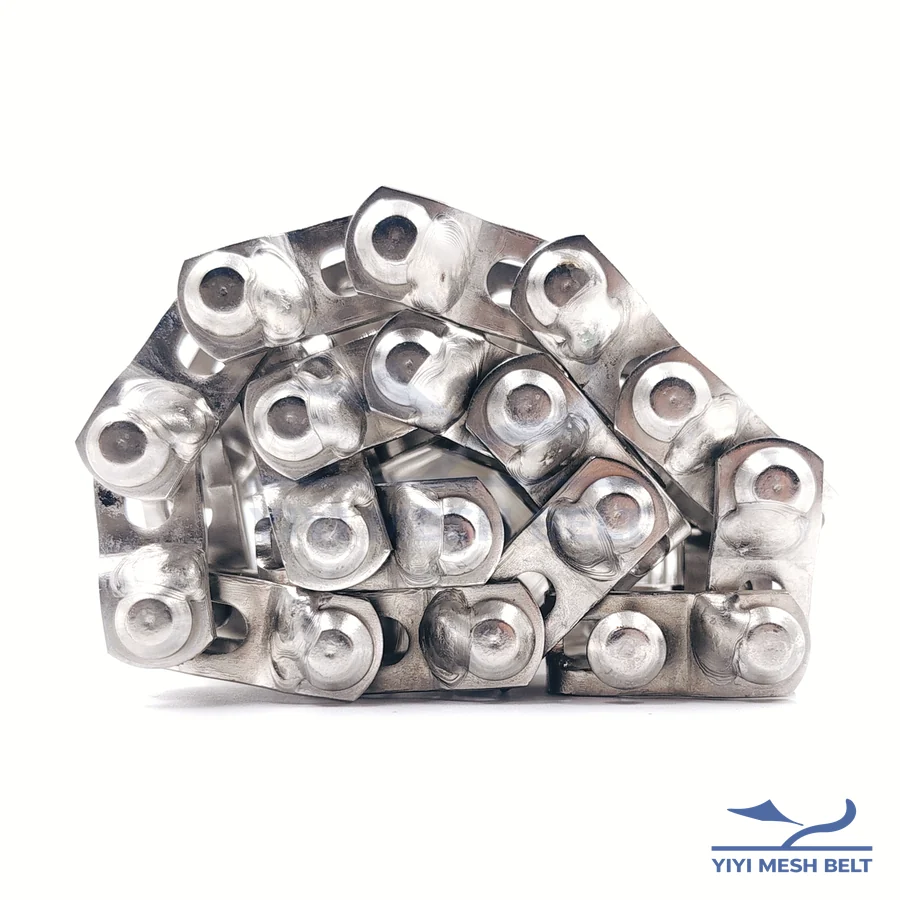
I am Sunny Ye, Global Sales Director at YIYI MESH BELT in Ningjin, Shandong, China. Our manufacturing experience dates back to 1998. We build welded, clinched, button and chain edges, and the edge is one of the first things I confirm on a drawing.
At a glance
| Product | Spiral, eye link, flat wire, chain driven and woven belts |
|---|---|
| Application | Any conveyor where the edge meets guides, sprockets or chains |
| Key parameters to confirm | Drive type, guides, load, attachments, cleaning |
| Buyer type | Equipment makers, food plants, maintenance teams |
| What to send for a quote | Photo of the old edge, drive end and guides, with a ruler in view |
Which edge types are there?
Edges fall into two families: finished mesh edges and chain edges.
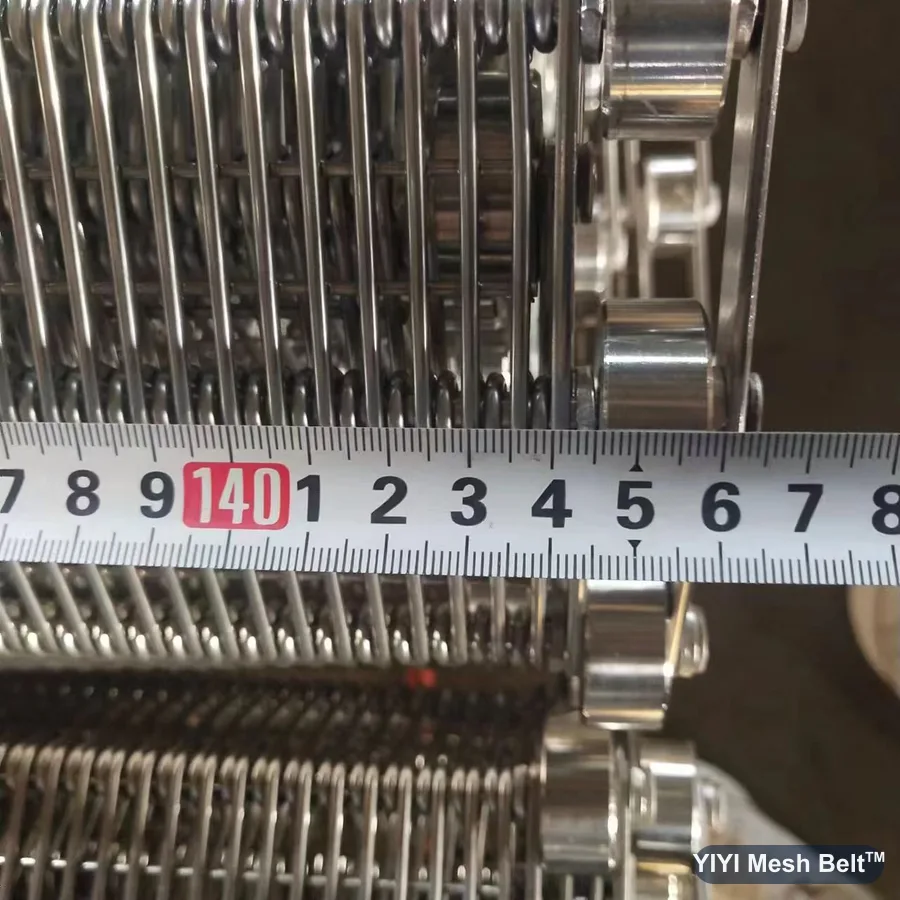
Finished mesh edges end the rods or wires in the belt itself: welded, button, flat-hat, clinched or washer-welded edges. Chain edges add roller chains at both sides that carry the drive. Spiral belts use edge links; eye link belts can have a roller chain or a reinforced plate edge.
| Edge | Typical belts | Driven by |
|---|---|---|
| Welded / button / flat-hat | Spiral, woven belts | Mesh, drum or cage |
| Clinched | Balanced weave, flat wire | Mesh or drum |
| Washer welded | Flat wire, chain driven rods | Mesh or chain |
| Roller chain | Eye link, chain driven | Sprockets on the chain |
| Reinforced plate | Eye link | Mesh or sprockets |
When is a welded edge right?
A welded edge is right when nothing but the belt touches the guides.
A welded edge is right when the belt is driven through the mesh, by drums or a spiral cage, and the edge just runs against guides. It is smooth, has no extra parts and cleans easily. The weld quality matters: uneven or proud welds catch guides and wear quickly.
Our inspectors check edges for uneven welds and welds standing proud of the link before packing, because a rough edge is a common cause of catching and jerking.
When is a chain edge right?
A chain edge is right when the belt has to be pulled hard.
A chain edge is right when roller chains must carry the drive, for heavy loads, wide belts, long or inclined conveyors, or when flights and side plates are attached. The chain standard, pitch and sprocket profile are then confirmed together, because the chain and sprocket wear as a set.
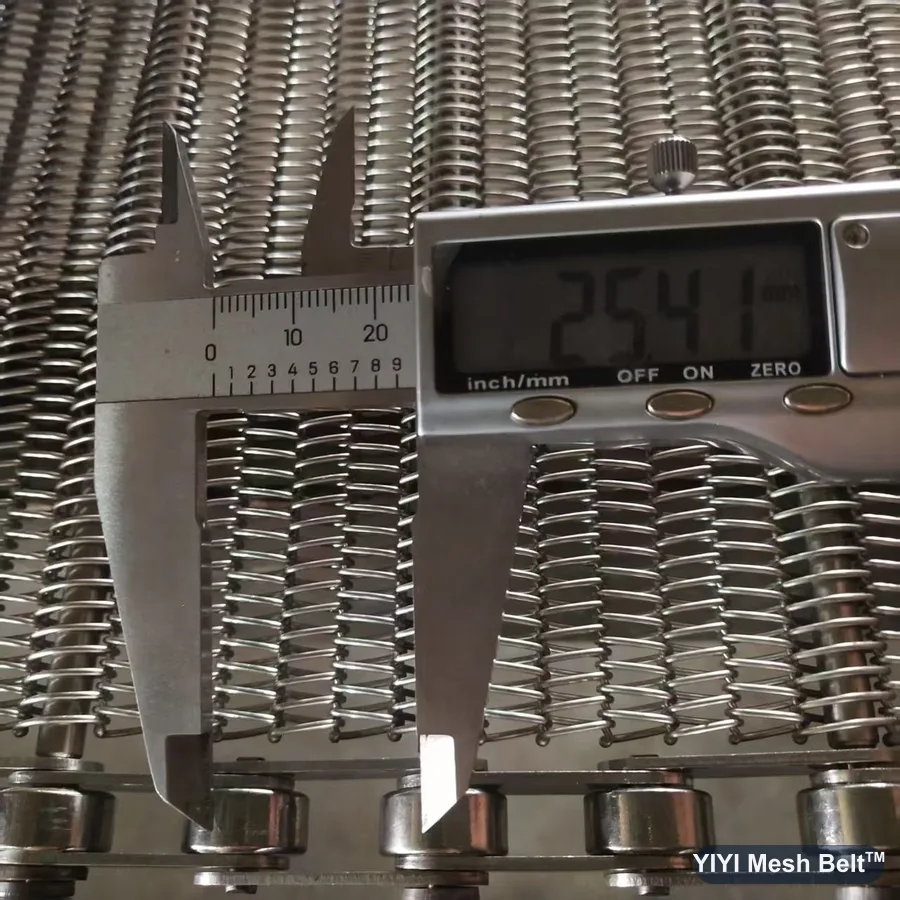
For a tunnel-freezer maker in Europe we build eye link belts with roller chain edges and matched 12- and 13-tooth sprockets, to the same drawings on every repeat order.
What should you check when replacing an edge?
A replacement edge must fit the machine, not just look the same.
When replacing, photograph the old edge and the drive end with a ruler, measure the edge height or chain pitch, roller and inner width, and check the guides and sprockets. Changing the edge type is possible, with the drive and guides checked on the same drawing.
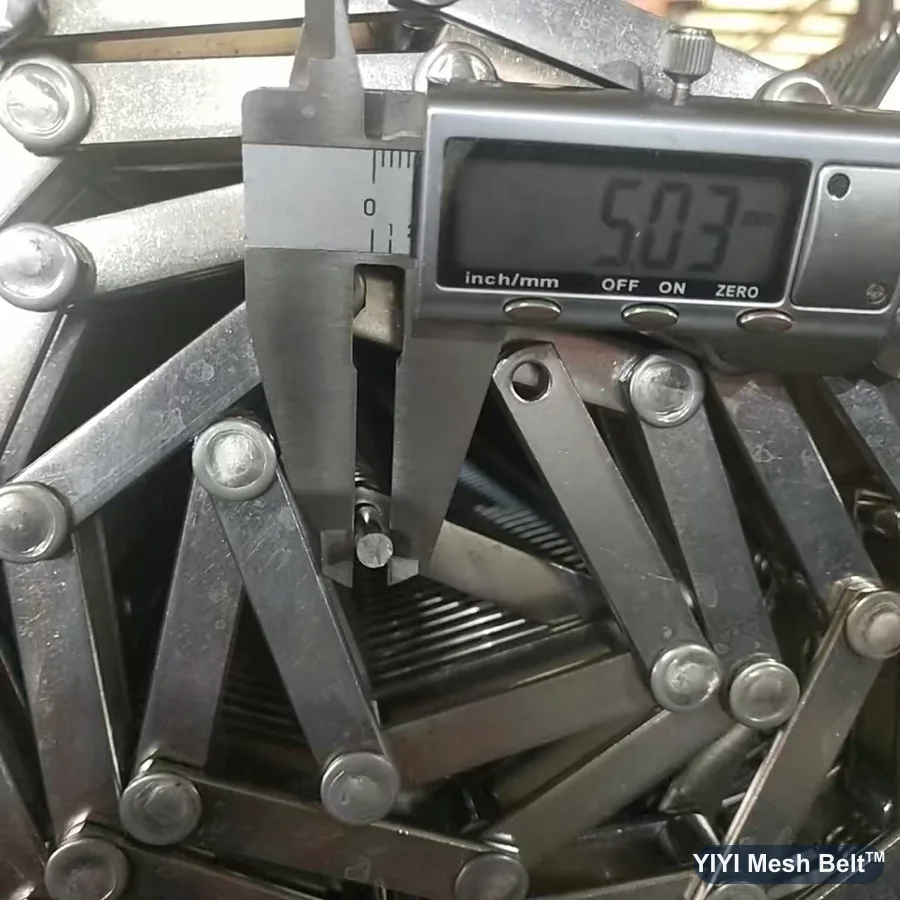
- PhotoOld edge and drive end, ruler in view.
- MeasureEdge height or chain pitch, roller, inner width.
- GuidesWhere the edge runs and rubs.
- DriveSprocket teeth and bore.
When this is not the right choice
A chain edge is not right just because it looks stronger; on a light, drum-driven belt it adds weight and wear points.
Changing edge type in a replacement is not right without checking the drive and guides.
From our engineering experience
For a tunnel-freezer maker in Europe we have built eye link belts with roller chain edges and matched sprockets for 13 years, always to the approved drawings.
My advice: send a photo of the drive end with the old edge. It shows which edge the machine was built for.
Evidence from our work
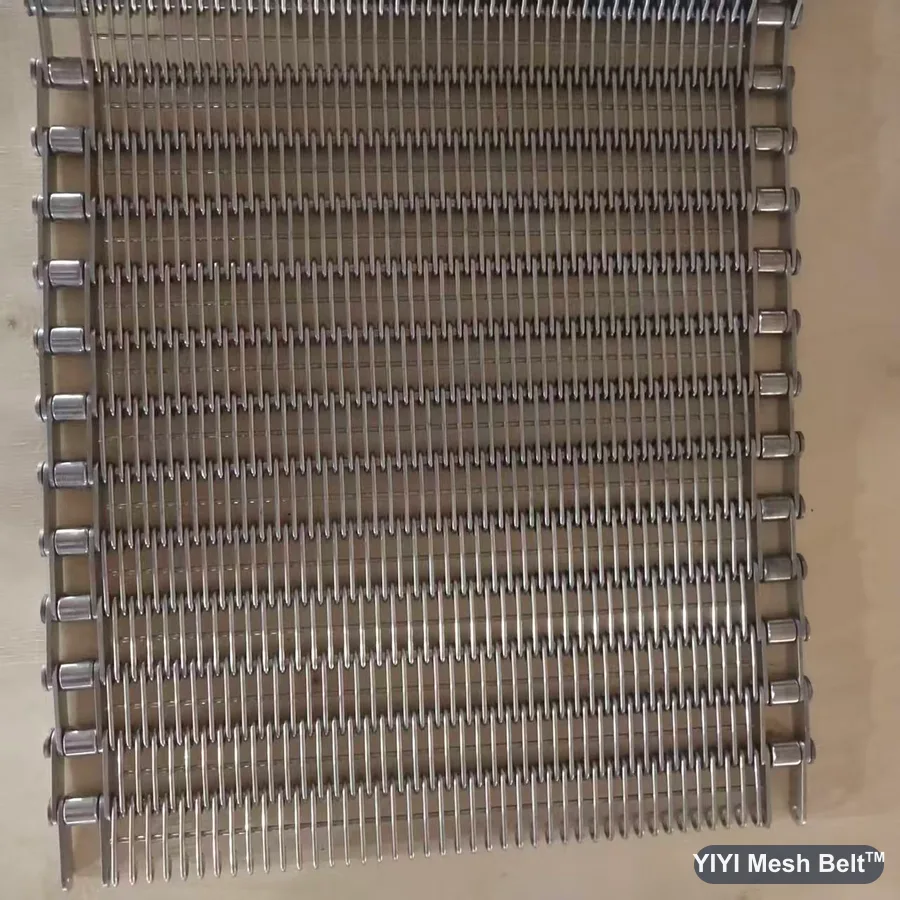
- Situation
- Eye link belts with roller chain edges and reinforcing plates, plus matched sprockets.
- What we checked
- Roller chain edge with 12 mm rollers, washer welded; 25.4 and 50 mm belt pitch; 12- and 13-tooth sprockets with 35 mm bore.
- Why it matters
- The chain edge and sprockets are specified together, so repeat orders fit the same machines.
- Result
- Repeat orders built to the same drawings, pickled, cleaned and packed with the sprockets.
- Buyer lesson
- Choose the edge with the drive, and keep both on one drawing.
FAQ
Which edge is easier to clean?
A welded edge, because it has no chain joints.
Can a spiral belt have a chain edge?
Spiral belts use edge links on the cage; their edge types include button, flat-hat, rod welded, button cap and clinched.
Can I change from chain edge to welded edge?
Yes, if the drive changes too; the chain carries the drive.
What should I send?
Photos of the old edge and drive end with a ruler, and the edge or chain measurements.
Conclusion
Drum or mesh driven and smooth: welded edge. Chain driven, heavy or with attachments: chain edge. Confirm the edge with the drive.
Useful files for your project
I work on metal conveyor belt projects, from new spiral freezers to belt replacement. I share project notes and replacement checklists on LinkedIn.
Technical reviewer: Sunny Ye, Global Sales Director, YIYI MESH BELT · Last updated: 2026-10-12