How Do You Specify an Eye Link Belt for Washing and Blanching?
Washing and blanching lines are wet, hot and cleaned often. An eye link belt has to drain, carry wet loads and keep its drive.

Short answer
Specify an eye link belt for washing and blanching by the process: SUS304 or SUS316 chosen for the water, heat and cleaning chemicals; cross rod, rod pitch and reinforcement for the wet load; a roller chain edge with matched sprockets; flights where needed; and a clean, dry belt on delivery.
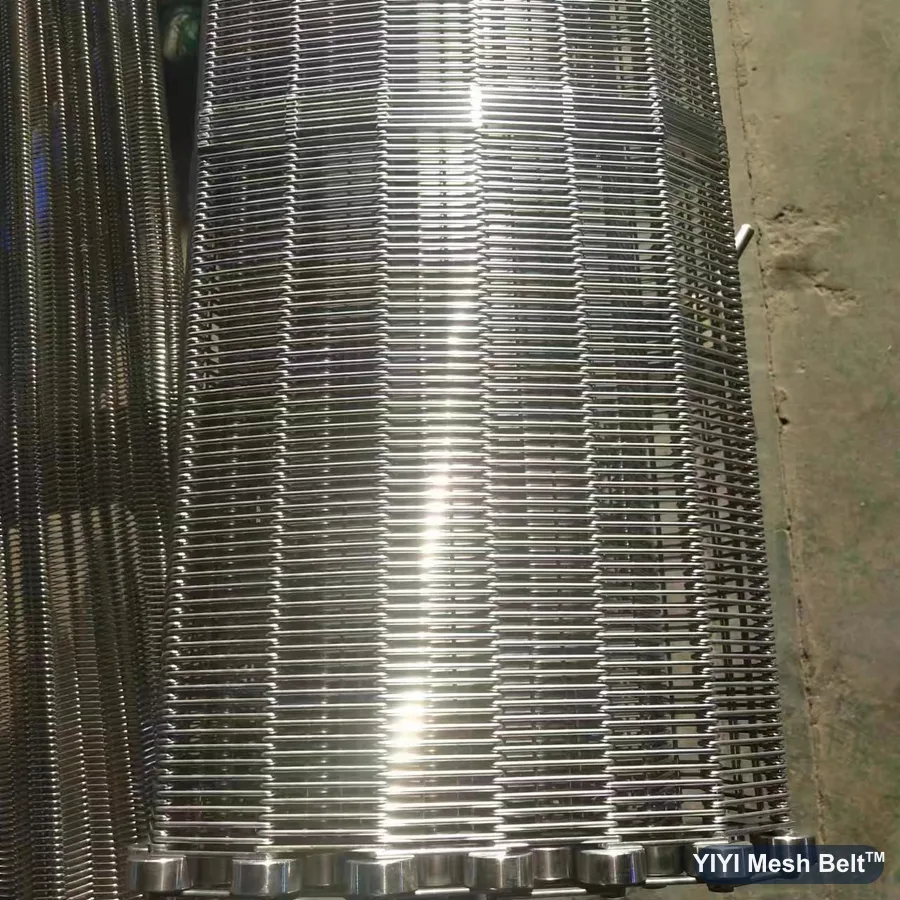
I am Sunny Ye, Global Sales Director at YIYI MESH BELT in Ningjin, Dezhou City, Shandong Province. We have made metal conveyor belts since 1998 and run 280 units of production equipment, including 9 automatic welding robots. We build eye link belts up to 3,000 mm wide, with roller chain or reinforced plate edges, reinforcement and flights.
At a glance
| Product | Eye Link Belt with matched sprockets |
|---|---|
| Application | Vegetable and food washing, blanching, cooling after blanching |
| Key parameters to confirm | Material, rod pitch, cross rod, wire, reinforcement, edge, flights, sprockets |
| Buyer type | Food processors, line makers, distributors |
| What to send for a quote | Process, product, load per metre, width, water temperature, chemicals, drive and sprocket data |
Why is an eye link belt used for washing and blanching?
Wet lines need a belt that drains, carries weight and keeps driving.
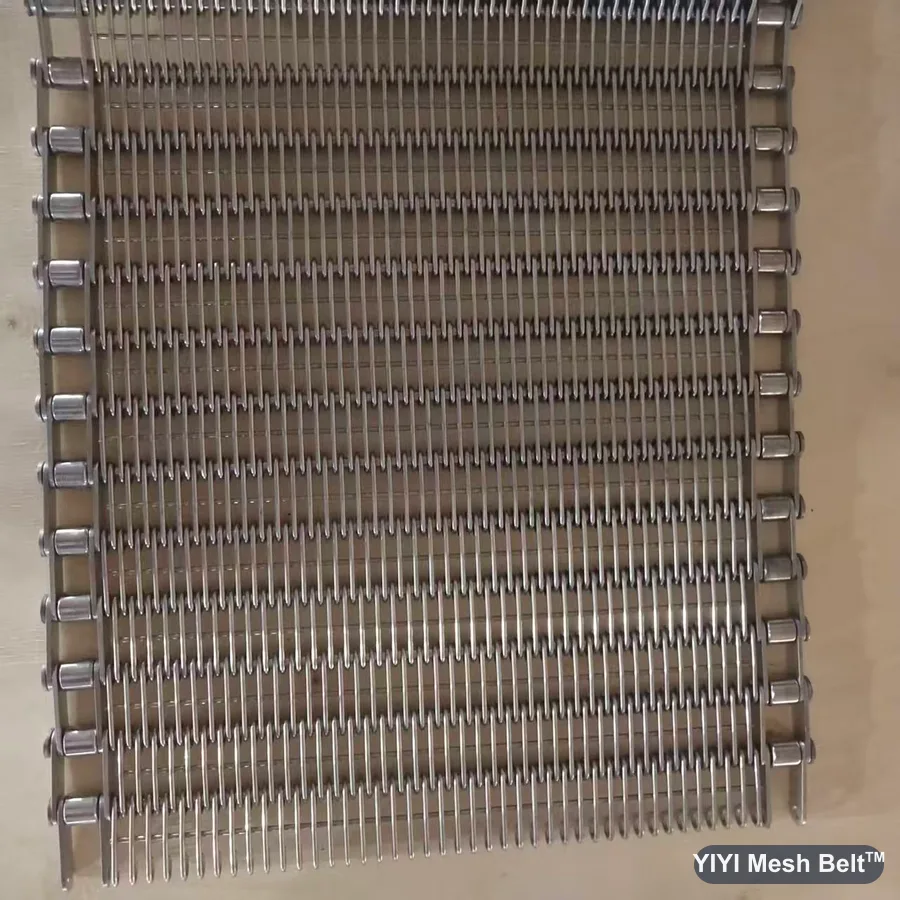
An eye link belt suits washing and blanching because its open structure lets water and steam pass through and drain away, its cross rods carry wet, heavy loads across wide belts, and a roller chain edge keeps a positive drive in wet conditions. Flights can carry product through water.
Washing, blanching and cooling are often one line with one belt or several belts in a row. Tell us the whole sequence, because a belt that passes from hot water to cold water sees more change than one that stays in one zone.
| Process step | What the belt must handle |
|---|---|
| Washing | Water spray, soil and debris, frequent cleaning |
| Blanching | Hot water or steam, then often a quick change to cooling |
| Cooling after blanching | Cold water, condensation, wet load |
| Inclines and tanks | Product carried by flights through or out of water |
Which material and finish suit water, heat and cleaning?
The grade follows the water and the chemicals, not the product name.
SUS304 suits most washing and blanching with clean water. SUS316 is reviewed where salt, brine, acids or chlorinated cleaners are used. Mild steel is not for wet zones. Pickling, and electropolishing arranged with partners where specified, give a cleaner surface. Tell us the water, chemicals and temperature.
We do not publish a general temperature limit for eye link belts. Suitability for hot water or steam is confirmed per project from the temperature, the time in each zone, the load and the cleaning routine.
A belt and frame that trap water can stain even in SUS316. Open, drained designs and a cleaning routine that rinses chemicals off help any grade.
How do you size rods, pitch and reinforcement for wet loads?
Wet product weighs more than dry product, and wide blanchers bow.
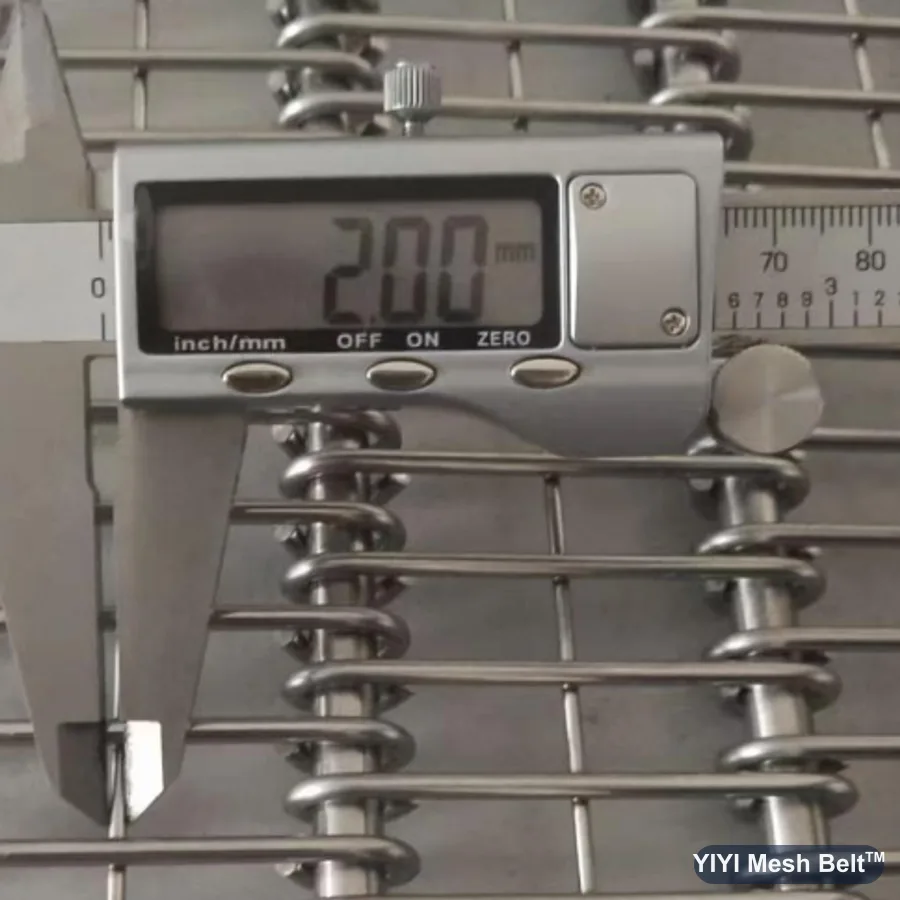
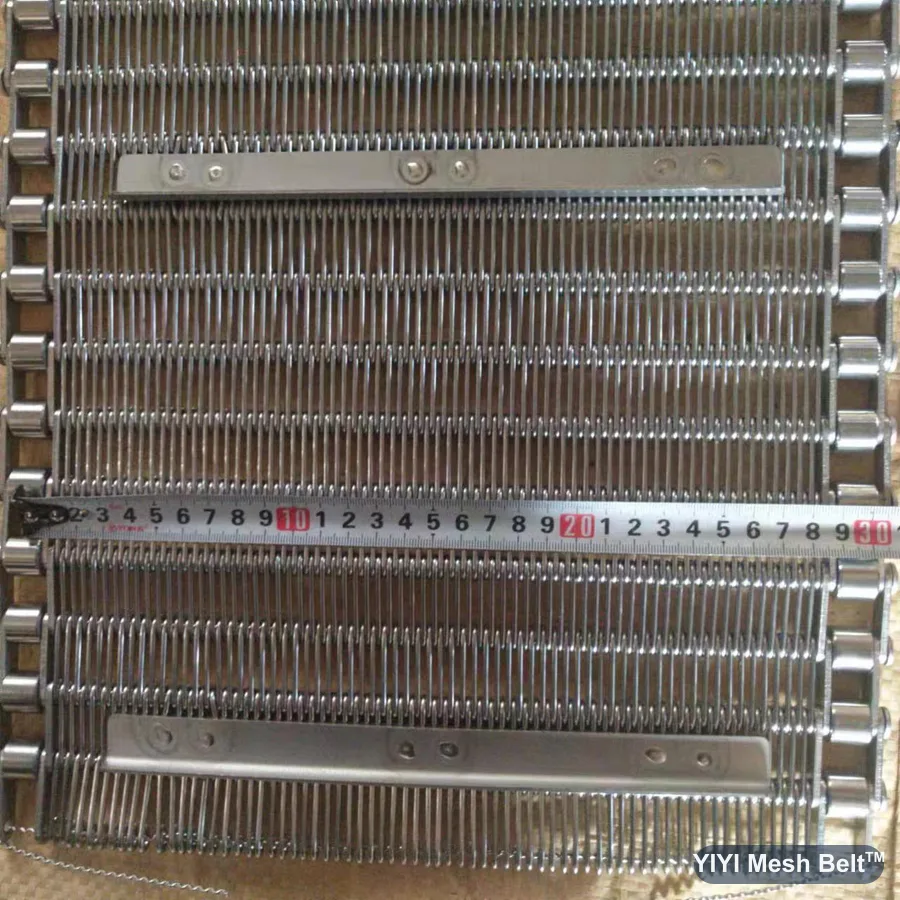
Size the cross rod and rod pitch from the wet load per metre and the width, remembering that water, product and debris add weight. Wide blanchers often need reinforcing bars or plates so the mesh stays flat. Choose eye-link pitch and wire so small products do not fall through.
For small products such as peas, beans or diced vegetables, the openings matter as much as strength. Send the smallest product size and we check the eye-link spacing against it.
| Dimension | Our reference range |
|---|---|
| Rod pitch | 25.4 / 50 / 50.8 / 76.2 mm or custom |
| Cross rod | 5 / 6 / 8 mm or custom |
| Eye-link wire | 1.6 / 2 / 2.5 mm |
| Reinforcement wire | 2 / 2.5 mm, single or double |
| Width | 300–3,000 mm or custom |
Which edge, drive and flights work in water?
Friction drives slip when wet; chains do not.
A roller chain edge with matched sprockets keeps a positive drive in wet conditions, where friction drives slip. Sprockets are specified on the same drawing as the belt. Flights carry product up inclines or through a water tank; their height and spacing are set from the product and the tank.
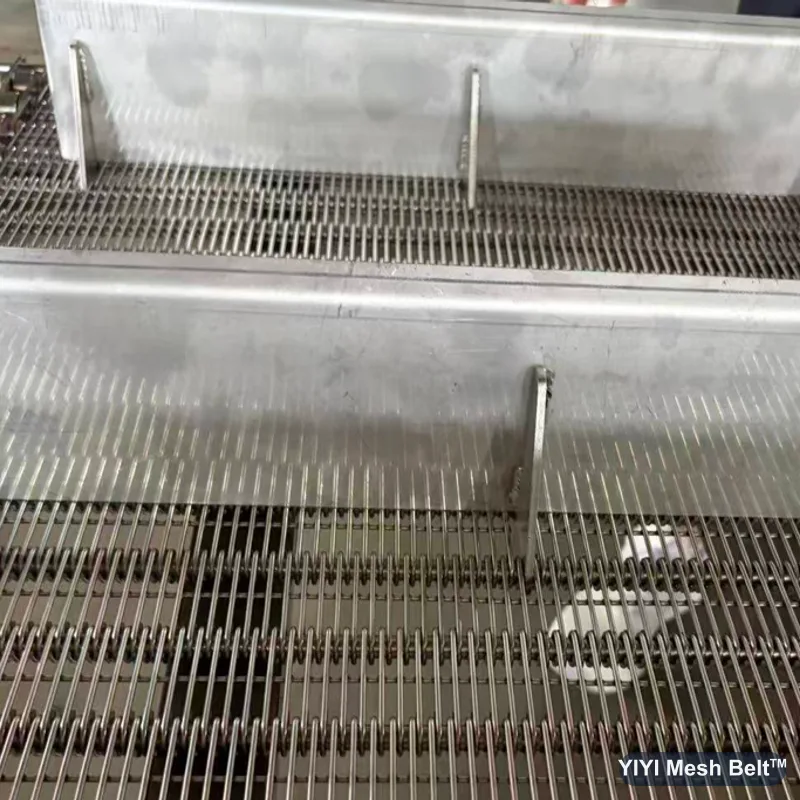
A reinforced plate edge suits lighter drive loads. For a blancher or a long washing tank with a heavy wet load, a roller chain edge is the usual choice.
Sprockets are machined by partners to our drawing and checked against the belt by us before shipment. Read when to replace belt and sprockets together.
How should the belt arrive for a food line?
A food washing belt should not need washing before its first run.
A belt for a washing or blanching line should arrive cleaned and dry, with no oil, black powder or loose wire from production, so it does not contaminate the first run. Ask for pickling where specified, and for photos of the cleaned belt before packing.
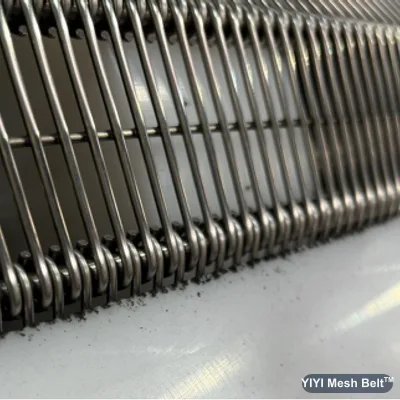
Black powder or oil on new wires comes from forming and handling. It is removed by cleaning before packing; on a food line, ask to see the cleaned belt in the pre-shipment photos.
What should you send to specify the belt?
Process details decide the belt more than the belt name.
Send the process (washing, blanching, cooling), the product and its size, load per metre, belt width and length, water temperature and chemicals, cleaning routine, drive and sprocket data, flight needs, and photos or a drawing of the current belt. We confirm everything on one drawing.
- ProcessWashing, blanching, cooling; water temperature and time in each zone.
- ProductType, smallest size, load per metre.
- BeltWidth, length, current belt photos or drawing.
- DriveSprocket tooth count, pitch diameter, bore; edge type.
- CleaningChemicals, concentration, frequency.
When this is not the right choice
Mild steel is not right in washing or blanching zones; keep it to dry sections.
A friction-driven belt is not right for a heavy wet load; it slips when wet.
A belt specified by width and length alone is not right; rod pitch, edge and sprockets decide whether it runs.
From our engineering experience
We do not have a blanching project we can publish here. The closest published eye link project is the frying line below: a hot processing line where rod, reinforcement, edge and sprockets were specified together, the same logic a blancher needs.
My advice: tell us the water temperature, the chemicals and how often the line is cleaned, not just "washing". The grade, the finish and the edge follow from them.
Evidence from our work
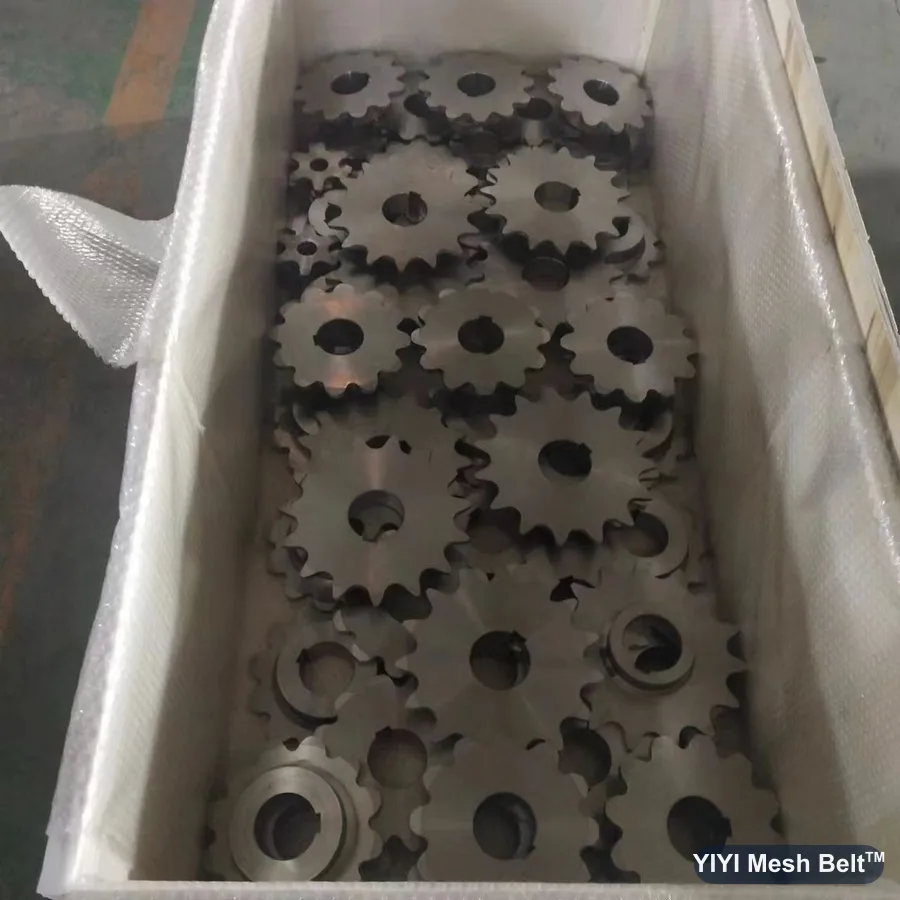
- Situation
- Four SUS304 eye link belts and five sprocket sets for a new hot processing line, 325 to 2,582 mm wide.
- What we checked
- Rod pitch 50 mm, rods 5 mm, eye-link wire 2.5 mm, reinforcing bars 2.5 × 12 mm, roller chain edge 50 mm pitch, washer welded.
- Why it matters
- Wide belts in hot processing need strength across the span and a chain edge for a positive drive.
- Result
- Sample approved, mass production, sprockets checked on the belt, measured photos before shipment.
- Buyer lesson
- Specify rod, reinforcement, edge and sprockets together; washing and blanching lines follow the same logic.
FAQ
Is SUS316 needed for blanching?
Not always. SUS304 suits clean hot water; SUS316 is reviewed for salt, brine, acids or chlorinated cleaners.
What temperature can an eye link belt take?
We do not publish a general limit; suitability is confirmed per project from temperature, time, load and cleaning.
Do I need a roller chain edge?
For heavy wet loads, usually yes; a reinforced plate edge suits lighter drive loads.
Can you add flights?
Yes. Height and spacing are set from the product and the incline or tank.
What should I send?
Process, product size, load per metre, width, water temperature, chemicals, drive and sprocket data, and photos of the current belt.
Conclusion
Choose material for the water and chemicals, size rods for the wet load, use a chain edge with matched sprockets, and ask for a clean belt.
Useful files for your project
I have worked on metal conveyor belt projects for 15 years, from new spiral freezers to belt replacement. I share project notes and replacement checklists on LinkedIn.
Technical reviewer: Sunny Ye, Global Sales Director, YIYI MESH BELT · Last updated: 2026-10-15